
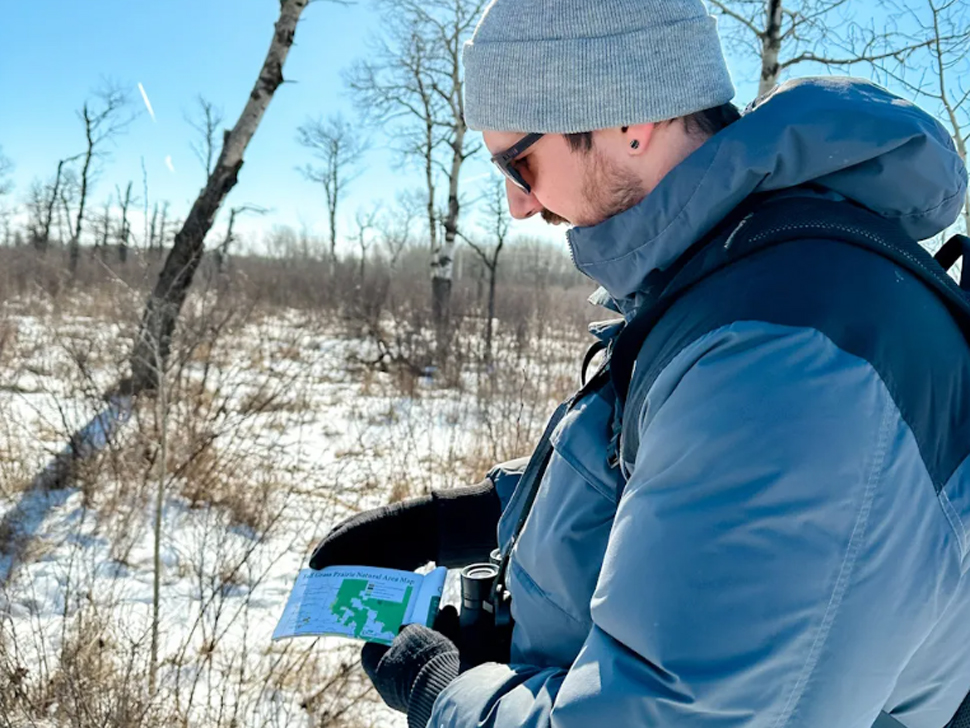
Winter offers a unique window into the hidden lives of animals, and local naturalist Norm Gregoire says snow-covered landscapes make it the ideal season to learn the art of wildlife tracking.
Gregoire, who leads the Adventures with Nature Norm program through Shared Legacy, says winter simplifies what can otherwise be a challenging outdoor skill.
“Winter, it just lends itself to wildlife tracking, just basically because of the snow,” Gregoire said. “The snow really just captures different prints and different animal signs,” he added.
In warmer months, tracks are often lost in grass or mixed woodlands, but fresh snow provides a clear canvas that reveals where animals have been and what they were doing.
Reading more than footprints
While tracks are often the first thing people notice, Gregoire says they are only one part of the story animals leave behind.
“There is a lot more than you might think,” he said.
He explains that learning to read wildlife signs takes time and practice, noting many people walk past clues without realizing what they are seeing, such as plant damage left by animals from feeding.
“Just walking through the trails, you can see tons of signs from different brows on the different willows and things like that from deer, rabbits and hares and everything like that around,” Gregoire said.
Chew marks on trees, day beds in the snow, and even owl pellets can all offer insight into animal behaviour. Gregoire says an owl that frequented the Interpretive Centre last winter has returned, leaving pellets beneath a regular perch.
“It sort of tells a story of what these owls have been up to over the last couple of weeks,” he said.
Common and surprising tracks
Some animal tracks are familiar to most residents, especially in southeastern Manitoba.
“I think most people in our area are pretty familiar with what a white-tailed deer track looks like,” Gregoire said.
Coyotes and foxes are also common trail users, but Gregoire says some of the most interesting signs are the smallest.
“These little animal highways that zip through the deep snow over the trail… are from little rodents, voles and mice and things like that,” he said.
More surprising finds can include tracks from weasels such as ermine and pine marten, which turn white in winter, and even larger animals that are rarely seen.
“Sometimes with animals we rarely see, like a wolf or an elk, we have a much more likely chance of spotting their tracks,” Gregoire said.
Knowing how old a track is
Determining whether tracks are fresh or days old is another skill Gregoire encourages people to practice.
“One of the easiest ways… is just simply sort of looking back on the last few hours or day or even days to remember when was the last time we had snowfall in the area,” he said.
(00:04:05)
He adds that temperature and how the snow has frozen around a print can also provide clues, something that becomes easier with experience.
“It’s all about getting outside and seeing what you can see,” Gregoire said.
Why tracking matters
For Gregoire, wildlife tracking adds depth to any outdoor experience.
“With tracks, they just give you more of an opportunity to learn from the animal, know that they’re in the area,” he said.
His advice for beginners is simple.
“Patience and also just awareness of what’s around you,” Gregoire said.
To hear the entire conversation with Gregoire, listen to the podcast with host Carly Koop.
Event details
Residents can put these skills into practice this weekend during a free guided winter wildlife tracking event.
Adventures with Nature Norm: Winter Wildlife Tracking takes place Saturday, Jan. 17, starting at 10 a.m. at the Weston Family Tallgrass Prairie Interpretive Centre, just outside Stuartburn. The approximately two-hour event includes time on the trails, weather permitting, as well as an indoor presentation on identifying animal tracks common to the area.

-Written with files from Carly Koop.