
What Congress just passed
On the morning of Jan. 5, as Members of Congress returned to work after the holidays, the bill, H.R. 6938, was released by House Appropriations Committee Chair Tom Cole of Oklahoma. H.R. 6938 is a “minibus” — three funding bills packaged together and included Commerce-Justice-Science, Energy-Water, and Interior-Environment. NASA, the National Science Foundation, and other science agencies are contained in the first section of the bill (CJS for short).
It was a piece of compromise legislation designed to move quickly through Congress. And it did. The House voted 397-28 in favor on Jan. 8, and the Senate followed suit with a vote of 82-15 on Jan. 15. Now the bill awaits President Trump’s signature to become law. He is expected to sign.
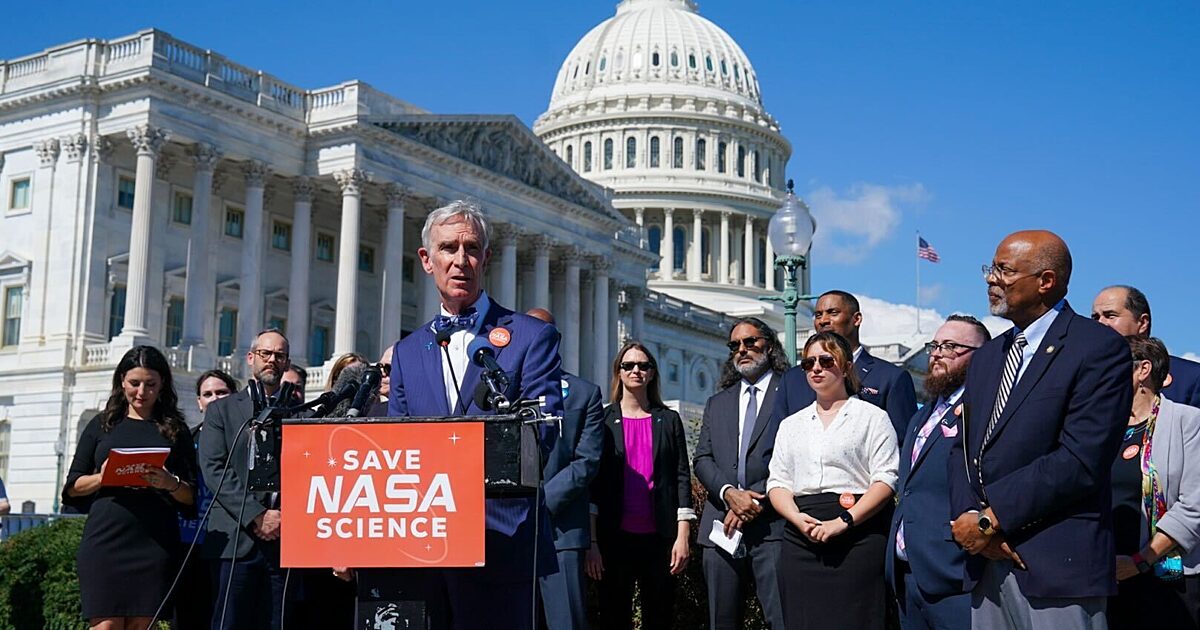
Poring over the details of this legislation, one thing is clear: the OMB-led cuts to NASA were soundly rejected by Congress.
The NASA Office of STEM Engagement, eliminated entirely in the OMB proposal, is also fully funded in the minibus. The National Science Foundation, a vital part of the American scientific enterprise, is funded just below current levels at $8.75 billion.
In addition to these topline funding levels, the minibus came with a Joint Explanatory Statement, or JES, much like other appropriations bills come with a “report” that provides finer details and direction about the programs Congress intends to fund. Note that the usage of the word “joint” in the name indicates that the contents of the JES were agreed to by both House and Senate leadership.
Additionally, the legal text includes language that makes the JES statutory, meaning it is not just a request, but a requirement for agencies to follow. This is not atypical, but represents Congress’s intent to make its point abundantly clear. The JES, with this backing, also includes a key provision in its opening crawl: “Unless otherwise noted, the language set forth in House Report 119-272 and the Senate Report 119-44 carries the same weight as language included in this joint explanatory statement.” This is good because the House and Senate reports had many more directions for NASA, especially as it relates to the Science programs, than the JES has. With this in mind, consulting the House and Senate reports and the JES, we get a better sense of what space missions, that were previously under threat, were saved by the minibus.
There’s an additional level of detail that’s important to this story. Despite the small cut to discretionary spending for NASA, the minibus isn’t the only source of funding for NASA in FY 2026. Over the summer, Congress passed H.R. 1, or the “One Big Beautiful Bill Act.” This budget reconciliation law included $10 billion for NASA, mainly for human spaceflight activities, over the next six years. There are requirements in H.R. 1 that require NASA to spend a certain amount of money per year, meaning that we can combine this supplemental funding with what Congress just passed to get a full picture of the FY 2026 budget.