
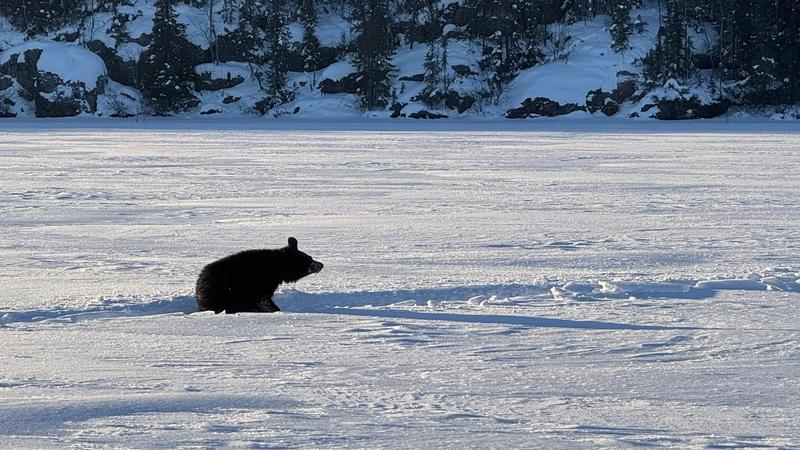
“It can be a difficult situation for those bears, but it does depend,” he said.

“If they left the den because there was trouble at the den sight, that can be problematic. They can leave for other reasons. It is possible they just wandered out for a bit and they would go back to the same den site and all is well, but if the den site was damaged or unusable for some reason, they may be able to find new site to settle into or they may not and that’s just the reality of life sometimes.”
Tokaruk noted unlike gophers or ground squirrels whose body temperature drops when they are in a hibernation state and don’t move much, bears are known as hyper-efficient hibernators. That means they may still run out of a den if it is disturbed by a snowmobile, for example.
“There is no need to be approaching these bears. They are kind of having a tough day so to speak,” he added.
“Let them be given their distance. What happens is going to happen whether they find a new site or don’t. Just treat them the same you would a bear in the snow free season. You shouldn’t be approaching. We don’t want to be attracting a bear that has emerged in an untimely fashion into a backyard or anything like that, so managing the food stuff in our yards is always important this time of year, whether it is for bears or coyotes, you name it.”
The hibernation cycle of bears are large tied to the amount of daylight hours. They typically enter the den in late October or early November and don’t emerge until late March or early April.
–
derek.cornet@pattisonmedia.com