
Tens of thousands of jobs could be lost if the UK’s clean energy supply chains were to suffer a shock as a result of an over-reliance on China, a left-leaning thinktank has warned.
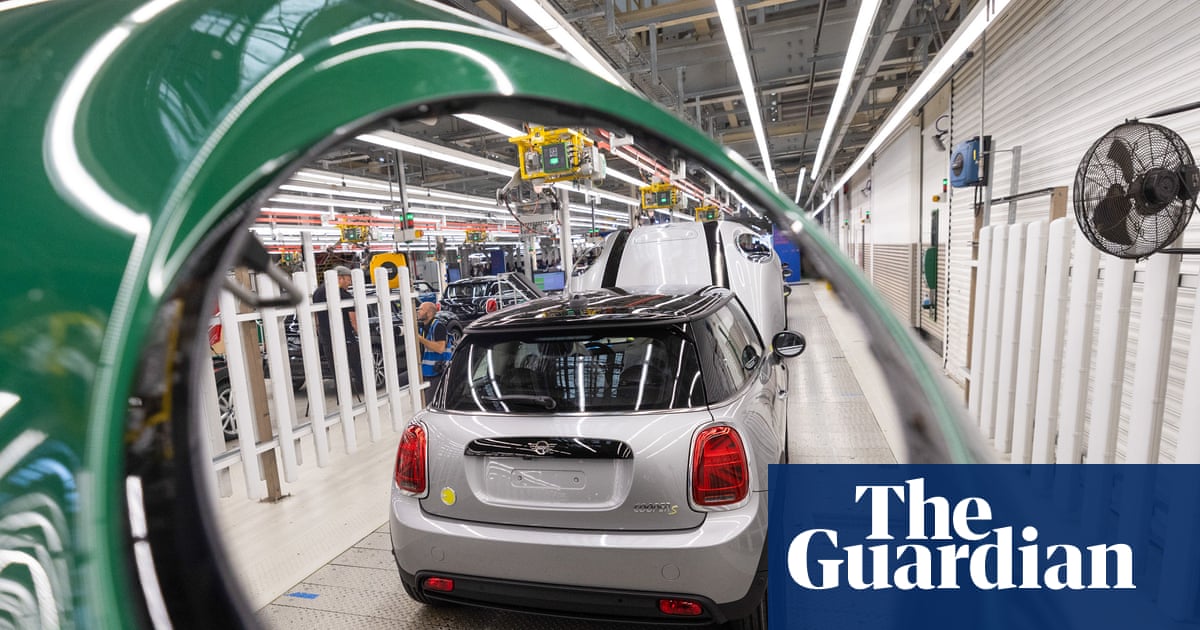
A year-long disruption to the supply of essential battery components used to manufacture electric vehicles could wipe out production of more than 580,000 electric cars and endanger 90,000 jobs, according to the Institute for Public Policy Research.
A delay to the supply of solar components and batteries could also delay the rollout of solar farms, the IPPR added, putting the UK’s clean energy goals at risk and costing the economy an extra £1.5bn a year by keeping the UK reliant on expensive gas generation.
Its report underlines growing concerns over the UK’s reliance on Chinese supply chains amid widespread geopolitical upheaval after the Covid-19 pandemic, including a halt of Russian gas supplies and escalating global trade tensions.
“The world’s over-reliance on China exacerbates these risks,” the report said. “Eighty to ninety per cent of global refining for critical minerals is controlled by China. Relying on a single source of supply leaves the UK and our allies more vulnerable to geopolitical and economic shocks.”
The thinktank has called on the chancellor, Rachel Reeves, to pursue a policy of “securonomics” through greater international investment and partnership.
“The UK is a small open trading nation sailing through an international economy whose waters are getting choppier by the day,” Pranesh Narayanan, a senior research fellow at IPPR and an author of the report, said.
“[Donald] Trump’s trade war with China, the rise of conflicts around the world – these shocks ultimately hurt the UK economy because we rely so much on trade to source the essentials, including clean energy technologies.”
Laura Chappell, the IPPR’s associate director for international policy, said: “Diplomats should be working to build partnerships that will underpin Britain’s future energy security. These can be win-wins, supporting the UK and its partners to make the most of their resources, generating jobs and growth.”
China is the global leader in manufacturing electronic technologies, including components that are essential in renewable energy projects. The world’s second-largest economy reported a record trillion-dollar global trade surplus last year, even as the Trump administration sought to slow the manufacturing powerhouse by imposing trade tariffs designed to shift US orders to other markets.
Economists expect China to continue gaining global market share this year, helped by Chinese firms setting up overseas production hubs that provide lower-tariff access to the US and EU, as well as by ongoing strong demand for lower-grade chips and other electronics.
However, Beijing has also shown signs of recognising it must temper its industrial exports to address the imbalances in China’s economy – and the image problem its export volumes are causing among its global trade partners.
The full-year trade surplus came in at $1.189tn (£888bn) – a figure on par with the gross domestic product of a top-20 economy globally such as Saudi Arabia – customs data showed on Wednesday, having broken the trillion-dollar ceiling for the first time in November.
“Cognisant of the risks and continuing to seek win-win cooperation, China has focused on promoting domestic demand as the future growth engine. With a growing middle class, the consumer potential for local and global products and services should not be underestimated,” said Lynn Song, the chief economist for Greater China at ING.
“This process will take time, perhaps more time than some of China’s trade partners may like, but we believe this is set to be a key theme of the coming decade and beyond.”
The IPPR said the government should clarify its position on Chinese investment and involvement in the UK’s clean energy supply chains, and invest more in domestic production of batteries and green steel.
It should also work with allies to invest in international stockpiles of solar, battery and critical minerals to avoid the risk of delay if supply chain shocks emerge.
A government spokesperson said: “Thanks to our industrial and critical minerals strategies we’re backing our automotive and clean energy sectors to grow, cutting our dependency on imports and protecting British jobs.”
This article’s headline was amended on 16 January 2026. An earlier version said that “90,00” jobs were at risk instead of 90,000.