
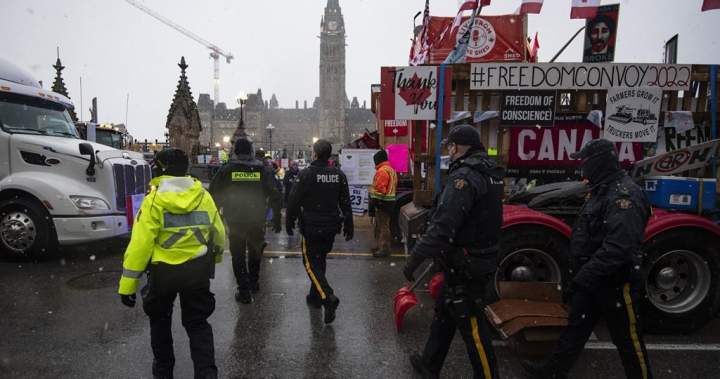
The Federal Court of Appeal on Friday ruled that the federal government’s use of the Emergencies Act to quell the 2022 “Freedom Convoy” protests was unreasonable.

The ruling upheld a 2024 decision by the Federal Court that also concluded there was “no national emergency justifying the invocation of the Emergencies Act” in response to the weeks-long blockade in downtown Ottawa.
The national movement also involved truck blockades at key border crossings to the United States, which prompted then-prime minister Justin Trudeau to declare a national emergency “arising from threats to Canada’s security.”
“The Federal Court correctly determined that the declaration of a public order emergency was unreasonable,” the appeal court ruling said.
The appeal court also agreed with the lower court that invoking the emergency powers led to the infringement of constitutional rights.
Story continues below advertisement
2:20
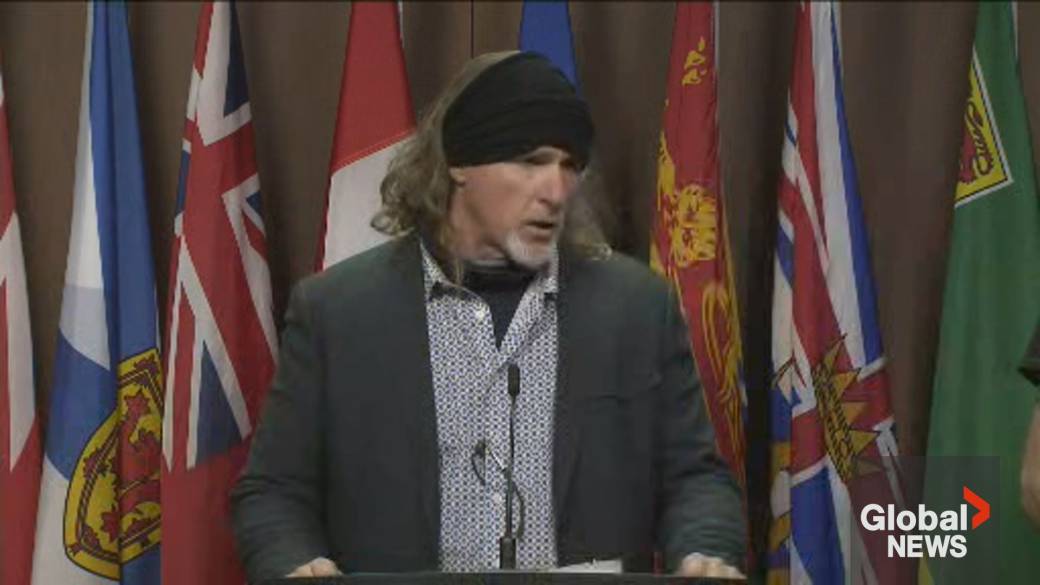
‘Hollow victory’: Freedom Convoy spokesperson on Emergencies Act ruling
Both rulings sided with the Canadian Civil Liberties Association and the Canadian Constitution Foundation, which brought the case against the government on free speech and assembly grounds.
“This decision provides some guidance and some guardrails in terms of interpreting the legislation, refining the understanding of it,” CCLA executive director Howard Sapers said during a media conference Friday.
“The act could still be used and a government could still try to abuse it, but at least now there’s some there’s some precedent decision.”
It was not clear Friday whether the federal government would seek leave to appeal the ruling to the Supreme Court of Canada.
Simon Lafortune, a spokesman for Public Safety Minister Gary Anandasangaree, said the government was reviewing the ruling and assessing next steps.
Story continues below advertisement
He said the government “remains steadfast in its commitment to ensuring the safety and security of Canadians.”
How the case has evolved since 2022
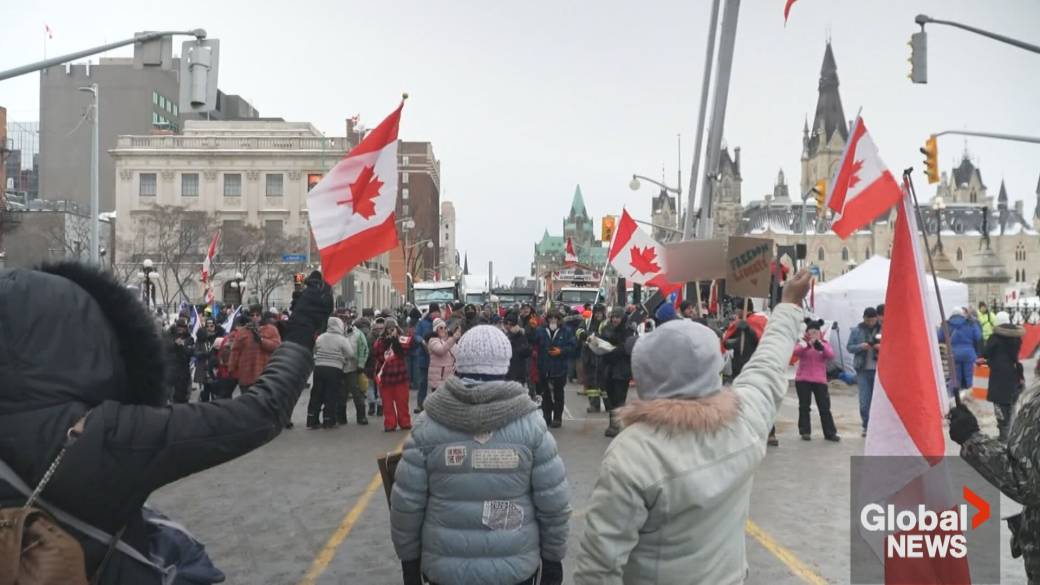
For about three weeks in January and February 2022, downtown Ottawa was filled with protesters, including many in large trucks that blocked streets around Parliament Hill.

Get daily National news
Get the day’s top news, political, economic, and current affairs headlines, delivered to your inbox once a day.
Trucks also jammed important cross-border trade routes at the Ambassador Bridge in Windsor, Ont., as well as in Coutts, Alta.
While many people demonstrated against COVID-19 health restrictions, including vaccine requirements for truck drivers and other groups, the gathering attracted some with a variety of grievances against Trudeau and his government.
On Feb. 14, 2022, the government invoked the Emergencies Act, which allowed for temporary measures, including regulation and prohibition of public assemblies, the designation of secure places, direction to banks to freeze assets, and a ban on support for participants.
Story continues below advertisement
It was the first time the law had been used since it replaced the War Measures Act in 1988.
The Public Order Emergency Commission, which carried out a mandatory review after the use of the act, concluded in early 2023 that the federal government had met the very high legal standard for using the law.
1:31
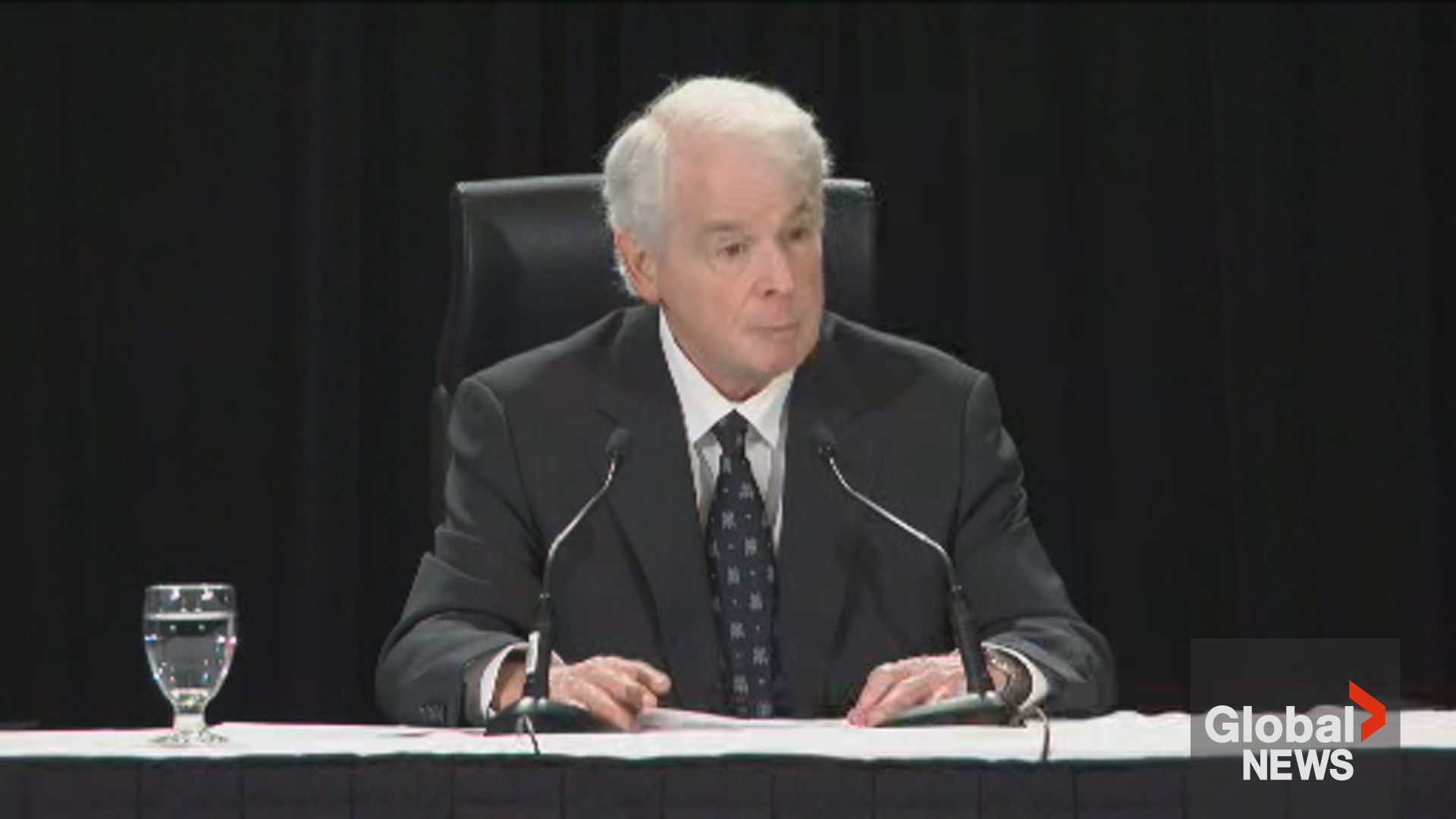
Feds justified in using Emergencies Act during ‘Freedom Convoy’: final report
At the public inquiry and in court proceedings, the CCLA and several other groups and individuals argued that Ottawa lacked sound statutory grounds to usher in the emergency measures.
The government contended the steps taken to deal with the turmoil were targeted, proportional and time-limited, and complied with the Charter of Rights and Freedoms.
Public sector groups and nurses unions in Ottawa also pointed to the disturbances caused by blaring horns from big rigs, diesel fumes, makeshift encampments and even a hot tub and bouncy castle set up in the protest zone near Parliament Hill.
Story continues below advertisement
The influx of people, including some with roots in the far-right movement, prompted many businesses to temporarily shut down and aggravated residents with noise, pollution and harassing behaviour.
Trending Now

N.S. missing kids: Mother accused partner of abuse, court documents reveal

This ‘landmark’ Nova Scotia castle is back up for sale. The price has gone up
Richard Mosley, the judge who heard the case in Federal Court, concluded the federal decision to issue the emergency proclamation did not bear the hallmarks of reasonableness — justification, transparency and intelligibility — and was not supported in relation to the relevant factual and legal constraints.
The federal government appealed the decision.
1:49
Canadian court finds use of Emergencies Act was ‘unreasonable’
Lawyer Michael Feder, representing the government, told the Federal Court of Appeal last February it was unfair of the judge to fault federal decision-making using “20/20 hindsight.”
That hindsight came during “the peaceful de-escalation that occurred in light of the emergency measures now being impugned,” he said.
Story continues below advertisement
“Who, outside of a courtroom, would seriously suggest the situation was going to get better in the absence of emergency measures?”
Feder said the government concluded it had reasonable grounds to believe the statutory preconditions for invoking the emergency measures were met.
The government’s conclusion “doesn’t have to be perfect,” he said. “It just has to be reasonable.”
More on Canada
More videos
The three-judge Federal Court of Appeal panel said that as disturbing and disruptive as the blockades and the “Freedom Convoy” protests in Ottawa could be, “they fell well short of a threat to national security.”
The Court of Appeal said this was borne out by the Canadian Security Intelligence Service’s own assessment, and the judges pointed to the fact that although an alternative threat assessment was requested, the Emergencies Act was invoked before it could be completed.
The Emergencies Act defines a national emergency as an urgent and critical situation of a temporary nature that seriously endangers the lives, health or safety of Canadians, exceeds the capacity or authority of a province to deal with it and cannot be effectively dealt with under any other law of Canada.
The Court of Appeal concluded the government “did not have reasonable grounds to believe that a national emergency existed,” taking into account the wording of the act, its constitutional underpinning and the record that was before it at the time the decision was made.
Story continues below advertisement
The judges said the failure to meet the requirements to declare a public order emergency led them to conclude the federal proclamation “was unreasonable” and exceeded the bounds of legal authority.
Multiple organizers of the “Freedom Convoy” protest were found guilty last year of mischief and other charges for their roles in the mass demonstration. Two of those organizers, Tamara Lynch and Chris Barber, are appealing their convictions.
Organizers and other prominent figures in the Coutts border blockade have also been convicted on mischief charges in Alberta, where courts have dismissed attempts to appeal.
—with files from the Canadian Press