

Listen to this article
Estimated 4 minutes
The audio version of this article is generated by AI-based technology. Mispronunciations can occur. We are working with our partners to continually review and improve the results.
Alberta’s energy regulator has opened public input into an Australian-owned mining company’s revised proposal for a coal mine in the eastern slopes of the Rocky Mountains after the company’s previous application was denied in 2021.
Albertans have until Friday to weigh in on what they think should be included in the environmental impact assessment of the Grassy Mountain coal mine.
“This is the first chance the public have to affect the outcome,” Mike Young, CEO of Northback Holdings Corp., told the Calgary Eyeopener’s Loren McGinnis Monday.
“It gives the public an opportunity to say to the regulator, ‘Look, I think they need to think about this and I’m worried about this animal, and have they thought about this?’”
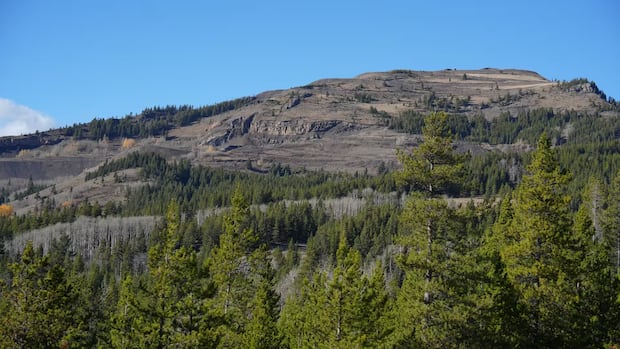
Northback’s proposed project at Grassy Mountain — around six kilometres north from the town of Blairmore, Alta. — was rejected in 2021, when a joint federal-provincial panel ruled potential environmental harm to fish and water quality outweighed the economic benefits of the project.
An exploration project for the mine, which would see an open-pit metallurgical coal mine in the Crowsnest Pass region, received the green light from the provincial government last May. Earlier last year, the provincial government lifted a ban on coal exploration in the area.
Now, the company is preparing for the crucial next step in the regulatory review of the new proposal, even as efforts are underway for a referendum question on banning coal mining in the region.
WATCH | Northback’s CEO on their proposed Grassy Mountain coal mine project:
Young said over the last five years, the company has spent a significant amount of time redesigning the mine plan to address ongoing concerns from ranchers, environmentalists and First Nations.
One of the biggest changes, he said, is reducing the mine’s footprint by 40 per cent.
“You reduce the footprint, you reduce the overall impact,” Young said.
Another change includes adding plans for progressive reclamation of the mine, which involves restoring land as mining operations are ongoing.
Mining would occur moving south to north, Young said, allowing the company to fill the pits that have already been mined with the waste rock from higher up.
“We don’t have a lot of waste outside the mine footprint this time,” Young said. “Then as you go, you can start to reclaim that land while you’re still mining further north, and that has a huge benefit in that we don’t have this environmental liability at the end of the mine life.”
Previous concerns remain
But concern about the environmental cost of the mining project, and similar ones proposed in the area, remain.
One of primary concerns is the potential for the project to leach toxic selenium downstream to bodies of water used for ranching and drinking, and which contain threatened fish species like trout.
Country singer Corb Lund has been a prominent opponent of coal mining in the eastern slopes, launching a petition late last year to ask the provincial government to ban all new mines in the area.
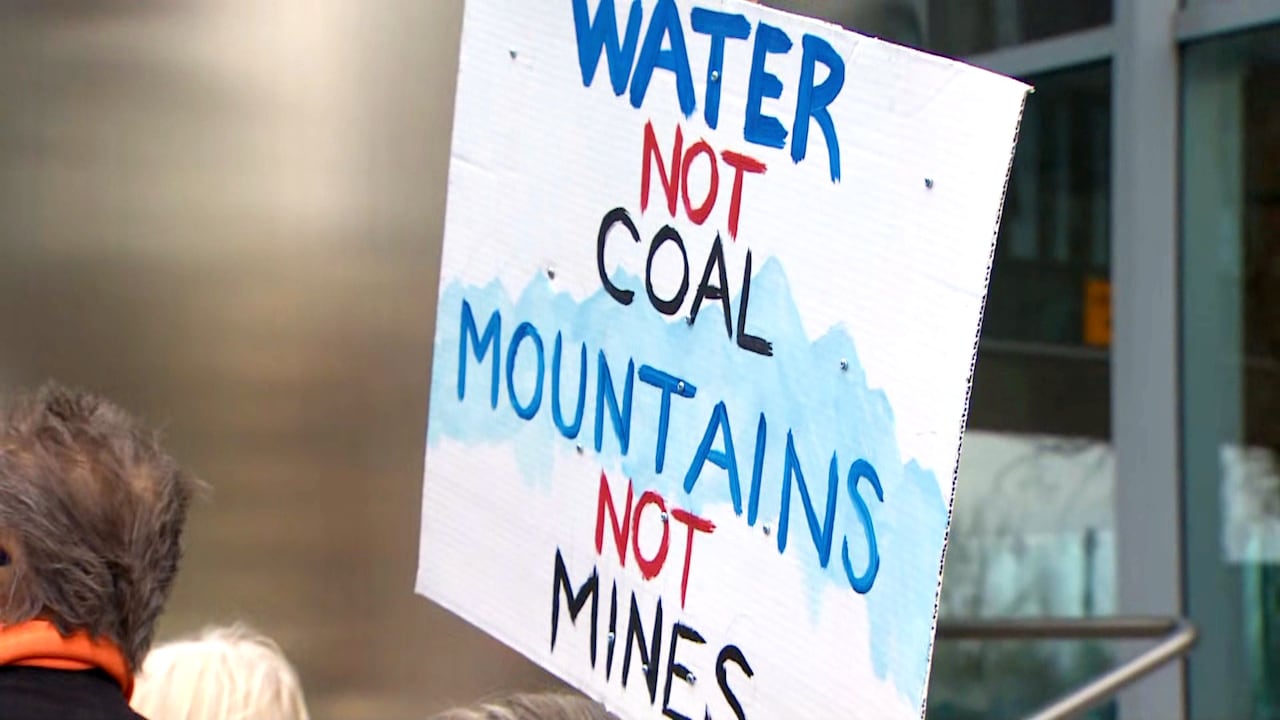 A sign opposing open pit coal mining in the Rocky Mountains is seen at a protest in downtown Calgary on Jan. 14, 2025. (Dan McGarvey/CBC)
“The risk-reward on this coal mining idea is really terrible,” Lund said in a December Calgary Eyeopener interview. “They want to put coal mines in a really sensitive area of our foothills of our Rockies where all the headwaters of our rivers are.”
Other environmental groups, such as Save Our Slopes and the Canadian Parks and Wilderness Society, have also vocalized their opposition to the project and others like it.
In 2019, a peer-reviewed study into Northback’s first proposal (at the time, the company was called Benga Mining) found that leaching of selenium was “an undisputed fact of open-pit mountaintop coal-mining.”
“Effective treatment doesn’t exist, only case after case of selenium pollution and resultant poisoning of fish and wildlife,” wrote the study’s author Dennis Lemly, a retired U.S. government scientist.
Young said he believes selenium treatment technologies have come a long way since then, and the company is incorporating those new developments into its approach.
“We believe the revised application addresses those concerns,” Young said.
After the latest round of public input, Northback will look to submit its project application to the Alberta Energy Regulator later this year. If it’s approved, Young said the mine could be operational by 2030.