
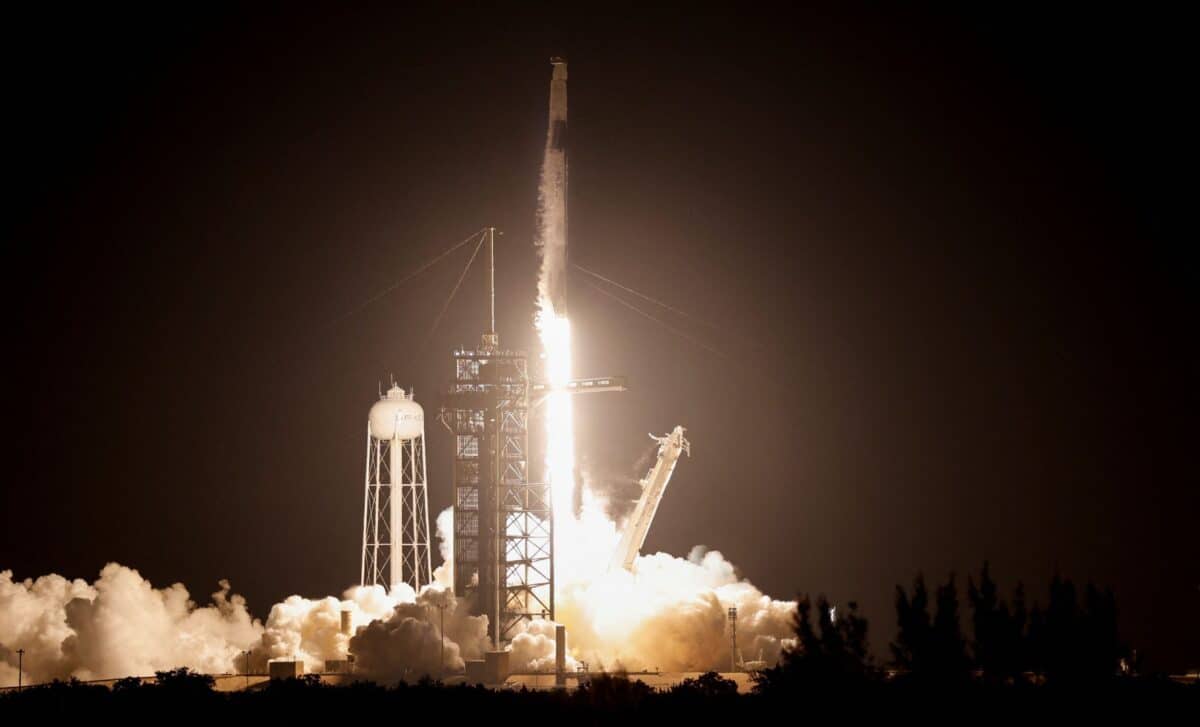
SpaceX kicked off its 2026 launch calendar with a high-priority national security mission for the U.S. National Reconnaissance Office (NRO). On the night of January 16, a Falcon 9 rocket lifted off from Vandenberg Space Force Base in California, sending a still-undisclosed number of spy satellites into orbit under the mission name NROL-105.
The launch was shrouded in secrecy. As is typical for NRO missions, neither the exact satellite payload nor the deployment timeline was made public, and SpaceX’s webcast was cut shortly after the rocket’s booster returned to Earth. The event marked SpaceX’s first national security launch of the year, as reported by Space.com, and highlighted the company’s expanding role in classified government operations.
Vandenberg Launch Success
The Falcon 9 rocket launched at 11:39 p.m. Eastern Time (8:39 p.m. local time) on January 16, carrying its classified payload into low Earth orbit. Just over seven minutes after liftoff, the rocket’s first stage completed a controlled landing at Vandenberg, successfully closing its second mission, according to information provided by SpaceX.
Despite the smooth execution, no technical specifications or mission objectives were disclosed beyond confirmation of the launch and booster recovery. As with previous classified missions, public visibility remained limited. The SpaceX livestream ended abruptly after the landing, likely at the request of the NRO, which routinely restricts real-time coverage of its operations.
This was the seventh mission of the year for SpaceX and follows four earlier launches dedicated to expanding its Starlink internet constellation. NROL-105 stood apart as the first flight of 2026 focused on national security.
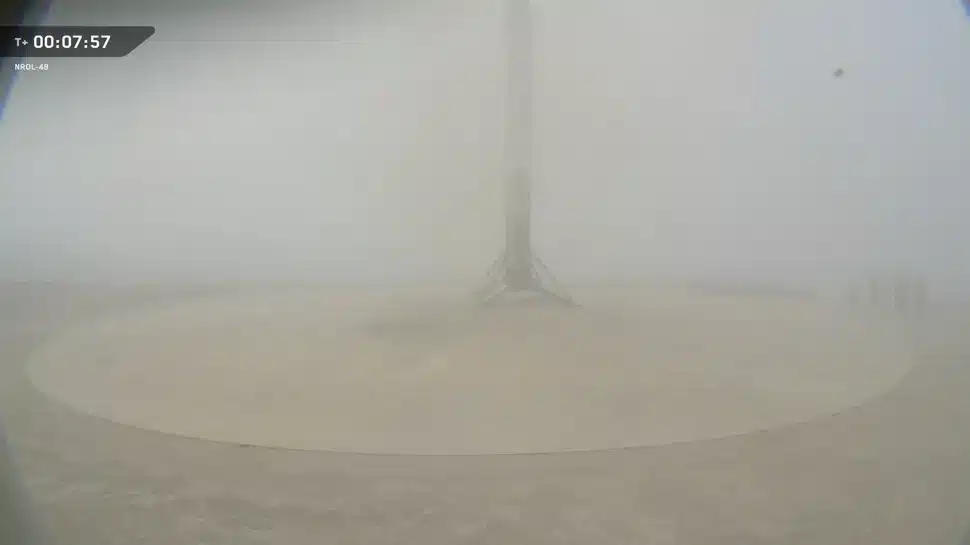 The Falcon 9’s first stage has safely landed following today’s NROL-48 launch. Credit: SpaceX
Boosting Constellation Expansion
The NROL-105 mission is part of the NRO’s growing emphasis on satellite proliferation, following an approach established with NROL-146, which launched in May 2024. According to the NROL-105 press kit, this newer architecture is designed to enhance operational capabilities by relying on “hundreds of small satellites” rather than fewer, bulkier systems.
Chris Scolese, Director of the National Reconnaissance Office, stated that the satellites will offer “greater revisit rates, increased coverage, [and] more timely delivery of information.” The idea is to enable the NRO to deliver intelligence to its clients faster and more reliably, even under unpredictable conditions.
The satellites aboard NROL-105 were developed by SpaceX and Northrop Grumman, continuing the partnership that began with earlier missions. Each has so far been deployed aboard Falcon 9 rockets from Vandenberg, cementing the base’s importance in U.S. intelligence launch operations.
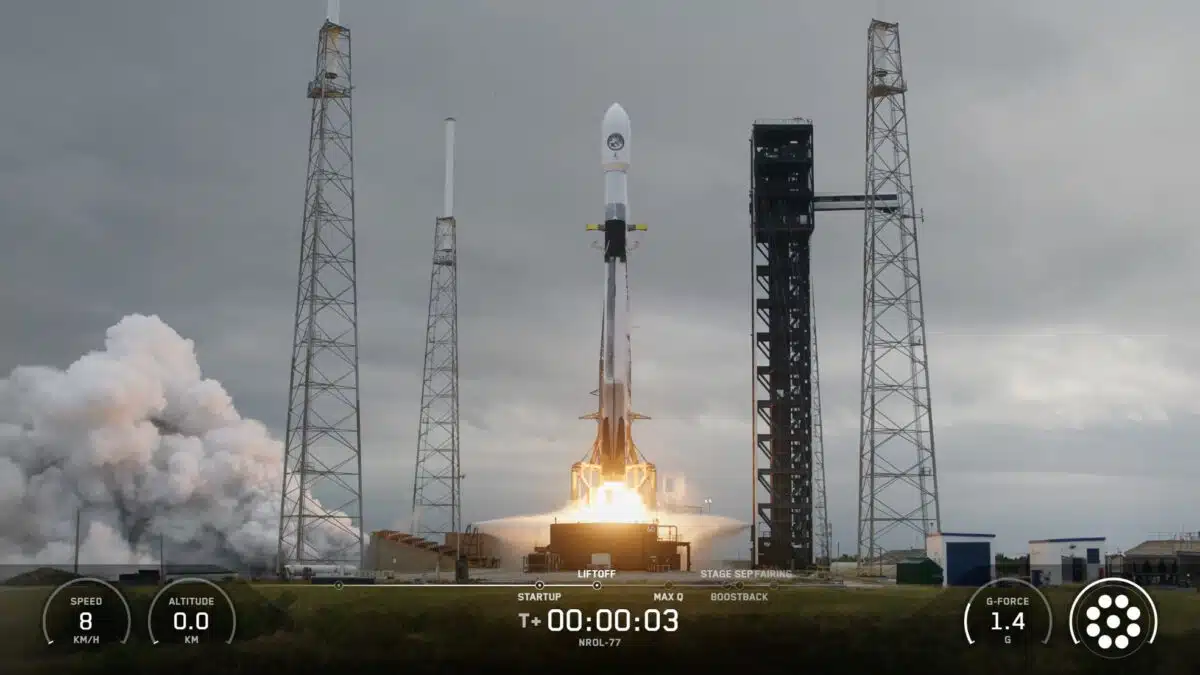 SpaceX Falcon 9 lifts off with classified NROL-77 payload under a veil of secrecy. Credit: SpaceX
Secretive Collaboration, Bigger Commercial Role
Missions like NROL-105 reflect a growing collaboration between private aerospace firms and U.S. intelligence agencies, with SpaceX at the center of this evolving relationship. The company’s ability to repeatedly launch and land rockets with speed and reliability has made it a key partner in defense-related spaceflight.
According to Space.com, the Falcon 9 has now carried all satellites involved in the NRO’s proliferated architecture efforts. The emphasis on reusable systems enables more frequent and cost-effective launches, aligning well with the demands of modern reconnaissance programs.
While the public may never learn the exact role or destination of the NROL-105 payload, the launch adds another layer to SpaceX’s growing portfolio of classified missions, reinforcing its position as a trusted contractor for U.S. national security interests.