
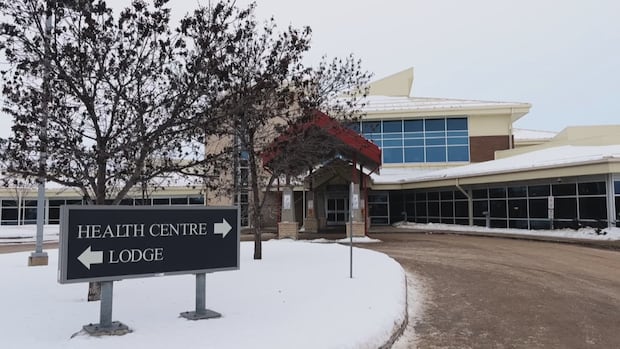
The union that represents Manitoba nurses says the emergency department at the hospital in Swan River is running with half the nurses required, with some shifts having no nurses at all.
It’s a problem the provincial government should have seen coming as it moves away from relying on nurses from private agencies, the president of the Manitoba Nurses Union says.
“We’re hearing from nurses in Swan River a lot about the crisis with staffing,” Darlene Jackson said Friday.
“We do know that the ER has a 50 per cent vacancy rate at this point, and they’ve consistently had vacancies in that ER, and have been very heavily reliant on agency nurses to keep that area staffed.”
In an email to CBC, Prairie Mountain Health — the western Manitoba regional health authority that includes Swan River — confirmed a 50 per cent nurse vacancy in the emergency department at the hospital in Swan River, a town about 380 kilometres northwest of Winnipeg.
A spokesperson said procedures have not been reduced in Swan River’s operating room, nor were any chemotherapy appointments cancelled because of staff shortages.
The health authority added it is encouraging agency nurses to consider working for the region.
 Manitoba Nurses Union president Darlene Jackson says the Swan River hospital is experiencing a nursing crisis, with a 50 per cent vacancy rate in the emergency department alone. (Prabhjot Singh Lotey/CBC)
Jackson says the issue is a lack of planning on the NDP government’s part to prepare for an exodus of agency nurses, which is one of the reasons why many health-care facilities are short-staffed.
Manitoba announced earlier this month that it will only work with four private agencies to fill vacant shifts at public health-care facilities, a change that came into effect on Thursday. That’s a sharp decline from the nearly 80 companies the health-care system was contracting, Health Minister Uzoma Asagwara said in a recent interview.
Four companies — Elite Intellicare Staffing, Integra Health, Bayshore HealthCare and Augury Healthcare — won the right to work in Manitoba through a competitive bidding process, according to Shared Health, which co-ordinates health-care delivery in the province.
The province has said the hope is that nurses who were working for private agencies will take jobs with the remaining agencies or in the public system. But Jackson said the union fears the disruption will leave already poorly staffed rural centres with even fewer nurses.
“We’ve been to government on numerous occasions,” she said. “Every time we were assured by the minister of health that yes, resources would be in place … and here we are.”
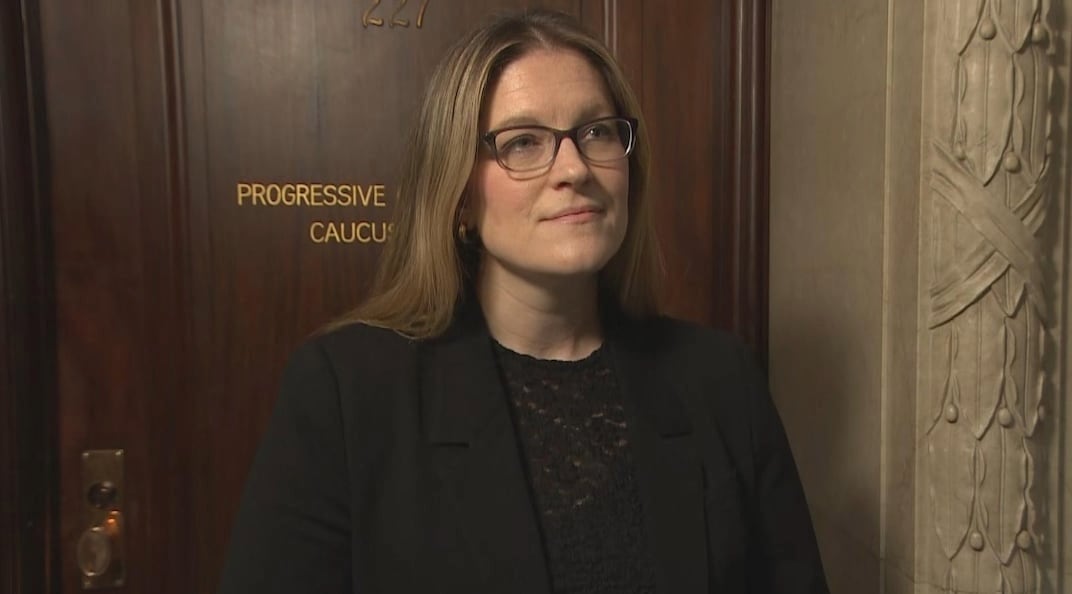 Kathleen Cook, Progressive Conservative MLA and party health critic says she agrees with reducing nursing agencies but not at the cost of patient care or nurse burnout. (Jeff Stapleton/CBC)
The provincial Progressive Conservatives also say staffing issues are a predictable outcome of the nursing agency changes.
“It didn’t have to be this way,” said Roblin MLA Kathleen Cook, the Opposition party’s health critic. “The NDP were warned by front-line workers, by people like me, that this approach was not going to work everywhere.”
The changes could have been made “in a more gradual manner, started in the regions that don’t rely as heavily on [agency] nurses,” she said.
“Even better, they could have focused on filling those vacancies in Prairie Mountain Health before they forced the agencies out.”
Dauphin staffing issues
Swan River isn’t the only western Manitoba community feeling the strain of a nursing shortage.
A unit that provides high-level care to patients at the hospital in Dauphin is temporarily suspended due to staffing issues, Prairie Mountain Health confirmed in an email.
The four-bed special care unit is staffed by two specialized nurses per 12 hour shift.
Prairie Mountain Health said late Friday afternoon it’s working to find nurses to reopen the special care unit, and patients may be transferred elsewhere as a result.
The emergency department in Dauphin remains open.
In Swan River, Bill Gade said his family experienced the nursing shortage first-hand after spending six and a half weeks at his ailing father’s bedside at the town’s hospital.
 Rural Municipality of Swan River West Reeve Bill Gade says the community’s hospital has to make changes to retain nurses. (Chelsea Kemp/CBC)
Gade, who is the reeve of the Rural Municipality of Swan River West, is also on the community’s recruitment committee. He said the area is losing nurses because of the working conditions.
“Our culture is the crab bucket,” Gade said.
“If anybody’s getting ahead or doing well, we must pull them back to the lowest common denominator. As long as we have that culture, this hospital is not going to get better.”
Nurses’ job satisfaction is a management responsibility, he said.
“I can get them here, [but] I can’t make them want to stay. Why can’t we just make people happy to be at work?”
A spokesperson for Shared Health told CBC in an email it is aware of “staffing pressures,” at the Swan Valley Health Centre, and said they existed long before the transition to fewer “approved nursing agencies.”
Stability is expected to improve as nurses sign up for the remaining approved agencies or the provincial travel nurse program team — a public system float pool that is the government’s answer to private nursing agencies — the spokesperson said.
That team, which had 280 nurses in December 2024, grew to 555 nurses in December 2025, a spokesperson for the health minister said earlier this week.
Jackson said there have been more than 300 applications for the travel nurse team, which proves people are anxious to get on board, but growing that team will take time and patience as the province moves away from relying on agency nurses.
“I can say to the nurses, ‘It’s going to get better,’ but for this very first part of the transition, that’s very little comfort to them, because they are concerned about providing safe patient care the way they’re staffed.”