

Listen to this article
Estimated 4 minutes
The audio version of this article is generated by AI-based technology. Mispronunciations can occur. We are working with our partners to continually review and improve the results.
Quirks and Quarks54:00The reason chimps can reason, and more…
On this week’s episode of Quirks & Quarks with Bob McDonald:
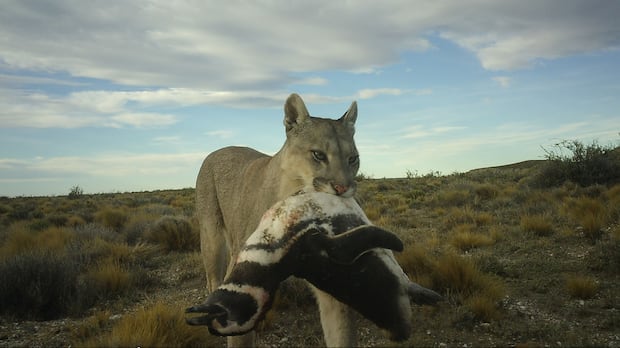
Why penguin-eating pumas live closer together in Patagonia
Quirks and Quarks8:20Why penguin-eating pumas live closer together in Patagonia
Pumas are making a comeback in Patagonia, after almost a century of being chased out by humans. Now that the big cats are coming back to an ecosystem that evolved without them, they’re feasting on penguins instead of their typical prey animals. Using trail cameras and tracking collars, ecologist Mitchell Serota from Duke Farms in New Jersey tracked what this change in diet could mean for the apex predators. He discovered that thanks to this new food source, the typically solitary animals are living closer to other pumas, making this region now home to the most dense puma population in the world. The research was published in the journal Proceedings of the Royal Society B.
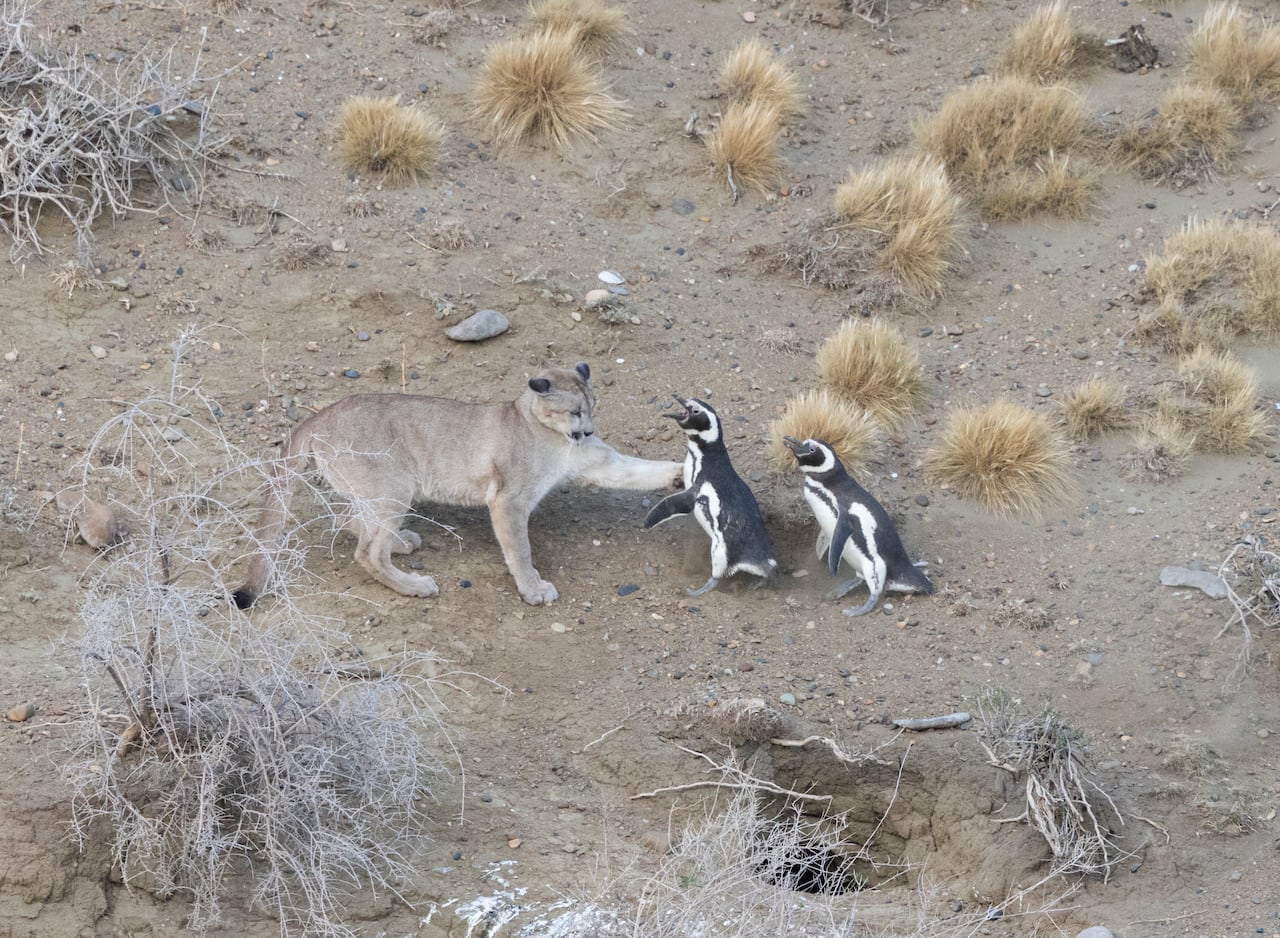 Researchers say that because the penguins didn’t evolve with terrestrial predators around, they don’t know how to react to pumas, so they are easily caught by the big cats. (Gonzalo Ignazi)The brain tweak that could be behind chimpanzees’ ability to reason
Quirks and Quarks17:21The brain tweak that could be behind chimpanzees’ ability to reason
New research in Uganda has found that chimpanzees can rationally weigh evidence, a trait that used to be thought as uniquely human. In the study, the chimps showed they too could change their minds when presented with stronger evidence. We may share a common ancestor with chimpanzees, but somewhere along the evolutionary line to us, our brains took a major detour. In another study, scientists have identified a genetic dimmer switch that they think played a role in how we became so smart by impacting the type of cells our brains make.
We spoke with:
Jan Engelmann, an associate professor of psychology at the University of California, Berkeley about his research into chimpanzees’ ability to reason. His team’s research was published in the journal Science.
Miles Wilkinson, a distinguished professor in the department of Obstetrics and Reproductive Sciences at the University of California, San Diego, about their discovery of a genetic dimmer switch that impacts the type of cells our brains make. His team’s research was published in the journal Science.
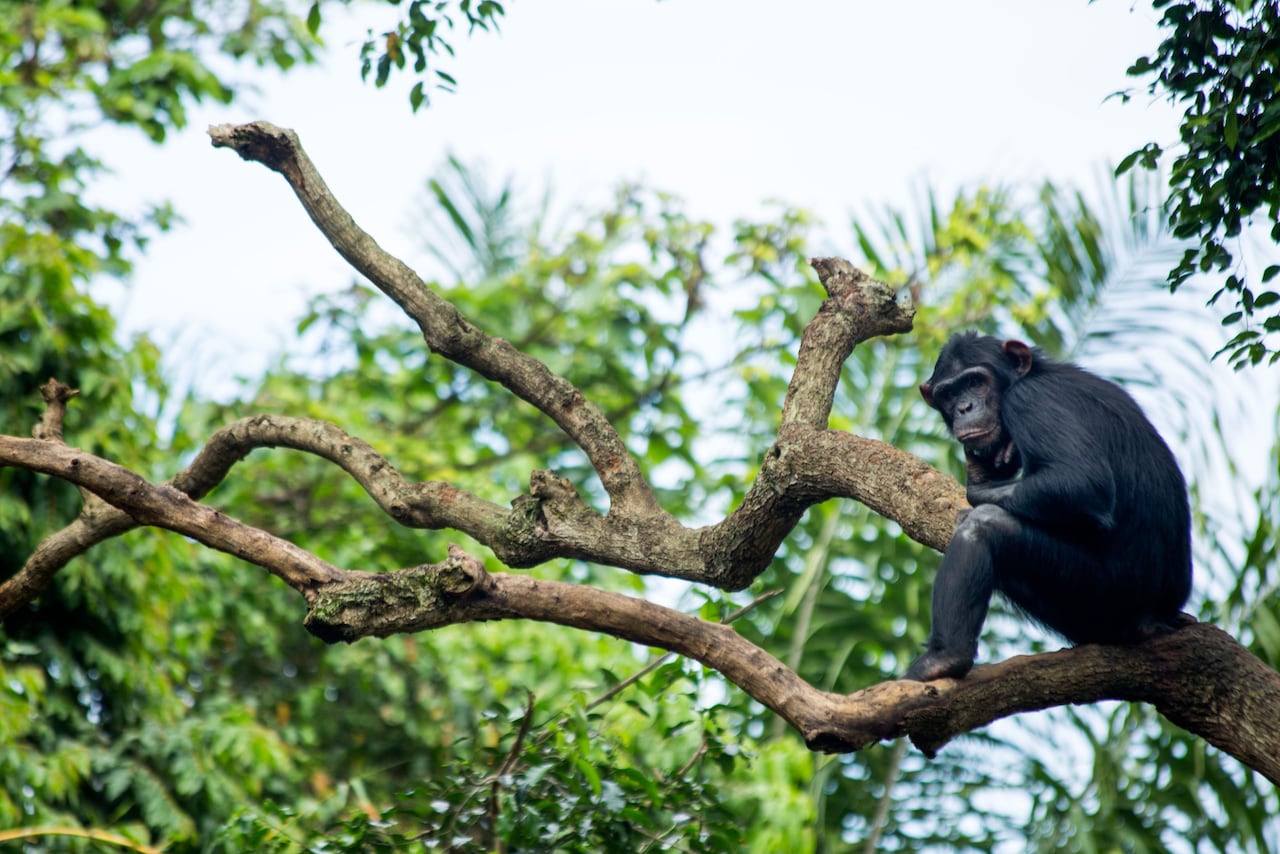 A chimpanzee sits on a tree at a chimp rescue center in Entebbe, Uganda. (Sumy Sadurni/AFP/Getty Images)Ants sacrifice the strength of individual workers for quantity
Quirks and Quarks9:02Ants sacrifice the strength of individual workers for quantity
Ants are social insects, living in colonies with complex social structures – but what’s good for an individual ant isn’t necessarily what’s best for the colony. From the point of view of evolution, there’s a trade-off between what benefits the individual versus what’s good for the collective. A new study looked at the ruggedness of individual ants, and how that correlates with the size of their colony — and uncovered an intriguing example of this trade-off. Evan Economo is an entomologist at the University of Maryland, and is one of the authors of this study. His team’s research was published in the journal Science Advances.
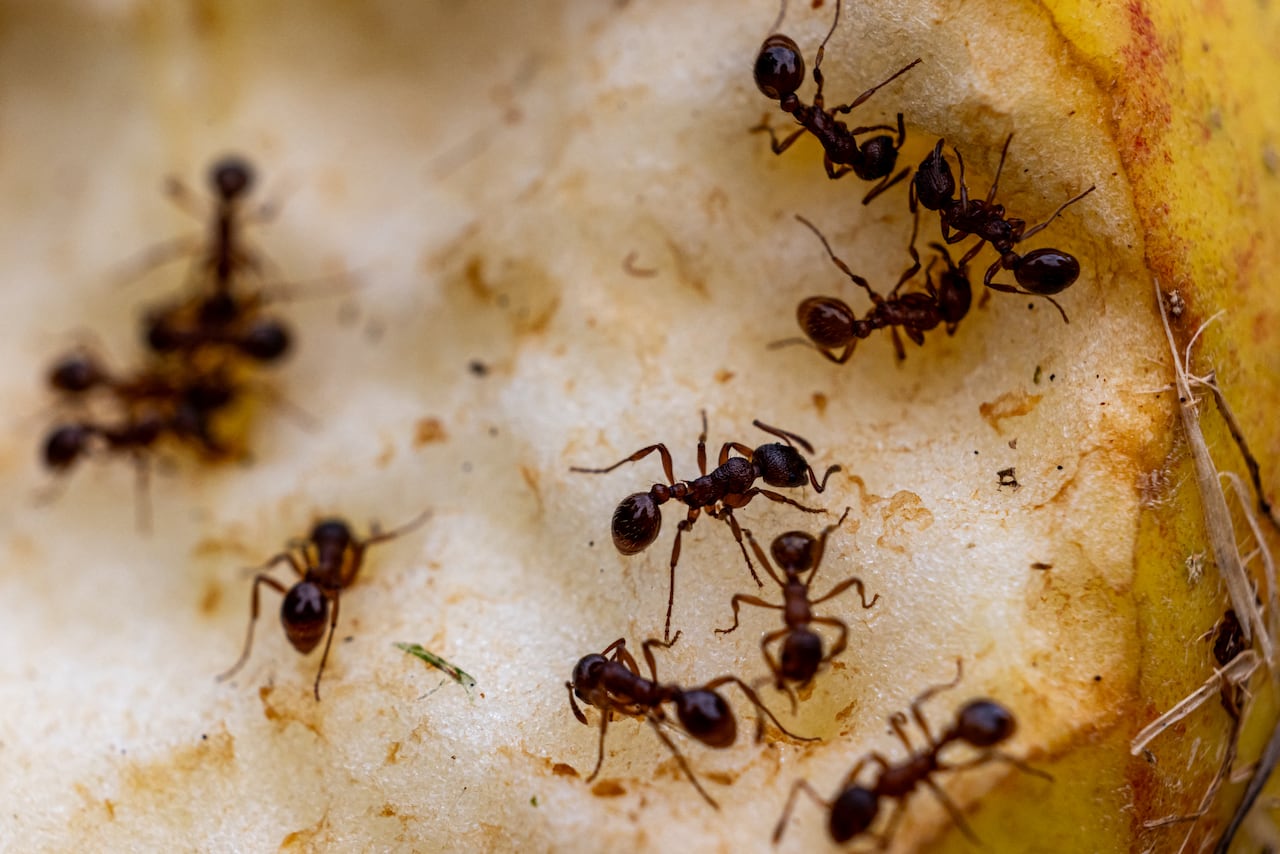 Researchers have found a surprising connection between the ruggedness of individual ants and the size of their colony. (Joel Saget/AFP/Getty Images)Mapping the landmass beneath Antarctica’s massive ice sheet
Quirks and Quarks7:32Mapping the landmass beneath Antarctica’s massive ice sheet
Antarctica is as big as Europe, but most of the continent lies hidden beneath a massive sheet of ice, many kilometres thick. Now, for the first time, scientists have combined satellite imagery and mathematical modelling to map the continent beneath that ice in unprecedented detail. Helen Ockenden is one of the researchers behind the new map. She’s a climate scientist and postdoctoral researcher at Grenoble Alpes University. Her team’s research was published in the journal Science.
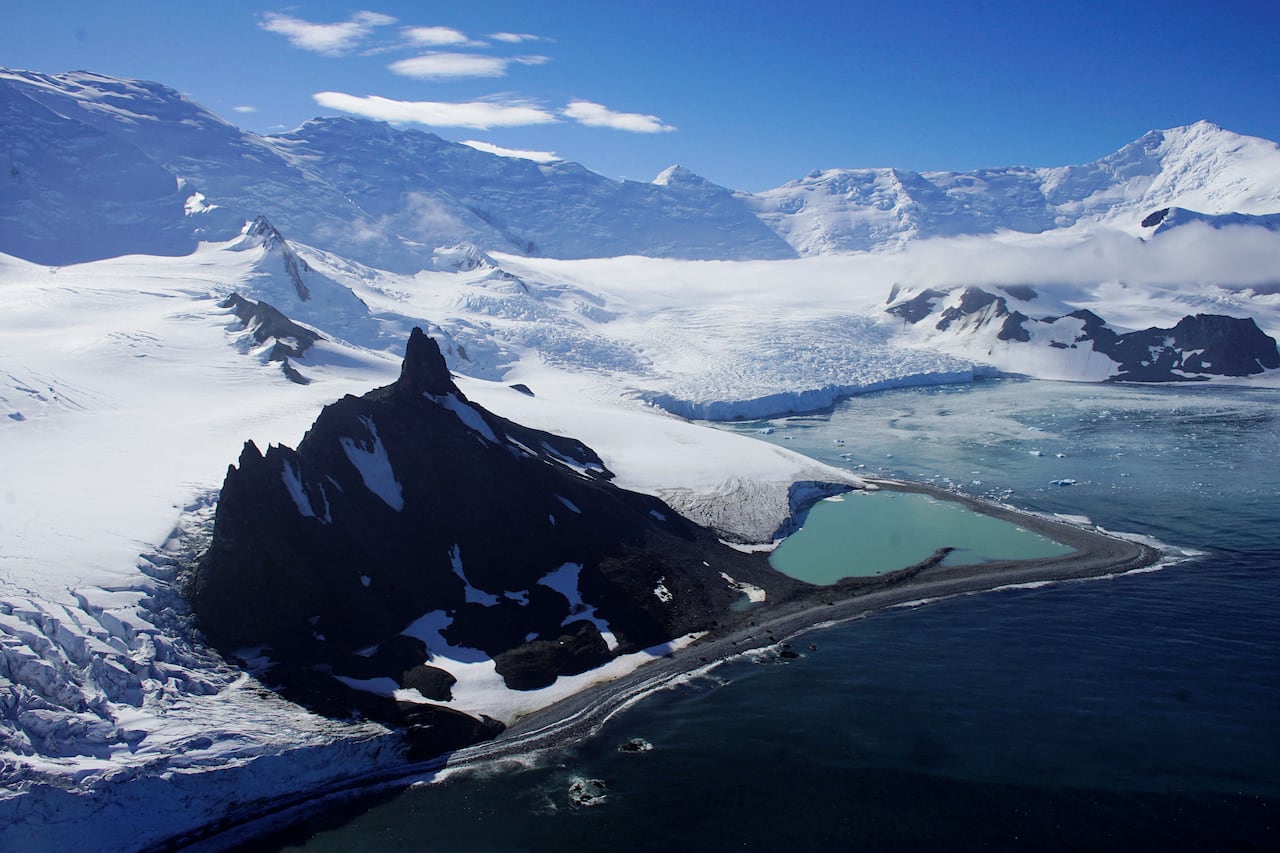 Glaciers are seen in Half Moon Bay, Antarctica, in this file photo. For the first time, researchers have created a detailed map of the land mass beneath the ice sheets that cover most of the continent. (Alexandre Meneghini/Reuters)How deep sea ocean environments affect fish body shape
Quirks and Quarks9:10How deep sea ocean environments affect fish body shape
Fish living in the deep ocean come in all sizes and shapes. Now a new study of nearly 3,000 fish species has found a stark difference in the fish living on the seafloor compared to the deep open ocean above it. It turns out the shapes of fish floating freely in the water are a lot more diverse than the bottom mud dwellers that evolved at a faster rate. Elizabeth Santos led this research that was published in the journal Evolution. She is an assistant professor in the department of Evolution, Ecology and Organismal Biology at Ohio State University.
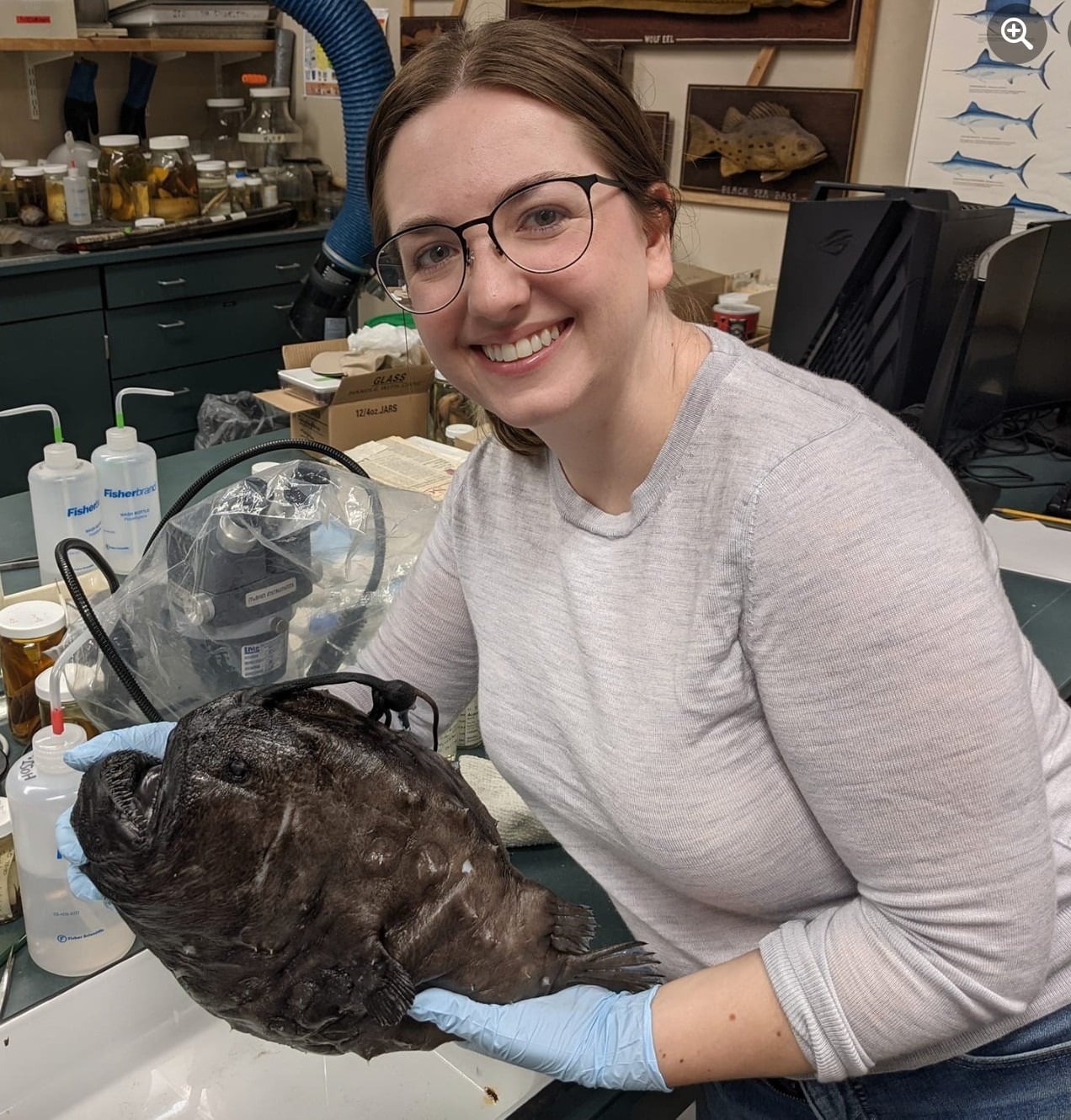 Elizabeth Santos holds a footballfish that washed ashore in San Diego, that is part of her study on the vast diversity of deep sea fish. (Submitted by Elizabeth Santos)