
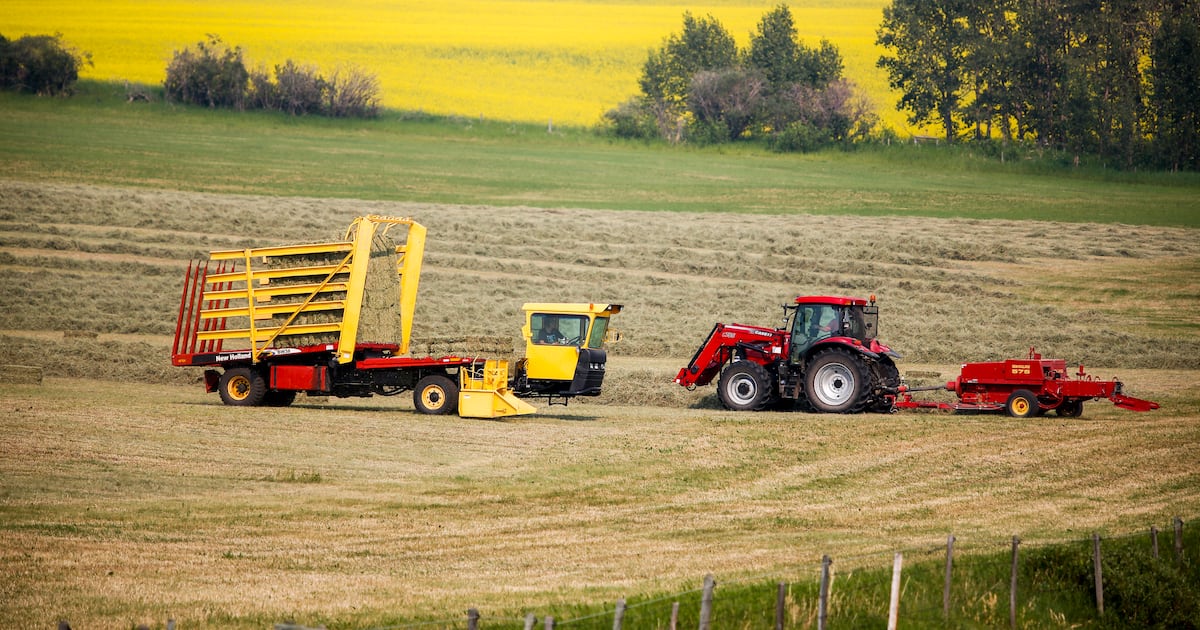
Curtis McRae farms between 1,500 and 1,800 acres of canola each year.
But due to poor weather last summer, he said it was a tough year for farmers like himself.
“It was not a great canola year. We did not get quite enough precipitation to make the canola crop work out well,” he said. “It still met crop insurance numbers, which is still kind of favourable.”
Adding to an already stressful season, McRae was also dealing with punishing tariffs imposed by China on Canadian canola.
“When the tariffs first hit, seeding was already complete, so there was no time to change our plans,” he said. “All we could do was what we do best and make harvest happen.”
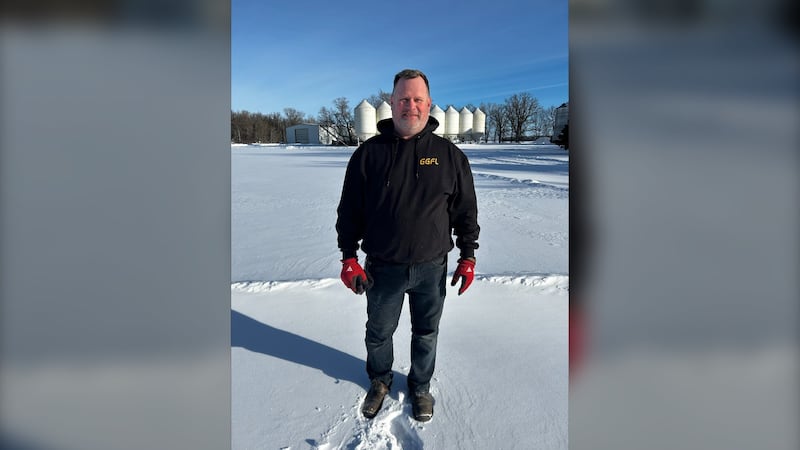 Curtis McRae Curtis McRae farms between 1,500 and 1,800 acres of canola each year.
The dispute began in the summer of 2024, when Canada announced a 100 per cent tariff on Chinese electric vehicles.
China responded in 2025 with tariffs of up to 100 per cent on some Canadian canola products.
But after Prime Minister Mark Carney’s meeting with Chinese President Xi Jinping in Beijing, it seems there is some relief on the way for farmers like McRae.
A new deal announced Friday is expected to see Beijing slash duties on canola seed to 15 per cent from 84 per cent by March 1.
Ottawa says tariffs on Canadian canola meal, lobsters, crabs and peas are also expected to be reduced or removed by the same date, at least until the end of the year.
But, there was no mention of canola oil, which remains subject to a 100 per cent tariff.
The new deal is giving a glimmer of hope to farmers like McRae.
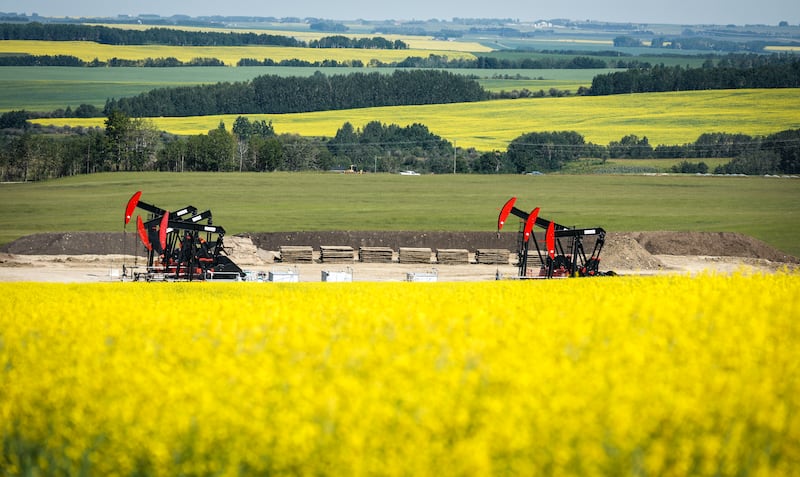 Canola farm Pumpjacks draw out oil and gas from well heads surrounded by Canola fields near Cremona, Alta., Monday, July 15, 2024. (Jeff McIntosh/The Canadian Press)
“Definitely helps to have your biggest customer not being handicapped trying to buy your product, so that’s a big plus,” said McRae.
“It’s definitely not a step backwards. In saying that, canola farmers lost a billion dollars essentially last year due to these trade agreements. How do we regain a billion in one year? It’s going to take a couple of years. We need more price improvement …
“It’s been a battle to sell canola at a decent price. Movement has been pretty slow. Hopefully, with these negotiations, at the very least, movement should speed up.”
For farmer Thorsten Stanze, it’s simple. Free trade is always good, but only if it lasts.
“I just hope that this trade deal will stay, and it won’t be a rollercoaster, like one year you have it and the next year you don’t,” he said. “It makes it very difficult or unpredictable to manage your farm going forward.”
Stanze farms around 2,000 metric tonnes of canola near Morris, in southern Manitoba.
He hopes the deal will remain in place.
“China is a little different to deal with than maybe some other markets, but I mean there is so much uncertainty in the world overall, so I think that it’s a good thing Canada is trying to diversify their markets,” he said.
“My concern is that next year, or in the next two years, we will be in the same position that we were just in, that bigger political powers will use their power to dictate what they want to do.”
 canola farm Storm clouds build over a canola field near Cremona, Alta., Friday, July 29, 2022. (Jeff McIntosh/The Canadian Press)
Stanze wants to see a more stable market with less political involvement.
“I don’t want to see one, two, three or four people deciding what the market is supposed to be,” he said. “I think that would be best and is a dream too.”
‘We have this glimmer of hope’
Warren Ellis, a farmer who works with Manitoba Canola Growers, estimates about 65 per cent of canola production is still sitting in bins due to the tariffs that were in place.
Now, he says, this new deal gives growers time to adjust their spring seeding plans before they hit the fields.
“That’s going to help our cash flow, it’s going to make such a huge difference in terms of what we plant,” he said. “Because before this, we were looking at possibly hanging onto a lot of canola throughout the course of the summer, so the last thing we wanted to do was grow more canola…
“We have this glimmer of hope, a little crack in the tariffs, so hopefully we will continue to do more work to try and open that up even more, and maybe this could turn into something quite good.”