
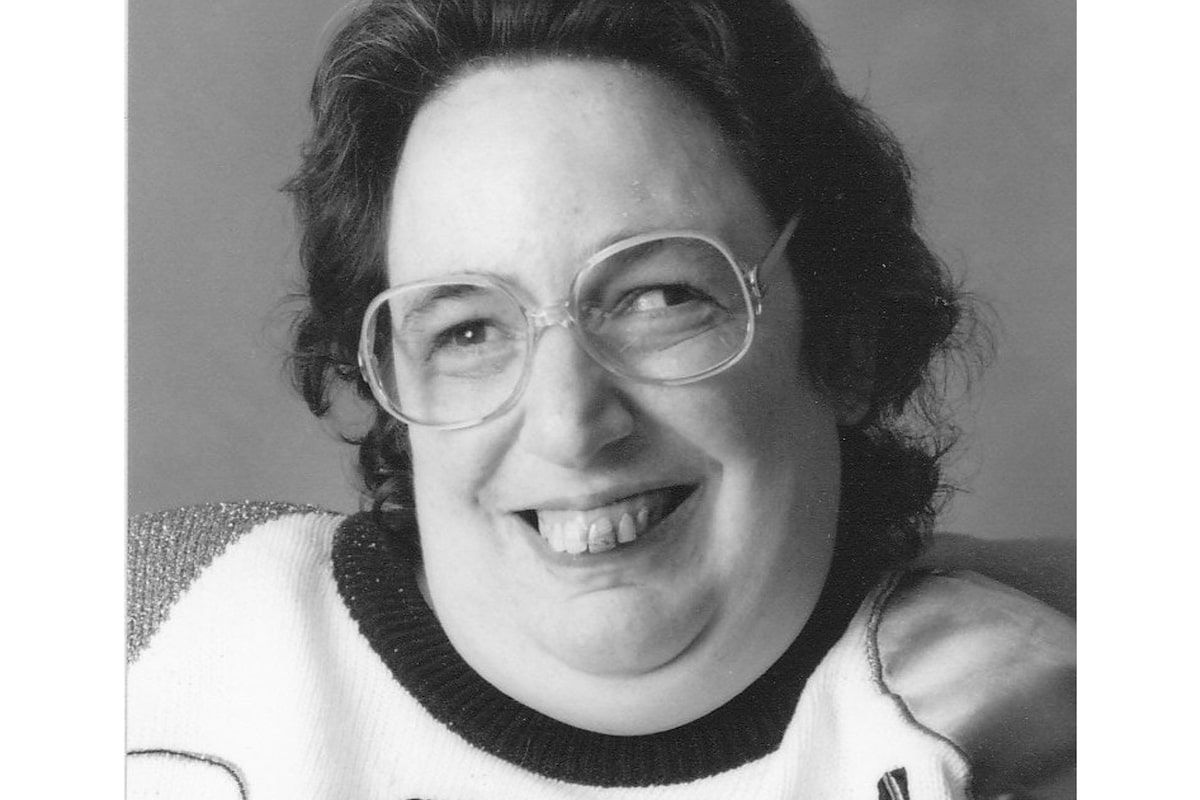
Harvey Max Chochinov is a distinguished professor of psychiatry specializing in palliative care at the University of Manitoba, and a senior scientist at the CancerCare Manitoba Research Institute. He is an inductee of the Canadian Medical Hall of Fame. The following excerpt has been adapted from his book, In Search of Dignity: A Lifetime of Reflections.
Harvey Max Chochinov’s sister EllenCourtesy of family
Several years before her death at the age of 55, owing to complications from cerebral palsy, my sister Ellen was again in hospital, this time in intensive care and on the brink of respiratory collapse. To say cerebral palsy had shaped her life is an understatement. It moulded nearly every facet of her being, from the contours of her body to the way she saw and experienced the world.
While one might assume that her life was defined by suffering, the only ones who suffered were those on the dance floor whose toes were crushed under the mighty weight of her electric wheelchair.
With the passage of time, her body became increasingly contorted, affecting her ability to take a deep breath or fight off upper respiratory tract infections. So long as I can remember, blowing out birthday candles was impossible without the assistance of her nieces, nephews, friends or extended family. Time at the family cottage in Winnipeg Beach, ice cream on a summer’s day, chocolate milk, or meals prepared by my parents were among her greatest pleasures.
How We Mourn: On the art of eulogizing someone you adore
But health challenges often interfered with her various plans and wishful thinking that one day she might actually get to see the world.
While being in hospital with Ellen was not an unfamiliar experience, this time felt different, with life and death hanging perilously in the balance. The attending physician, whom I knew from occasional work-related encounters, was diligently reviewing her medical record, scanning her monitors, and calculating if her deteriorating condition would soon require the insertion of a breathing tube.
At one point, her physician turned to me and asked if Ellen read magazines. While this was a seemingly innocent question, it was the only question I was asked about her personal life.
The subtext was chilling, as this was not an attempt to get to know Ellen as a person or how she spent her days, but rather a cryptic way of gauging her cognitive abilities, and deciding if hers was a life worth saving.
Something else was happening that day at my sister’s bedside that threatened to undermine the care she desperately wanted and needed
While it was never said, I recognized the rationale and detached mental calculus: Her body looks like a train wreck. … Who would want to live this way? … Perhaps we should just let nature take its course.
In other words, while he could see her contorted body and falling blood gases, what he couldn’t see was Ellen.
To be clear, this physician was not a bad person and was regarded as a highly skilled clinician. But the lens through which my sister was being viewed was one that had been shaped in ways her physician was entirely unaware of.
From the time we are young, there are images and values that are elevated above all others, including youth, beauty, wealth and power. We learn to worship at the altar of this ephemeral perfection, with all else deemed of lesser value, lesser utility and lesser consequence.
The results are insidious, from the way we perceive bodies – both our own and those of others – to the social policies we do and do not support.
It is no coincidence that older individuals, for instance, were disproportionately affected by the COVID-19 pandemic, given our chronic failure to invest in the supports needed to safeguard their well-being and vitality. You bankroll what you value, and some lives are valued more than others.
But something else was happening that day at my sister’s bedside that threatened to undermine the care she desperately wanted and needed.
Treatment decisions are often based on considerations of reciprocity and the Golden Rule. If I were that patient, what would I want for myself? Doing unto others as we would want done unto ourselves. This means that health care professionals often use their own values, wants and needs to gauge those they assume are held by their patients.
But what happens when these don’t align?
It is hard to imagine a wider chasm between my sister’s lived experience and outlook, and that of her intensive-care provider. When this degree of misalignment occurs, it is easy to anticipate health care recommendations based on the conviction that you yourself wouldn’t want to live as your patient does. I wouldn’t want to be that disabled, dependent, disfigured or disenfranchised. Why offer opportunities to sustain an existence that I would personally feel is unimaginable and intolerable?
André Picard: Lessons on dying well from the father of palliative care
I’ve spent my entire career as a psychiatrist working in palliative care. This has included leading a large program of research, and examining most aspects of end-of-life experience for patients nearing death. Recently, I have recast the Golden Rule for health care professionals, reminding them that they must aspire to a higher standard. I have coined this the Platinum Rule: Do unto others as they would want done unto themselves.
This means that health care professionals can’t presume to know what is in the patient’s best interest based on what they themselves would want in those circumstances; in other words, they need to take the time to consider the patient’s goals, hopes and wishes.
While not every patient request can be accommodated, the Platinum Rule provides insights that strip away biases and assumptions, helping those of us who look after patients to see them as people, and thus raising the bar on person-centered care.
Failure to do so erodes human dignity and undermines personhood – experiences that are at the core of human suffering.
So, when Ellen’s physician asked me if she read magazines, I scrambled to come up with a response that might help him see beyond the shape of her body and rapidly failing lungs. There wasn’t enough time to talk about jiving on the dance floor or the magical allure of Winnipeg Beach or the many birthday celebrations.
I wanted Ellen to be seen as not just the patient, but the well-loved sister, daughter, aunt, niece, cousin, disability-rights activist and friend that she was. I wanted everyone to understand that she had a rich emotional life, and an imagination that could take her to places that, as fate would have it, she would never get to see.
And so, after a few seconds, I responded, “Yes, she reads magazines. But only when she’s in between novels.”