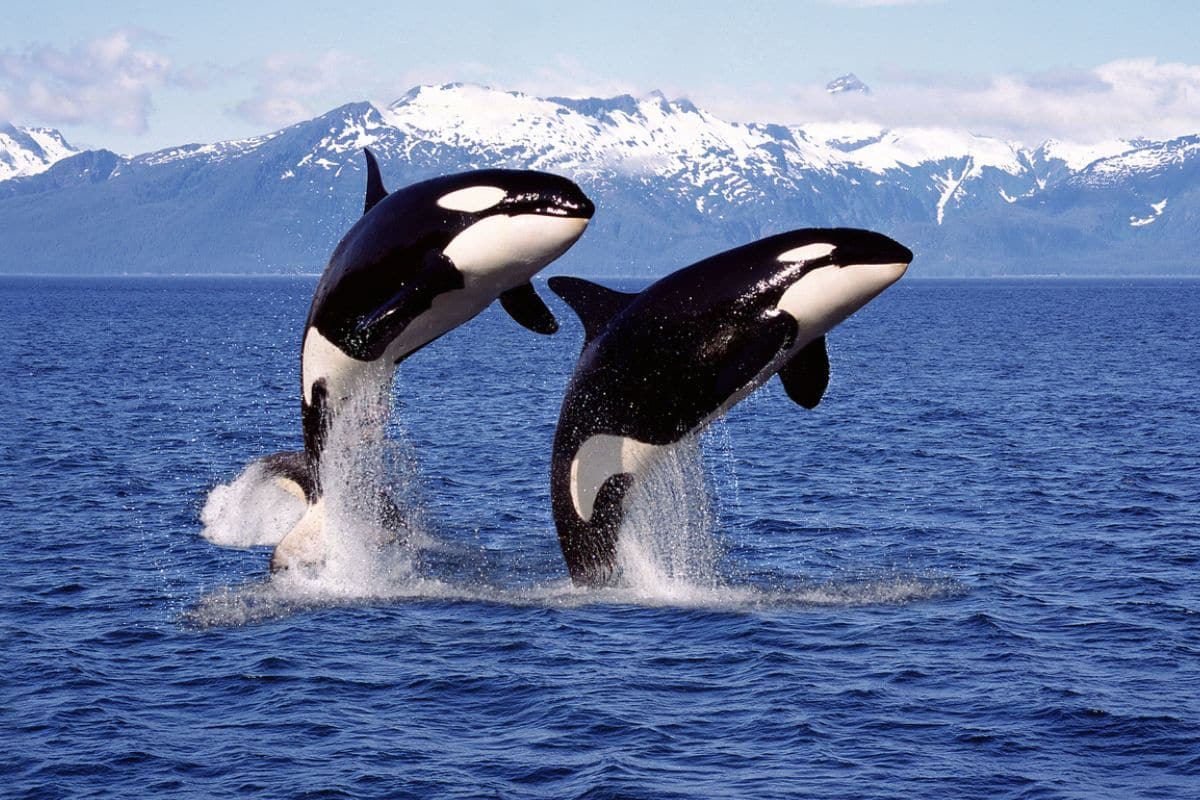
It’s now official: dolphins and orcas have crossed the evolutionary point of no return. Once land dwellers, these marine mammals are forever bound to the sea — and a new study reveals the hidden price of their success.
Roughly 250 million years ago, ancient mammals began venturing into the ocean. Their descendants — today’s dolphins and orcas — became masters of the water, perfectly evolved for life beneath the waves. But scientists say that evolution has taken them so far that there’s no going back. According to new research, these animals have reached an irreversible stage in their evolution.
Published in Proceedings of the Royal Society B, the study argues that dolphins and orcas are now so deeply adapted to the marine world that a return to land is biologically impossible. Once evolution crosses a certain threshold, the road to terrestrial life is closed forever — leaving them anchored to the ocean they call home.
Evolution’s one-way ticket to the sea
Led by Swiss researcher Bruna Farina from the University of Fribourg, the study examined the evolutionary history of more than 5,600 mammal species. Her team placed each species along a spectrum, from fully land-based to entirely aquatic. Once a species becomes completely marine, the researchers found, the transformation can’t be reversed.
This finding aligns with Dollo’s Law — the idea that once evolution loses a complex trait, it almost never returns. In dolphins and orcas, that point has already passed. Their anatomy, diet, and physiology are so specialized for ocean life that returning to land isn’t just unlikely — it’s impossible.
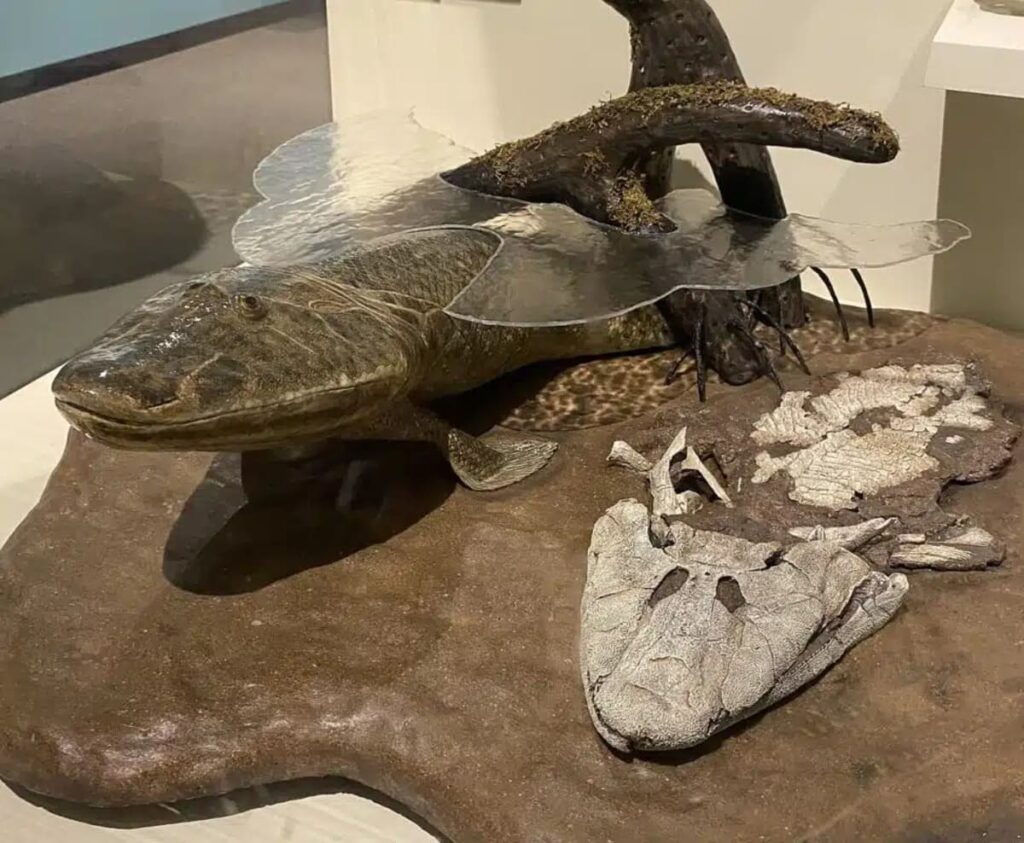
The Tiktaalik roseae model, an ancestor of tetrapods thought to have begun the transition from sea to land 375 million years ago. Credit: Wikipedia / Harvard Museum of Natural History
How anatomy locks in destiny
Through millions of years, dolphins and orcas have evolved bodies designed for the sea. They’ve grown larger to retain heat in cold water, switched to a meat-heavy diet to meet massive energy needs, and developed flippers and powerful tails for propulsion. Even their reproductive systems are built for underwater births.
These weren’t small changes. Their entire physical structure has been remodeled for swimming, diving, and navigating open waters. Every major body system — from the respiratory to the skeletal — is now fine-tuned for ocean life. As Farina’s research shows, such deep adaptations can’t simply be reversed.
The heavy price of perfection
Their evolutionary triumph has made dolphins and orcas apex predators — but it’s also made them vulnerable. Extreme specialization means less flexibility when the world around them changes. With climate change and ocean pollution accelerating, that lack of adaptability could become a fatal flaw.
Farina and her team describe these species as “trapped in their watery paths.” Their dominance comes at a cost: if ocean conditions move beyond their biological limits, they have no way to evolve out of danger. Their survival depends entirely on the fragile balance of their marine ecosystem.
A fragile future beneath a changing sea
The ocean environment is shifting faster than ever — warming waters, acidification, and vanishing prey all pose growing threats. The study calls for urgent attention to the plight of fully aquatic mammals, whose evolutionary path can’t be undone.
For dolphins and orcas, the ocean isn’t just home anymore. It’s their fate — a beautiful but final chapter in the story of life on Earth.