
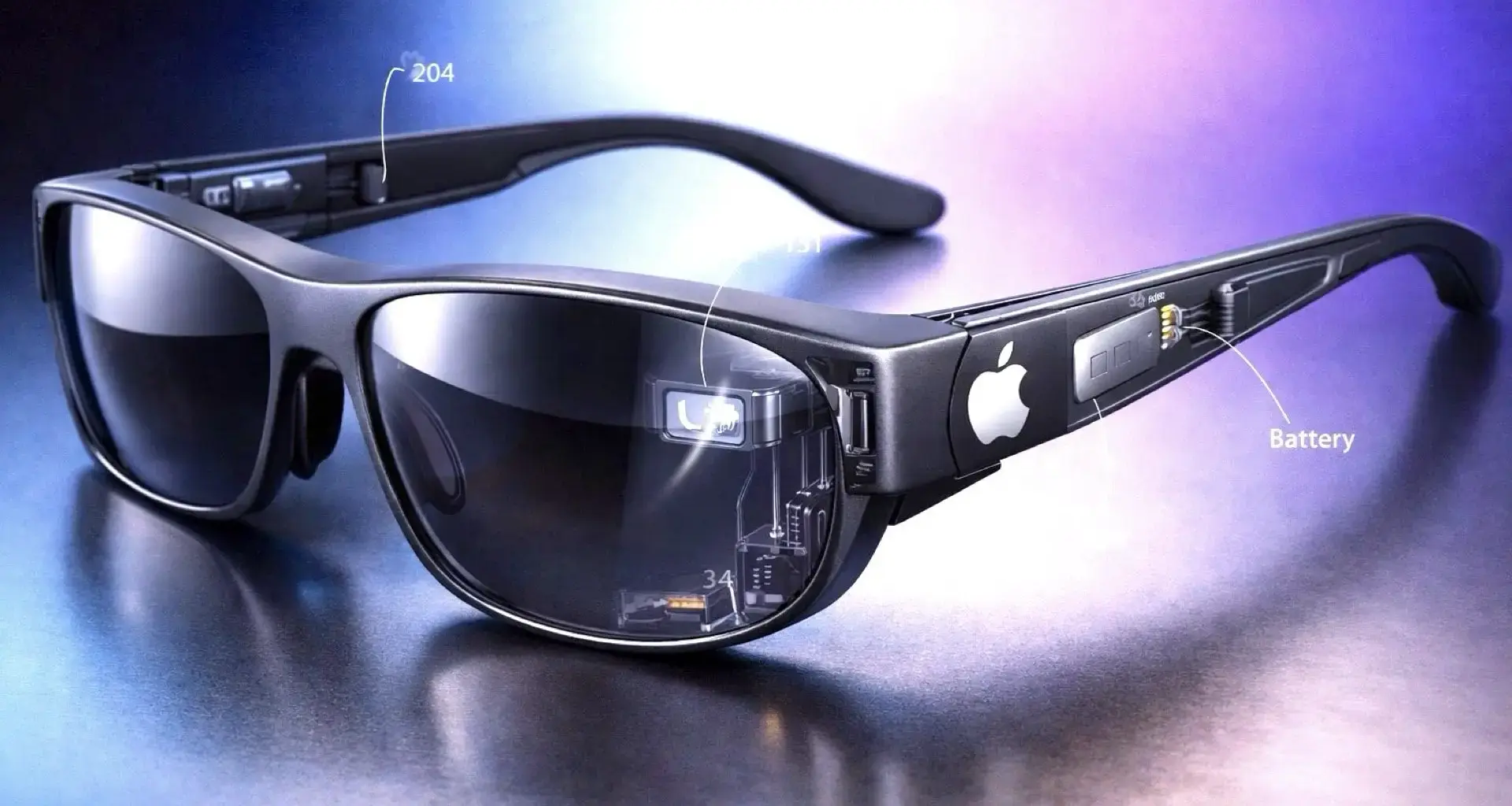
Apple’s Vision Pro proved that immersive spatial computing can look stunning. It also made something very clear. Bulky headsets are difficult to live with. A newly granted Apple patent now offers a quieter but more telling signal of where the company may be heading next. Instead of chasing raw power or higher resolution, Apple appears to be redesigning how VR and AR devices physically sit on the human head.
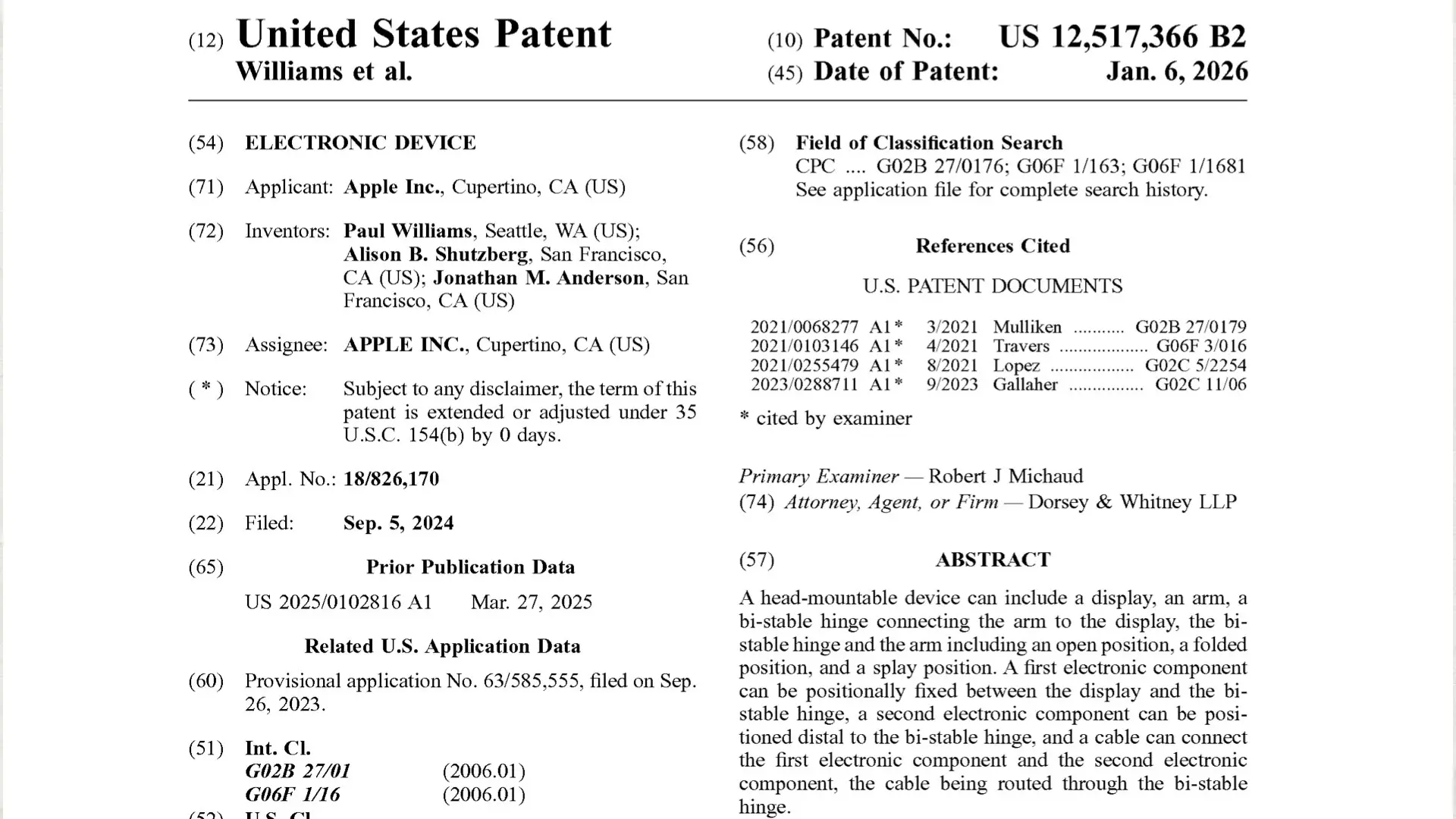 Apple’s patent titled: Electronic Device
At its core, the patent focuses on a head-mounted device with arms that behave more like real glasses. Instead of stiff, fixed arms, Apple describes a hinge that supports 3 natural movements. A normal open position for wearing. A folded position for storage. And a small outward flex that adapts to different head shapes. That outward flex, called a splay movement in the patent, is subtle but important. Apple explicitly explains that heads vary in size, ear position, and shape. Rigid arms either press too hard or fail to hold securely. The splay movement allows the arms to adjust slightly without feeling loose or fragile. This is not a cosmetic feature. It is a comfort and durability solution.
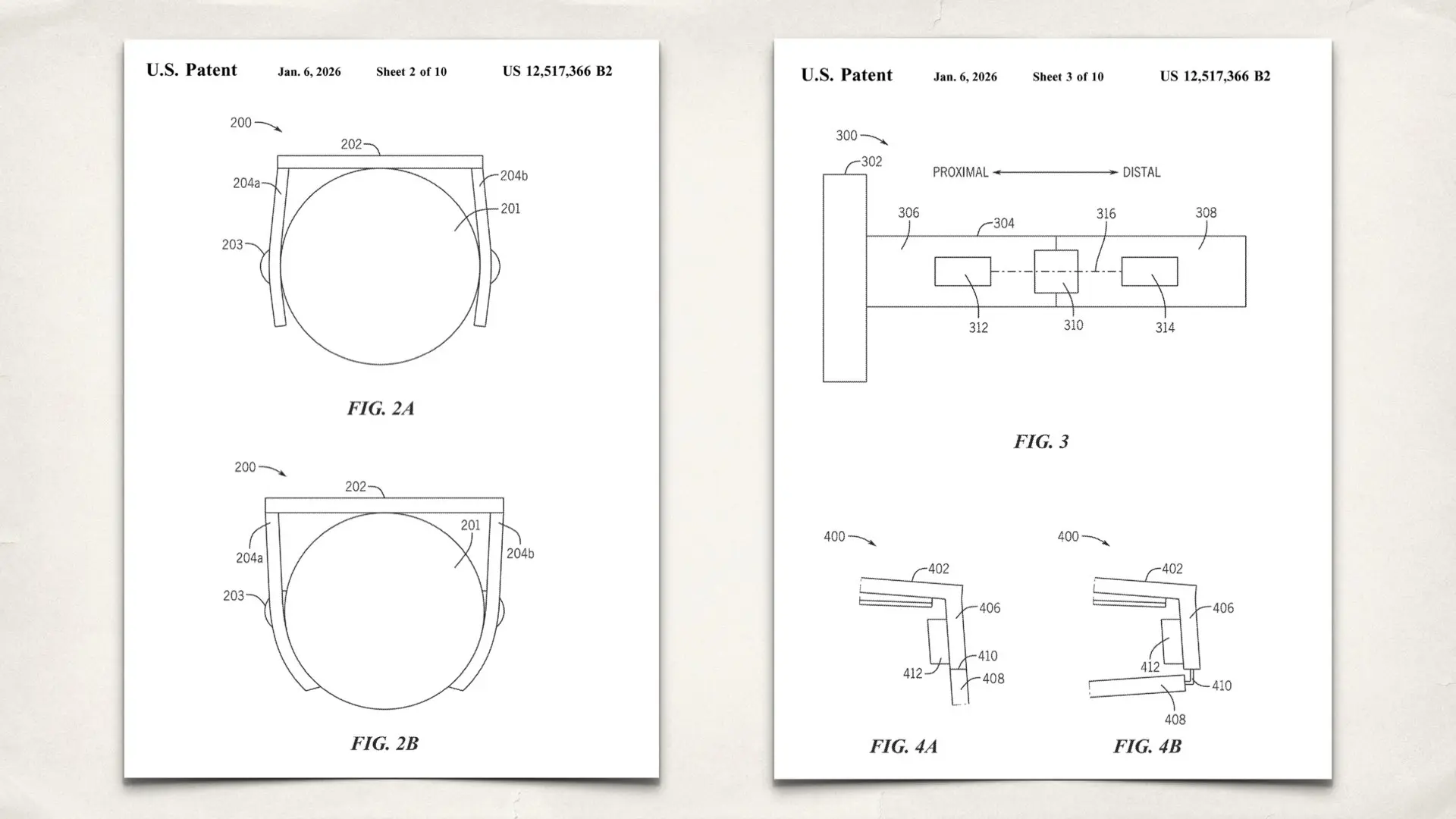 Apple’s patent titled: Electronic Device
Apple describes a bi-stable hinge, meaning the arms snap cleanly into 2 solid positions. Open when worn. Folded when stored. In between, springs and linkages control the motion so the arms do not drift, wobble, or feel cheap. This matters because once electronics, batteries, and cables are added, hinges often become the weakest point. Apple is clearly trying to make the motion feel deliberate and familiar, closer to premium eyewear than to a technical device. The patent also explains that the hinge can absorb accidental forces. If the arm catches on clothing or gets bumped, the controlled flex helps prevent cracking or snapping.
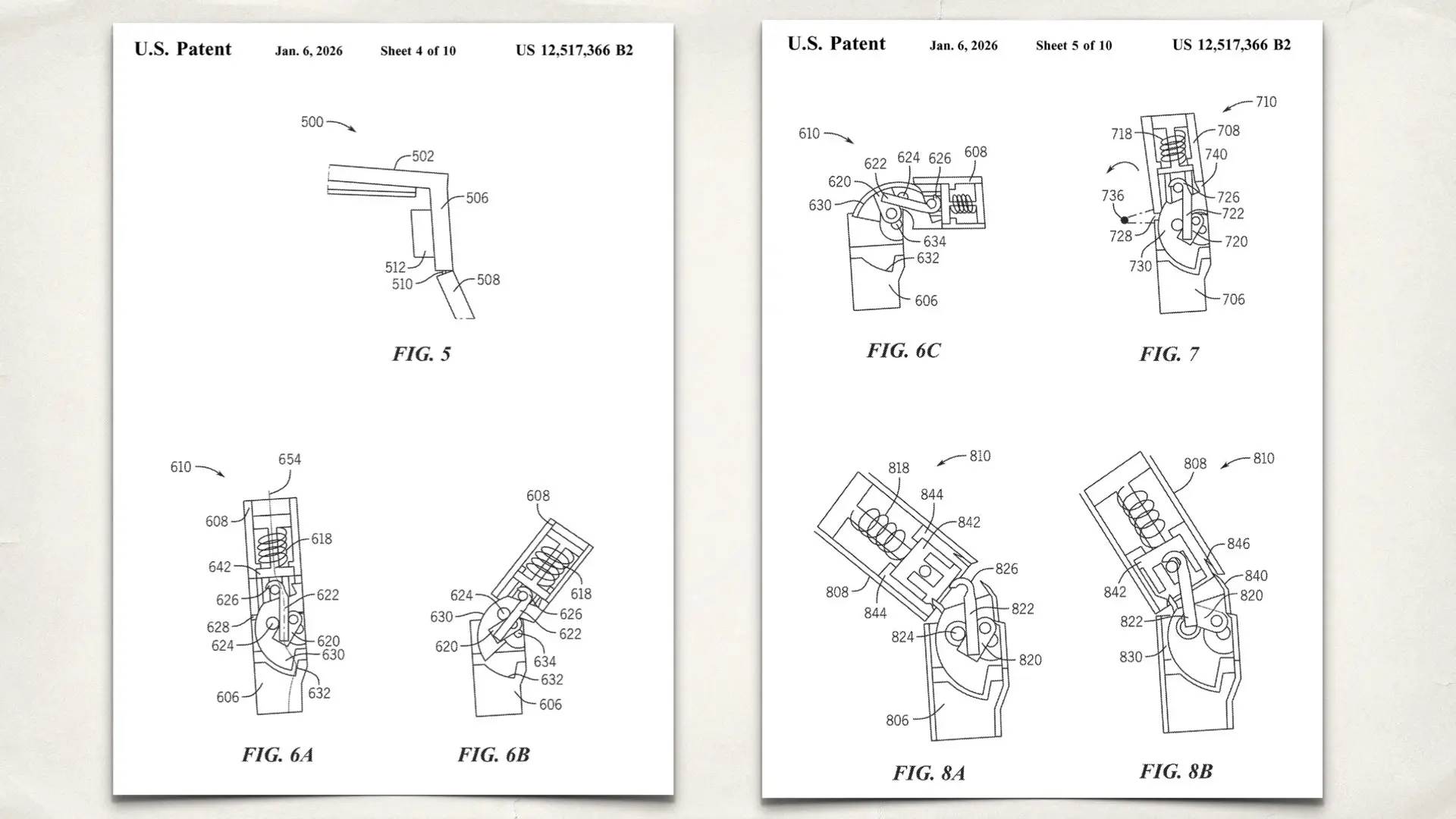 Apple’s patent titled: Electronic Device
One of the most revealing parts of the patent is how much attention Apple gives to hiding the mechanism. The hinge is designed so outer gaps stay visually consistent as the arm moves. Internal parts are covered. Cables are routed through the hinge itself. From the outside, the device is meant to look clean and calm, even though complex mechanics are working underneath. nThis approach directly reflects Apple’s design philosophy. Advanced engineering should disappear visually. The patent also outlines how Apple plans to distribute weight. One electronic component sits closer to the display. Another sits farther down the arm. A cable runs through the hinge to connect them. Apple even states that the front component could be a projector, while the arm could house a battery or circuit board. This kind of layout is typical of lighter, glasses-style VR or AR devices, not front-heavy headsets.
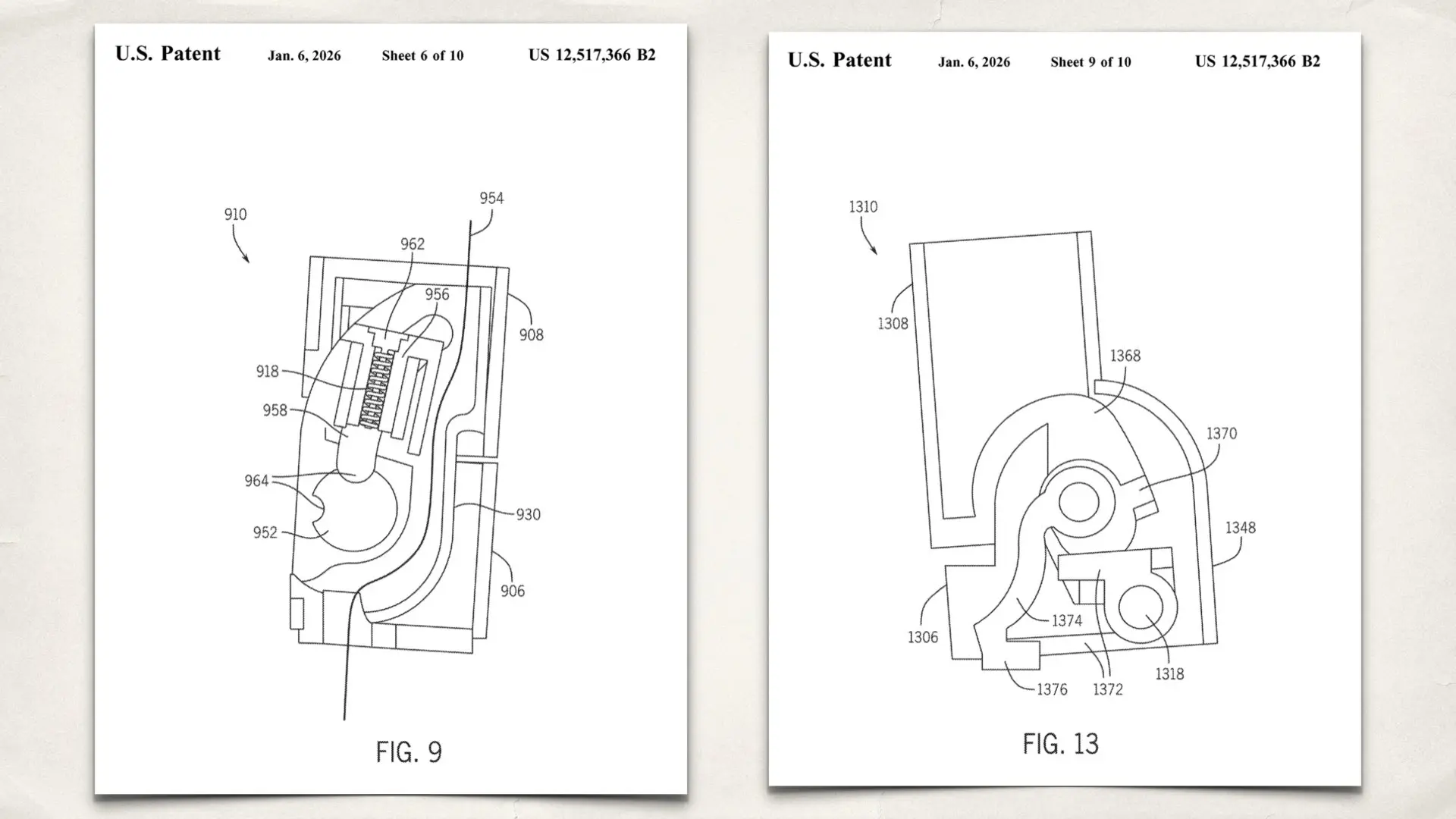 Apple’s patent titled: Electronic Device
YMCinema has already explored why Vision Pro struggled to reach a wider audience, despite its technical achievements. Weight, comfort, and real-world usability played a central role, as discussed in Why Apple’s Vision Pro Failed, the Struggle of Immersive 3D Cinema to Capture the Public. Later iterations added more power, but not less weight. Vision Pro M5, Heavier, Smarter showed that performance improvements alone did not solve the core wearability issue. This new patent feels like a response to that reality. Instead of refining a bulky headset, Apple appears to be rethinking the fundamentals of how head-mounted devices should feel. Furthermore, rumors around lighter Apple headsets and glasses, often referred to as Vision Air, suggest a shift toward more natural form factors. That idea was explored in Vision Air, Apple AR Glasses. The hinge system described in this patent fits that direction cleanly. Foldable arms. Controlled flex. Hidden mechanics. Balanced weight distribution. These are the building blocks of eyewear, not helmets.
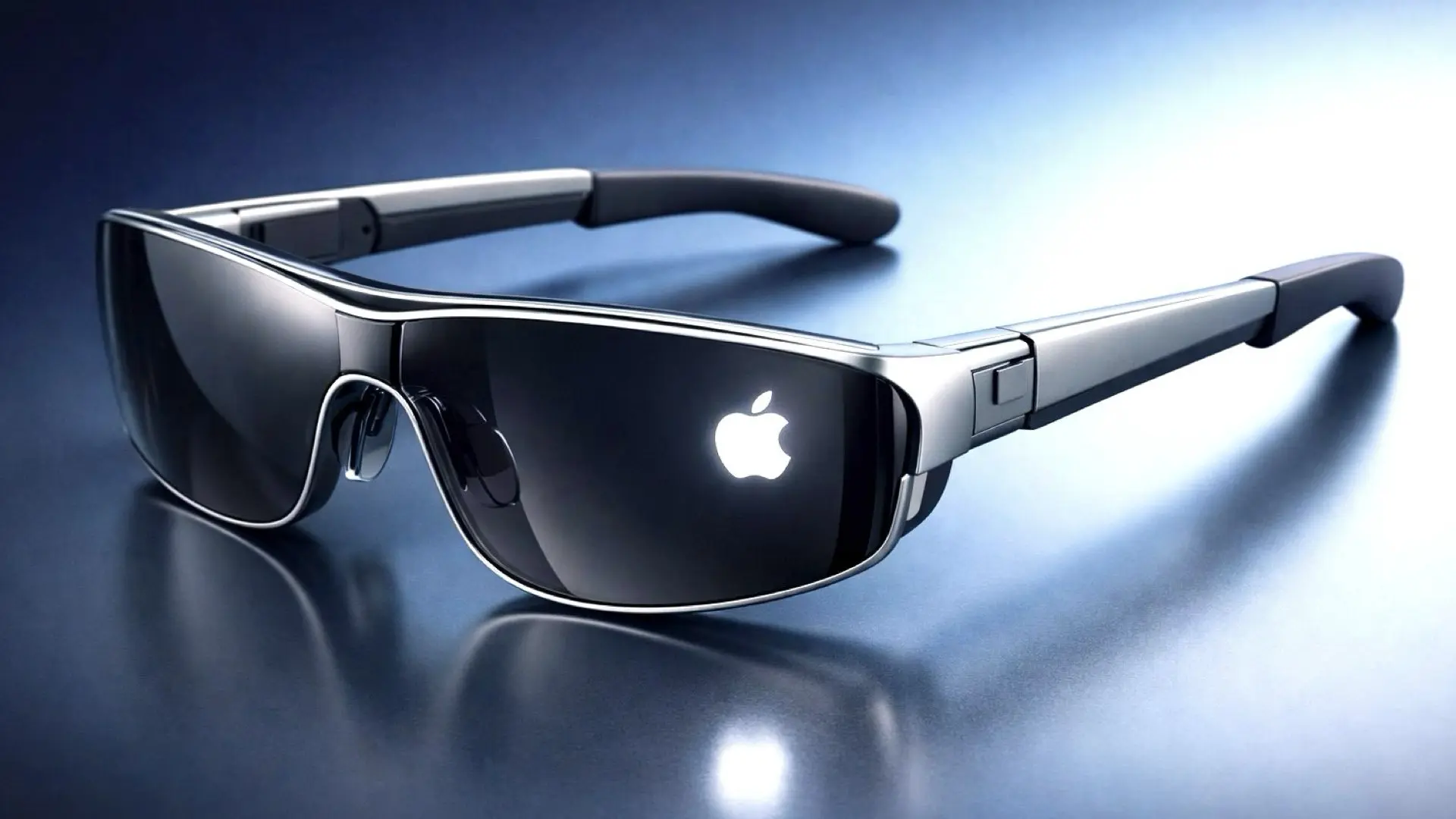 Apple’s patent titled: Electronic Device. A rendered mockup
No. A patent is not a product announcement. But it is a strong signal. This patent solves practical problems that bulky headsets struggle with. Comfort. Durability. Clean design. Weight balance. Those are exactly the problems Apple must solve if VR and AR are ever going to feel as natural as wearing glasses. Taken together with Apple’s Vision Pro journey, Vision Air discussions, and broader industry trends, this patent looks less like an experiment and more like a foundation. Apple may not be ready to show lighter VR glasses yet. But this patent suggests the company is already redesigning the basics to get there.