
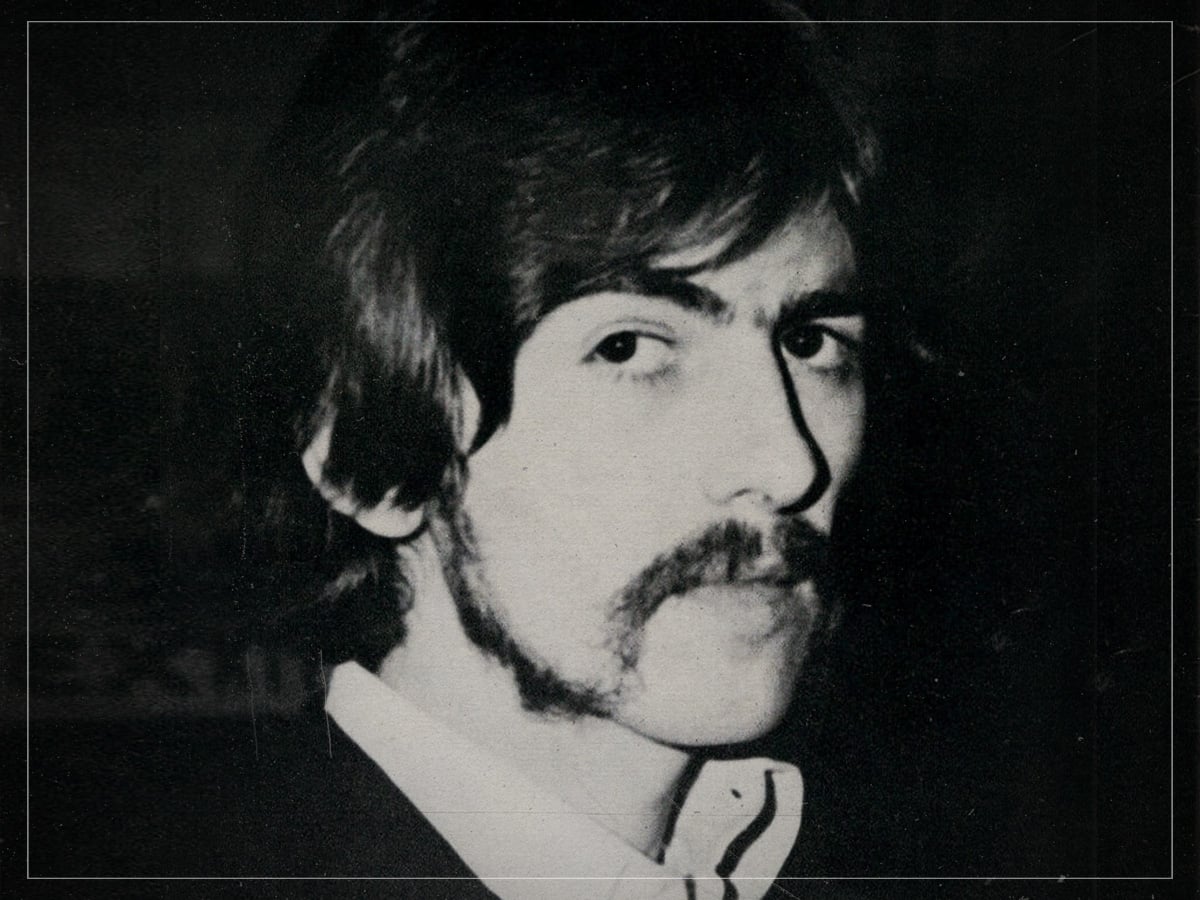
(Credits: Far Out / Bradford Timeline)
Mon 19 January 2026 18:00, UK
Getting a band with the same size and scope as The Beatles was a strange miracle.
No one manages to ever land on that kind of chemistry so easily, and yet when looking at everyone in the band, there’s no way to take one person and have everything be remotely the same whenever they walked into the studio. So when they officially went their separate ways and started their own projects, George Harrison was counting his blessings every day for being able to work with true legends of their field.
Granted, there were bound to be people calling up any of the Fab Four at all times of day to collaborate with them whenever they announced their split. These were four of the greatest musicians that the pop world had ever seen, but even when they needed a break from each other, they weren’t going to settle for putting another band together. They all wanted to flex their muscles, and Harrison made sure that everything that he made was perfect when creating All Things Must Pass.
He had help from a lot of his musical friends, like Eric Clapton and Billy Preston, when making the record, but there wasn’t any song that Harrison couldn’t have made perfect with an acoustic guitar and his voice. His craft had grown exponentially since Abbey Road, but his debut record was only the beginning of working with the best musicians in their field. After all, The Concert for Bangladesh was right around the corner, and Harrison couldn’t think of a better way to jam with his friends for a good cause.
This was like trying to make a musical version of Live Aid years before Bob Geldof had the idea, but even with the help of everyone from Leon Russell to Ravi Shankar to Ringo Starr to Bob Dylan, the jam sessions that Harrison will forever be known for are The Traveling Wilburys. That kind of star power in one band is the stuff of legend, and while working with the likes of Roy Orbison never stopped being a thrill for him, sometimes the best players are the ones who are a bit more subtle.
Harrison already followed in the footsteps of the lower lights from the rock and roll world like Carl Perkins, but when he heard what people like Willie Weeks could do on the low end, he knew he had found the perfect people to fill out his band in the late 1970s, saying, “I only met Andy Newmark and Willie Weeks a few months ago. If I hadn’t met them, I wouldn`t have a rhythm section, but I believe the Lord provides me or you or all of us, if you believe that, he provides you with whatever you need.”
But whereas The Beatles had that common language that they all understood, what Weeks and Newmark brought to the sessions were a lot more finesse. Weeks would be a constant on a lot of Harrison’s records, and while the bass not be the most prominent instrument in the mix on any of his albums, hearing him push the band forward on a track like ‘Love Comes to Everyone’ hits just as hard as the material he was working on when working with true legends like Donny Hathaway.
It’s impossible to think that one man could have so many legends come to him, but that was the talent that Harrison never took for granted. He was always focused on his faith before everything else, and as long as he had faith in his higher power, he knew that good things were bound to come to him.
Related Topics