

Getty
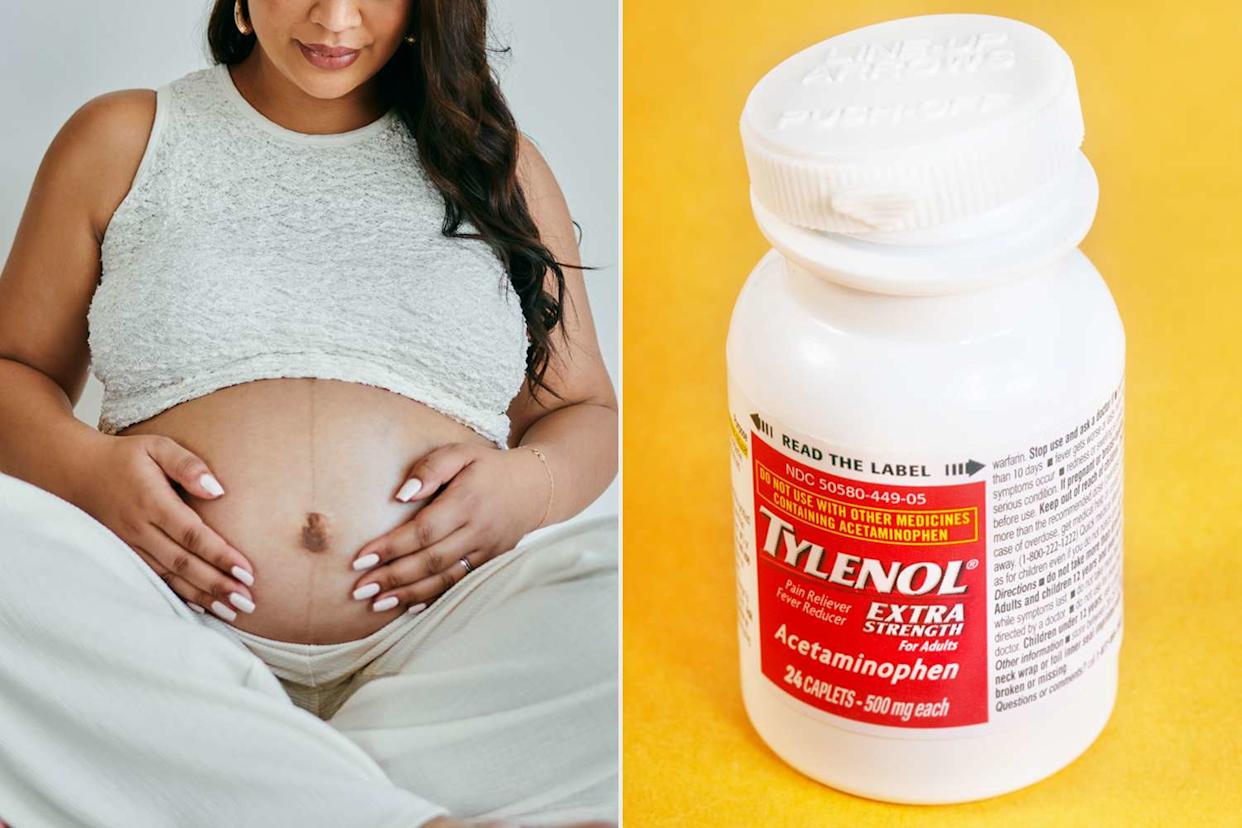
A pregnant woman (stock image); a bottle of Tylenol pillsNEED TO KNOW
Taking acetaminophen while pregnant does not increase the risk of a child being born with autism, ADHD or an intellectual disability, according to a new study published in peer-reviewed journal The Lancet on Jan. 16
Experts reviewed 43 studies and compared the results of moms who had taken Paracetamol (acetaminophen) while pregnant compared to pregnancies where they had not
This comes several months after President Donald Trump said that “taking Tylenol is not good,” and that the FDA will no longer recommend Tylenol during pregnancy
A new study has found no link between pregnant women taking acetaminophen and their child having an intellectual disability.
The findings, which were published in a study in The Lancet Obstetrics, Gynecology & Women’s Health on Jan. 16, contradict remarks from President Donald Trump and U.S. Health and Human Services Secretary Robert F. Kennedy Jr. that suggested otherwise.
The study undertaken by a team of seven researchers from across Europe noted that taking acetaminophen — a common over-the-counter medication used for pain relief like Tylenol and Paracetamol — while pregnant does not increase the risk of a child being born with autism, ADHD or an intellectual disability.
Experts reviewed 43 studies “with the highest quality and most rigorous research methods” and compared the results of mothers who had taken Paracetamol while pregnant compared to pregnancies where they had not. Their data included over 262,000 children assessed for autism, over 335,000 for ADHD and over 406,000 for an intellectual disability.
“The message is clear: paracetamol remains a safe option during pregnancy when taken as guided,” said lead researcher Asma Khalil, who is a Professor of Obstetrics and Maternal Fetal Medicine at St George’s Hospital, University of London.

Scott Olson/Getty
Boxes of Tylenol
“This is important as paracetamol is the first-line medication we recommend for pregnant women in pain or with a fever, and so they should feel reassured that they still have a safe option to relieve them of their symptoms,” she added.
This comes a few months after President Trump shared during a press conference in September that “taking Tylenol is not good,” and that the Food and Drug Administration (FDA) will no longer recommend Tylenol during pregnancy — only in cases where a women can’t “tough it out.”
Following Trump’s comments, the FDA announced that it initiated the process “for a label change for acetaminophen” to “reflect evidence suggesting that the use of acetaminophen by pregnant women may be associated with an increased risk of neurological conditions such as autism and ADHD in children.”
However, several experts across the field pushed back, including Dr. Karam Radwan, Director of the UChicago Medicine Neurodevelopmental Clinic, who told PEOPLE, “People have been taking Tylenol since 1960, and there’s a very long history of safety here.”
Dr. Sindhu Srinivas, professor of obstetrics and gynecology at the Perelman School of Medicine at the University of Pennsylvania, also told Today, “The science is very clear that there’s really no causal link between acetaminophen use during pregnancy and autism in children.”
Tylenol’s parent company Kenvue also defended the use of the medication in pregnancy, telling PEOPLE in a statement in September, “We believe independent, sound science clearly shows that taking acetaminophen does not cause autism.”
Getty
A pregnant woman (stock image)
Never miss a story — sign up for PEOPLE’s free daily newsletter to stay up-to-date on the best of what PEOPLE has to offer, from celebrity news to compelling human interest stories.
“Acetaminophen is the safest pain reliever option for pregnant women as needed throughout their entire pregnancy,” they added. “Without it, women face dangerous choices: suffer through conditions like fever that are potentially harmful to both mom and baby or use riskier alternatives.”
Kenvue concluded the statement noting, “We stand with the many public health and medical professionals who have reviewed this science and agree. We will continue to explore all options to protect the health interests of American women and children.”
Read the original article on People