

Tom’s Hardware Premium Roadmaps
(Image credit: Future)
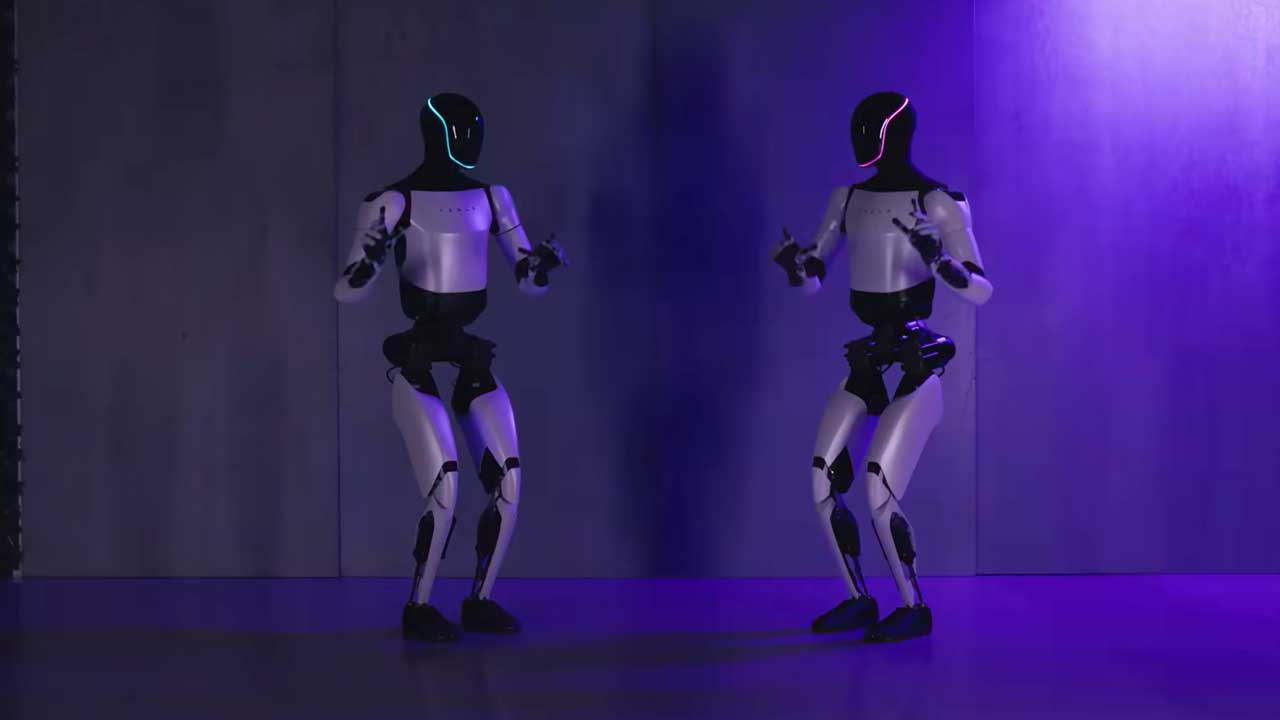
Around 16,000 humanoid robots were installed globally in 2025, according to a report from Counterpoint Research (via SCMP), and of that total figure, almost 13,000 were deployed in China. Around 5,200 of them were shipped by the Shanghai-based Agibot Innovation, with a further 4,200 shipped from Hangzhou-based Unitree Robotics. In comparison, the top-performing Western company for humanoid robotics shipments was Tesla, but it secured less than five percent of the overall market and came in fifth in terms of overall sales.
(Image credit: Tesla)
Without a major leap in production, sales, and deployment from Western companies, it seems only likely that the vast majority of those humanoid robots will come from Chinese companies.
You may like
This is extremely important, as the industry is currently finding its footing, deciding upon standards and norms. If Chinese firms set those, it could cement their dominance for some time to come.
“The next two years will see more humanoid enterprises commercialising the mass-production versions of robots, and their performance will largely determine the development pace of the whole industry,” Counterpoint said in its report, and this is something that Nvidia is also clearly thinking about, too.
If China can leverage its enormous manufacturing capabilities to advance humanoid robotics and deploy them at scale rapidly, it risks winning the AI race without needing to be the best or the smartest. It just needs to be the one that can get the software into the hardware and get it where it needs to be: In factories and homes.
World models are the next frontier
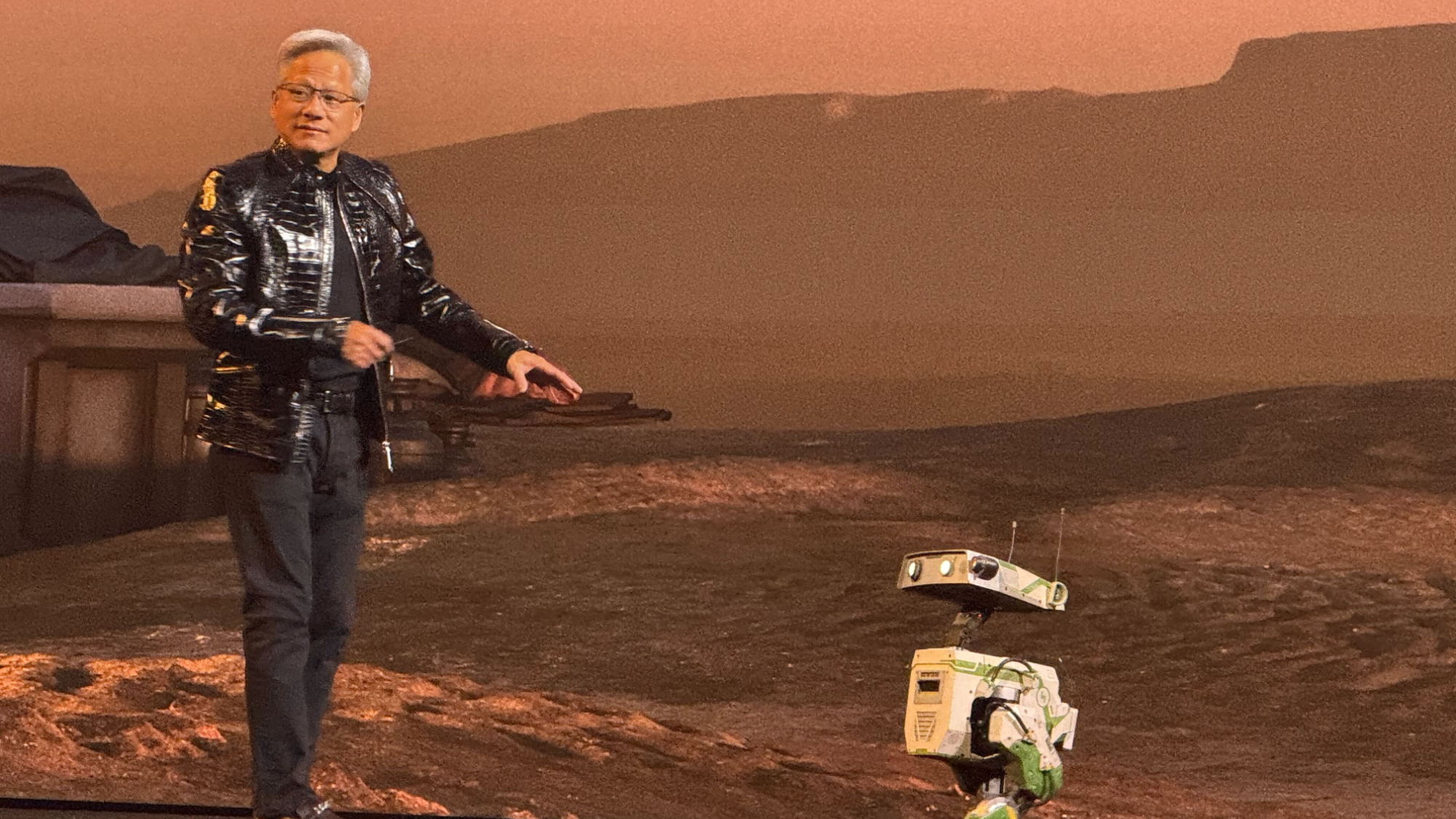
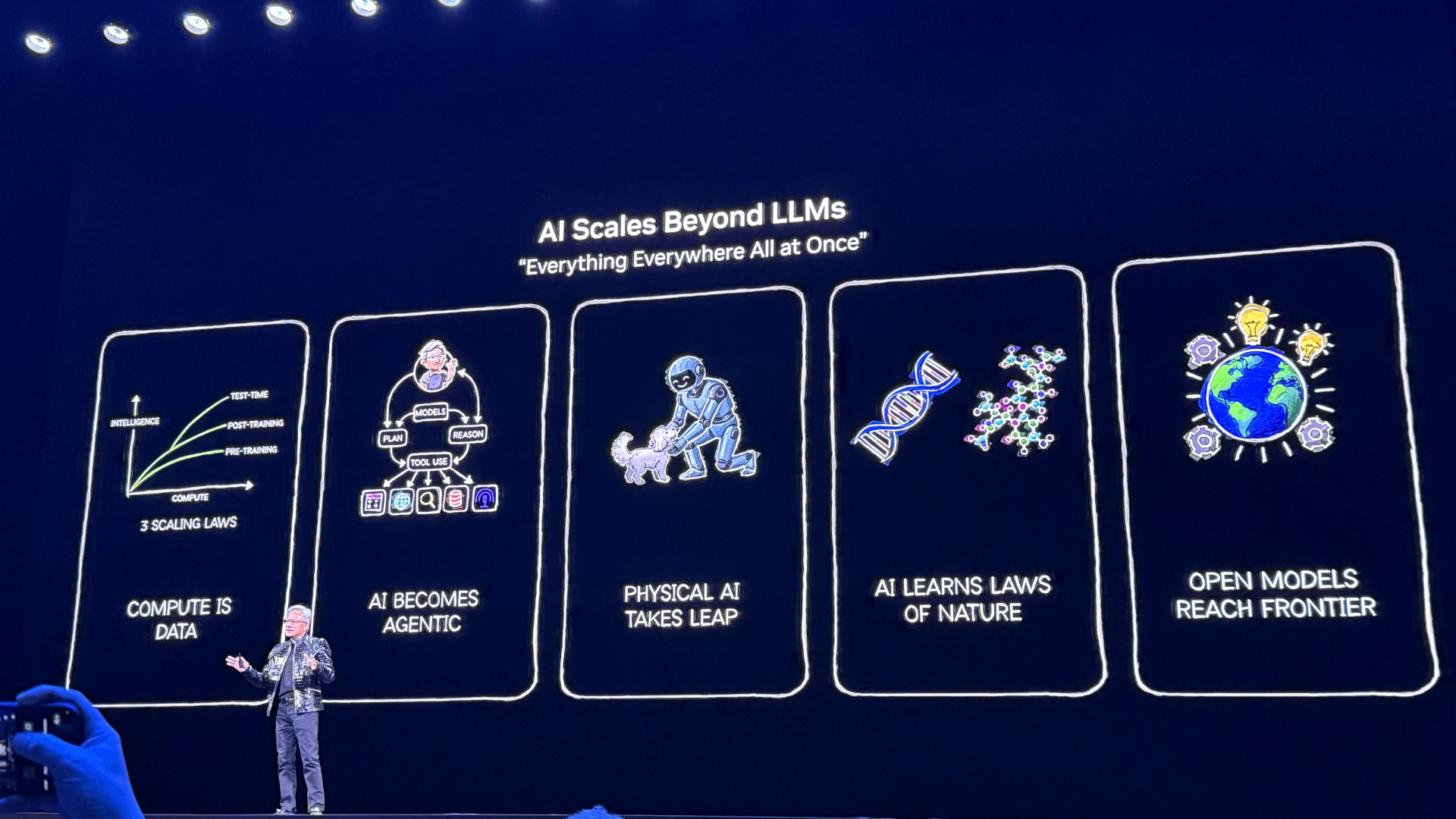
Although the top AI companies are still competing to develop the next best large language model for their chatbots, image generators, and smart assistants, for robotics, the frontier developments are “World Models.” These are neural network AIs designed for the physical world, trained on video and image data rather than simply raw text. This is evident in Nvidia’s full-stack physical AI platform, which uses its Cosmos AI platform to train data for self-driving cars, as explained at CES 2026.
Data annotation and the training itself are incredibly intensive, costly, and lengthy processes, so it’s no surprise to learn that Nvidia is keen to be a part of it. Its Cosmos platform provides developers with foundational models to build upon, and it offers bespoke versions of its Blackwell-powered server designs specifically tailored for robotic development workloads.
(Image credit: Tom’s Hardware)
Agibot released its World dataset in late 2024, including a range of foundational models for training different AI-driven robotics. It might not be chasing the superintelligence moonshot, but models like G0-1 are already showing impressive capabilities. It’s building ties in other strong manufacturing countries, too, like Malaysia.
Unitree making its own UnifoLM-WMA-0 world model open source will aid adoption, too. It currently uses it in its G1 humanoid robot, but with most of its revenue currently coming from the education sector, making its models open source gives a much greater chance of its standards becoming commonplace within the market, helping to cultivate a strong developer ecosystem. Nvidia’s GR00T is also a foundational model for robotics, while it comes under a research and non-commercial license, it’s not open source.
You may like
Sometimes you don’t need to be the best to become the standard. You just need to be the most accessible.
Consolidation and fears
One bright spot for humanoid robotics companies outside of China is that there are too many of them inside China. Part of the reason the country has made such great advances in humanoid robotics in recent years is the sheer scale of people working in the industry. At the start of 2025, there were fewer than 100 companies globally building and developing humanoid robotics. By the end of the year, there were over 150 in China alone. This has its advantages, but the diversification of talent and parallel developments could ultimately slow the industry and lead to a contraction there.
Forbes quotes Li Chao, the spokesperson for China’s National Development and Reform Commission (NDRC), as saying there are simply too many companies working on the technology, and this has the potential to overwhelm the industry. He believes that it would be beneficial to consolidate some of these efforts to prevent more duplicate developments. China has most recently made efforts to consolidate its tech stack, so it wouldn’t be entirely surprising to see this move in robotics.
Americans working in space agree. Speaking on the TechFirst podcast, former head of NASA’s robotics and AI unit, Dr. Robert Ambrose, said that he thought the messier and “chaotic” American entrepreneurship model of encouraging development of the technology was more likely to result in a stable industry in the long run.
(Image credit: Tom’s Hardware)
But it will need to put the financial investment in place to achieve that. With the Chinese government already using a state-backed ‘guidance fund’ to encourage what it estimates could be close to $140 billion in humanoid robotics over the next couple of decades, it is clearly banking on it as a future economic success story and strategically important technology. Although some of the companies receiving that investment may ultimately fold if an AI bubble pops, it’s still accelerative in ways that current Western approaches to humanoid robotics aren’t.
Even without the firms that kick-started the industry, the infrastructure, standards, and deployed hardware would still be there, building a strong foundation for future developments.
Working to their strengths
China might have a strong advantage in its established manufacturing base, increasingly close ties with other regional powerhouses, and it got out of the gate strong with Huawei despite export controls in the AI hardware race. But that doesn’t guarantee its win.
A major strength of American innovation over the decades has been its ties with its partners and allies around the world. Japan has incredibly experienced robotics industries and companies. Europe has the advanced machinery necessary to create chips for robotics at scale. The elements are all there, but whether or not they can deliver is another question entirely.
Over the next few turbulent years, China may have a golden opportunity to get there first, with open-source models easing adoption. Western companies might have flashy demos and the backing of the biggest firms in the world, but if China can cultivate relationships, deploy good-enough humanoid robotics safely and cheaply at scale, and do it first, that’s a compelling argument to make its standards, global standards.