
In a first step toward modernizing residential care facilities, the City of Hamilton will change the way it funds privately run, subsidized homes.
Following a vote by City Council’s General Issues Committee in December, city staff will work to implement a new model designed by consultants Hamilton hired. Researchers, operators and advocates for residents say change is welcome but there’s more to do. Some worry the changes risk displacing existing tenants.
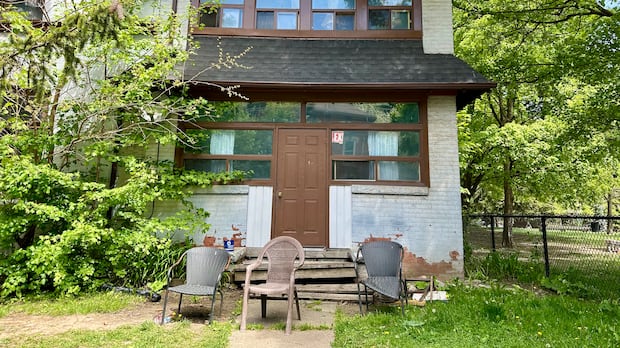
On its website, the city describes residential care facilities (RCFs) as a form of housing for residents who need support with daily living and might otherwise live in shelters, hospitals, or unstable housing. These communal homes have shared spaces and facilities and usually offer services such as meals.
In August, researchers with the Juravinski Integrated Residential Care Initiative published a report saying RCFs no longer support “the complex needs of today’s residents” and the sector is governed by “outdated legislation.”
The result is that we’re “putting a lot of people with extremely high needs into one place with very, very little support,” research scientist Chi-Ling Joanna Sinn told CBC Hamilton in October.
At the Dec. 3 committee meeting, Michelle Baird, Hamilton’s director of housing services, said regulating RCFs also involves bylaw and licensing but noted for now, the focus is on funding, which comes from Hamilton’s homelessness budget. She previously told CBC Hamilton, despite sharing the same budget, RCFs do not follow the same intake and reporting procedures as services like emergency shelters.
Pilar Homerston, Hamilton’s manager of social and community housing told the committee there are 800 subsidized beds shared across 46 providers in Hamilton and those operators get a maximum of $65 per day per eligible resident — a per diem which hasn’t changed in “some time.” Homerston said that has resulted in financial strain for operators and affected residents’ quality of care.
RCF operator Sonia Brown, who runs Caring Loving Sharing Retirement Homes, spoke at the committee meeting, saying, by her calculations, the per diem would be at least $77 if it had regular cost of living increases.
Consultants suggest funding based on need
Homerston presented alongside Jarrod Bayne, senior manager with KPMG who led the review of the current funding model. His team suggested a “tiered” model in which the city would fund three levels of RCFs based around resident needs, with more intense supports and greater funding available for those housing people with greater needs. Bayne said the expected benefits include better resident outcomes, oversight, quality assurance and greater sustainability for the sector.
Homerston and Baird’s department recommended councillors vote to direct staff to create an implementation plan for the tiered funding model, which they did, voting 11-0 in support.
“I’m not a fan,” of the new plan, Brown told CBC Hamilton in January, after voicing her concerns before the committee. Her RCF near Upper James Street and Mohawk Road E., houses 17 people whose needs range from low to high, Brown said, adding there’s a “balance” to it.
If she has to pick one level of need to serve, Brown wonders what that means for her neighbours.
“We’re dealing with people here,” she said, “not blocks” you can shift around.
 A promotional image on CLS Retirement Homes’ website shows operator Sonia Brown, centre, with residents whose faces the home blurred. Brown told CBC Hamilton residents enjoy activities including regular trips to the movies. (CLS Retirement Homes)
Sinn raised similar concerns before the committee, saying the approach isn’t “person centred” and the city should “proceed carefully.”
Bayne’s presentation said “current residents should not be evicted,” but even if people aren’t moved from their current RCFs, Brown worries about disrupting them. “What works for these individuals is the calm and the peace.”
RCFs are people’s homes, she said, noting she has one 63-year-old who’s been at the RCF since she was 18.
[RCFs are] not a model where we can make small-scale change around the edges.- Michelle Baird
Another committee delegate, Charly Chiarelli, echoed that sentiment, telling councillors his brother lives in a downtown Hamilton RCF.
At one point, his brother was at risk of going to jail, Chiarelli said, but he stabilized his life at the RCF.
Now, Chiarelli said, his brother is 79-years-old and wants stability. “Anything that would minimize transition is extremely important,” he said of changes to RCFs.
Baird told the committee that although change comes with risk, the city is already assuming risk by having people living in RCFs “likely without the right level of supports for their needs.”
“It’s not a model where we can make small-scale change around the edges,” she said.
Multiple groups seeking change for RCFs
James Kemp, Chair of Hamilton’s Accessibility Committee for Persons with Disabilities (ACPD), agrees change comes with risk, but says “we need a step forward.”
Kemp told CBC Hamilton he learned a lot about RCFs from the late Hamilton activist Lance Dingman, who lived in residential care for a time, and from the experience of his brother, who lived and died in an RCF.
The KPMG report “raised some good ideas,” Kemp said, as did the report by Sinn and her team.
The ACPD’s Housing Working Group has spent several years working on its own report about RCFs focused on topics including privacy, air conditioning, social development, and the ability of residents to leave RCFs. Kemp said that is set to come up in the first half of 2026.
He said he’s also hoping to create an RCF working group to bring interested parties together as the city starts making changes.
Going forward, Brown said she’s grateful for the interest in RCFs, even as coming changes bring uncertainty.
“It’s an area that a lot of people in the community don’t have a full understanding of.”