

As the sun disappeared beneath the horizon on a drive across the northern tip of Morocco, Adrian Heath couldn’t help but think of the places football had taken him.
The sport first lifted him out of Knutton, the iron-forging village in Newcastle-under-Lyme, England, where a small kid nicknamed “Inchy” discovered the work rate instilled in him by his railworker grandfather and an uncanny nose for goal outmeasured anything else.
It carried him to Stoke City, and then into becoming Everton’s most expensive signing at the time in 1982. His goal in the League Cup in 1984 against Oxford United may have saved Howard Kendall’s job and helped Heath become a giant at the club.
He became one of the first English footballers to venture to Spain’s La Liga, signing with Espanyol in 1988. And when his playing days were done, the sport brought him to the United States through coaching stints at Austin Aztex, Orlando City and Minnesota United. For those clubs, he traveled the globe looking for players. He coached a Ballon d’Or winner in Brazilian legend Kaká.
This trip to Morocco was supposed to be another adventure: an interview for a coaching job in Saudi Arabia. Heath thought of it as a chance to work on a new continent, experience a different part of the world. Another chapter that football would write in his life.
On another night, it might have looked beautiful as dusk turned to darkness and the city lights faded behind him. But on this night, Heath thought about what the game had given him. He thought about his four grandchildren and the stories he could tell them.
Then he turned to look at his kidnapper in the driver’s seat of the four-door sedan and wondered whether it would be football that now ended his life.
There are rhythms you develop over decades of marriage, especially when work has one half of a partnership on the road.
Adrian and Jane Heath are no different. They met in 1990, when Adrian was playing for Manchester City, and over the next three and a half decades, they fell into a routine when Heath traveled for work. He would always touch base when he landed and then again when he got to the hotel. Technology streamlined those traditions now. A text upon landing, a FaceTime from the hotel.
So when Jane got the text when Adrian landed in Tangier, but didn’t get the FaceTime call when he got to the hotel, alarms started to go off.
“Are you OK?” she texted.
“I’m fine,” he responded. “Just busy.”
But Jane couldn’t shake the feeling that something was wrong. The grammar in the texts felt off. They always used proper grammar. And Adrian still wasn’t FaceTiming.
She called him.
“Are you OK?” she asked.
Adrian responded the same way.
“Yeah, I’m OK.”
But she could hear in his voice that something was wrong.
“I’ll see you in the morning,” he said.
They hung up.
One minute later, one of the men in the room put a blade to Adrian’s throat.
“Listen,” he said. “You’ve got a few hours now to think this over.”
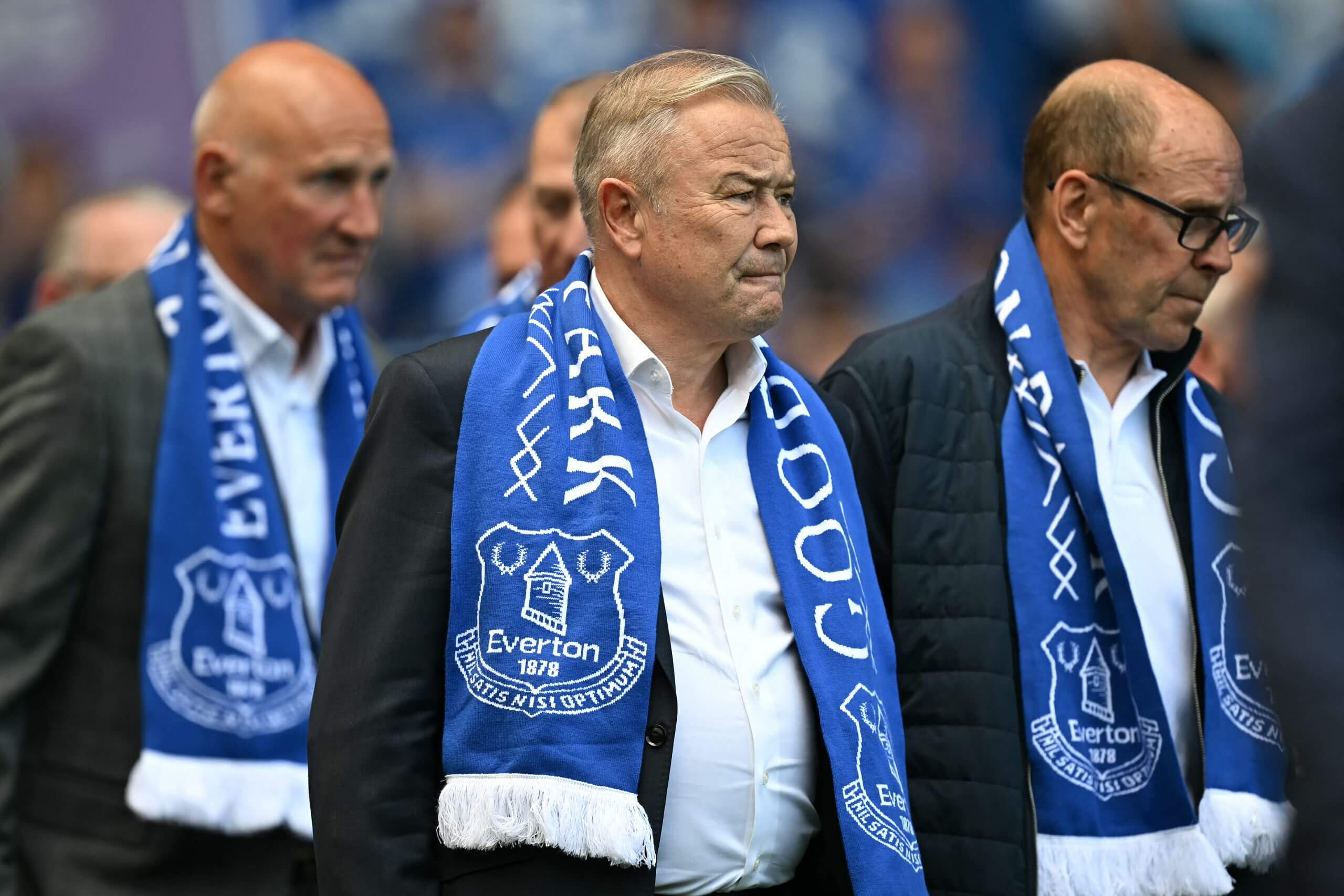
Adrian Heath took part in the festivities during Everton’s final match at Goodison Park (Paul Ellis / AFP / Getty Images)
This wasn’t a story Heath planned on sharing.
For more than a year, he kept his kidnapping quiet outside of telling a small circle of friends and alerting the League Managers Association (LMA; the trade union representing managers in English football). Then he got a call from the FBI agent in charge of his case. It had happened to another manager.
“When we got that phone call from the FBI saying it’s happened again, I immediately broke down,” Jane Heath said. “You think it’s over, but it’s never going to go away… The thought of another family going through anything like that.”
He heard there may have been two cases before his. Now another after it. The Heaths decided staying quiet opened the door for others to face the same type of threat he escaped.
In an interview in December 2025, they recounted the experience of three days in November 2024 to The Athletic. They agreed to tell the story on the condition they did not use names and specific locations, or any details that could threaten what remains an open investigation in both the U.S. and England.
The FBI replied to an email saying their policy is to neither confirm nor deny the existence of any investigation. A spokesman for the UK’s National Crime Agency (NCA), though, issued the following statement: “We can confirm officers from the NCA are investigating allegations linked to a fake football consortium who are offering professional footballers employment, which has resulted in threats of violence and the transfer of monies with no employment or contracts actually existing. As our investigation is ongoing, we are not able to provide any further information at this time.”
For the Heaths, recounting the details feels surreal even now.
“It’s like a movie or an episode of Homeland or something,” Adrian said.
He goes through the same process when he looks back on it: Thinking through how the dialogue started. Wondering if there was a red flag he missed.
Heath, 65, spent the year after being fired by Minnesota United in October 2023 traveling with Jane, and visiting his kids, Harrison and Meg, and his four grandkids. After 15 straight years of managing in Austin, Orlando and Minnesota, a break was overdue.
But when a call came in summer 2024 from a UK-based agent asking if he would be open to a job in Saudi Arabia, Heath answered in the affirmative.
“Obviously, everything would have to be right,” Heath told the agent.
When the club and the money were discussed, Heath was intrigued by the opportunity. He wanted to get back into managing. He felt as eager as ever to coach again.
The job was eventually filled by another manager, but Heath kept an eye on the club. Things were going poorly. A few months later, he got another call from the same agent.
“Adrian, this job is going to come back around and you were very close the last time,” the agent said. “Is it something you want to revisit?”
Heath said yes. Over the next few days, the two discussed details: salary, budget for staff, accommodations in Saudi Arabia, even healthcare. The calls were done over speakerphone. Jane listened in on each one. Nothing seemed off.
Adrian made some calls to contacts who worked in Saudi Arabia, including Liverpool legend Steven Gerrard. They all had good things to say about the club and working in the Saudi leagues. Soon, the agent said the club’s owner wanted to meet with him. He asked if Heath could meet in Morocco, where “the sheikh” had several hotels and other businesses.
“If we get everything done by Tuesday, we’ll fly you to Saudi for the announcement,” the agent said.
A plane ticket was sent over for Sunday, November 17, and a reservation was made at a five-star hotel on the Mediterranean Sea.
“How this whole process happened is no different than how it happened with him going from England to America or him going from Orlando to Minnesota,” Jane said. “There were no red flags because they’d had hours of conversations. There wasn’t any question (the agent) hesitated on.”

Adrian Heath playing for Everton against Liverpool in the 1984 League Cup final (Allsport / Getty Images)
Adrian got on a flight to Tangier via Manchester. When he landed in Morocco on the evening of Nov. 18, two men were there to greet him at the airport. They handed him flowers and then ushered him to a black, four-door sedan and set off for the hotel.
But after about 40 minutes, they turned off the main highway.
“At first, I’m thinking it’s the quickest way to where we’re going,” Heath said. “We were supposed to be going to meet with the sheikh. ‘He just wants to meet you and say hello.’ Great, no problem. But within 20 minutes, I’m starting to panic a bit because the lanes are going down and it’s getting dark. We end up driving into this little harbor town and we go into a sketchy neighborhood. I was supposed to be staying at a beach hotel.”
The car turned down an alley and came to a stop. The men hopped out of the car and opened the door for Heath to get out. They guided him into a small apartment building and then into a sparsely furnished, smoke-filled room. A sectional couch was pushed against three of the walls, brass ornaments sat on a table in the middle of the room and a TV was on the far wall. Elaborate, heavy curtains covered the windows. Music played in the background.
There were three men in the room. A man in his mid-50s, another in his 30s and the third, in his late teens or early 20s, looked like the younger brother of the 30-something.
“For the first hour, they didn’t really speak to me,” Heath said. “They were having a few drinks and they were asking me, ‘Do you want a drink?’ And I said no, because by then I’m thinking I don’t want to be drinking anything.”
Then they sat Heath down on the couch.
“You obviously realize that this isn’t what you thought it was going to be,” the man in his 30s said to Heath. “This is how it’s going to work: You’re going to send us money.”
Heath said the number was well in the six figures, but declined to share the amount.
“And if you don’t, you won’t see your wife again. You won’t see your two kids and your grandkids.”
It was clear the men in the room had done their research on Heath and his family. They took his wallet and phone. Heath’s stomach dropped. Immediately, he started thinking of how he might escape this situation unscathed.

Harrison Heath, left, playing for Orlando City while being coached by his father, Adrian, in a 2015 friendly vs. West Brom (Alex Menendez / Getty Images)
For now, he needed to buy time. He seized on the seven-hour time difference. Even if he wanted to send the money, his wife wouldn’t be able to do it now, Heath insisted. It was late in Morocco, which also meant it was past the end of the business day in the U.S., he said.
“I was just thinking of ways to sort of try to string it out,” Heath said. “To find out how strong we were with this.”
When Jane called, one man held the phone in front of Adrian’s face with the speakerphone turned on. The thin, 15- to 18-inch blade came out soon after.
Heath sat on the couch through the night, his eyes closed as those around him drank and smoked. He pretended he was asleep, but was just trying to come to terms with what was likely to happen in the coming days.
Heath said the seven hours in the night were “when it was at its worst.”
“Because I got time to think,” he recalled. “What I’m thinking is this might be it, right? I’m not sure I’m getting home from here.”
As the men in the room carried on, Heath thought about what he wanted to get home to.
“I started thinking about all the good stuff about my life,” he said. “My wife. My children. My grandkids.”
He thought about his grandsons, Hayden and Hendrix, who were in New Jersey with Harrison and his wife, MLS Apple TV analyst and former Canadian women’s national team player Kaylyn Kyle; and his grandson Heath and granddaughter Wilder, who lived in England with Meg and her husband, Reading striker Will Keane.
He wondered if they’d ever be together again.
In the pitch-dark room, Heath remembers hearing the call to prayer in the morning. What came next surprised him. The wife and toddler son of the man in his 30s came into the room. Neither looked at him. The little boy — Heath guessed he was about four — watched a cartoon on the TV. At one point, the wife went grocery shopping. Later, she put a backpack on the kid and took him to school. Heath remembers the young boy turning back and looking at him. They made eye contact.
By that time, Heath determined he had no good options. If he gave them the money, they were only going to ask for more, he thought. But if he didn’t, the blade could come out again. Heath felt determined not to give any money.
As the sun rose across the world in Minneapolis, his captors took out their phone and told Heath to call his wife.
Jane was still in bed when the call came. It was 6:30 a.m., but she had been awake thinking about Adrian anyway. She barely remembers hearing him tell her he needed her to go to the bank and wire money.
“What’s going on?” she asked.
“I need you to transfer some money,” he answered. “Listen to what I’m saying. I need you to transfer some money.”
Jane then made a split-second decision.
“Adrian, we changed bank accounts less than 12 months ago,” she replied. “You’re the head name on it. I can’t transfer any money without you there.”
After some arguing, his captors hung the phone up. A minute later, they called back. This time, Adrian asked for less money, but the amount was still “in the six figures.” Jane, now in tears, stuck to her story. She couldn’t transfer anything.
“Listen, sweetie, don’t worry,” Adrian replied. “I’ll chat to you in a bit.”
He hung up the phone. Jane immediately called Harrison, a former MLS midfielder, to tell him what was going on.
Harrison called his father. No one picked up. He called again.
Adrian insisted to his captors that he needed to answer.
“Dad, what’s going on?” Harrison asked. “Just step out of the room and tell me what’s going on.”
“Harrison, f***ing listen to me,” Adrian said. “I can’t.”
Once again, Heath’s captors hung up the phone.
Back in the States, with Harrison and Jane understandably upset, it was Kyle who provided a steady hand and took control of the situation. She directed her mother-in-law to check the ‘Find My Friends’ app.
Incredibly, Heath’s kidnappers had taken his phone but neglected to turn off location services.

Adrian Heath’s daughter-in-law, MLS presenter and former Canadian international Kaylyn Kyle, played a vital role in his release from captivity (Lucas Boland / Imagn Images)
Jane took a screenshot and texted it to Harrison, who called the agent that initially set up the meeting. In what they would recount as “an aggressive phone call,” Harrison demanded to know what was happening. He sent the agent the screenshot of where his father was. By chance, the father of a kid on the youth soccer team Harrison coached in New Jersey was an official at the FBI office in New York. Harrison called him.
Back in Morocco, Heath leaned into negotiations with the kidnappers.
“Listen, I don’t know how this is going to end up, but bottom line, you’re not getting any money,” Heath told them. “You can see that the only chance you’ve got in getting any money is me going home and me wiring it to you. From there, you’re gonna have to trust me, but that’s where we are.”
Heath said the knife came out again as they argued. Unbeknownst to the veteran coach, his family had sent the screenshot. Within minutes, things suddenly changed.
“Like a light switch was flicked,” Heath said.
The 30-something kidnapper walked into the room.
“Get your gear,” he said, pointing to the day bag Heath brought. “I’m taking you to the airport.”
He told Heath to get into the passenger seat of the sedan. With the sun beginning to set, they took off toward the highway. With his phone now back in his hand, he texted Jane four words.
“I’m in a car.”
As the city lights faded, there was about a 40-minute stretch in which it felt like darkness enveloped the car. Every once in a while they’d pass a gas station and a shop or restaurant.
Heath tried to think of ways to make conversation that might keep him alive.
“Morocco were great in the World Cup,” he offered at one point.
As they got closer to the airport, Heath started to believe he just might get out of the situation alive. When they approached Tangier-Ibn Battouta Airport, the car slowed to a couple miles per hour at a corner near the entrance to the airport. The man told Heath to open the door, then grabbed him and shoved him out of the car.
“Before I’d even picked up my bag, the car had sped off,” Heath said.
Heath, though, had his passport, bag and wallet — without the $600 cash that was in it at the start of the trip. Considering the circumstances, that it was all he lost was a miracle.
He ran to the airport and up to the first ticket desk he could see.
“What’s your next flight to Europe?” he asked.
“We have a flight to Madrid in 30 minutes,” he was told.
“If I buy a ticket now, can I get on it?” he replied.
“Yes,” the agent responded.
Heath didn’t ask how much it cost. He booked a ticket and sprinted through security, constantly looking over his shoulder, unsure of where he could feel safe again. He FaceTimed Jane from the gate.
“To say he looked like s**t is an understatement,” Jane said.
At that moment, the skies opened. A torrential downpour started. Heath looked to the sky and prayed the flight would still take off. Eventually, the weather cleared and he did.
In all, he had spent about 24 hours in the apartment in Morocco. It was Tuesday evening. By Wednesday, Heath landed back in the Twin Cities. Jane and the FBI were there waiting for him. The officers allowed Jane and Adrian to see each other briefly, before separating them for individual questioning.
“I literally collapsed into his arms,” Jane recalled.

Adrian Heath managed in MLS with Minnesota United and Orlando City (Carmen Mandato / Getty Images)
The FBI provided security for the Heaths for the next 28 days. They didn’t leave their home for the first 48 hours, not even for their daily walk. Most of the next few weeks were spent inside their home.
“This sounds crazy, but I’m going to use the word ‘lucky,’” Adrian said. “How lucky we were. Because the one thing, listening to the FBI, they were just saying, ‘You’re very, very lucky to be back.’”
Heath alerted the LMA so it might be able to prevent a similar incident from happening in the future. It created a new protocol, Heath said, to run offers or interviews through the LMA, and the organization can then confirm interest and interviews through the corresponding federation.
LMA chief executive Richard Bevan provided a short statement via email, confirming awareness of the NCA investigation, but he would not comment further because the case was still ongoing.
Heath said he was told one other former MLS manager might also have been approached, though he declined to provide any names. He said he hopes the incident helps managers in the U.S. create a group like the LMA that might be able to help U.S.-based coaches. His goal of talking about what happened in Morocco, he said, was so that other managers might be warned.
Heath feels fortunate to still be alive.
“At times it seems surreal,” he said. “It was like the longest and quickest three days of my life. It gives everyone a chance to reevaluate your life and what’s actually important. And the only important thing is your family. Everything else is secondary.”
He and Jane don’t take anything for granted now. The time with their kids and grandkids. The little things at home together.
But even beyond that, when Adrian thinks back to that final drive in Morocco, he realized how much the sport still meant to him. He wants to work again, if only to have football again bring something positive to his life, as it has for so long.
“I’ve got a new respect for how good our life is and how good I’ve had it,” he said. “I’ve worked hard, but I’ve had a great life. We’re talking about a year ago, virtually now, and I was sitting there that night thinking, ‘This is it and I’ve still got so much I want to do.’ And so I still want to coach. I still want to get back out there. I’ve still got the enthusiasm. I know it sounds stupid, I’m thinking this is it, this is the end of it all. But the next part of it is really me talking about it and then getting back into it now.”
For Heath, it’s a mission to reinforce what he felt that night when he imagined the worst: that he wasn’t done yet.