

The 1998 Tour de France represented a turning point in the history of professional cycling. Nothing would ever be the same after the so-called ‘Festina Affair’ and the downfall of French national hero Richard Virenque. The race somehow made it to Paris with Marco Pantani pulling on the winner’s yellow jersey, but the widespread use of doping in cycling had finally been revealed.
The early 1990s are often regarded as a dark era for the sport. The spread of the blood-boosting drug EPO transformed performances and the balance of power in the peloton, with Italian and Spanish cycling enjoying a renaissance before Festina resurged to defend French pride and Jan Ullrich emerged to boost cycling in Germany.
You may like
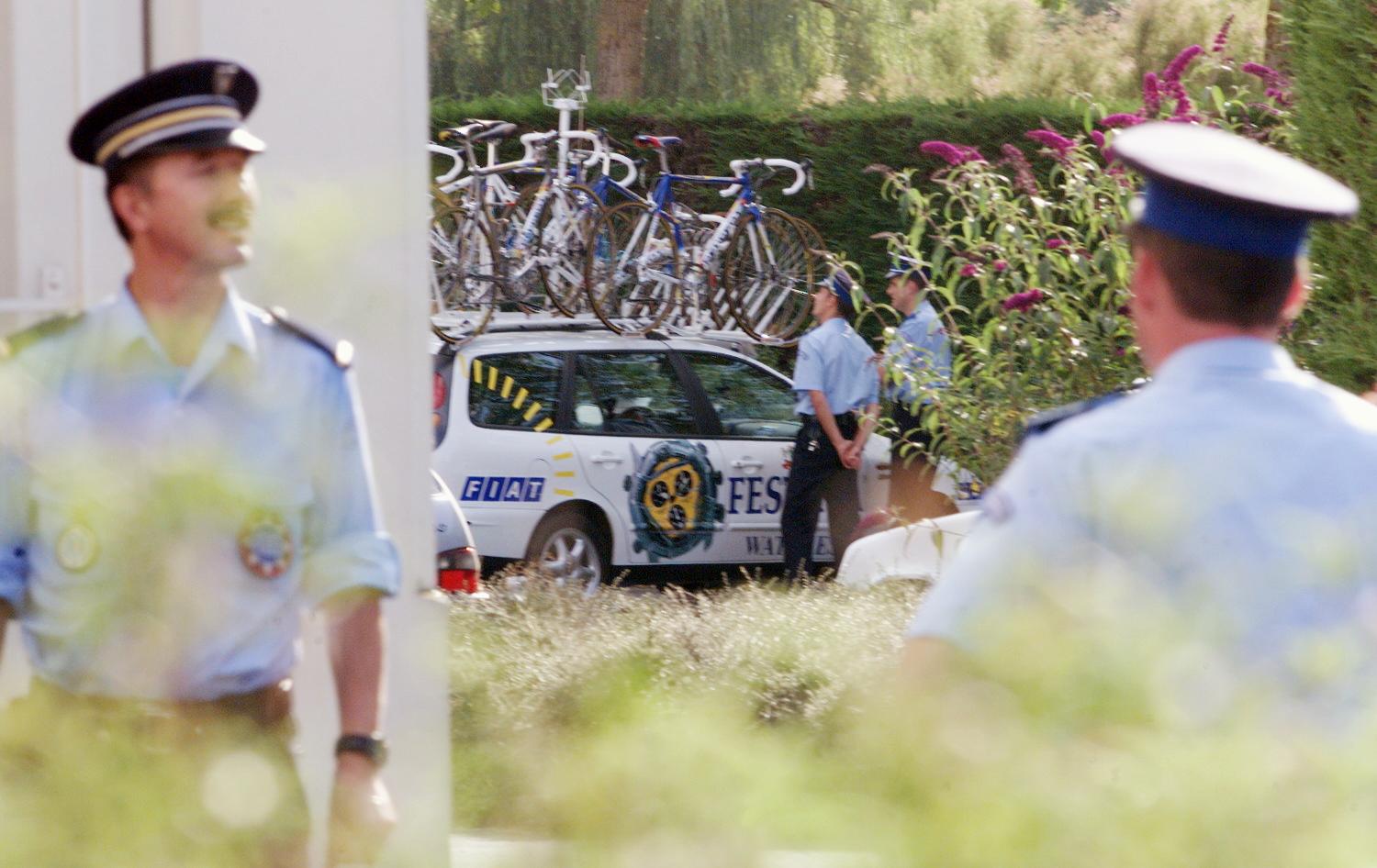
Police surround the team’s hotel in Cholet (Image credit: Joel Saget/Getty Images)
The team staff involved in the Festina Affair eventually went on trial and were given suspended prison sentences, while the riders were banned for nine months or less, the usual sentence for doping at the time.
Some riders confessed immediately, but Virenque raced on with the Polti team in 1999 and continued to deny any wrongdoing until he went on trial in 2000. He was not found guilty of any crime but was banned for a year. He stayed defiant and came back with the Domo-Farm Frites team and then QuickStep, winning several stages at the Tour.
A French parliamentary investigation eventually published the results of retroactive testing of anti-doping samples from the 1998 Tour, revealing that Pantani, Ullrich and many others tested positive for EPO. The French inquiry alleged 18 riders had traces of EPO in their tests and said another 12 had suspicious tests.
Cyclingnews’ Alasdair Fotheringham wrote the defining account of the ‘Festina Affair’ in 2016; his book is titled: ‘The End of the Road – The Festina Affair and the Tour that almost wrecked cycling.’ Of course, Lance Armstrong returned from testicular cancer to win the 1999 Tour and create a new era of hero worship and doping in the sport. However, the 1998 Tour was a watershed moment for French cycling, for the Festina team and the riders who raced the Tour that year.
Respected French journalist Pierre Carrey was racing as a teenager in 1998. He was shocked when the dark side of professional cycling was revealed after years of adoration for Virenque, but it sparked a wave of change.
You may like
“The Festina Affair opened people’s eyes to EPO doping in cycling. During the 1998 Tour, the news was more and more about doping and less and less about cycling,” Carrey tells Cyclingnews.
“I was in school and my classmates called me a ‘doper’ because of the doping discovered at the 1998 Tour. It created a decade of what they called ‘cyclisme à deux vitesses’ as French teams struggled to compete with their doped rivals, but it perhaps saved cycling in France.
“Riders like Thibaut Pinot grew up with posters of Virenque on the walls of their bedrooms, dreaming of winning mountain stages like him. The Festina Affair helped them understand the dark reality of cycling in the 1990s and afterwards gave them some moral guidance. The Festina Affair almost killed French cycling, but was a blessing in disguise too.”
This is what happened to the 1998 Tour de France Festina team after the raids. Virenque’s crocodile tears and denials made him a pariah, but other riders quietly served their bans, other teams signed them, and some even raced the 1999 Tour de France. However, the Festina Affair did change the perception of doping in cycling and of the abuse of EPO.
Richard Virenque
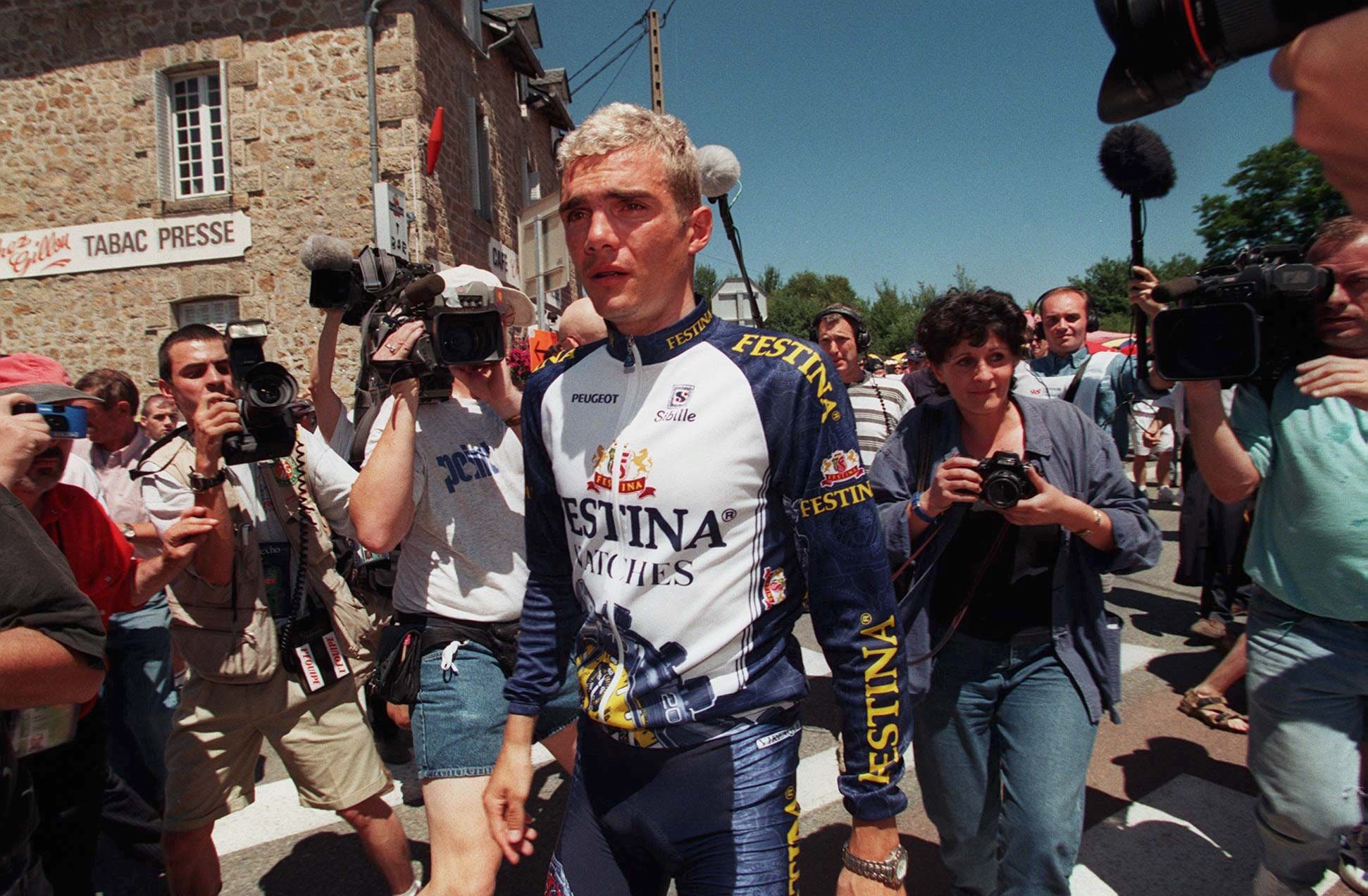
A teary-eyed Virenque swamped by media as the team were expelled from the 1998 Tour (Image credit: Andreas Rentz/Bongarts/Getty Images)
Richard Virenque was the poster boy of Festina and a French national hero because of his success at the Tour de France. Many had hoped he could deliver a home victory at the Tour after he first pulled on the yellow in 1992, aged just 23, but he quickly became a ‘chaudiere’ who demanded the latest medical help.
The Festina team developed around him and was one of the best teams in the world in 1998. Virenque was convinced it was his year after finishing third at the Tour behind Bjarne Riis in 1996 and second to Jan Ullrich in 1997.
When the Festina Affair exploded, Virenque opted to go into denial rather than confess, playing the role of the sacrificial lamb. He only confessed under oath, but then denied it all again to help him race on again.
After the 1998 Tour, the Italian Polti team signed him, quick to take advantage of his huge public persona. He won a stage at the 1999 Giro and finished eighth overall in the 1999 Tour de France. After eventually serving a nine-month ban, Virenque came back and won four other stages – including stages atop Mont Ventoux and in Morzine in 2003 – but was never an overall contender again. He won the King of the Mountains jersey in 2003 and 2004 while riding for QuickStep.
Virenque retired after the 2004 season and worked as a television commentator for Eurosport for a number of years. He also took part in the French version of ‘I’m a Celebrity… Get Me Out of Here!’ in 2006, but was also ridiculed by the French version of the Spitting Image puppet show for having admitted he doped but “without his full knowledge and consent.”
Virenque has always lamented that he is the scapegoat for the Festina Affair and always complained that he was never allowed to fully return to the sport like so many other former dopers.
He has occasionally given interviews to those who would listen to him, and in 2025, he stood on the finish line at the summit of Mont Ventoux and even talked to French stage winner Valentin Paret-Peintre, who, for a day, like Virenque in 2002, had saved French pride by winning a mountain stage of the Tour de France.
“Nothing could have stopped me from winning,” the now 55-year-old, silver haird Virenque said of the 1998 Tour to Belgian newspaper La Dernière Heure, claiming his downfall came due to a political battle to discredit the cycling-loving former French president Jacques Chirac.
Laurent Brochard
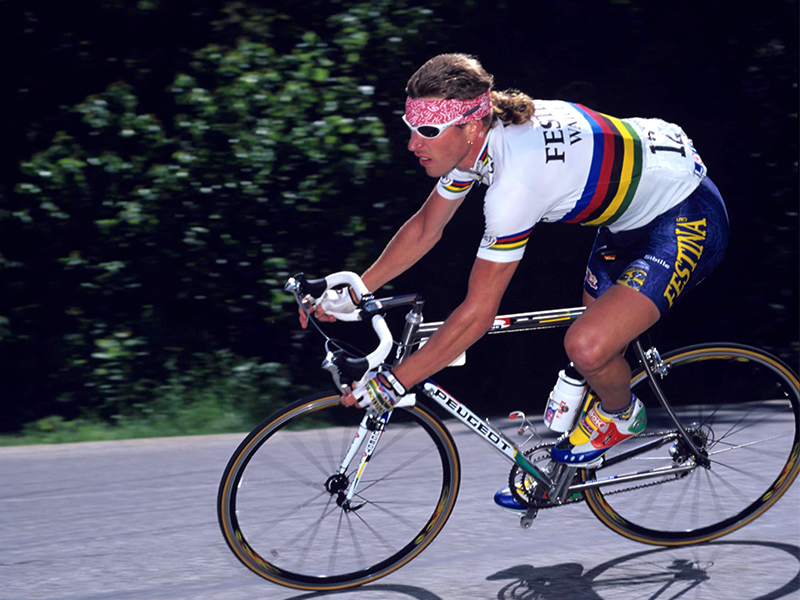
Brochard won the 1997 UCI World Road Championships road race in San Sebastian (Image credit: Graham Watson/Getty Images)
Laurent Brochard was famous for his long mullet as much as his surprise world title in 1997 in San Sebastian. He raced for Festina between 1995 and 1999, the peak years of the team’s doping programme.
In 2023, the UCI admitted that they wrongly accepted a backdated medical prescription for lidocaine to explain Brochard’s positive anti-doping test.
Brochard quickly confessed to his doping during the summer of 1998 and was banned for nine months, like many of his teammates. He returned to racing in the spring of 1999 with the new-look and supposedly clean Festina team. He even rode the Tour and won a stage at the 1999 Vuelta.
He always tried to avoid talking about the Festina Affair and raced until 2007 for Jean Delatour, AG2R Prévoyance and Bouygues Telecom. He settled in the Auvergne region of France in 2015. His mullet has gone, but Brochard still rides frequently and organises an annual cyclosportive ride called the La Sancy Arc-en-Ciel By Laurent Brochard.
In recent years, Brochard has driven a VIP car at the Tour for sponsor Mondial Relay.
Laurent Dufaux

Dufaux racing earlier in 1998 at the Tour de Romandie (Image credit: Graham Watson/Getty Images)
Laurent Dufaux was one of three Swiss riders in the Festina team for the 1998 Tour. From near Aigle, where the UCI is based, Dufaux used his charm and positive outlook on life to quickly move on from his doping confession and seven-month ban.
He raced for Saeco between 1999 and 2001, then Alessio and QuickStep. He rode a final Tour and won a stage of his local race, the Tour de Romandie, in 2004. Since then, he has worked for the Craft cycling and winter sports brand, managing accounts in France and then near home in the French-speaking region of Switzerland. He is also a sports director with the Swiss Elite Fondations Continental team that aims to help young Swiss riders and gradually develop into a professional team.
Pascal Hervé

Hervé riding for Festina at the 1994 Tour de France (Image credit: Jean-Yves Ruszniewski/Getty Images)
Hervé had the same air of confidence and denial as Richard Virenque during the Festina Affair.
The two raced together for over 300 racedays, often sharing a room, with Hervé able to calm and inspire Virenque to his biggest victories. Hervé was the last to admit to doping, getting away with just a two-month ban. Virenque helped Hervé join him at Team Polti in 2000, but he then tested positive during the 2001 Giro d’Italia and retired.
“When it all came to light, I played the tough guy. It was my young, jerk phase. Looking back, I should have confessed right away and said that the whole peloton was doing the same thing,” Hervé told La Parisien in 2018 after moving to Québec, Canada, where he was a sports director with the Garneau-Quebecor continental team.
He was diagnosed with aggressive stomach cancer and passed away, aged 60, on Christmas Eve 2024.
Armin Meier
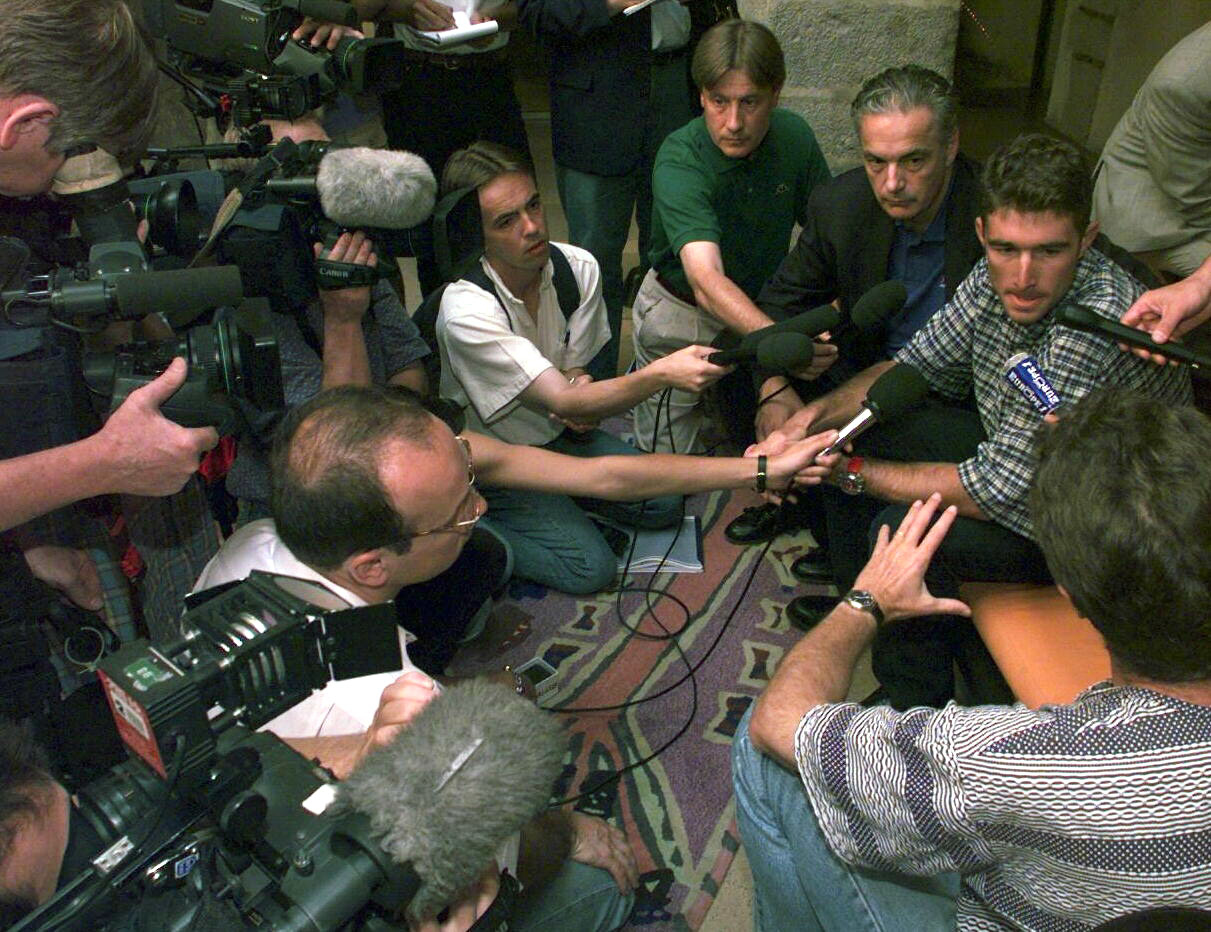
Meier giving a press conference shortly after the team’s doping scandal was exposed (Image credit: Stephane Ruet/Getty Images)
Like fellow Swiss rider Laurent Dufaux, Armin Meier opted to confess to doping quickly when taken into custody by French police during the 1998 Tour. He served his ban and returned to racing, winning the Swiss national title and returning to the Tour in 1999 while riding for Saeco.
He retired aged 31 in 2001 and quickly moved into sports management with IMG Switzerland, helped by his former agent Jean-Marc Biver, who was later involved in the BMC and Astana teams.
Meier rose to become the managing director at InfrontRingier Sports & Entertainment in Switzerland, but left to create Human Sports Management AG, which organises numerous cycling and running events. In 2025, the company was sold to the far bigger Belgian company Golazo, which works with the UCI to run the Gravel World Series and other events.
Christophe Moreau

Moreau in Monaco ahead of the 2009 Tour de France (Image credit: Lionel Bonaventure/Getty Images)
Christophe Moreau raced on until 2010 after serving his ban for the Festina Affair in 1998; his results, smile and silence about his past meant his doping was soon forgotten.
“I paid for what I did. All I know is that I came out of it stronger. It transformed my life,” he said.
Moreau won the prologue of the 2001 Tour de France and used his stage racing prowess to twice win the Critérium du Dauphiné Libére. He was also fourth overall in the 2000 Tour.
After retirement, Moreau worked for Eurosport France until 2015 and moved to Switzerland with his partner, whom he had met at the 2000 Tour.
According to the Swiss newspaper Le Matin, he was arrested in early 2023 on suspicion of threats of violence against his wife and daughters. He was reportedly under the influence of alcohol during his arrest and was held for a month before beginning treatment for addiction. He later admitted his threats of aggression but claimed he would never have carried them out.
“Today, when you Google ‘Christophe Moreau,’ I’m perceived as a murderer who wants to kill his wife by chasing her through the streets with a gun, which is completely untrue,” he told Swiss newspaper Blick.
Didier Rous
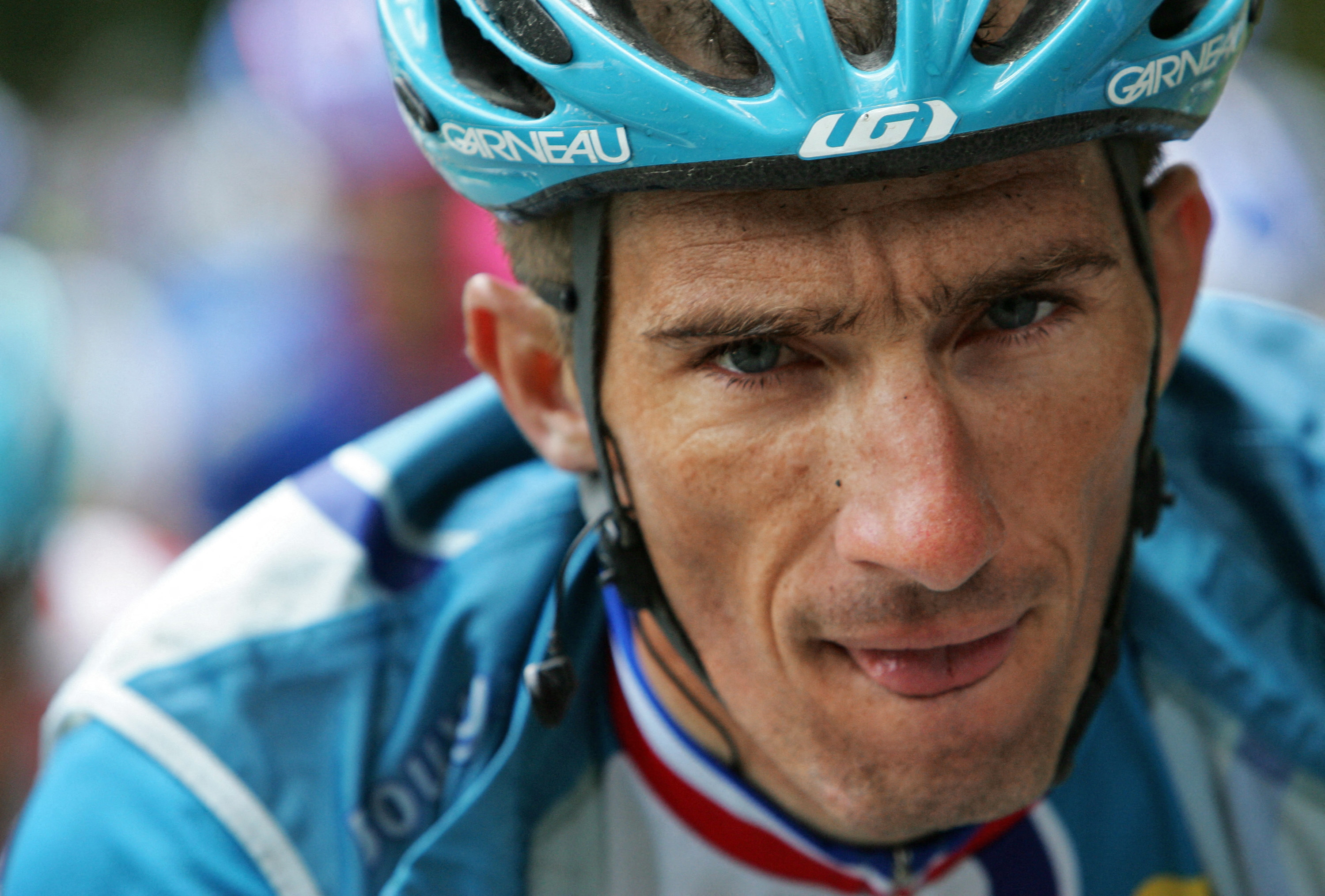
Rous during his final Tour de France in 2006 (Image credit: Franck Fife/Getty Images)
Rous’ career went full circle, with the Frenchman’s last victory at the 2006 Paris-Corrèze race, close to the bar-tabac where he, Virenque and the other Festina riders spoke after being kicked out of the 1998 Tour de France.
The Frenchman raced on after his ban, apparently regretting his past and racing clean, joining Jean-René Bernaudeau’s team until 2007. He has worked as a sports director since then, spending 2025 with the Arkéa-B&B Hotels team.
“The Festina Affair was important because it began to change attitudes. It has become increasingly more difficult and that’s a good thing,” he said.
Neil Stephens

Stephens riding for ONCE at the 1996 Vuelta a España (Image credit: Graham Watson/Getty Images)
Australia’s Neil Stephens followed the Virenque playbook when the Festina Affair exploded. He denied doping and claimed he thought the injections he was given by team doctors were just legal vitamins.
Stephen retired in 1998. He continued to live in the Basque Country in northern Spain and worked for a cycling holiday company. He had raced for the ONCE team in the early 1990s alongside Alex Zülle and Laurent Jalabert, and rejoined the team when US insurance company Liberty Mutual became a title sponsor in 2004.
He has worked as a sports director ever since, first with the GreenEdge team, then UAE Team Emirates and Bahrain-Victorious. He has rejoined the Australian team for 2026.
“I’m thankful to the teams I’ve been with, I’ve had some great experiences, and it’s helped to shape me in my professional career,” 62-year-old Stephens said.
Alex Zülle
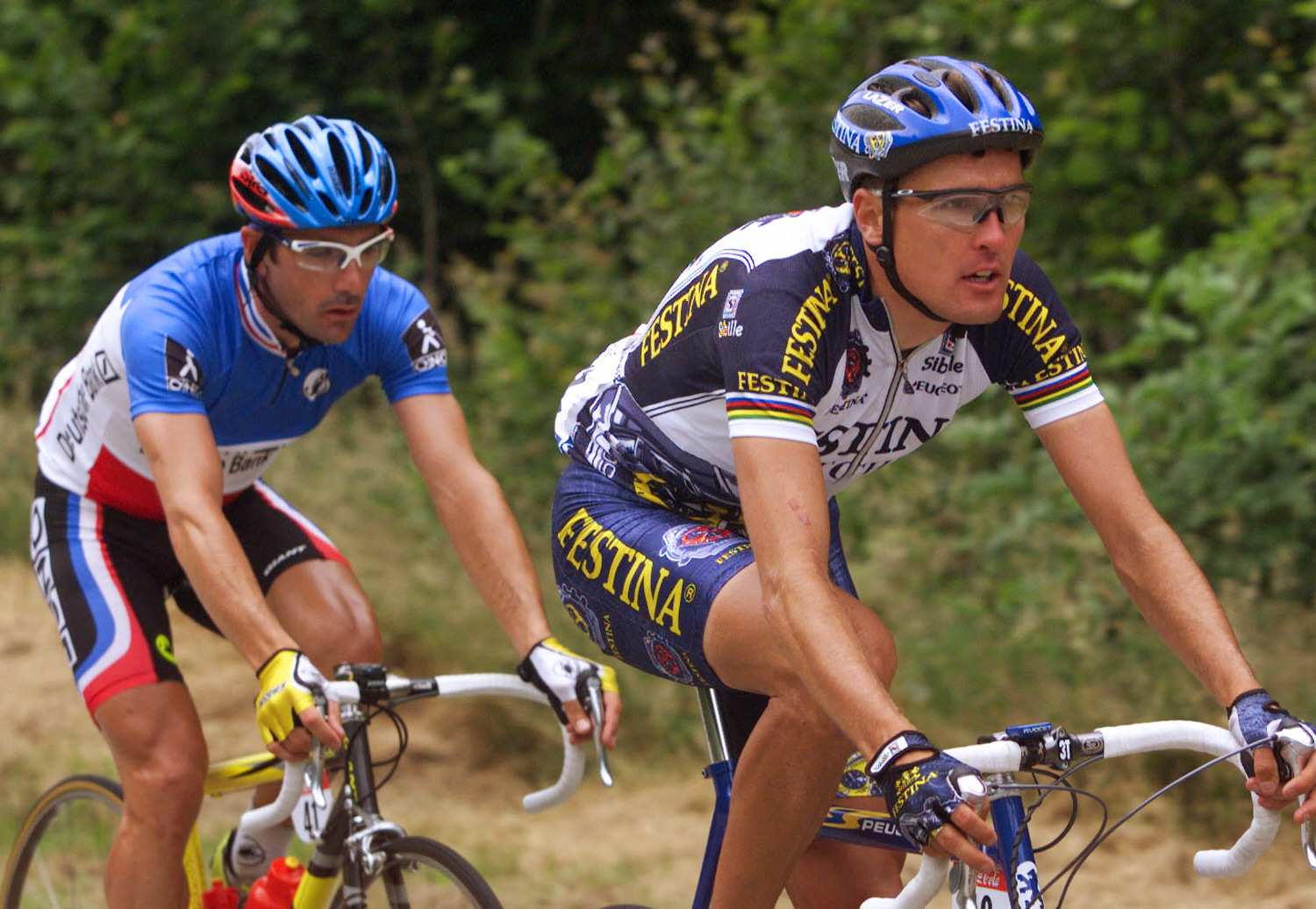
Zülle on stage 6 of the Tour de France, a day before the team were expelled from the race (Image credit: Pascal Pavani/Getty Images)
The Swiss rider was best known for his years racing in the ONCE yellow and only joined Festina in 1998, as they aimed for overall victory at the Tour. He had won the Vuelta a España in 1996 and 1997, and Festina considered him an alternative GC leader if he could avoid crashing.
Zülle confessed to doping and returned to the peloton with Banesto, and then the troubled Team Coast outfit built around Jan Ullrich. He ended his career at Phonak, where other doping problems would emerge when Floyd Landis was there.
“I used EPO for about four years. The first time was when I was riding for the ONCE team,” Zülle told French police in 1998.
“At Festina, EPO was used in the same way, and about 20 riders took EPO under the supervision of the doctor. I can’t prove it, but I think that EPO can be found in all the major cycling teams.”
Zülle has kept a low profile since retiring in 2004, but like the other Swiss riders managed by Jean-Marc Biver, he had a role in the Tour de Suisse organisation via the Infront events management company.
Bruno Roussel

Roussel at the 2015 UCI Track Cycling World Championships in Paris, during his time working for Mexican cycling (Image credit: Loic Venance/Getty Images)
The Festina team manager, Bruno Roussel, denied there was an organised doping programme in the team for the first week of the 1998 Tour. Upon being taken into custody by French police, he eventually confessed during a three-week stint in jail. He claimed the programme was carefully managed to limit the risk of being caught and to limit the risk to the riders’ health.
Like other staff and team doctors, Roussel was given a suspended prison sentence and banned for five years. He became a property developer at home in Brittany and briefly worked with the Mexican national team.
He wrote a book confessing his central role in the Festina Affair, but also suggesting a series of actions that were needed to clean up professional cycling. Some have since been done, others remain and are important if another Festina Affair is to be avoided.
Willy Voet
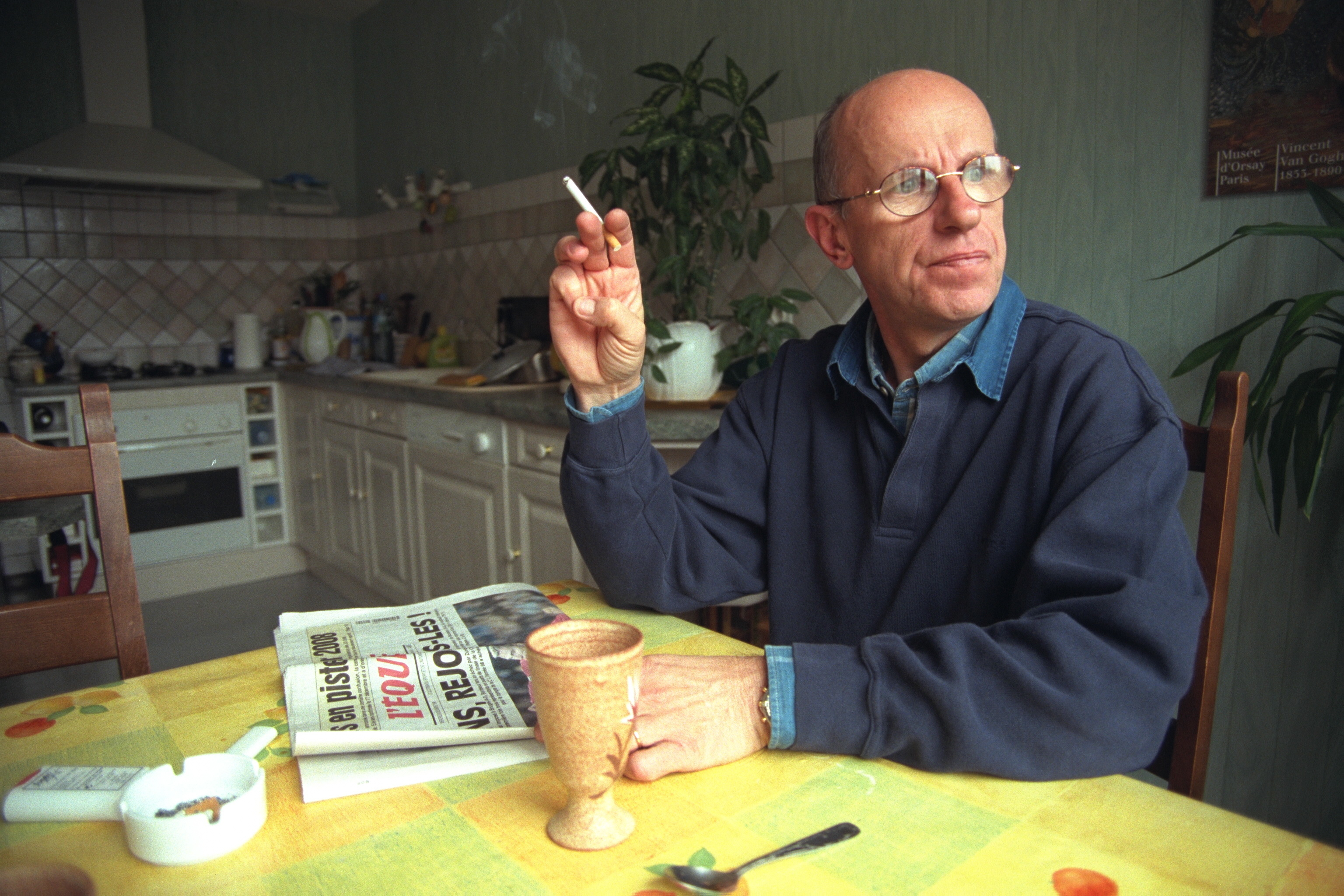
Willy Voet, pictured at home in December 1998 (Image credit: Stephane Ruet/Sygma/Getty Images)
Team soigneur Willy Voet, whose arrest sparked the whole Festina Affair, also wrote a book after being found guilty and given a suspended prison sentence.
Called ‘Massacre à la Chaine,’ the book reportedly sold 300,000 copies and was translated into English. Voet revealed every sordid detail of how he helped riders dope during the 1980s and 1990s, and how riders began to use EPO in the mid-1990s. He suggested that trying to convince riders not to take drugs was “like telling children not to touch chocolate.”
Voet was banned for three years; however, unlike many of the riders he helped dope, he never returned to cycling and confessed to everything he did wrong. He became a bus driver before retiring. He is now 80.