
Published January 20, 2026 01:27PM
Late last night Payson Mcelveen took to Instagram to set some pressing things straight in the world of gravel tech. Buy this man a drink, it was time someone said it.
“I can’t believe how much chatter there is about drop bars being banned at Leadville, but the fact that it’s made such waves is a great sign in its own right. Cool that so many people seem to care. That said, it feels like the record needs to be set straight a bit— this rule change was requested by the riders. The comment sections of @escapecollective, @pinkbike etc have been going pretty wild with folks pissed off on the athlete’s behalf, and I’ve gotten more than a few DM’s asking if Life Time is turning into the UCI. Sorry to disappoint, but y’all have it backwards!
There was a meeting between some of the @lifetimegrandprix athletes and the organizers last fall, and among the many suggestions, doing away with drop bars at Leadville had near unanimous support. And, maybe even more surprising to some of y’all, it was @keegels99 (Keegan Swenson) who brought up the consideration of fairness. Getting a drop bar MTB to work usually requires getting an extra frame and going down a size, a luxury not everyone on the start line has…especially younger up-and-coming riders.
On top of that, most seemed to agree that having a mix of handlebar shapes wasn’t that sweet in a peloton going 40mph into a hole shot, and also might not set the best precedent for age group riders and their own bike setup decisions.
Yes, there are things about these events that could continue to use improvement, but plenty of examples of collaboration between the athletes and organizers the last few years too. I totally get the argument for bike setup innovation, Tomac glory content etc., but as our sport continues to professionalize in new ways, this seems like the right call for now.”
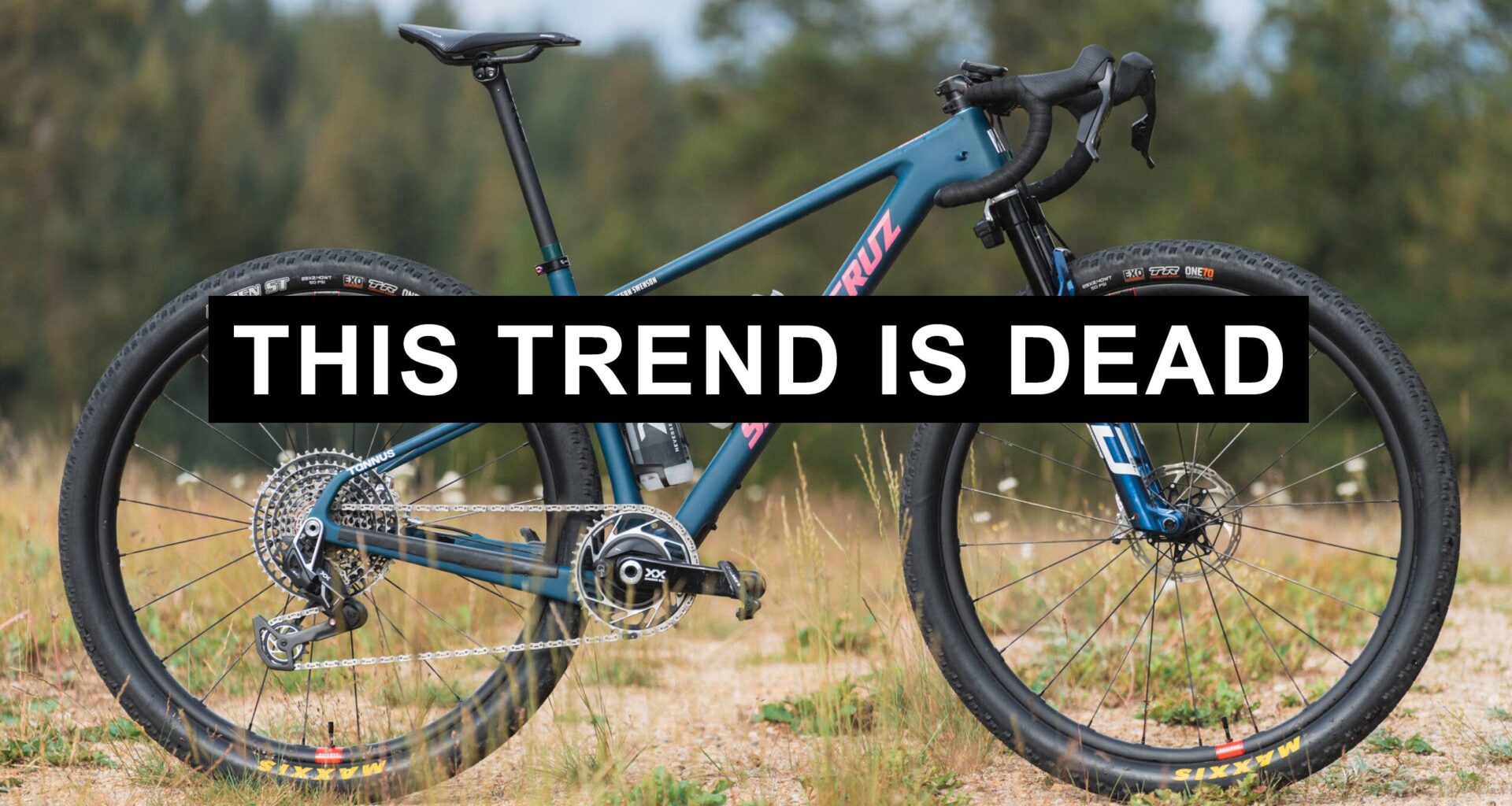
 Swenson won Leadville 2024 on a controversial set of handlebars. (Photo: Life Time)
That’s right, by Mcelveen’s accounting not only was this not what we often see from the UCI but it was, in a way, an indictment of the UCI process. A properly functioning governing organization for a sport is there to provide exactly this kind of guardrail. The participants understood that an arm’s race was taking off and it wasn’t going to be in the best interests of those participating. The governing body responded by adding a rule that put everyone back on even ground.
Keegen Swenson responded in the comments throwing some irony on the fire by saying: “I use drop bars, people hate it. I suggest they ban them, they get banned and now everyone wants them back.”
 (Photo: Pinarello)
This saves you too
Believe what you want but race results drive interest and bike brands respond to that interest. Professional racers do what is required to win, and when the rules don’t have proper guidelines that leads to issues for everyone else.
Drop bar mountain bikes have been in the news as they’ve won events. People start to wonder if maybe they have a mountain bike they can convert and it’ll be faster that way. Then people realize it’s not actually that easy to make it work correctly without dedicated parts.
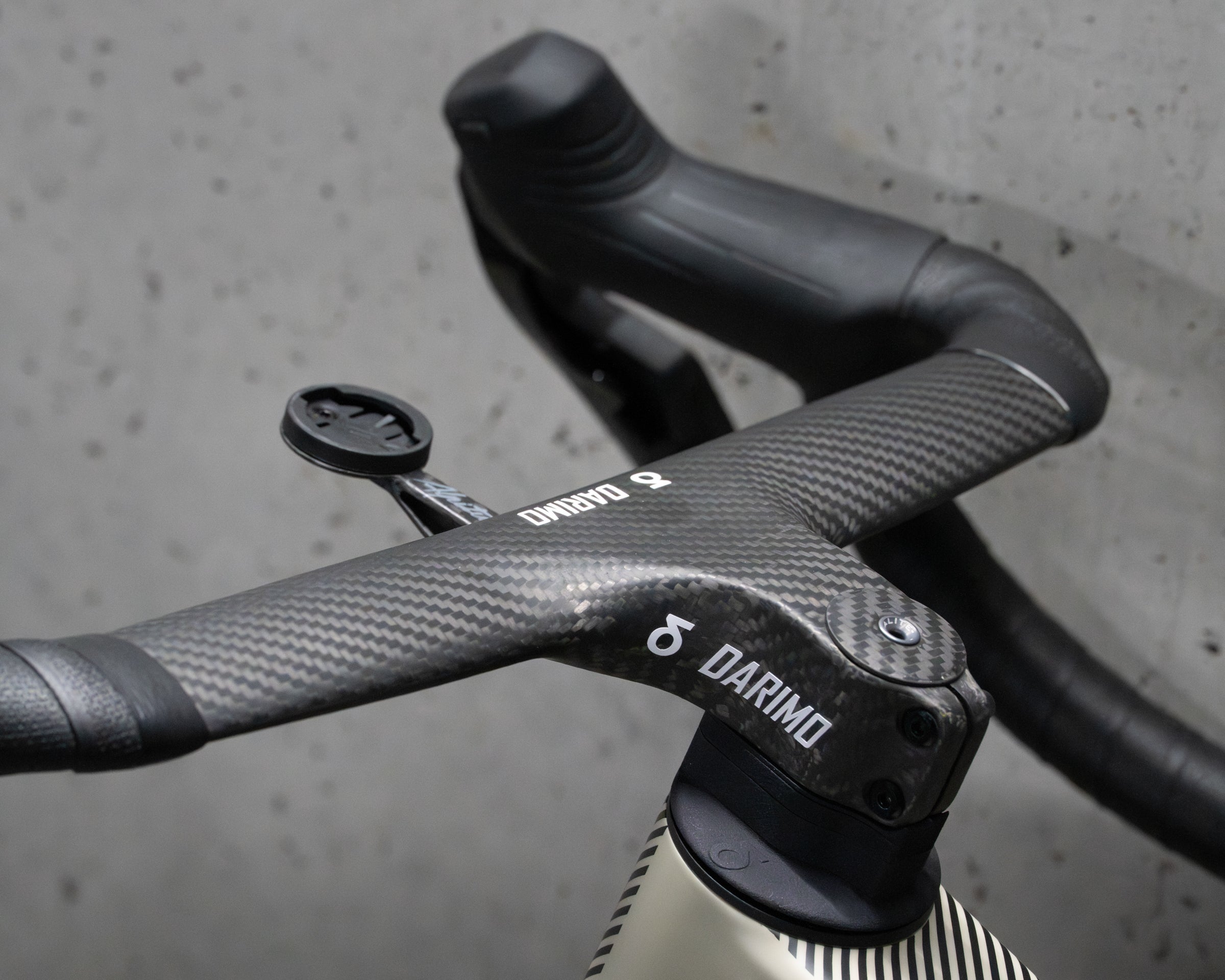
For Dangerholm (aka Gustav Gullholm)’s recent Scott Spark RC gravel build, he rebuilt the chainstays and had Darimo build a special bar and stem unit to make the handling and fit actually work. Not many people can do that and it’s something that Mcelveen acknowledges in his statement. That leaves a hole in the market.
 (Photo: Gustav Gullholm/@dangerholm)
Bike brands then respond by building ready to go conversions. You don’t have to source parts; you just have to put down your credit card and you get something that’s fully engineered. Except is it? Is it actually fully engineered?
What if you are a small brand that just wants to capitalize on a trend without much investment. That would never happen in our small community, right?
And certainly a bigger brand would never take a hard tail, slap road bars, and a bunch of marketing on it… right?
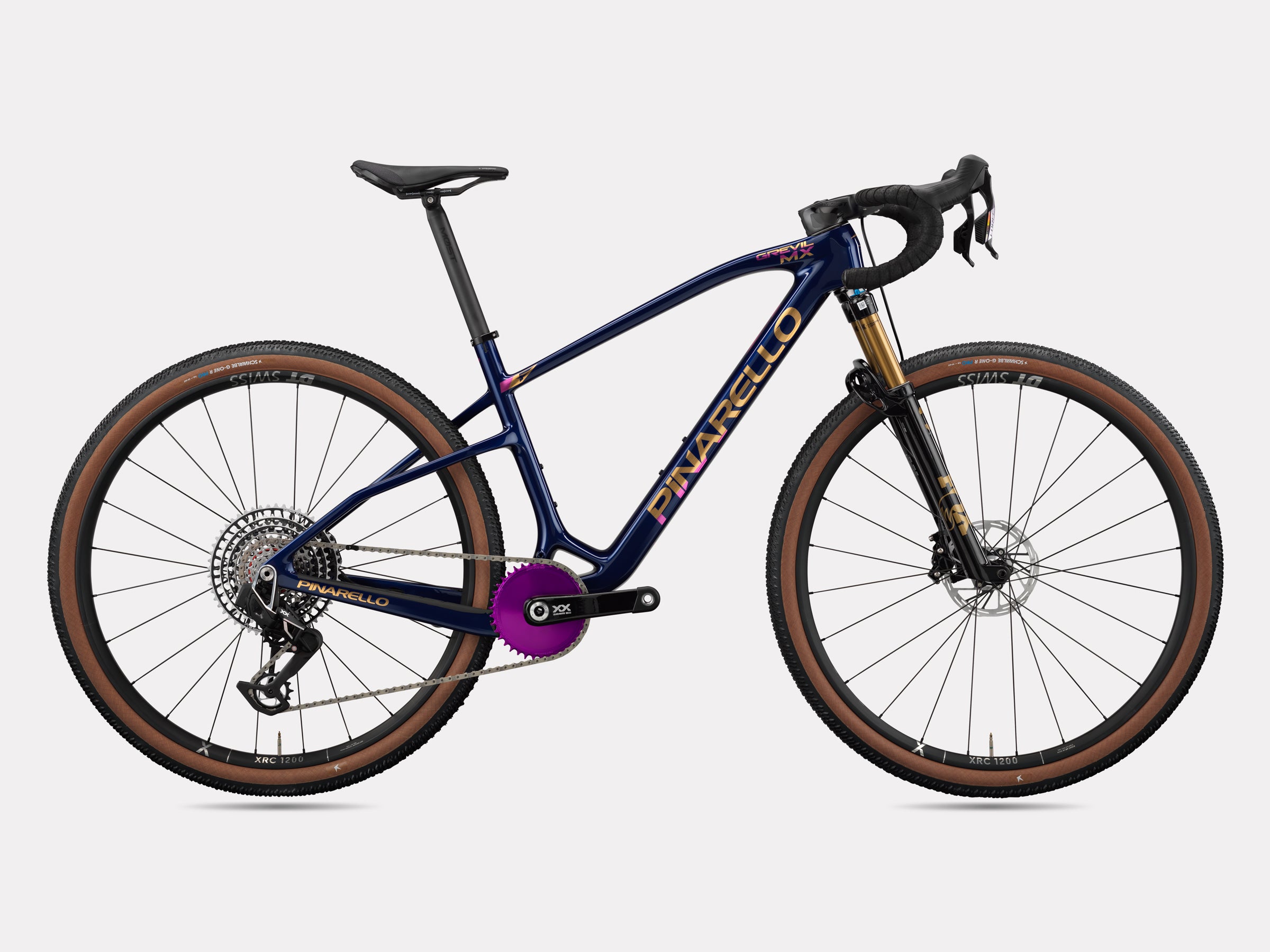
Let me show you the Pinarello Grevil MX that takes the Dogma XC Hardtail frame and changes nothing on the frame (save for the model name painted on the frame of course). At the front there’s a set of the Pinarello MOST Talon Ultra Light handlebars from the road side, which are also unchanged. The tires are switched to Schwalbe G-One R Pro in 50mm front and rear and somehow, with nothing in the frame changed, the Grevil MX magically becomes “optimized for 50mm gravel tires,” achieving “an optimal blend of traction and fatigue reduction.”
No it doesn’t. That’s a mountain bike frame designed around mountain bike tires. Yes you can fit smaller tires but that doesn’t mean it is magically designed around those tires. Either it was never right when it had mountain bike tires or it’s not right with smaller tires. It can’t be designed around both.
Life Time is right to kill this trend in the racing community, but you should also be thanking them. This rule change will save you from bikes like this. The actual use case is incredibly small and Leadville is at the center of that. Banning the trend there means you won’t be seeing drop bar mountain bikes winning races nearly as often. That will mean less headlines about it and that will mean less interest. Brands won’t need to respond.
 (Photo Trek)
Trek Shows Us What Innovation Actually Looks Like
When I wrote about the Trek Checkout, I was skeptical there too. That bike is a full suspension gravel bike that fits 2.2” tires and a dropper. It’s also a mountain bike, but unlike the Pinarello this is how a brand can do it right.
Trek has actual mountain bikes too and this isn’t one of them. The brand engineered a new frame that specifically takes drop bar positioning into account and is actually designed for a narrower tire. This bike is still going to be for a very narrow use case but it also solves a real problem without compromise. Compared to the Trek Procaliber or Supercaliber it’s got a lower bottom bracket, more space in the main triangle, and more flexibility for wheel choices with standard road and gravel axle spacing.
There are people who want to get very rowdy on a gravel bike. Some of those people just want to buy a well engineered bike instead of trying to convert something with a handful of parts. If that’s your desire, there’s still a place for that when a brand actually takes the time to create something that solves the equation.
Life Time and the riders who sit at the table where decisions are made have saved us from parts bin cash grabs. If there’s truly a market for gravel bikes that are very nearly mountain bikes, the segment now has the space to grow organically through smart engineering. Stand up and clap if you are a fan.
 SGV on the way to winning Leadville (Photo: Life Time)
Mountain bikes are actually fun and Life Time is not the UCI
Mountain bikes have a long history of being really good bikes and adapting to changing needs over time. There’s real fun to be had that’s distinct from what’s possible, or fun, on a gravel bike. Let that be and let racing them be allowed to survive.
Innovation is great but it should be about solving problems and making the ride better. It should not be about adding barriers to entry. Life Time killed the drop bar mountain bike and it’s not going to stifle progress. The decision will save us from expensive parts-bin bikes. That is a win for everyone.
Also, Life Time made the change in the best way possible. This was a decision of stakeholders. Life Time worked with the riders in the series to help protect the sport instead of issuing a proclamation from the top. What a nice change of pace over here in the drop bar world.