

About 30 per cent of patients involved in a pharmacy pilot had no other health-care options, says Chris Folkins, the co-author of the second part of a report looking at the province’s cancelled pilot in pharmacist care clinics.
“People felt that it was taking care of their needs and potentially preventing them from having to seek more challenging means of care, like visiting the ER,” Folkins said.
Survey results included in the report also showed that while 66.2 per cent of clients had a primary care provider, this varied greatly depending on the reason for the visit.
Only 11.1 per cent of clients seeking attention because of their chronic diseases had a primary care provider.
The report examined a pilot program launched by the Blaine Higgs government in 2023 that allowed pharmacists to manage and prescribe for certain chronic conditions, such as diabetes and asthma. The clinics also had point-of-care testing and prescribing for patients three or older with symptoms of strep throat.
The report completed by Data N.B. at the University of New Brunswick looked at 3,090 clinic services provided during the observation period.
It examined how the clinics affected people’s health and use of other health-care services as well as what clients and staff thought about the program.
The report examined a pilot program launched by the Blaine Higgs government in 2023 that allowed pharmacists to manage and prescribe for certain chronic conditions, such as diabetes and asthma. The clinics also had point-of-care testing and prescribing for patients aged three or older with symptoms of strep throat.
 Chris Folkins, a researcher with Data N.B., at the University of New Brunswick, said he thinks the report makes it clear that there is a need and demand for access to care.
(Submitted by Chris Folkins)
According to the report, among chronic disease clients, the most common intervention was pharmacist prescriptions, at 51.7 per cent of services. The next most common was pharmacist-initiated change in drug therapy, at 15.4 per cent.
The pilot ran clinics in six locations — Fredericton, Moncton, Hampton, Paquetville and Riverview — but was ended last year by the Susan Holt government.
At the time, the Department of Health said “the pilot did not significantly impact health outcomes.” Meanwhile, the New Brunswick Pharmacists’ Association expressed disappointment over the cancellation of a program that it said worked well.
CBC asked for an interview with the health minister but did not get one.
Instead, an emailed statement from Health Minister John Dornan was provided. The statement said that the majority of about 10,000 appointments conducted during Data N.B.’s evaluation period were for services still funded by the government, including assessment and treatment of common ailments and prescription renewals.
These don’t include the additional services from the pilot of chronic disease medication management and Group A strep testing and prescribing.
“When the pilot wrapped, rather than funding these additional services as part of a stand‑alone, pharmacy‑only model, the Department of Health chose to focus on working to integrate pharmacists into collaborative care teams, where they can have the greatest impact,” the statement read.
According to more than 900 pages of documents obtained through a right-to-information request last year, the pilot showed that improving access wasn’t simple, and that the government was warned about pitfalls at the very beginning.
The first part of the UNB evaluation report that was released earlier in 2025 and conducted for the pharmacists’ association found high patient satisfaction with the program.
That part of the report evaluated the pilot’s implementation, clinic operations, services provided and client experiences.
In a recent interview, Folkins said he thinks the report makes it clear that there is a need and demand for access to care.
“I think it was really encouraging to see how readily this new option was embraced,” he said.
“There didn’t seem to be any sort of, you know, initial trepidation or ramping up period. Right away, you know, the public was ready to embrace and take advantage of this offering.”
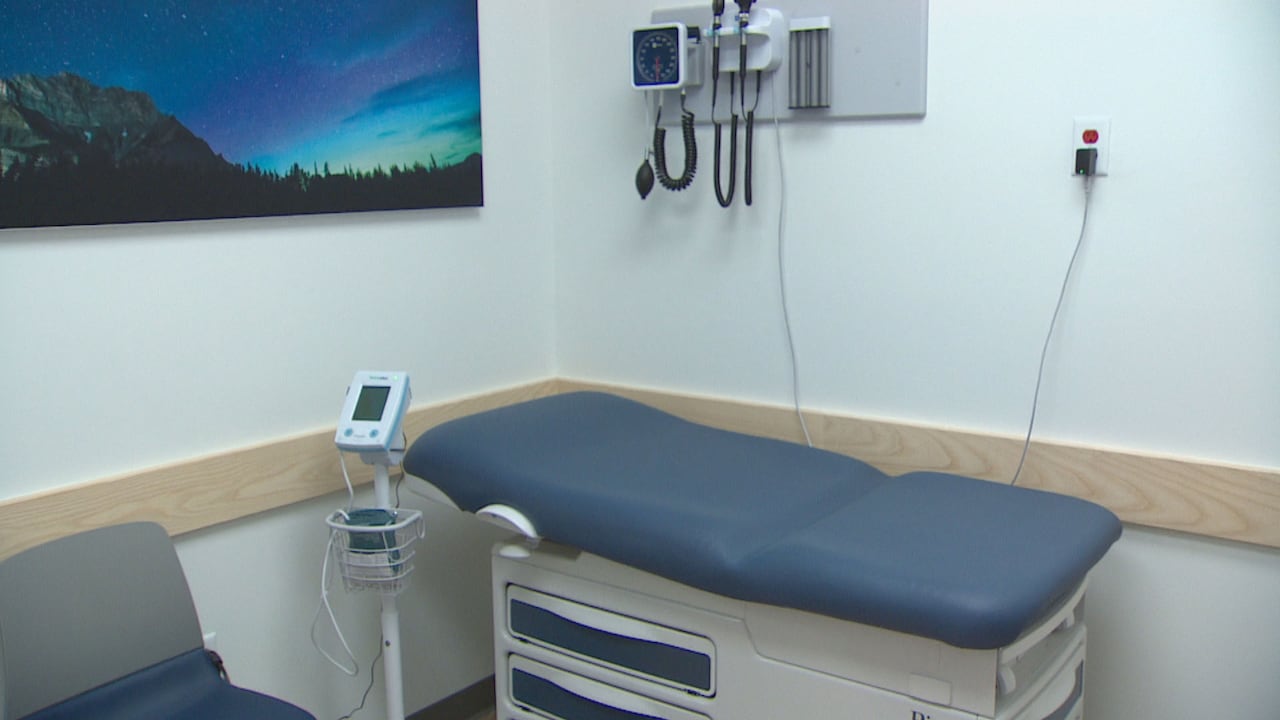 The participating pharmacies in the pilot had clinical areas to consult with patients. (Jonathan Collicott/CBC)
But one of the issues with the pilot, revealed through the assessment, said Folkins, was that pharmacists operating the clinics weren’t able to order bloodwork for patients. He said while they could prescribe medications, they couldn’t necessarily monitor those medications with the appropriate bloodwork.
“When bloodwork was required, the pharmacist had to refer the patient to a physician to have the bloodwork ordered, and so you can imagine, this sort of introduces an extra step to the process.”
Still, Folkins said the response from pharmacists was very positive.
He said there was a feeling that these clinics were a very feasible thing to do within the pharmacies.
As well, Folkins said, there was a lot of satisfaction among pharmacists because they were able to practise to the top of their scope.
“Pharmacists have training to provide these types of services, but historically, they haven’t always been given the opportunity to use all of that knowledge and skill to provide the best care possible to their patients,” he said.
Folkins said there are many decisions being considered at the government level on where to go with the health-care system and the pharmacy care clinics are just one.
But he said he thinks it was important to have the pilot to understand the strengths and limitations of these clinics and see what might need to be tweaked if it was rolled out on a larger scale.
“In our evaluation, we saw some positive results, we saw the types of benefits that can be gained from this approach,” he said.
“So I can’t say for sure, you know, what the next steps will be, but I hope this remains on the table to be considered, because I think there’s a potential for a lot of benefit here for our patients.”