
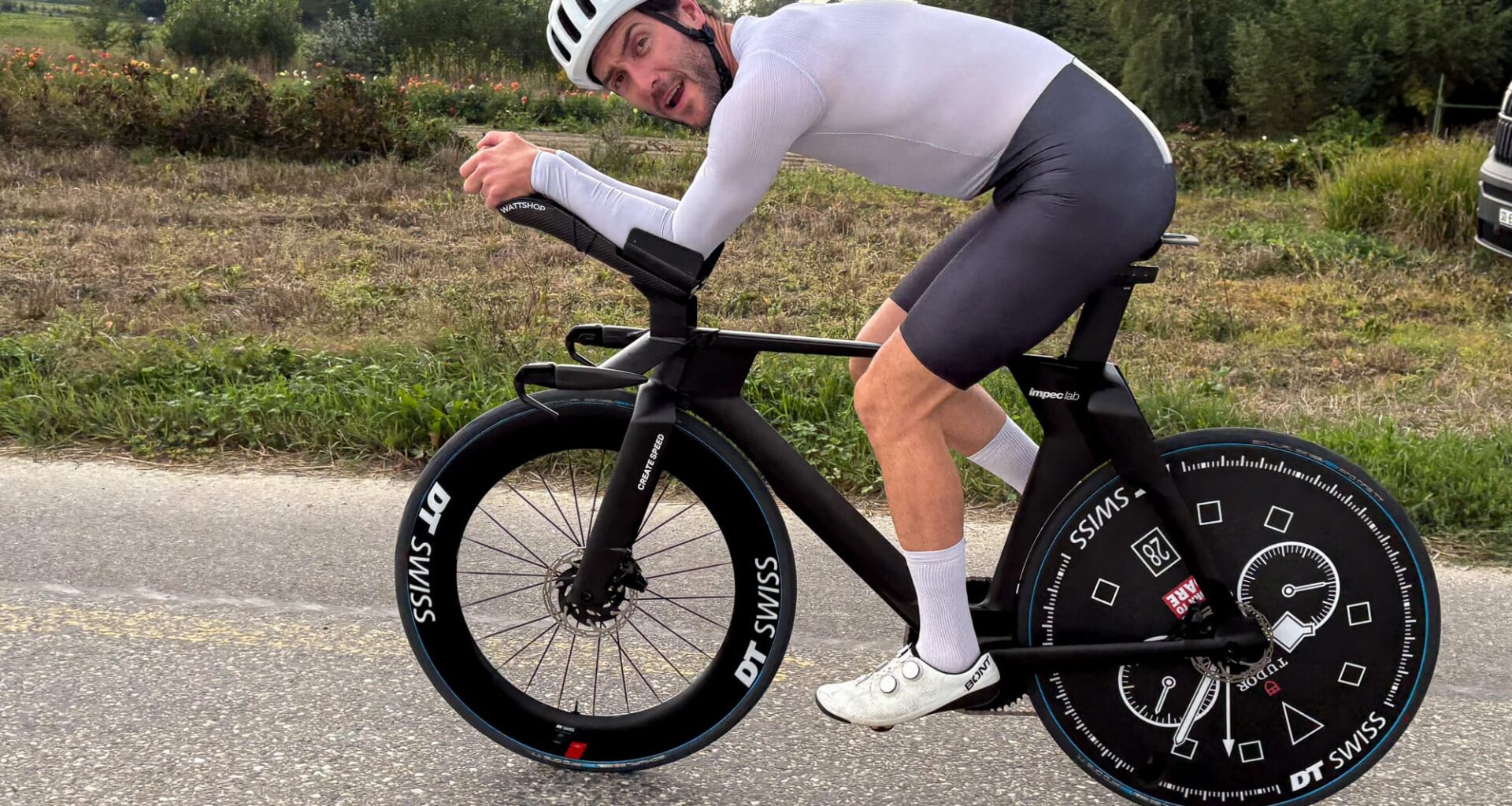
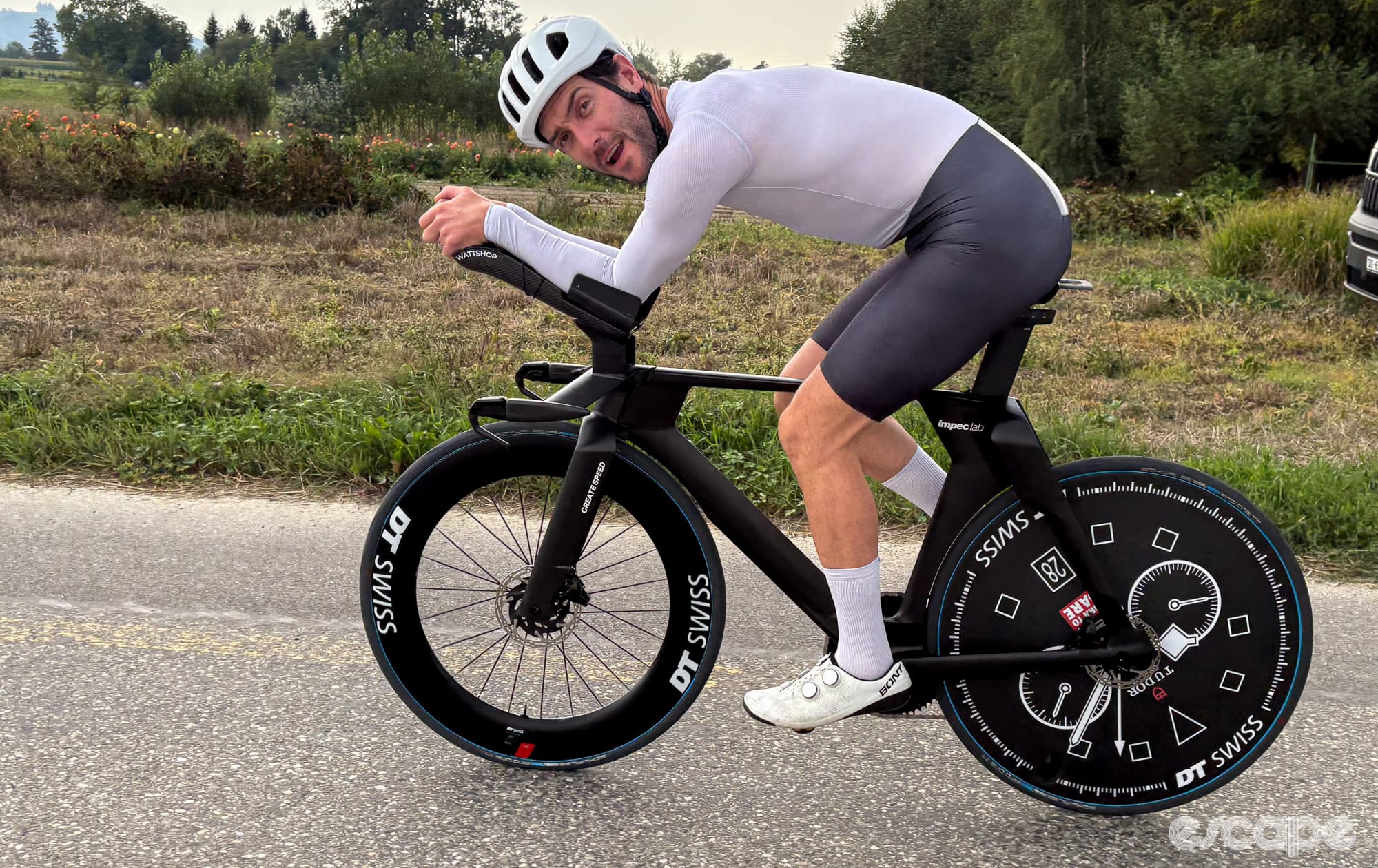
Concept validation is quickly followed by disaster when the UCI changes its frame design rules.

Ronan Mc Laughlin
This is part two of an exclusive series following Escape embedded within BMC’s development project of its new, as-yet-unreleased time trial bike. In this instalment, we explore how BMC and its pro team partner, Tudor, validate the initial design concept from part one through wind tunnel testing. The team has to overcome an unexpected setback from a costly UCI rule change, and then all the hard development work gets a crucial real-world accountability moment with early prototype ride testing.
Exclusive: Inside BMC and Tudor’s innovative time trial project
The bike brand and its team partner invited us to document the development of a time trial bike still so new even some of Tudor’s pro riders haven’t seen it yet.
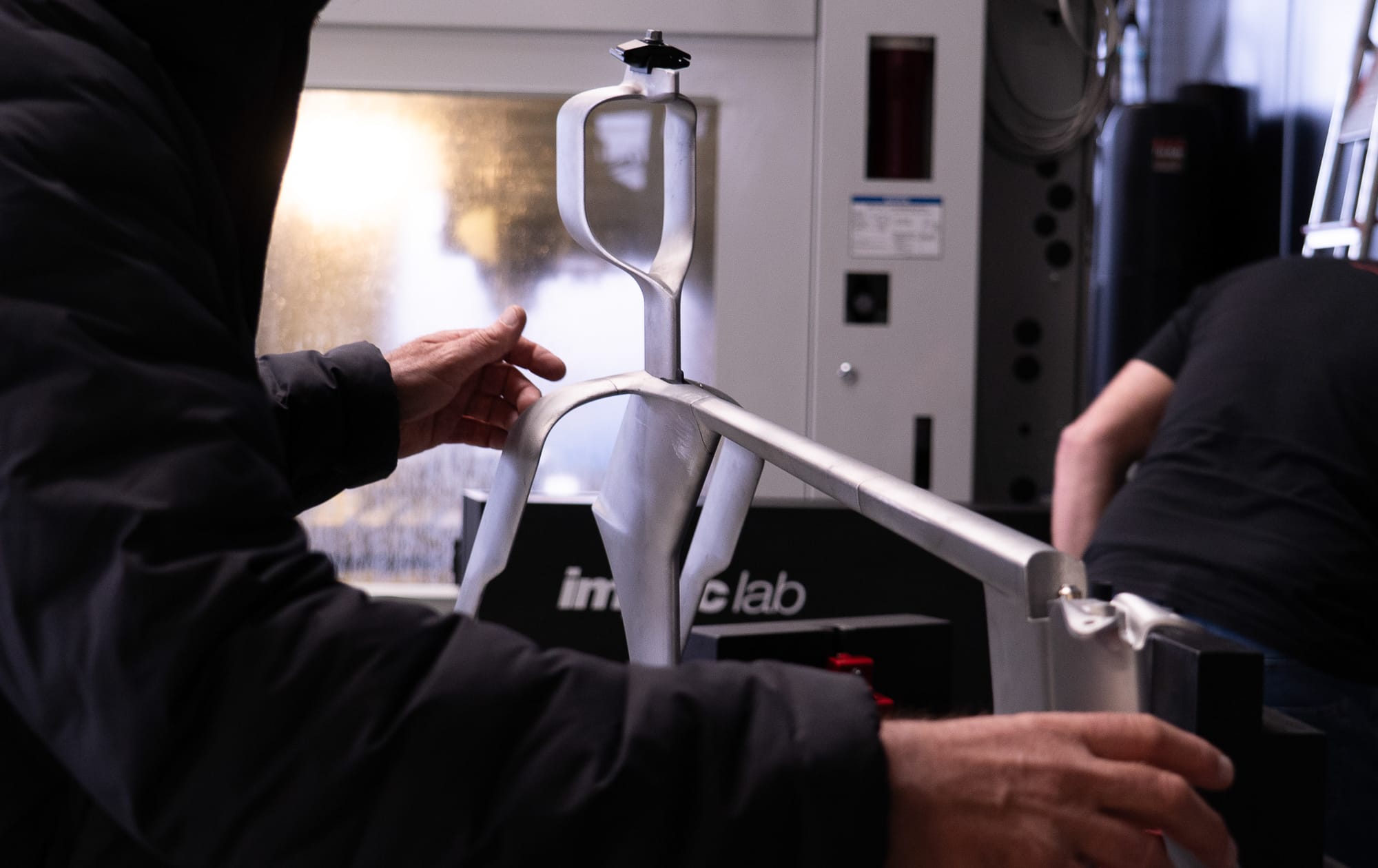
I spent a large chunk of part one detailing how Tudor differs from other pro teams and how its performance engineering lead focus aids its partners. It was with that in mind that I traveled to Silverstone wind tunnel last February, keen to see how this approach manifests in aero development.
Wind tunnel testing is critical in modern performance bike development but, unfortunately, we often get marketing hype instead of detailed insight. BMC and Tudor were testing the 3D-printed prototype frame we saw at the end of part one. Embedding in the project this early would let me witness how a performance-first project utilises tunnel time.
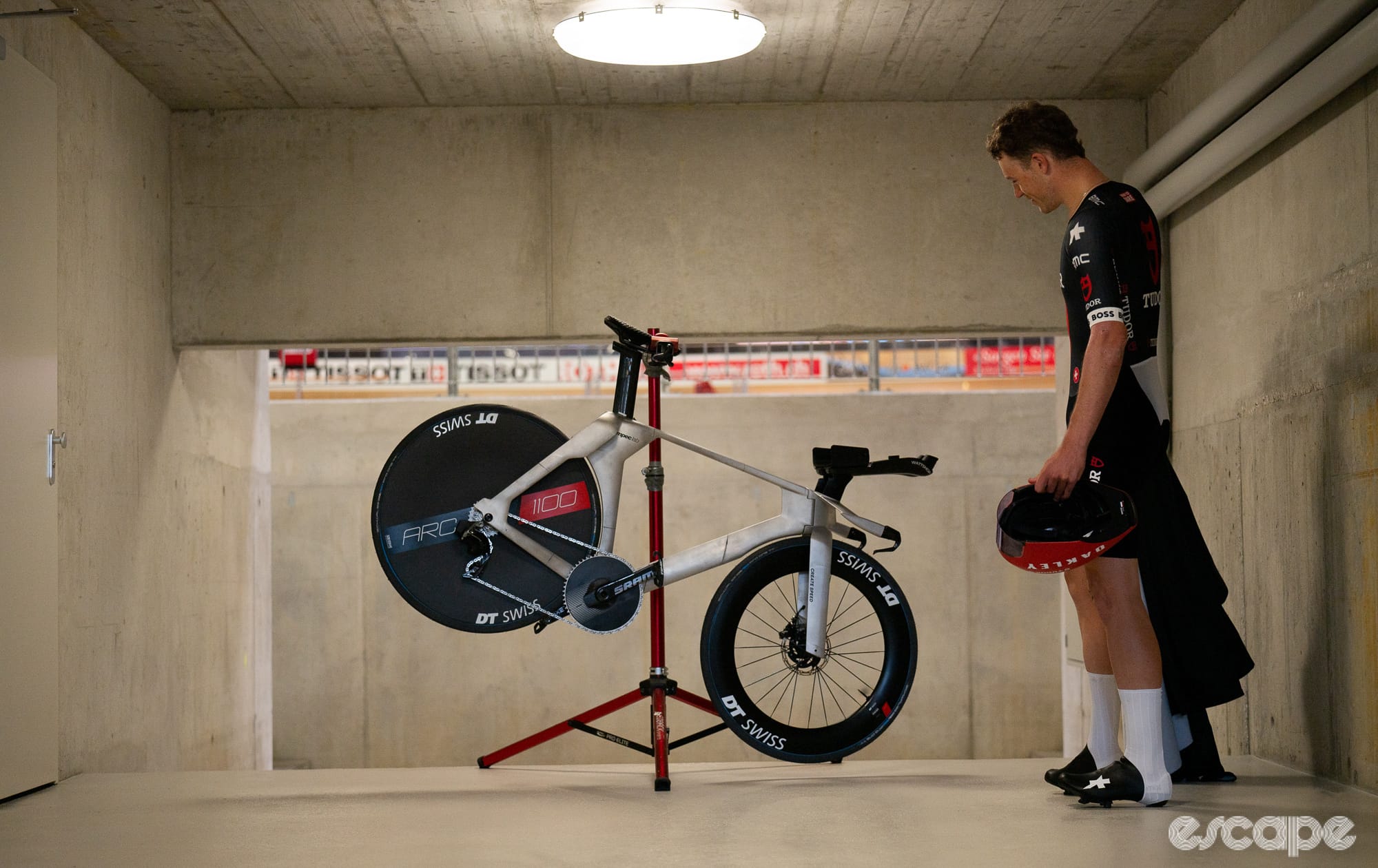 Tudor rider Maikel Zijlaard eyes the 3D-printed prototype.
The test matrix wasn’t extensive. Kurt Bergin-Taylor, Tudor’s head of innovation, quipped that anyone could show up at a wind tunnel facility, pay for an hour of testing, and, in theory, complete the same work his team had done over multiple days.
This isn’t due to inefficiency on Tudor’s or BMC’s part, but rather the rigour and attention to detail needed to deliver reliable, accurate information and confidence from their testing to inform the next development step. That includes testing at 11 yaw angles and three speeds, with three repeats of every test, plus baseline repeats, end-of-day and next-day repeats, all with a taring (zero offset) between every repeat, which Bergin-Taylor admitted is a “pain in the ass” and doubles the run time but is critical to ensuring accuracy and validity.
But those controls are nothing without repeatability from test run to test run, and humans are notoriously bad at repeatability, especially over long testing sessions.
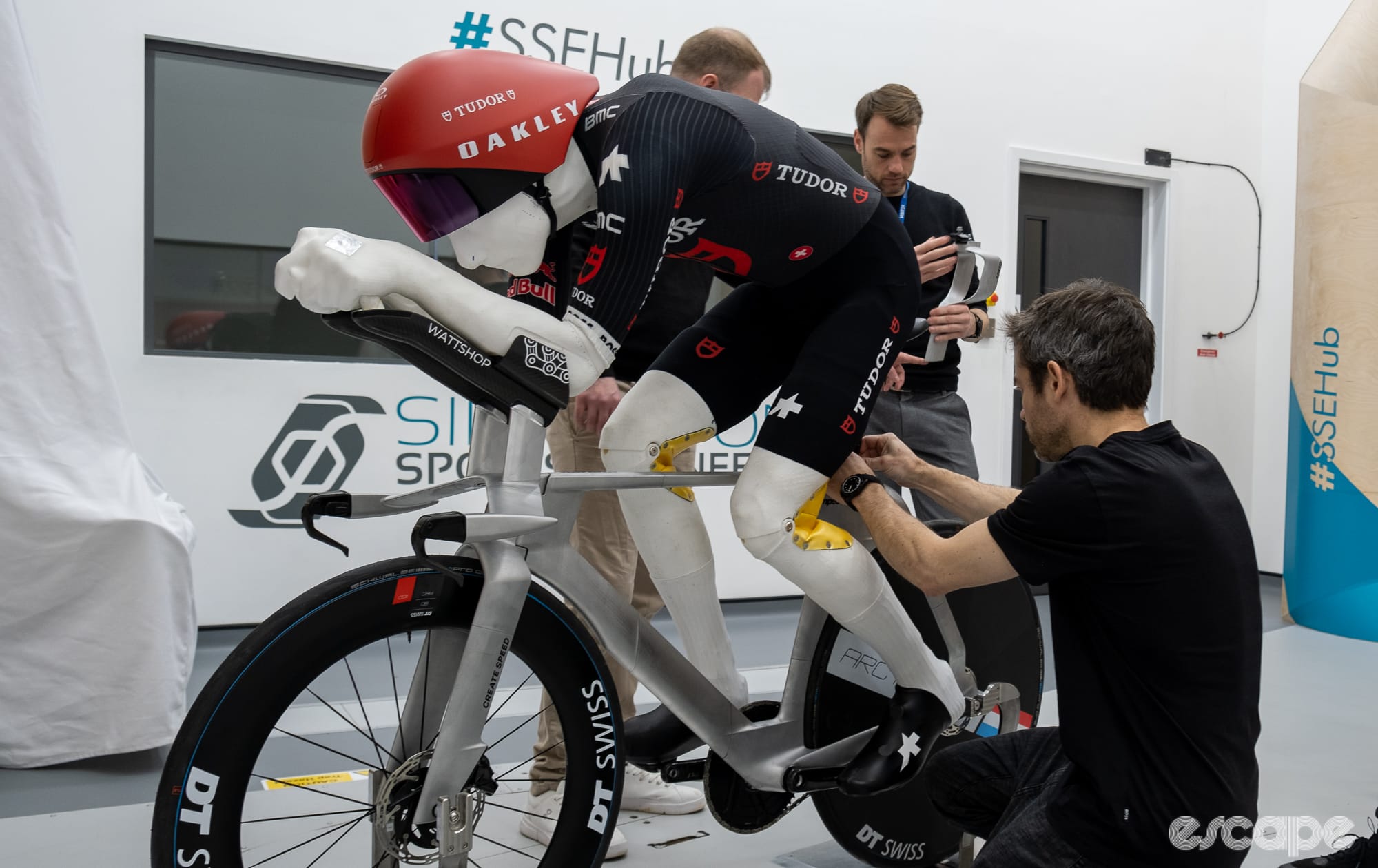 Not much for conversation, but a great tester
Enter Tudor pro rider Joel Suter – not the real Joel Suter, but a 3D mannequin of him equipped with spring-loaded joints to become the team’s pedaling test dummy.
The team initially created a single prototype mannequin to improve testing efficiency, as human riders get hungry, need to travel, which costs them racing and training time, and have lower repeatability. The project team has since developed several more mannequins, each a full-size replica of a specific rider – I saw Marc Hirschi getting scanned for his mannequin on a subsequent visit. They’re created using high-resolution 3D scans with sophisticated scanners that cost €40,000 apiece. The mannequins are detailed enough to show individual features like veins, but their real party piece is the true-to-form pedaling motion.
This isn’t the first pedaling mannequin ever used in cycling, but BMC and Tudor insist it’s potentially the most accurate in the industry. Creating it wasn’t simple, but it was considered superior to a human subject with less repeatability between test runs, or a static mannequin. The latter, Bergin-Taylor explained, is insufficient – especially for this project – because moving legs are essential to understanding the interaction effects between the rider and the bike.
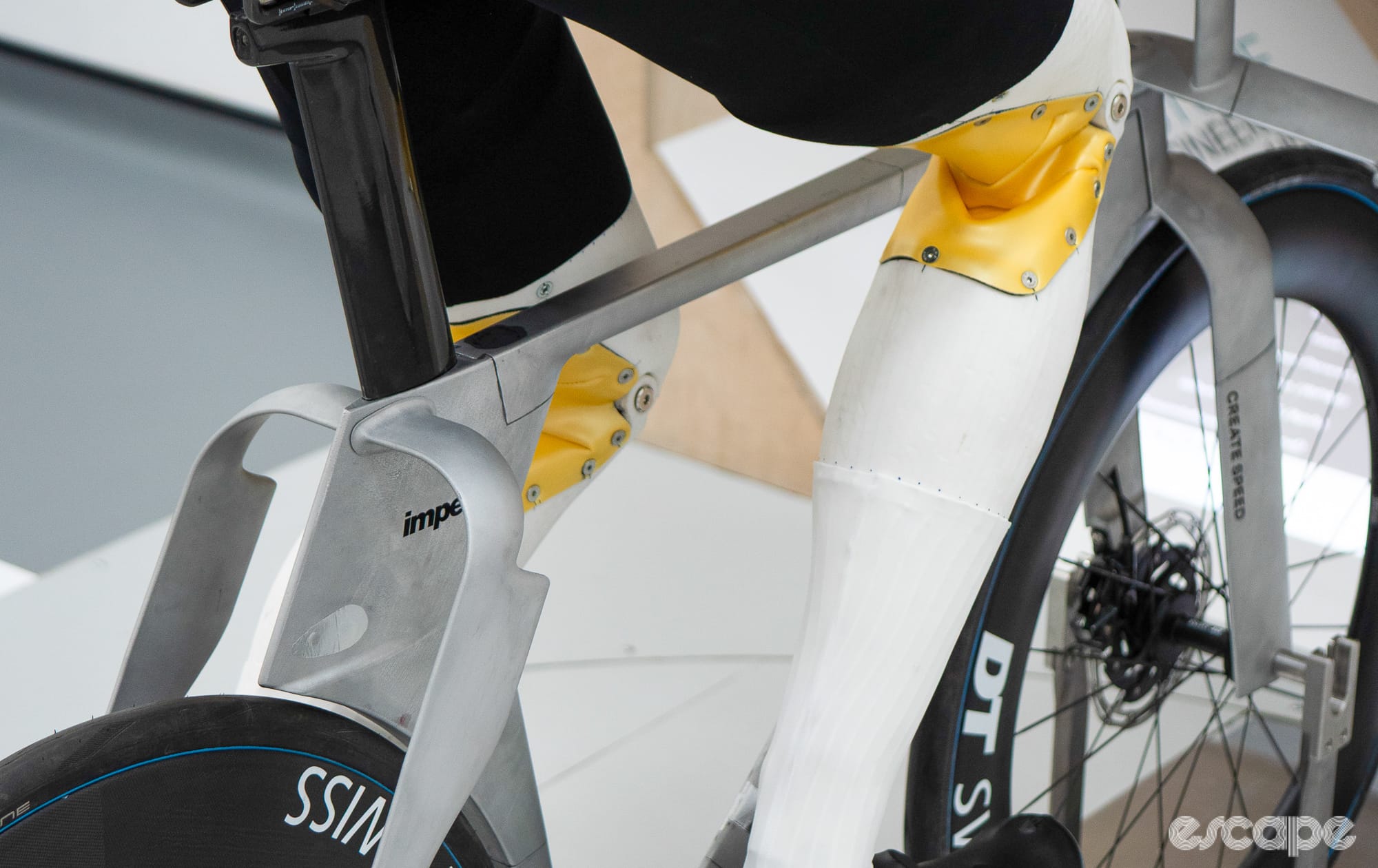
Both parties explained how creating a pedaling mannequin is a formidable engineering feat, primarily because the human body’s pedaling motion is a complex chain of events between muscle groups contracting and relaxing across the foot, knee, and hip joints.
This post is for paying subscribers only
Subscribe now
Already have an account? Sign in
Did we do a good job with this story?
👍Yep
👎Nope