
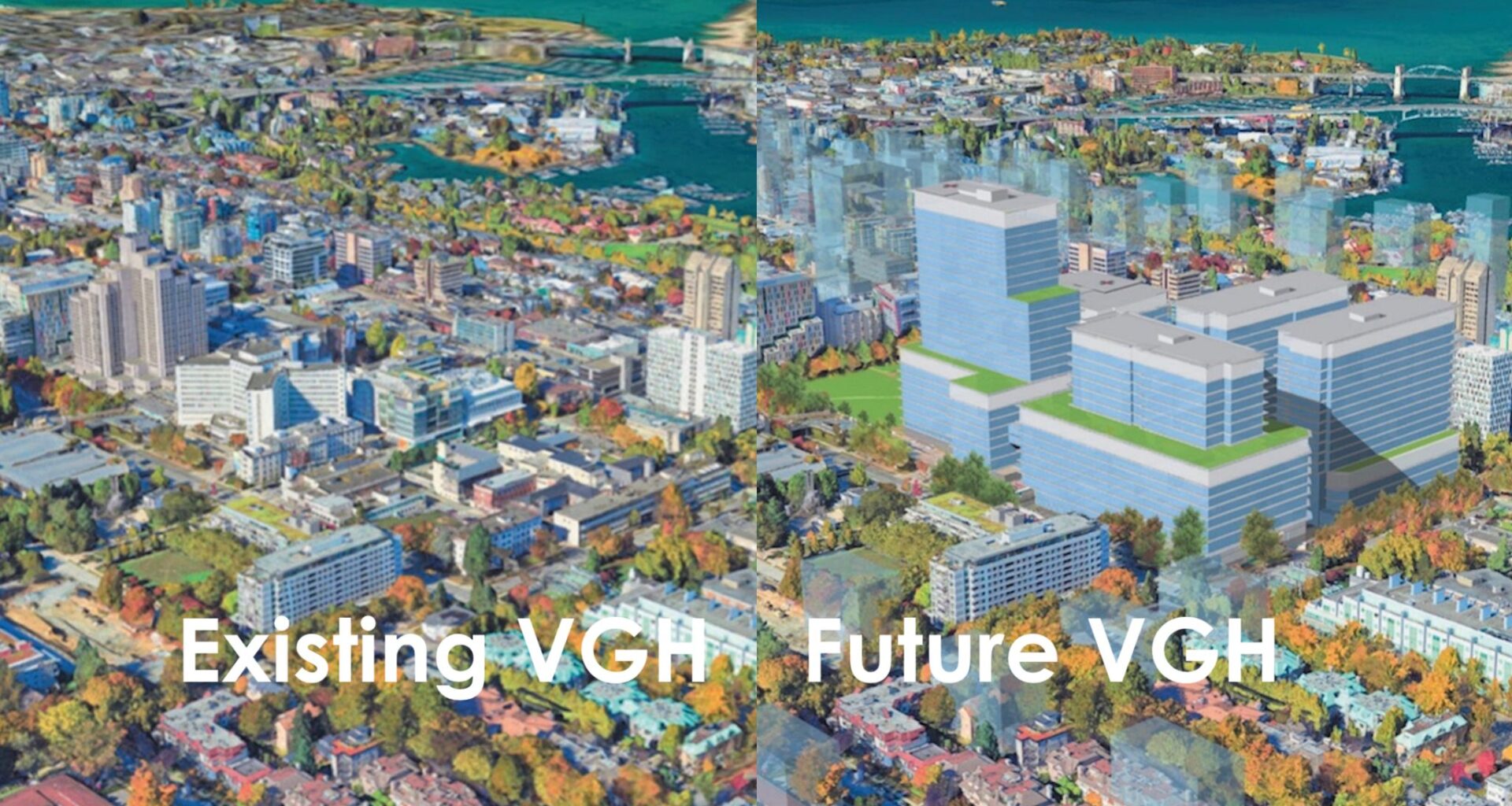
In over 30 years from now, if all goes as planned, nearly the entire 34-acre Vancouver General Hospital (VGH) campus will be completely unrecognizable, with all of the buildings that are now currently associated with VGH demolished and replaced with taller and wider buildings for drastically modernized and expanded healthcare facilities.
This includes the eventual demolition of the entirety of the Jim Pattison Pavilion and its landmark 1991-built, 299-ft-tall tower, as well as the Laurel Pavilion and Leon Blackmore Pavilion buildings. Altogether, at least 12 buildings will be demolished over the coming decades.
Vancouver Coastal Health Authority has submitted a rezoning application for a campus-wide master plan to guide the future evolution of British Columbia’s largest and principal hospital, which provides a wide range of highly specialized services for treating the province’s most critically ill patients. Formal public consultation on the proposal is scheduled to begin in February 2026. The full details of the health authority’s application were made public today, following a pre-application consultation conducted last fall.
This is not to be confused for Vancouver City Council’s approval last week of the separate and comparatively far smaller rezoning application by VGH & UBC Hospital Foundation to build two towers with 885,000 sq. ft. of non-acute healthcare uses — including clinical support and long-term care uses — on a 1.4-acre site at the southwest corner of the precinct.
In stark contrast, the health authority’s master plan calls for over 3.2 million sq. ft. of brand new building floor area, with the total floor area of new and existing/retained buildings at the campus fluctuating from 2.9 million sq. ft. during Phase 1 of construction to over 4.5 million sq. ft. during the 10th and final phase, with such facilities focusing on acute-care healthcare. These figures do not include the foundation’s separate project, which will be space leased by the health authority upon completion.
The number of vehicle parking stalls will rise from nearly 2,200 today to about 5,000 by the final phase, with the new parking built underground.
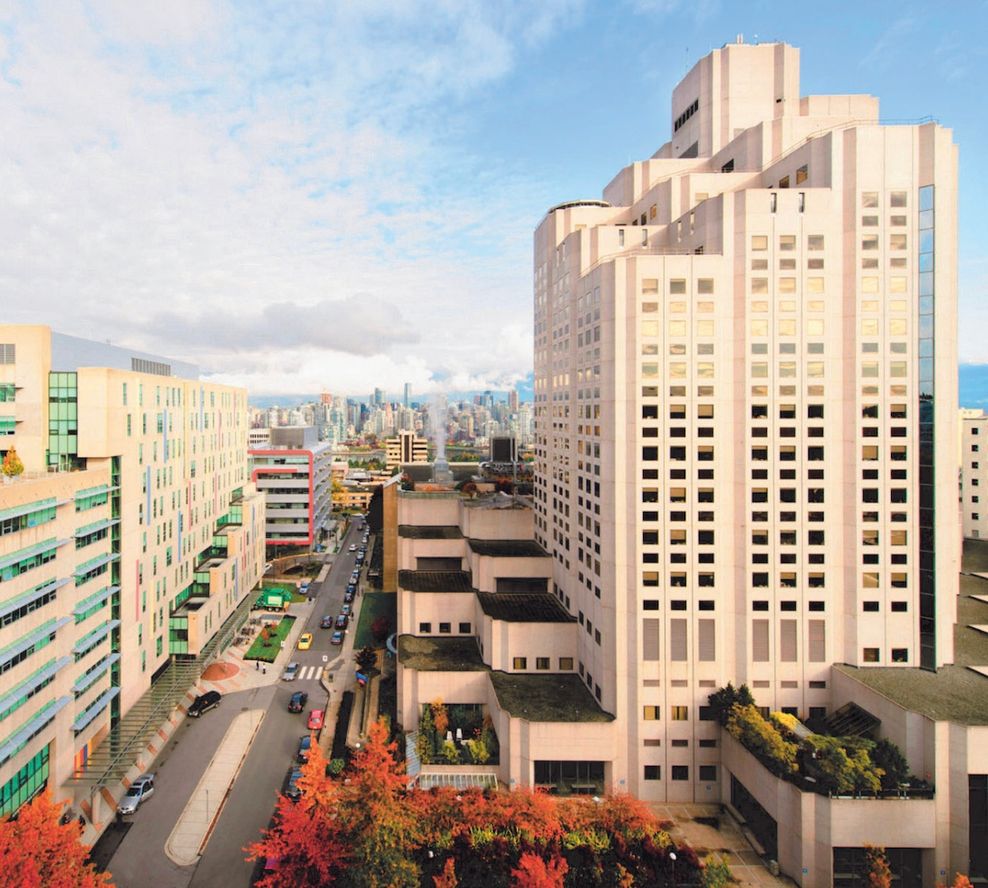
Jim Pattison Pavilion tower at the Vancouver General Hospital campus will be demolished. (Kasian Architecture/Vancouver Coastal Health)
Existing condition:
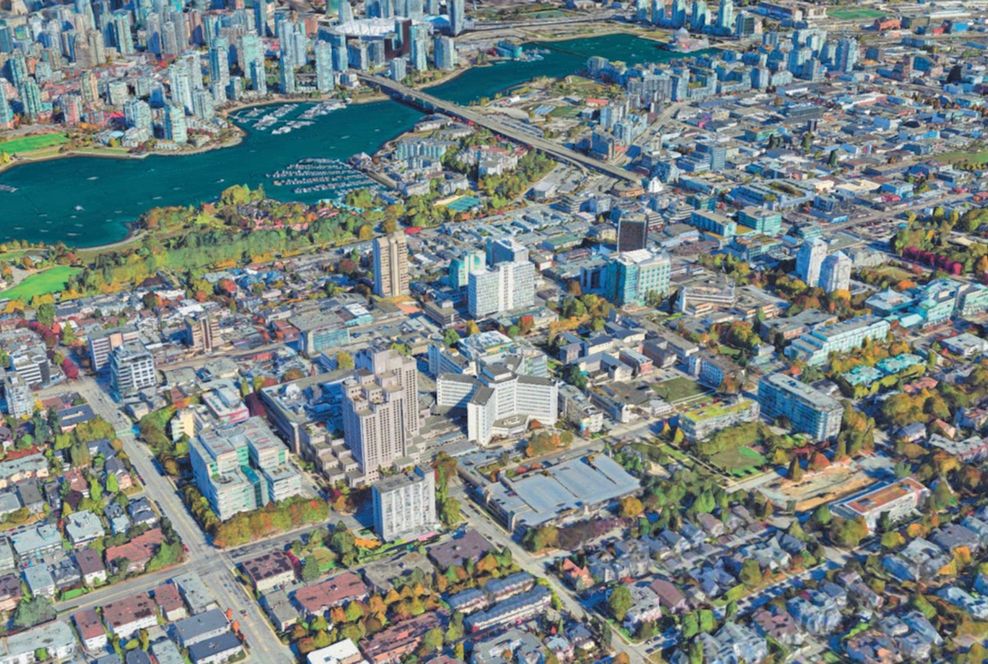
Existing condition of the Vancouver General Hospital campus. (Kasian Architecture/Vancouver Coastal Health)
Future condition:
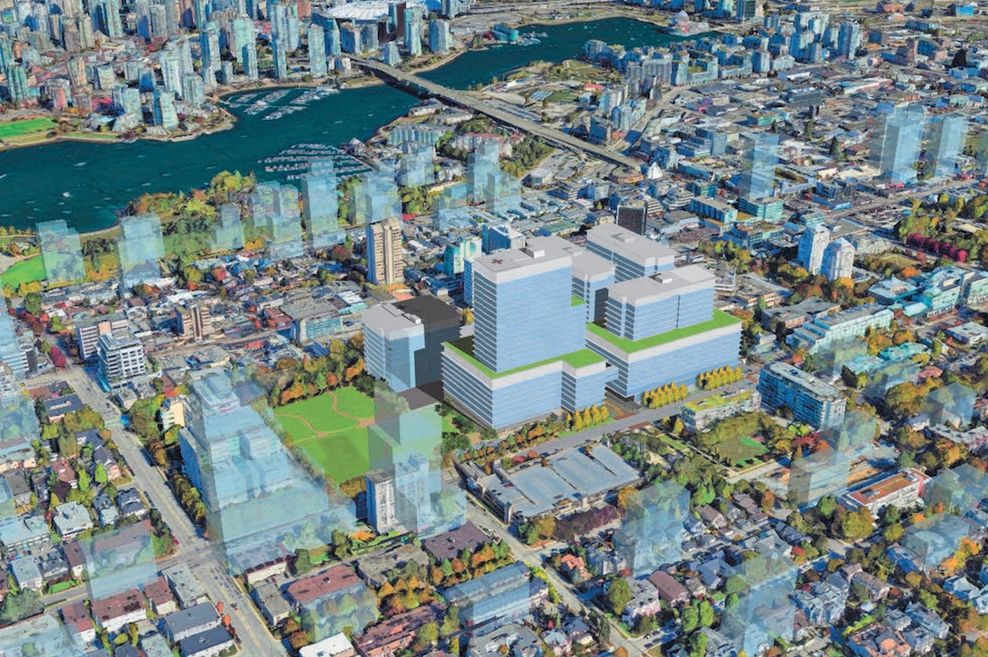
Full buildout concept (Phase 10) of the Vancouver General Hospital campus redevelopment. (Kasian Architecture/Vancouver Coastal Health)
At the core of the health authority’s master plan is a recognition that VGH must evolve to meet mounting pressures, including significant long-term population growth in the immediate local area (Broadway Plan area), the Vancouver proper area, and wider Metro Vancouver region, as well as a rapidly aging demographic, increasing demand for specialized and emergency care, and aging facilities that in some cases date back to the 1950s and 1960s, which the application deems to be “operationally obsolete” for not meeting the latest standards of optimal healthcare design.
According to the health authority, inpatient and emergency bed shortages create daily operational challenges leading to delays in inpatient admissions from the emergency department.
VGH is expected to see a demand surge requiring 1,468 patient beds as early as 2035 — up from the current capacity of 1,063 beds. The vast majority, 80 per cent, of the inpatient beds are located in buildings constructed between 1953 and 1989. Average daily visits to VGH’s emergency department, built in the mid-1970s, are expected to increase from 267 in 2023 to 388 by 2045.
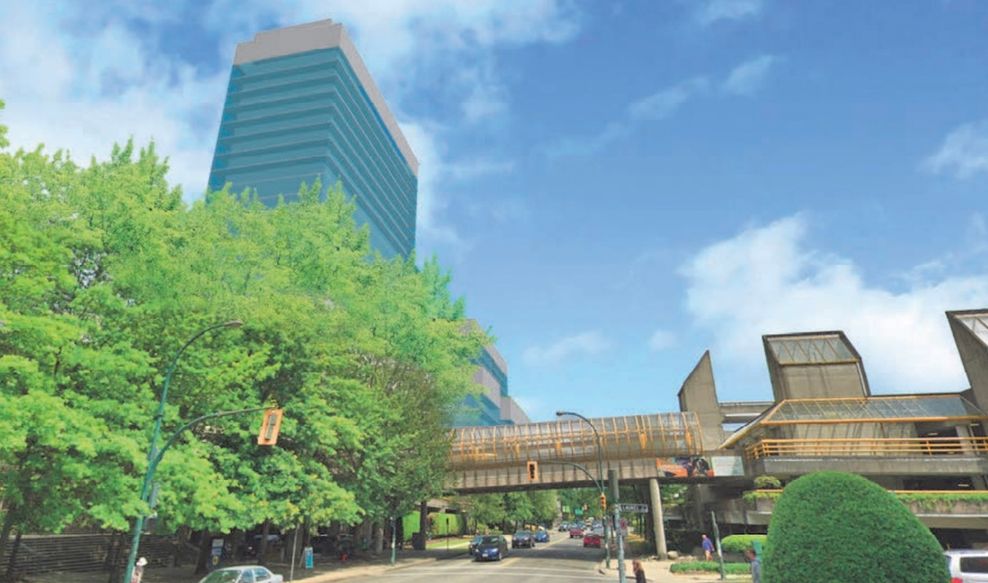
Full buildout concept (Phase 10) of the Vancouver General Hospital campus redevelopment. (Kasian Architecture/Vancouver Coastal Health)
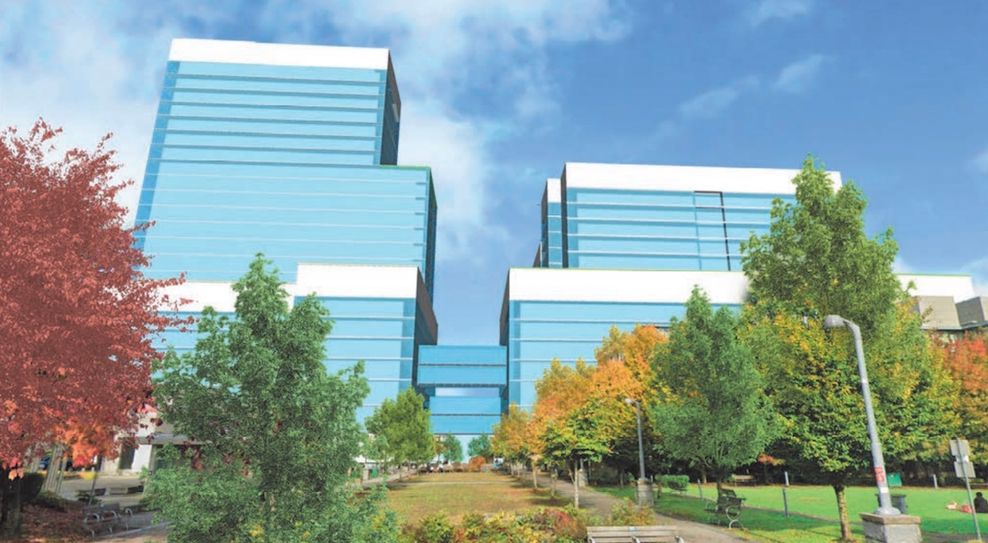
Full buildout concept (Phase 10) of the Vancouver General Hospital campus redevelopment. (Kasian Architecture/Vancouver Coastal Health)
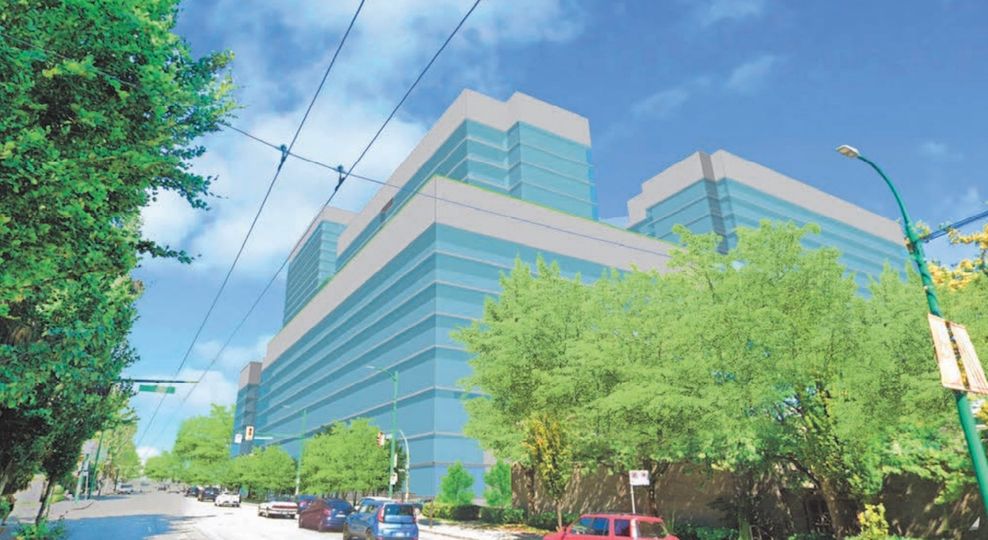
Full buildout concept (Phase 10) of the Vancouver General Hospital campus redevelopment. (Kasian Architecture/Vancouver Coastal Health)
The master plan does not specify the number of patient beds that will ultimately be delivered through the phased redevelopments; however, a substantial increase from current capacity over the coming decades is not out of the question, given the overall growth of the campus and the introduction of more efficient floor plans and layouts, including very large floor plates designed to support modern healthcare operations.
Currently, nearly 10,000 people work at the campus — a figure that is also expected to significantly grow as healthcare services are expanded. This is also a major research and teaching hospital for the University of British Columbia.
Existing condition:
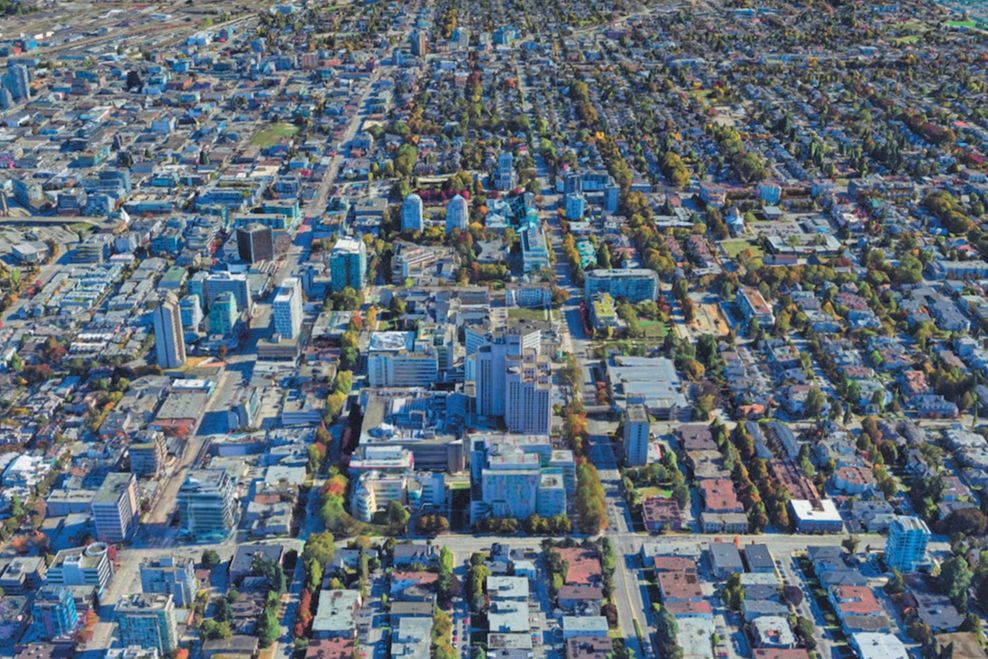
Existing condition of the Vancouver General Hospital campus. (Kasian Architecture/Vancouver Coastal Health)
Future condition:
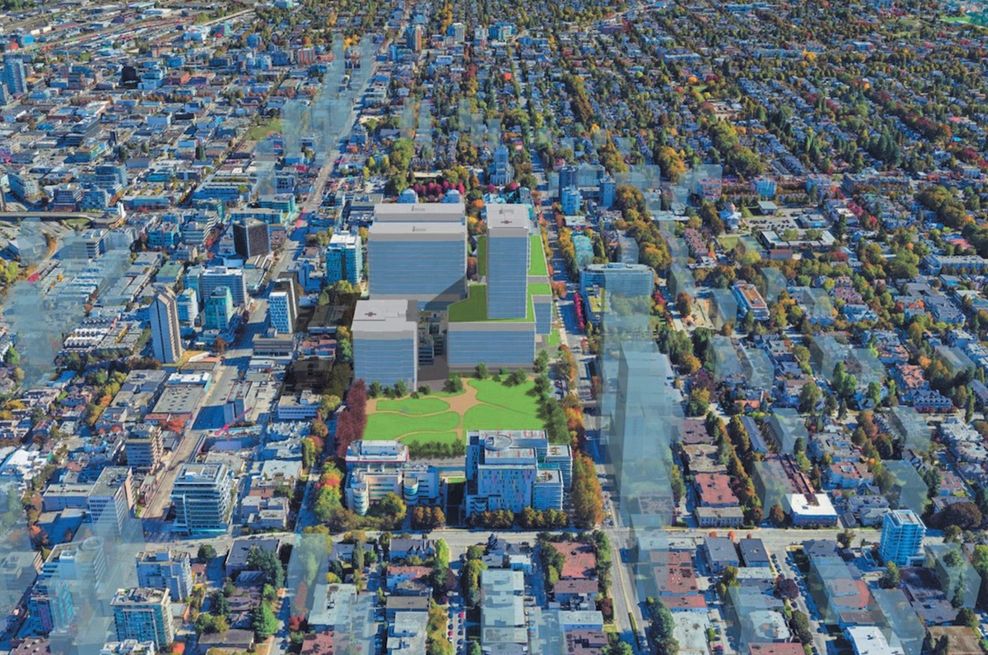
Full buildout concept (Phase 10) of the Vancouver General Hospital campus redevelopment. (Kasian Architecture/Vancouver Coastal Health)
This master plan is designed by Kasian Architecture, which has prior experience working on other major hospital projects, and landscape architectural firm Durante Kreuk.
10 phases of redevelopment, including the demolition of the heritage Heather Pavilion
The redevelopment phasing of demolishing some of Vancouver’s largest buildings and subsequently constructing new major facilities that are even larger can be compared to a carefully orchestrated game of musical chairs.
New space must be constructed and brought into operation before any existing facilities can be removed, ensuring that patient care, staffing levels, and critical services are never disrupted.
As services are relocated into new buildings, older structures can then be decommissioned, allowing the next phase to proceed. This sequential approach across the site, repeated across multiple phases, is the only practical way to modernize a fully functioning provincial-scale hospital while keeping it operational at all times.
Existing condition:
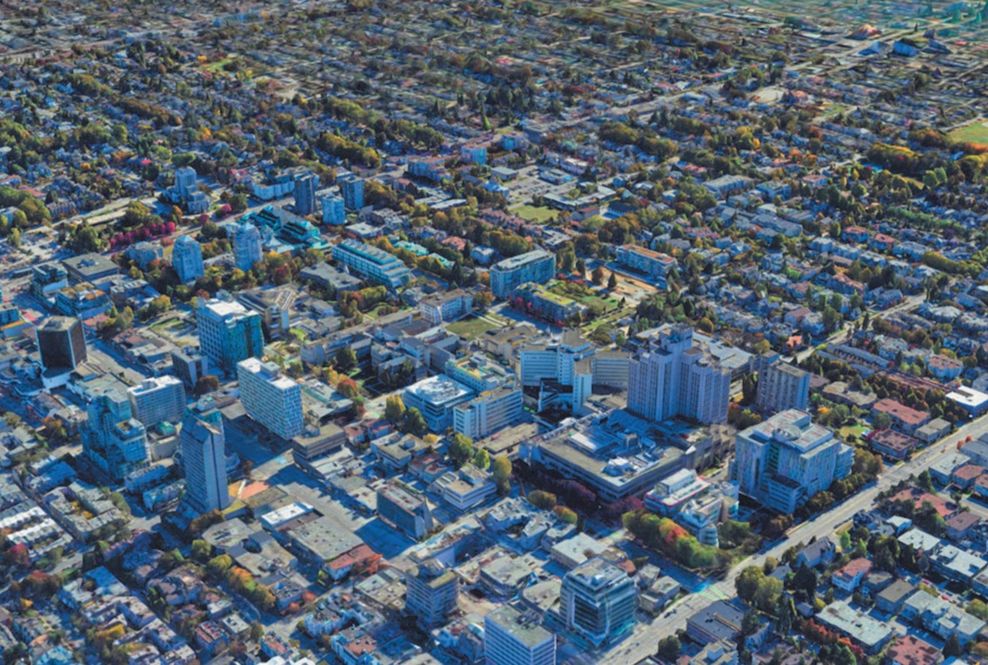
Existing condition of the Vancouver General Hospital campus. (Kasian Architecture/Vancouver Coastal Health)
Future condition:
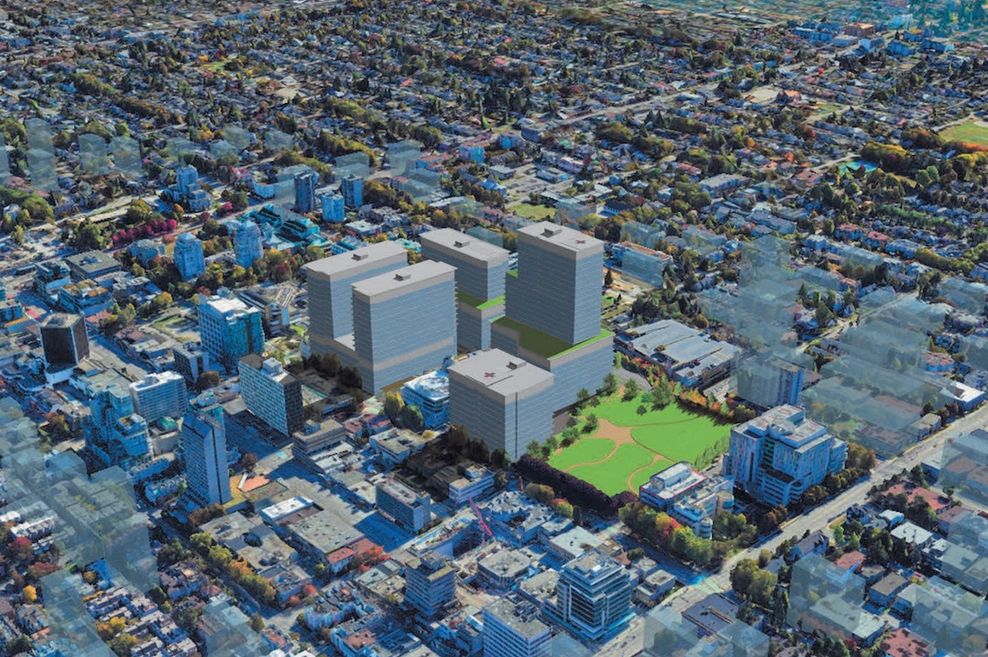
Full buildout concept (Phase 10) of the Vancouver General Hospital campus redevelopment. (Kasian Architecture/Vancouver Coastal Health)
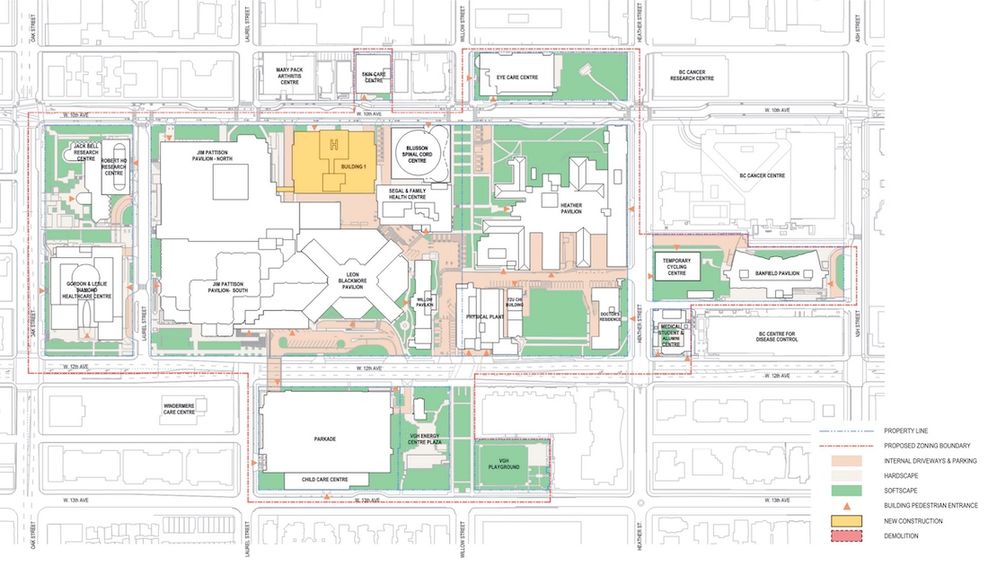
For Phase 1, the Laundry Building, Research Pavilion, and VGH Cycling Centre — all situated near the core of the campus, immediately east of the building with the existing emergency department — will be demolished, with such facilities relocated to other areas.
Demolition work on this parcel fronting West 10th Avenue will then lead to Phase 2 — the construction of the master plan’s first new building, a new 11-storey hospital building with inpatient care facilities and a significantly expanded emergency department. It will be connected to the existing emergency department by an enclosed footbridge, and also include underground parking and provide VGH with its second rooftop helicopter pad. This new building could potentially be achieved in the first half of the 2030s.
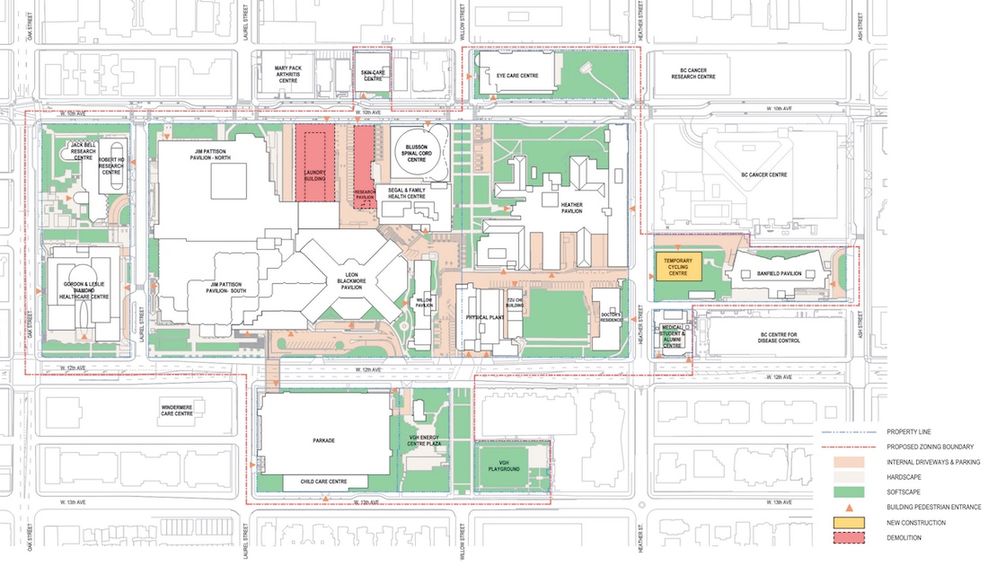
Phase 1; concept of the Vancouver General Hospital campus redevelopment. (Kasian Architecture/Vancouver Coastal Health)
Phase 2; concept of the Vancouver General Hospital campus redevelopment. (Kasian Architecture/Vancouver Coastal Health)
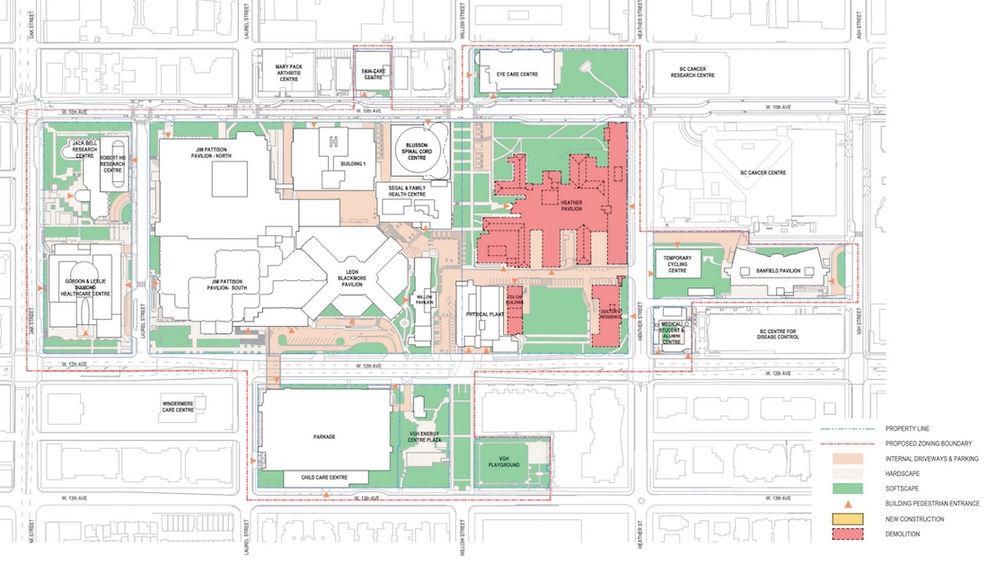
Phase 3; concept of the Vancouver General Hospital campus redevelopment. (Kasian Architecture/Vancouver Coastal Health)
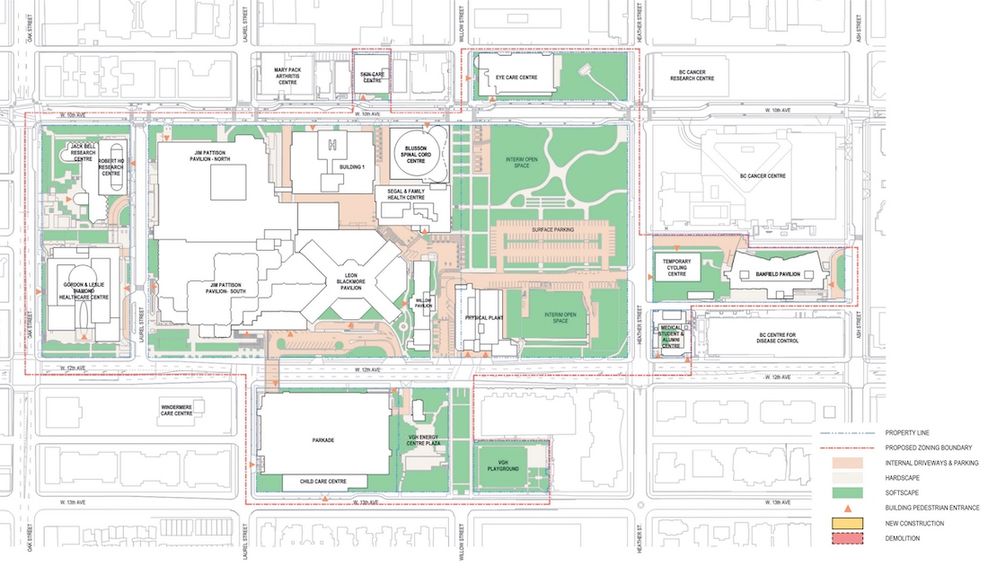
Phase 4; concept of the Vancouver General Hospital campus redevelopment. (Kasian Architecture/Vancouver Coastal Health)
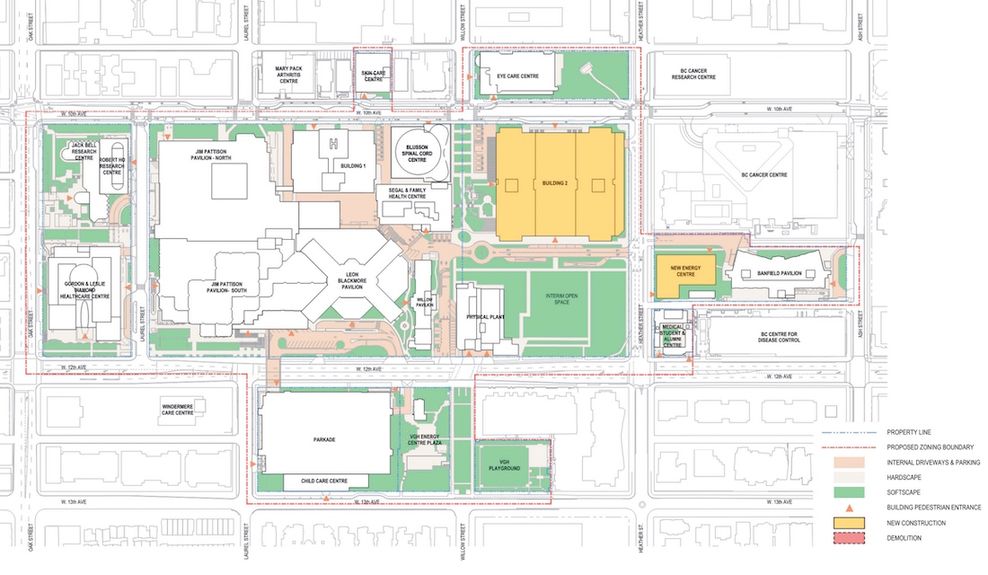
Phase 5; concept of the Vancouver General Hospital campus redevelopment. (Kasian Architecture/Vancouver Coastal Health)
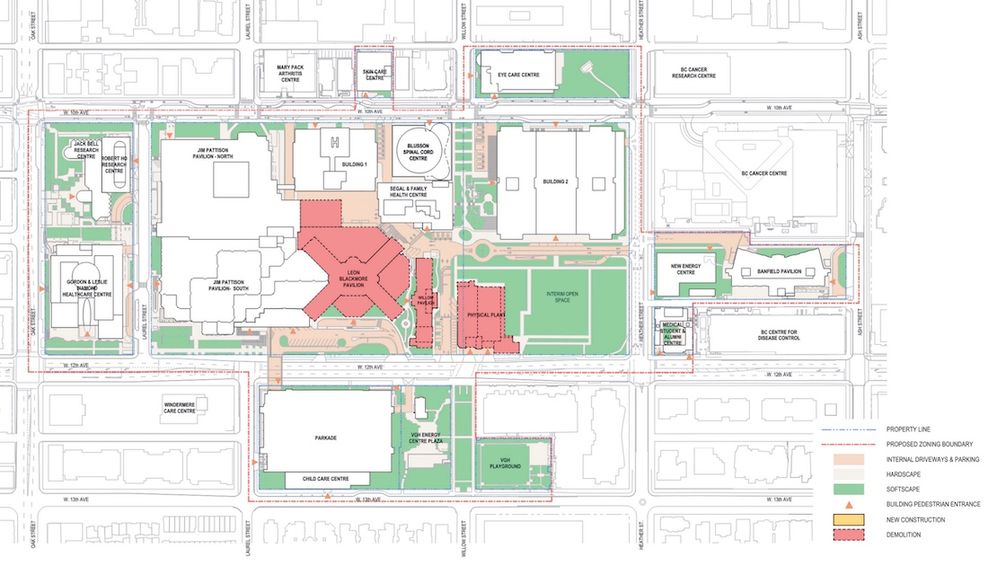
Phase 6; concept of the Vancouver General Hospital campus redevelopment. (Kasian Architecture/Vancouver Coastal Health)
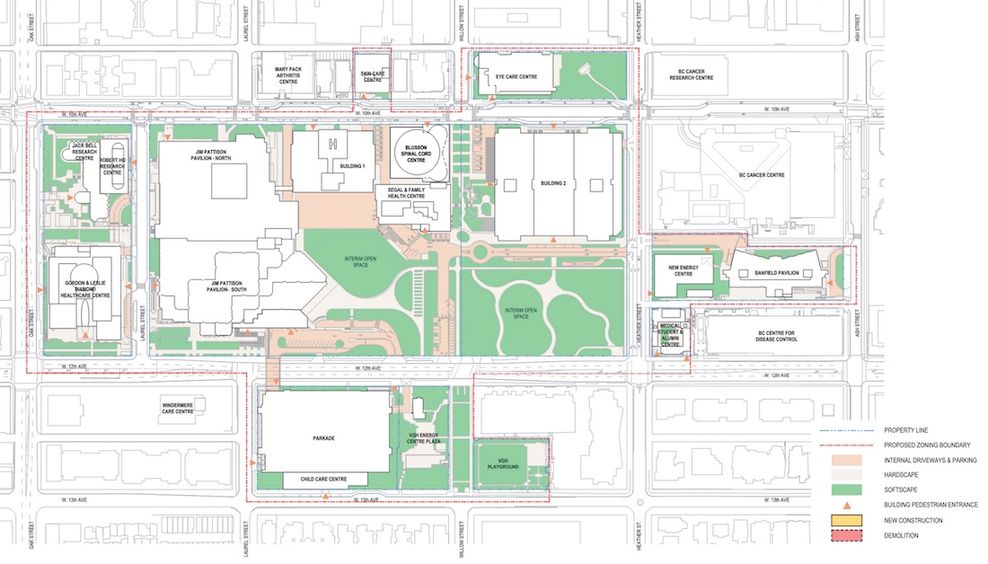
Phase 7; concept of the Vancouver General Hospital campus redevelopment. (Kasian Architecture/Vancouver Coastal Health)
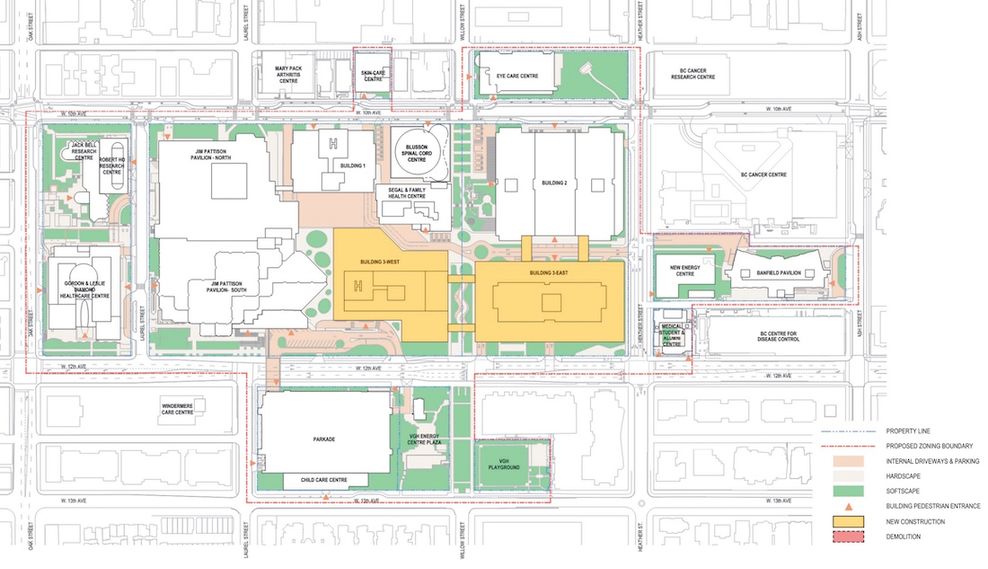
Phase 8; concept of the Vancouver General Hospital campus redevelopment. (Kasian Architecture/Vancouver Coastal Health)
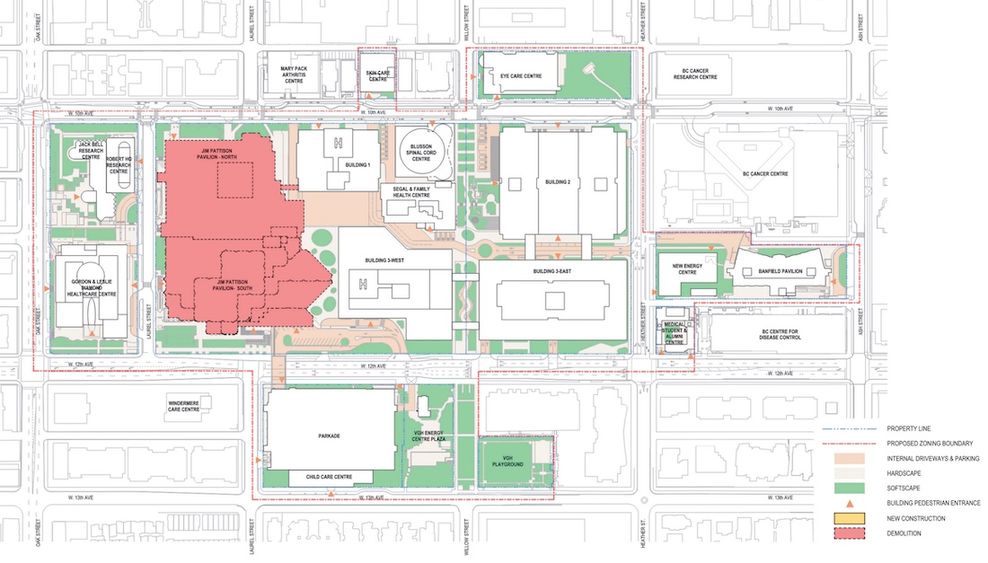
Phase 9; concept of the Vancouver General Hospital campus redevelopment. (Kasian Architecture/Vancouver Coastal Health)
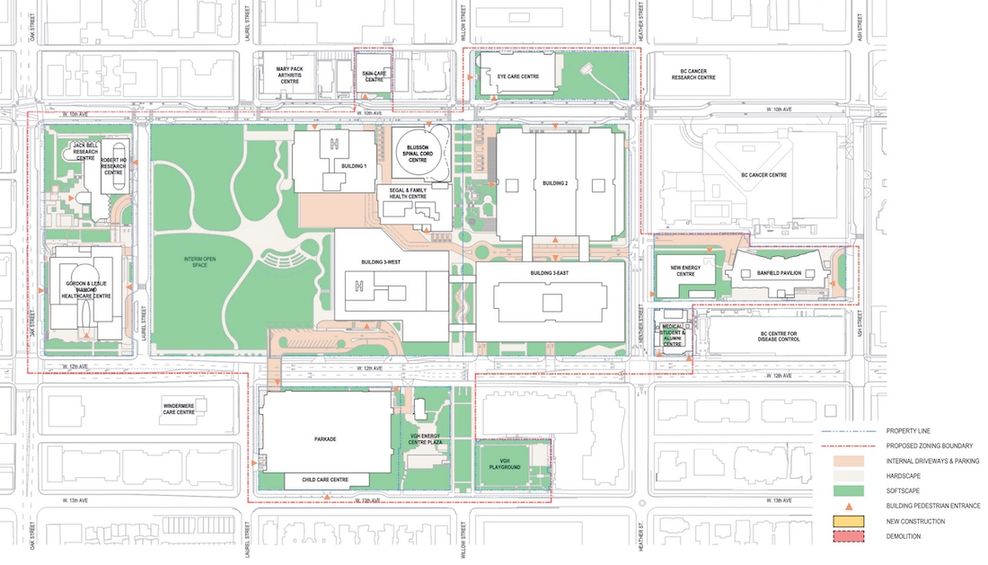
Phase 10; concept of the Vancouver General Hospital campus redevelopment. (Kasian Architecture/Vancouver Coastal Health)
Phase 3 involves the demolition of the large Heather Pavilion — built in stages between the early 1900s and the post-war 1950s — and other facilities at the northeast and southeast corners of the campus, fronting Heather Street. As there will be a years-long “lag” on these cleared parcels between demolition and the construction of the new buildings, the easternmost end of the campus will become temporary landscaped open space and a surface vehicle parking lot, which represents Phase 4.
Although the Heather Pavilion has architectural and heritage value, preserving and restoring the structure would entail substantial cost and significantly complicate the multi-phased strategy for delivering new hospital facilities, according to the application.
As a result, the master plan calls for demolition of the Heather Pavilion. Doing so, however, would require reversing a 2002 legal agreement under which the health authority committed to revitalizing the building, which was the largest and most modern hospital in Western Canada when it first opened in Vancouver’s early history. The potential demolition of the Heather Pavilion has long been contentious, having already been seriously considered during the 1990s.
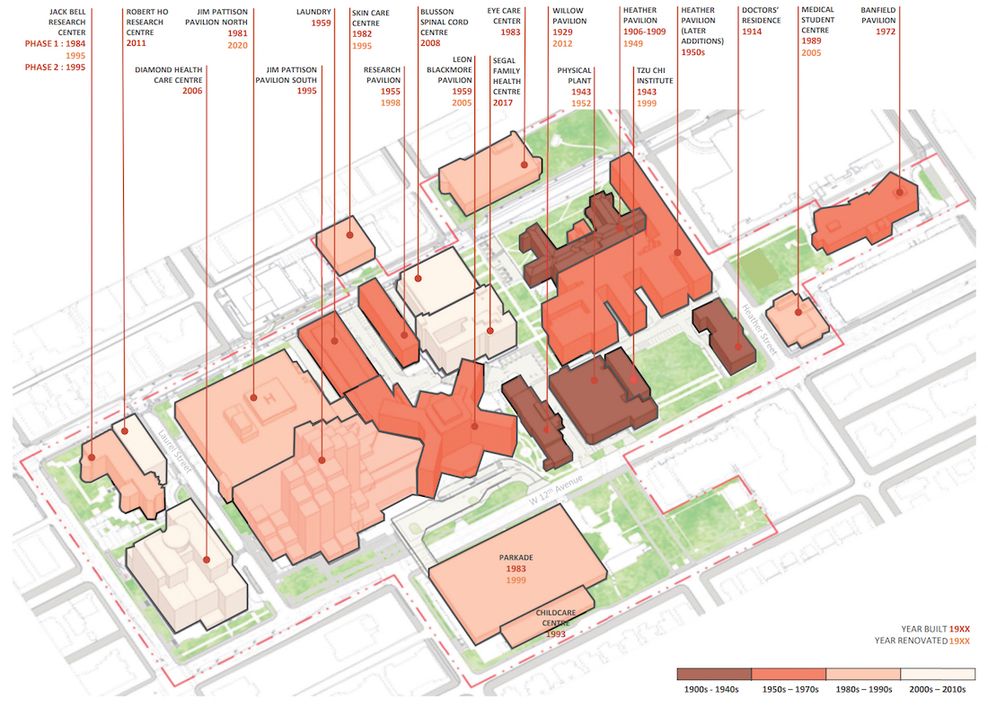
Construction and renovation dates of Vancouver General Hospital’s existing campus buildings. (Kasian Architecture/Vancouver Coastal Health)
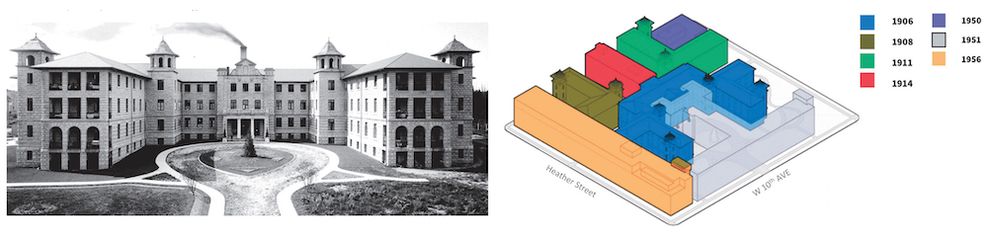
1908 condition of the Heather Pavilion hospital building (left) and an illustration of the subsequent additions to the Heather Pavilion (right), with some of the subsequent additions previously demolished. (Kasian Architecture/Vancouver Coastal Health)
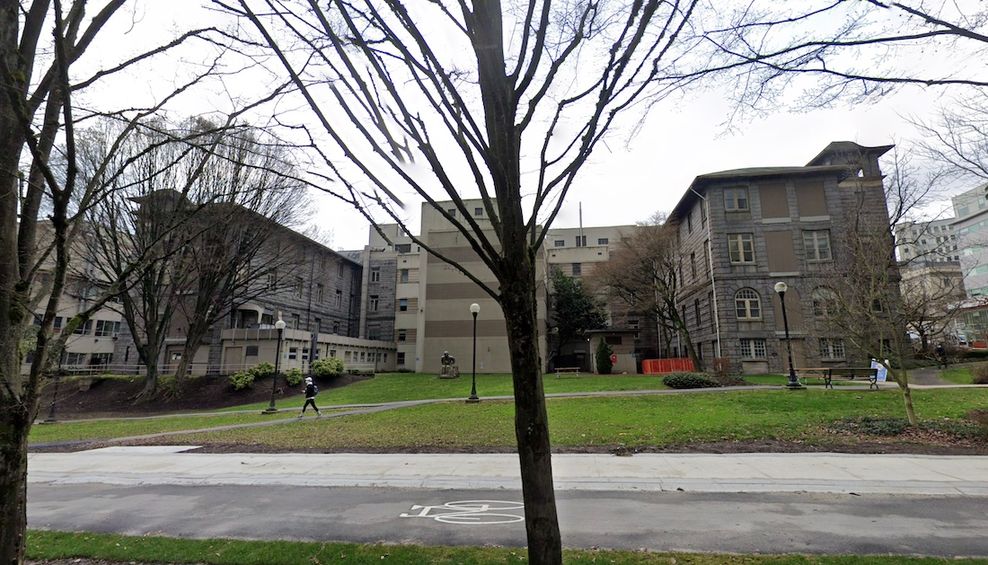
Existing condition of the original/oldest structure of the Heather Pavilion of Vancouver General Hospital, viewed from West 10th Avenue. (Google Maps)
Future relocated emergency department on West 12th Avenue, and a second heliport
Phase 5 will achieve a new major acute-care building on the former footprint of the Heather Pavilion to substantially expand patient bed capacity, along with a new logistics hub, underground parking, and new campus-wide energy centre.
This will be followed by Phase 6, entailing the demolition of the very signifcant 1959-built Leon Blackmore Pavilion — a tall and large cruciform-shaped building fronting West 12th Avenue, immediately east of the Jim Pattison Pavilion tower — and the Willow Pavilion and Physical Plant Building. This cleared space along West 12th Avenue will then become interim landscaped open space under Phase 7.
Later on, as Phase 8, two large acute-care buildings will be constructed on the vacant parcels along West 12th Avenue. These new facilities will replace the Jim Pattison Pavilion and the Laurel Pavilion in their entirety, including the Jim Pattison Pavilion tower, and will deliver a new replacement emergency department (with the emergency entrance located on West 12th Avenue), replacement and additional patient bed capacity, and other expanded clinical and support spaces. The development will also include significant underground vehicle parking.
This then directly leads to Phase 9 of demolishing the entire Jim Pattison Pavilion, Laurel Pavilion, and the existing emergency department, with its footprint then temporarily turned into a large landscaped open space — representing Phase 10 — to preserve the site for the next major hospital building expansion, which is not defined by this current master plan.
Existing condition:
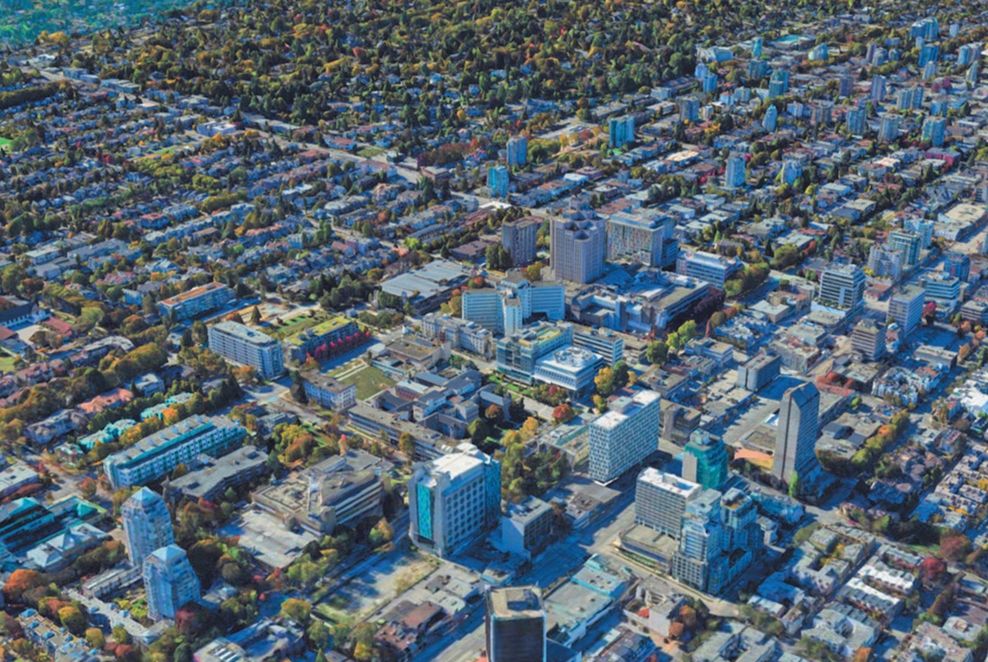
Existing condition of the Vancouver General Hospital campus. (Kasian Architecture/Vancouver Coastal Health)
Future condition:
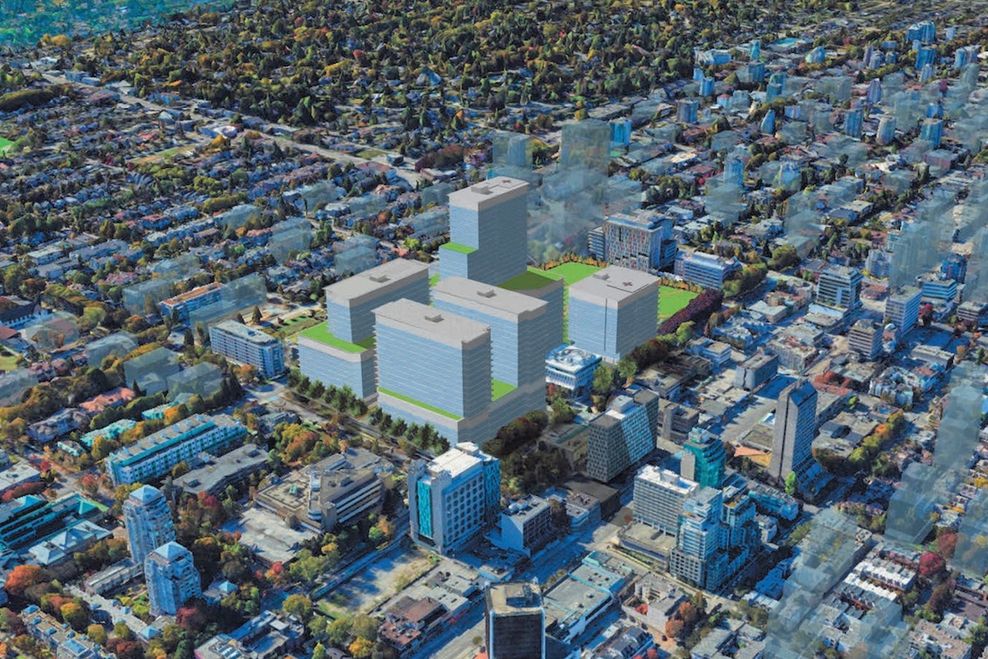
Full buildout concept (Phase 10) of the Vancouver General Hospital campus redevelopment. (Kasian Architecture/Vancouver Coastal Health)
By the time the master plan is fully built out decades from now, the total investment in new facilities and other site works is likely to total tens of billions of dollars.
The new buildings will reach up to 24 storeys, with the tallest building expected to be achieved in Phase 8, exceeding the height of the Jim Pattison Pavilion tower. The future building heights are limited by not only the City of Vancouver’s protected mountain view cone emanating from the peak of Queen Elizabeth Park, but also the helicopter flight paths for both VGH rooftop heliports and the overlapping helicopter flight path for BC Children’s Hospital.
The proponents note that over time, some building developments in the surrounding area outside of the campus have constrained the potential flight path options that could be established for the redevelopment’s new heliports. All the while, the existing heliport has also substantially limited building heights in the area, including a new Hilton hotel project that has gone through numerous design revisions over the years due to the inability to vertically expand into the federally-regulated flight path.
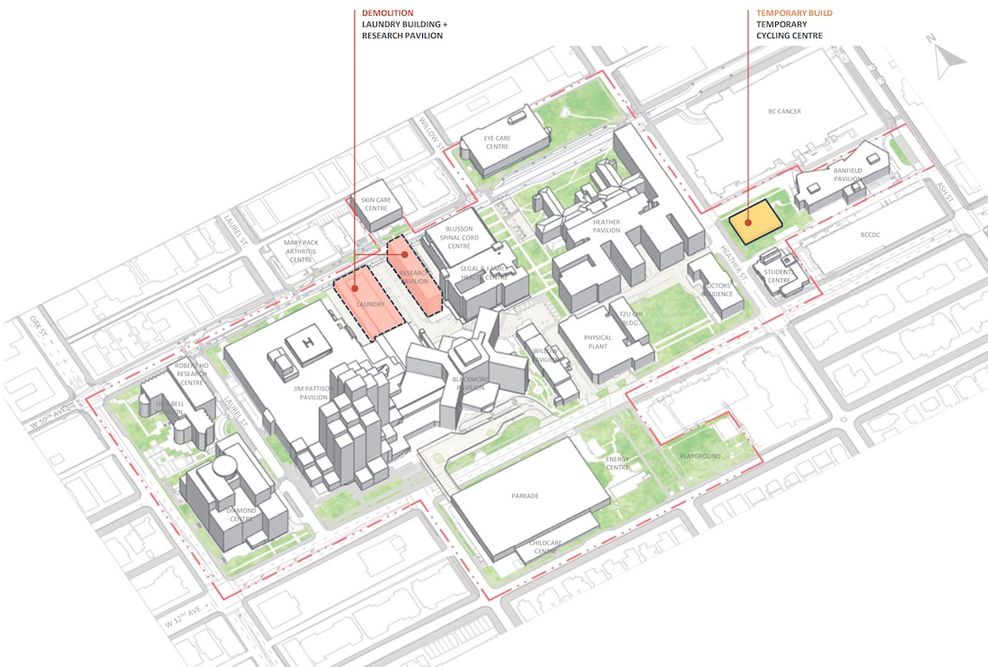
Phase 1; concept of the Vancouver General Hospital campus redevelopment. (Kasian Architecture/Vancouver Coastal Health)
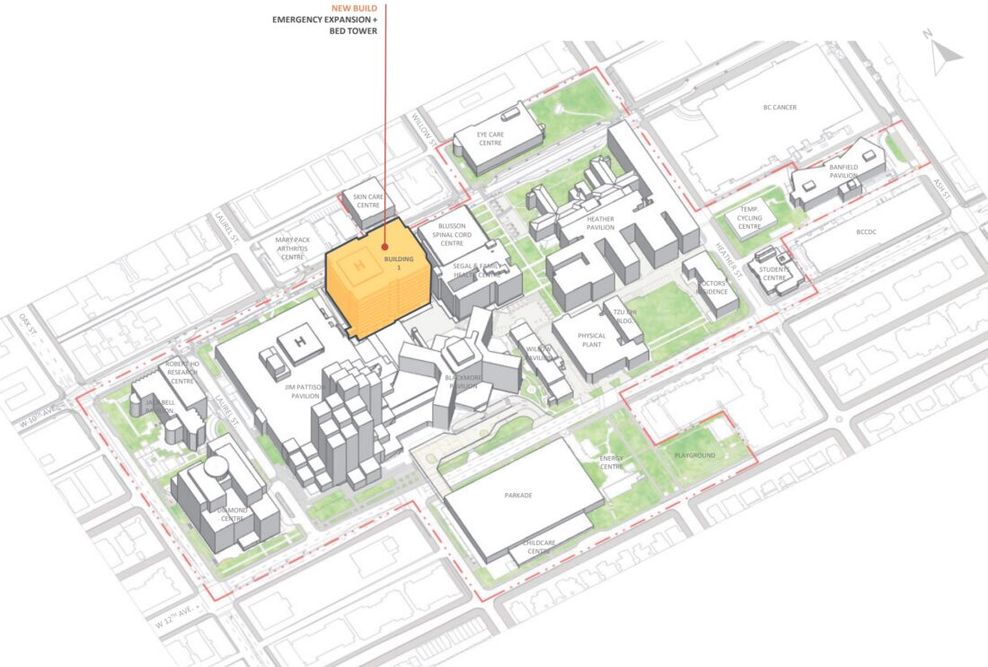
Phase 2; concept of the Vancouver General Hospital campus redevelopment. (Kasian Architecture/Vancouver Coastal Health)
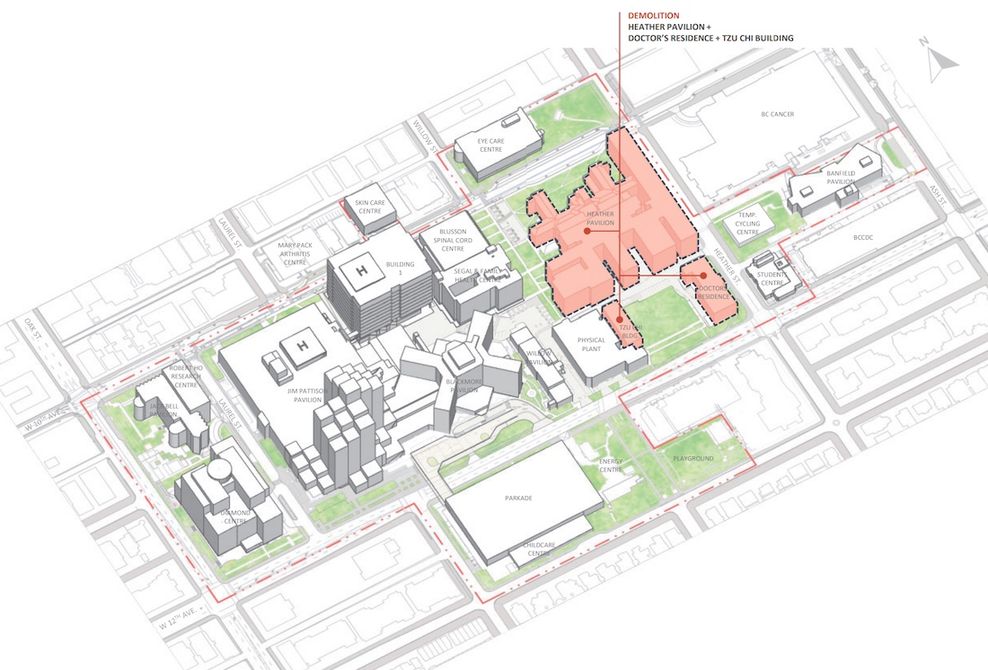
Phase 3; concept of the Vancouver General Hospital campus redevelopment. (Kasian Architecture/Vancouver Coastal Health)
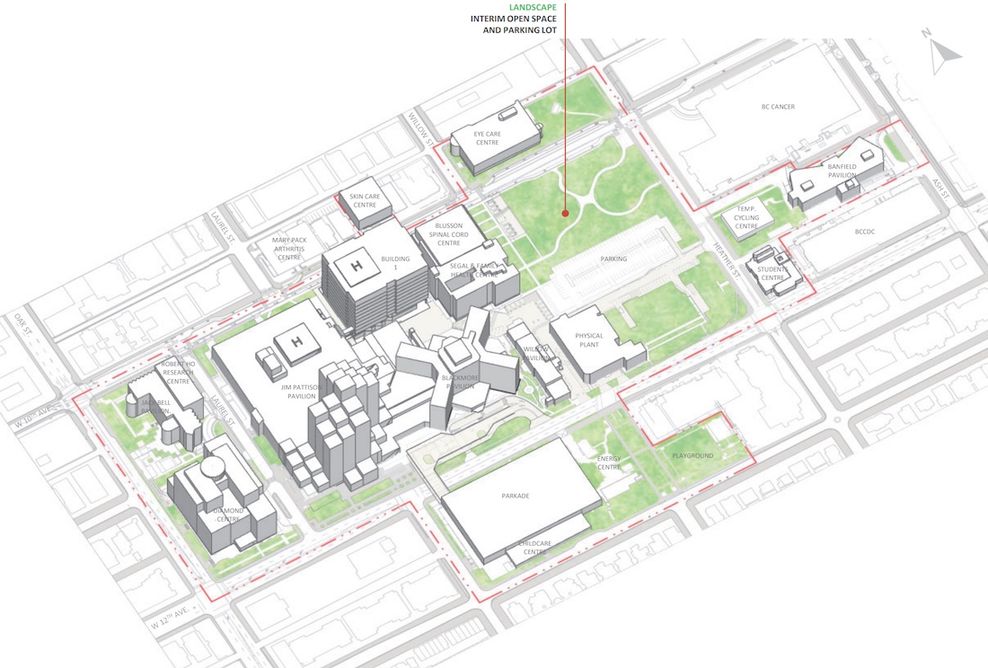
Phase 4; concept of the Vancouver General Hospital campus redevelopment. (Kasian Architecture/Vancouver Coastal Health)
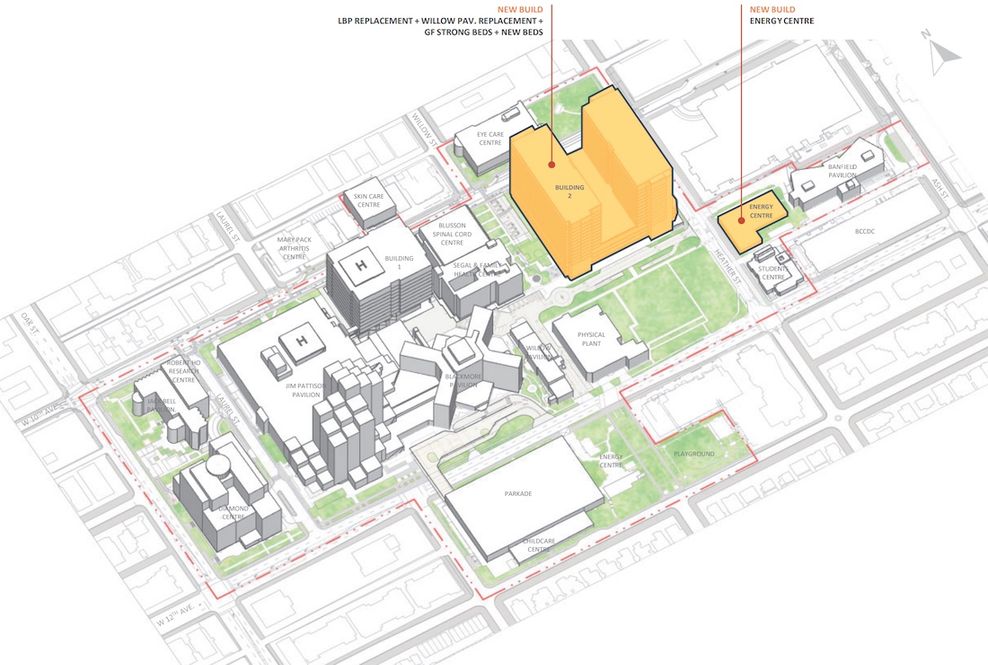
Phase 5; concept of the Vancouver General Hospital campus redevelopment. (Kasian Architecture/Vancouver Coastal Health)
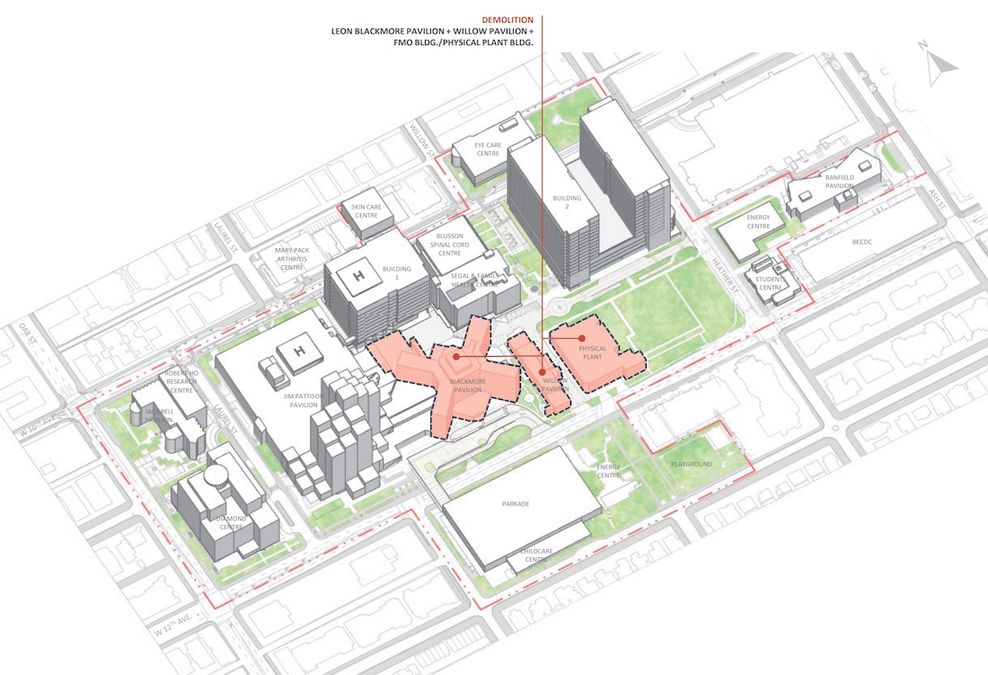
Phase 6; concept of the Vancouver General Hospital campus redevelopment. (Kasian Architecture/Vancouver Coastal Health)
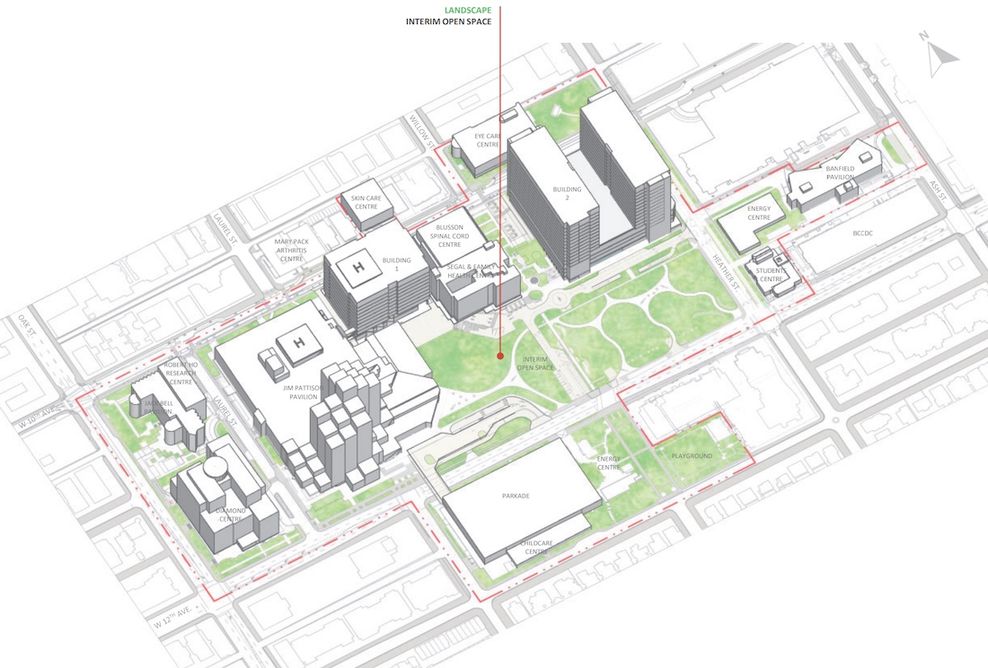
Phase 7; concept of the Vancouver General Hospital campus redevelopment. (Kasian Architecture/Vancouver Coastal Health)
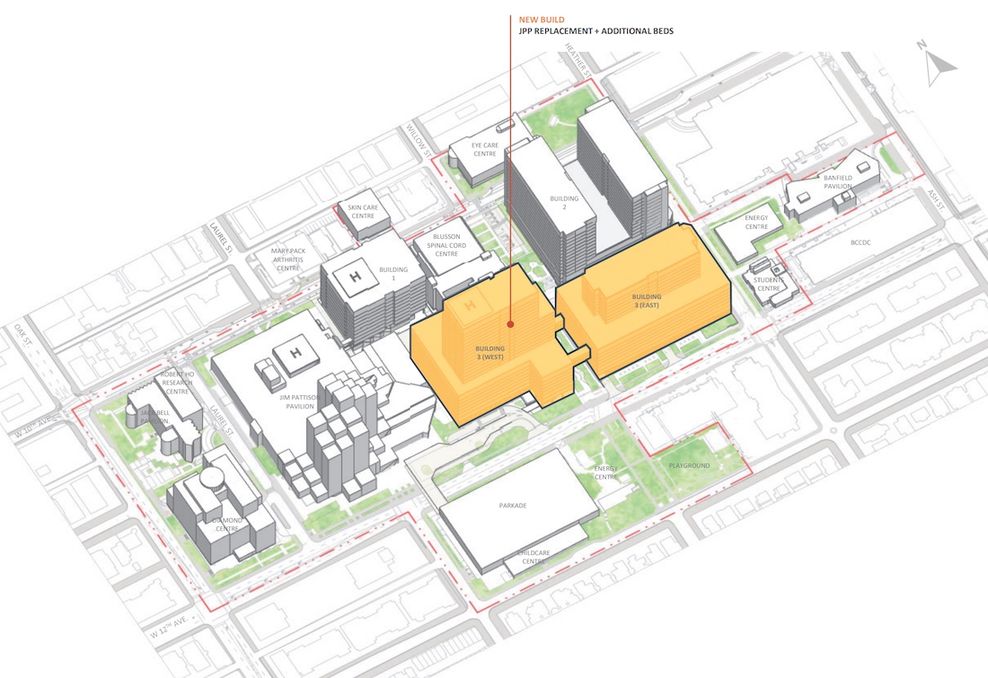
Phase 8; concept of the Vancouver General Hospital campus redevelopment. (Kasian Architecture/Vancouver Coastal Health)
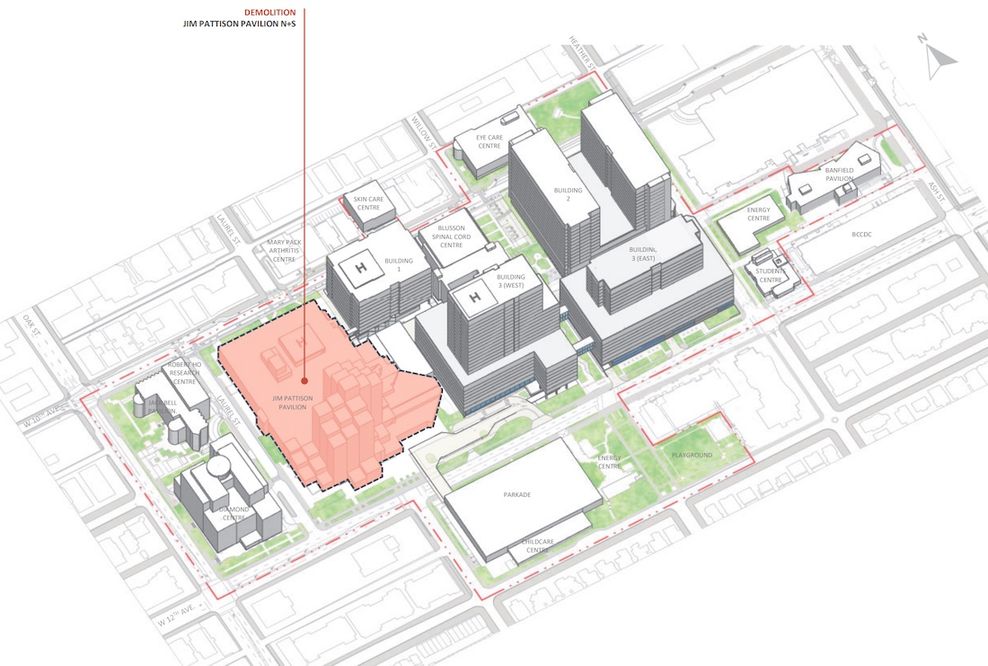
Phase 9; concept of the Vancouver General Hospital campus redevelopment. (Kasian Architecture/Vancouver Coastal Health)
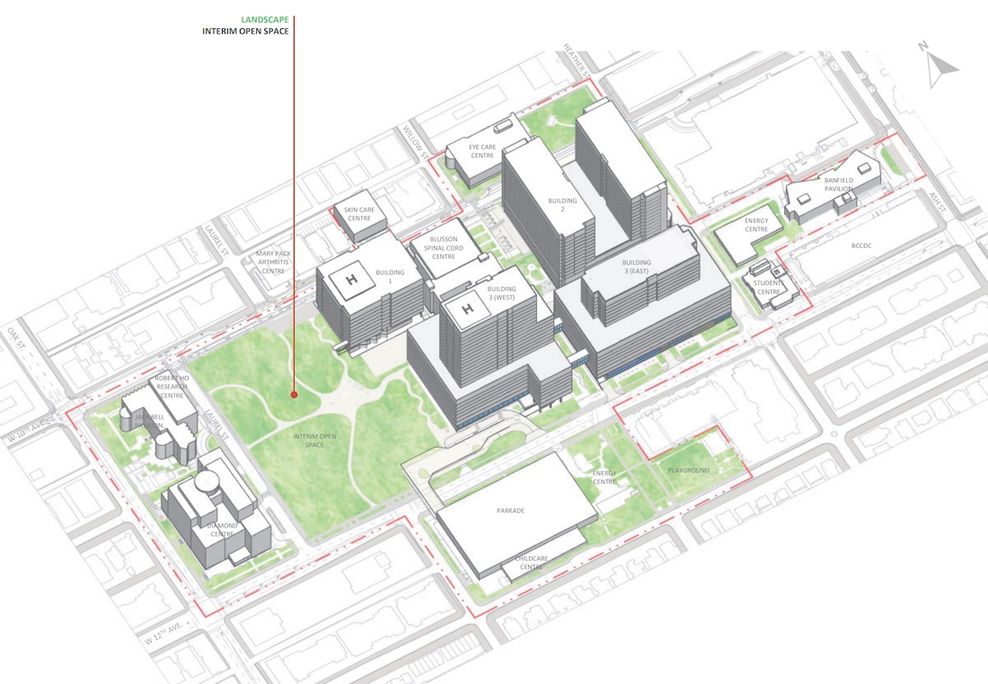
Phase 10; concept of the Vancouver General Hospital campus redevelopment. (Kasian Architecture/Vancouver Coastal Health)
New road configurations and public spaces
By the completion of Phase 10, decades from now, the existing major buildings expected to still stand entail the 1992-built Jack Bell Research Centre, 2006-built Gordon & Leslie Diamond Health Care Centre, 2008-built Blusson Spinal Cord Centre, 2011-built Robert Ho Research Centre, and 2017-built Segal & Family Health Centre. Prior to the construction of the Diamond Health Care Centre, the site was temporarily used as tennis courts, reflecting the long-standing strategy of keeping VGH land vacant with interim public recreational uses until it is needed for future hospital expansion.
A previous campus master plan called for the creation of a 6.5-acre permanent public park at the southeast quadrant of the campus — the northwest corner of the intersection of West 12th Avenue and Heather Street — but this is not possible due to the realities of the spatial needs of expanding the hospital. Under this previous concept, a full restoration of the original structure of the Heather Pavilion would act as the visual and physical centrepiece of the park.
Under the proposed master plan, there will still be permanent green and open public spaces between the buildings, in addition to the ever-changing interim landscaped spaces. Various large rooftops of the new hospital buildings will also feature outdoor amenity spaces with landscaping for the benefit of patients and staff.
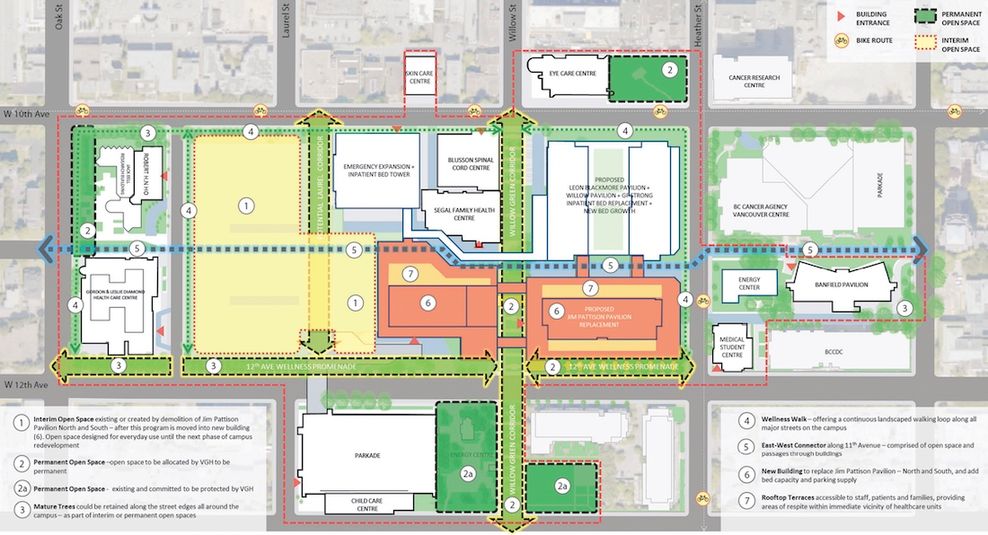
Full buildout concept (Phase 10) of the Vancouver General Hospital campus redevelopment. (Kasian Architecture/Vancouver Coastal Health)
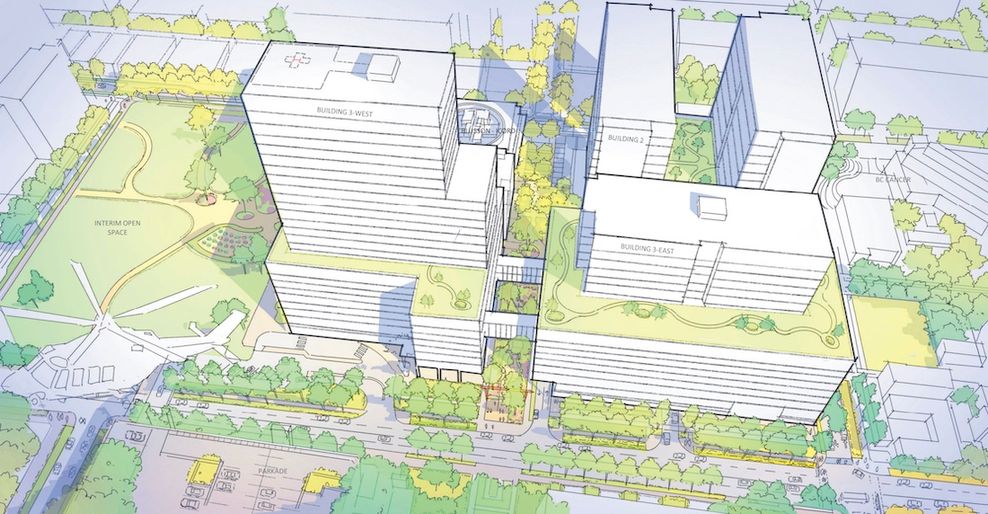
Full buildout concept (Phase 10) of the Vancouver General Hospital campus redevelopment. (Kasian Architecture/Vancouver Coastal Health)
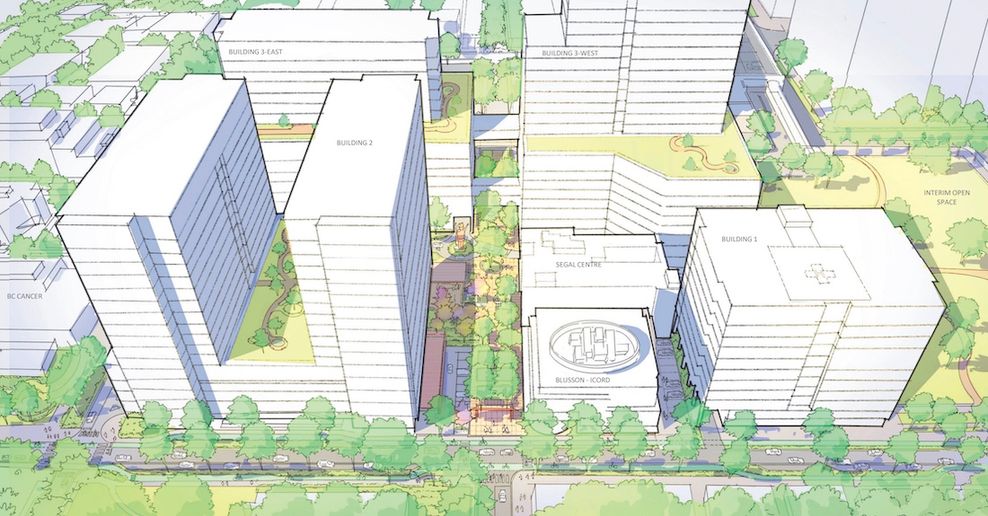
Full buildout concept (Phase 10) of the Vancouver General Hospital campus redevelopment. (Kasian Architecture/Vancouver Coastal Health)
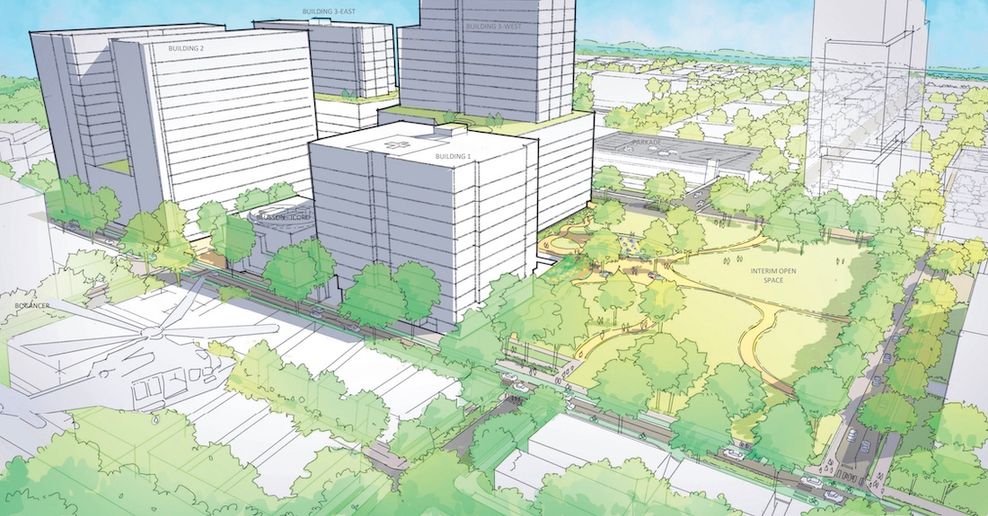
Full buildout concept (Phase 10) of the Vancouver General Hospital campus redevelopment. (Kasian Architecture/Vancouver Coastal Health)
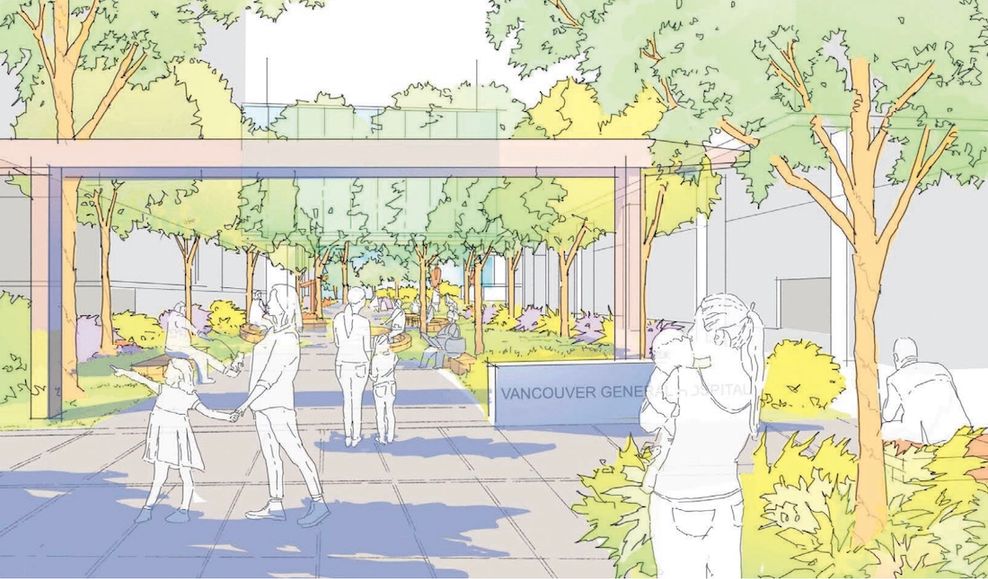
Full buildout concept (Phase 10) of the Vancouver General Hospital campus redevelopment. (Kasian Architecture/Vancouver Coastal Health)
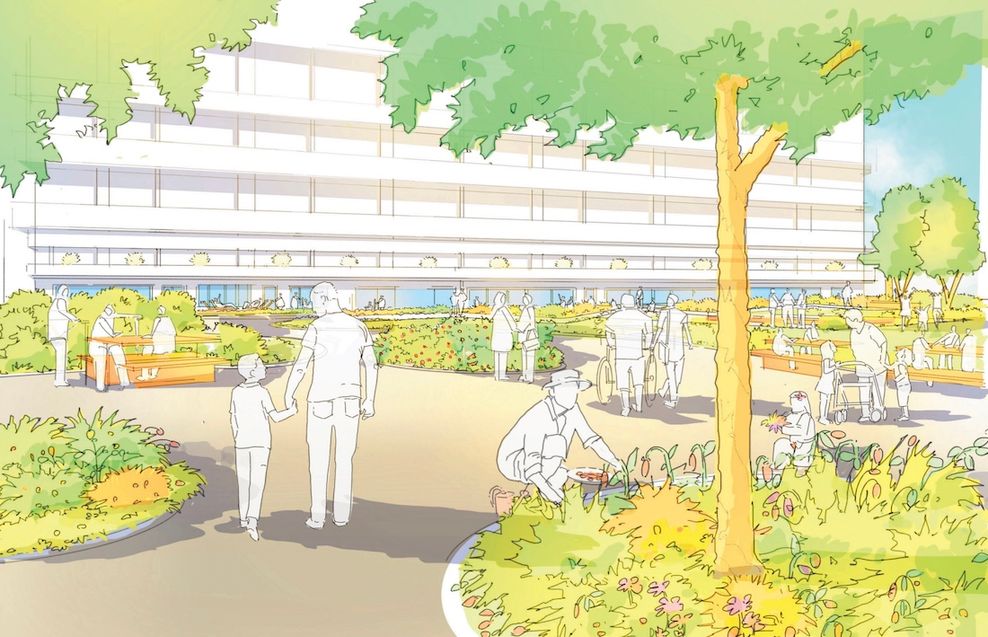
Full buildout concept (Phase 10) of the Vancouver General Hospital campus redevelopment. (Kasian Architecture/Vancouver Coastal Health)
Throughout the entire 10-phase redevelopment, there will be special consideration to integrating these developments into VGH’s existing campus-wide service tunnel network that stretch between Oak Street and east of Heather Street. The tunnels connect 16 existing buildings and critically support hospital operations, especially for clinical support, such as the movement of patients, supplies, equipment, and staff. It is not publicly accessible.
The three new large acute-care buildings constructed during Phases 5 and 8 will be interconnected by enclosed footbridges and/or underground pathways.
These three new buildings will be organized around a new internal grid formed by major access roads, including an L-shaped internal road connecting Heather Street to a new traffic-signalized intersection on West 12th Avenue. The plan also introduces a permanent north-south, car-free, pedestrian-oriented Willow Street greenway bisecting the campus between West 10th Avenue and West 12th Avenue, as well as a new east-west pedestrian route between Ash Street and Oak Street, roughly aligned with West 11th Avenue
There will be site-wide considerations for enhancing pedestrian connectivity to SkyTrain’s future VGH-Oak Station on the Millennium Line’s Broadway extension. Opening in 2027, the station is located at the southwest corner of the intersection of Laurel Street and West Broadway — just north of the existing emergency department entrance.
The subway station is designed in a way to enable a potential future direct underground entrance to the hospital campus.
With all that said, concerns have been raised about the City’s Broadway Plan prescription to convert Heather Street — immediately east of VGH — into a car-free corridor as part of the Heather Street Greenway, as well as to designate a segment of Laurel Street near the campus as another car-free street. These changes would be in addition to the existing bike lane on West 10th Avenue, which previously narrowed the roadway available for vehicle traffic outside the existing emergency department entrance. The application suggests some consideration to amend the Broadway Plan on these aspects may be needed.
Instead of a car-free street, the application proposes widening Heather Street between West 10th Avenue and West 12th Avenue by using a property setback on VGH property. This would offer two southbound vehicle traffic lanes and one northbound vehicle traffic lane, along with wide pedestrian sidewalks and the Heather Street Greenway’s protected bike lanes configured on the east side of the street.
“Due to the needs of the VGH campus, Heather Street will be heavily trafficked,” states the application.
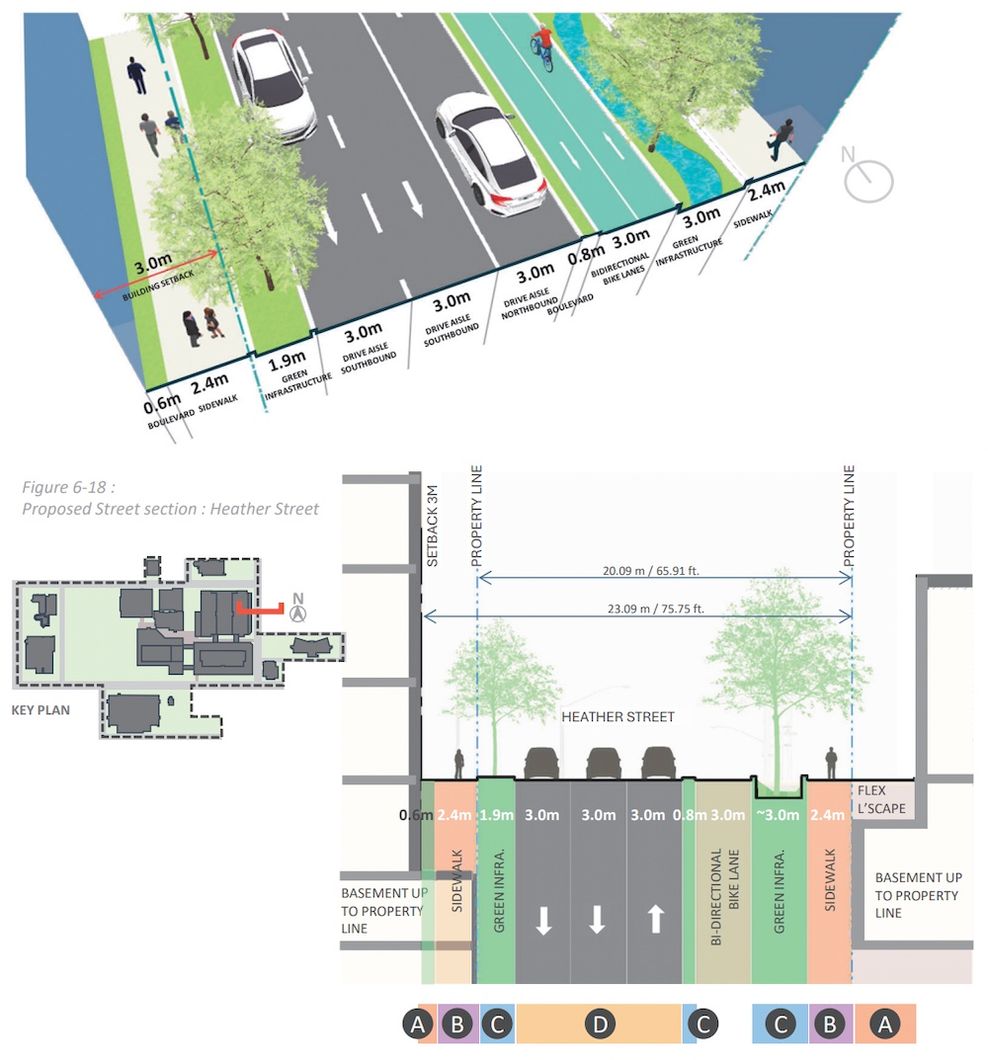
Heather Street configuration; concept of the Vancouver General Hospital campus redevelopment. (Kasian Architecture/Vancouver Coastal Health)
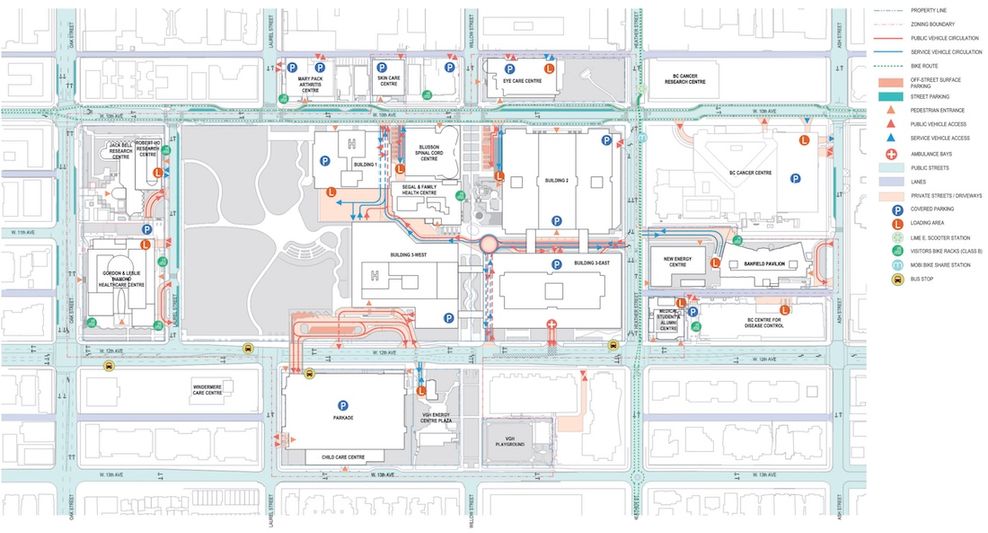
Full buildout concept (Phase 10) of the Vancouver General Hospital campus redevelopment. (Kasian Architecture/Vancouver Coastal Health)
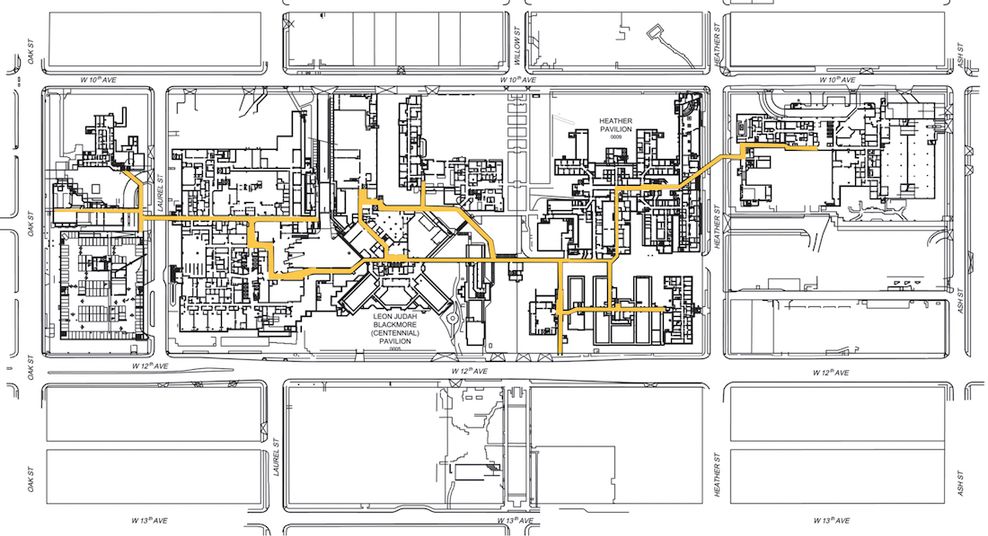
Map of the tunnel network of the existing Vancouver General Hospital campus. (Kasian Architecture/Vancouver Coastal Health)
The significant expansion of the hospital is expected to generate additional vehicle traffic, making it essential that the capacity, reliability, and redundancy of the surrounding access roads are maintained for emergency vehicles, staff, and visitors. Moreover, new underground parkade entrances for about 2,000 vehicle stalls will lean heavily on Heather Street for ingress and egress.
In Summer 2026, City Council is expected to consider an interim rezoning for one parcel of the campus to enable Phases 1 and 2 of the redevelopment to proceed, allowing construction of a new 11-storey building that would provide timely relief for inpatient and emergency department capacity. Also during the summer, City Council will consider amendments to the Broadway Plan to ensure the area plan’s prescriptions and stipulations align with what is necessary for VGH’s expansion.
At a later date, at some point after the October 2026 civic election, the campus-wide, master plan rezoning application will be considered at a public hearing by the new makeup of City Council.
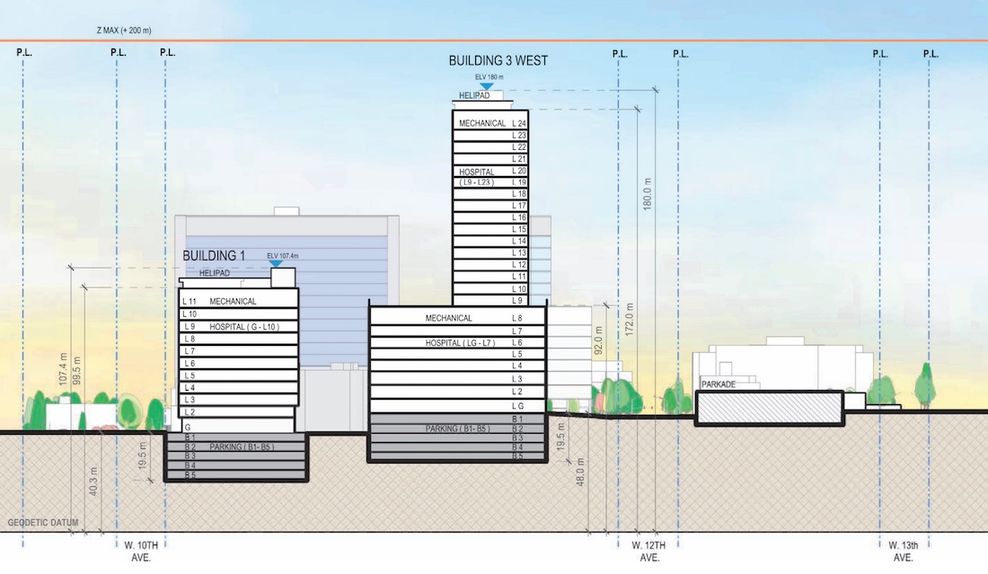
Full buildout concept (Phase 10) of the Vancouver General Hospital campus redevelopment. (Kasian Architecture/Vancouver Coastal Health)
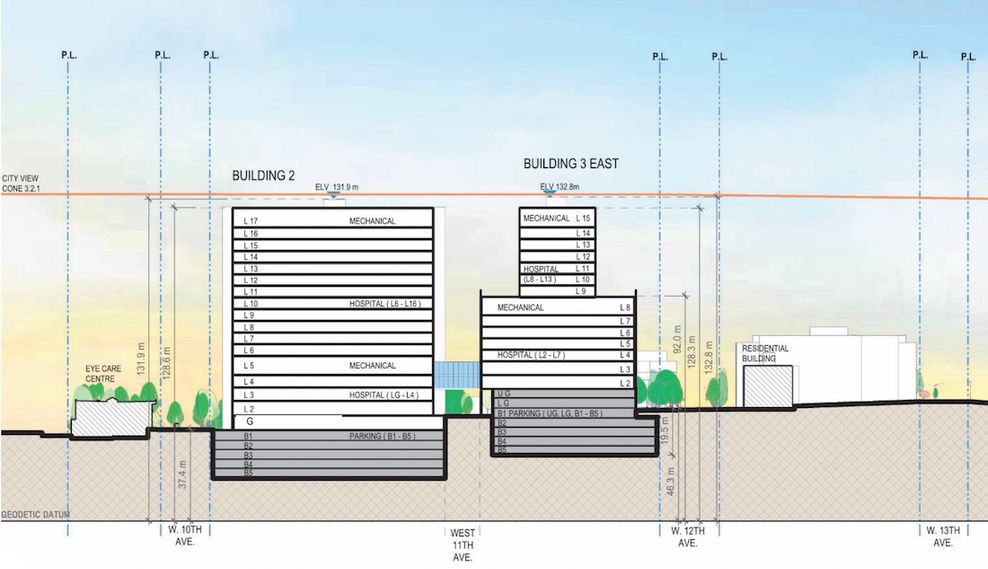
Full buildout concept (Phase 10) of the Vancouver General Hospital campus redevelopment. (Kasian Architecture/Vancouver Coastal Health)
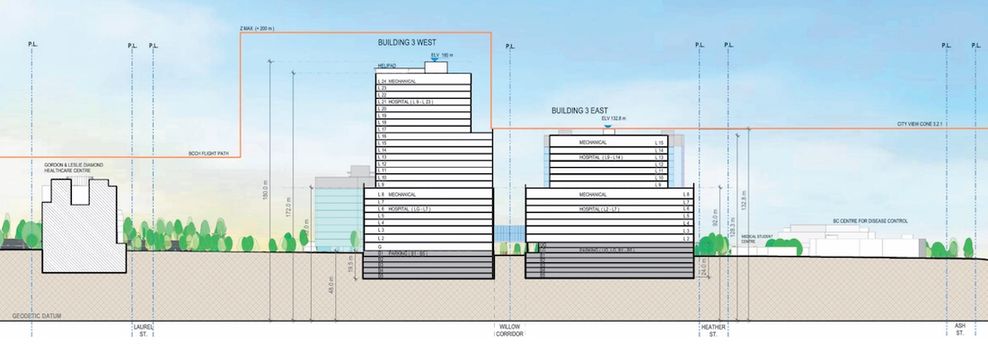
Full buildout concept (Phase 10) of the Vancouver General Hospital campus redevelopment. (Kasian Architecture/Vancouver Coastal Health)
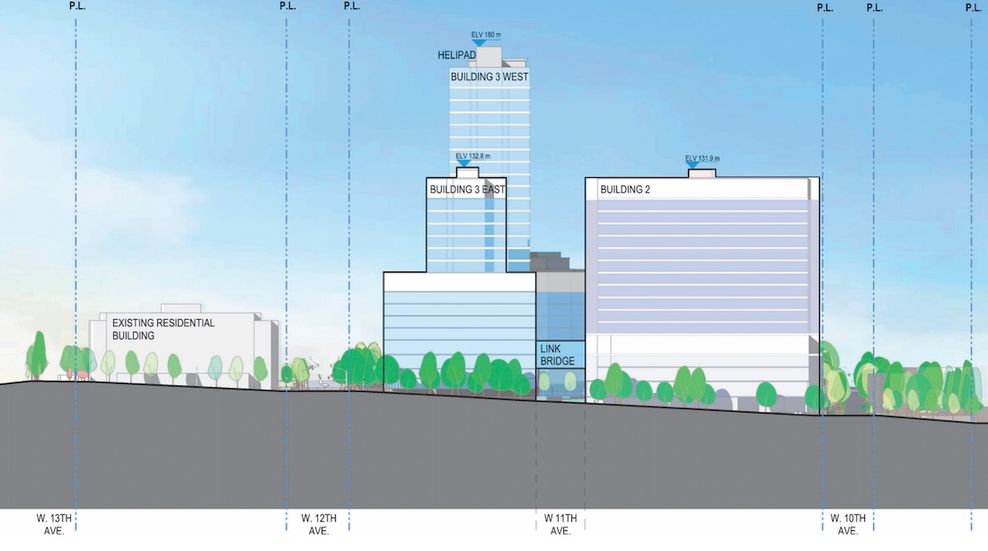
Full buildout concept (Phase 10) of the Vancouver General Hospital campus redevelopment. (Kasian Architecture/Vancouver Coastal Health)
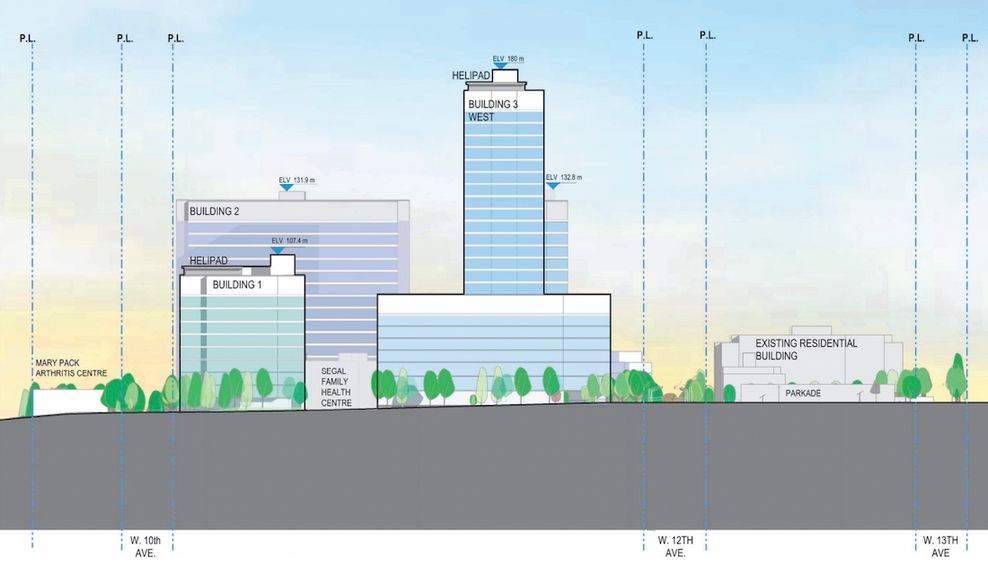
Full buildout concept (Phase 10) of the Vancouver General Hospital campus redevelopment. (Kasian Architecture/Vancouver Coastal Health)
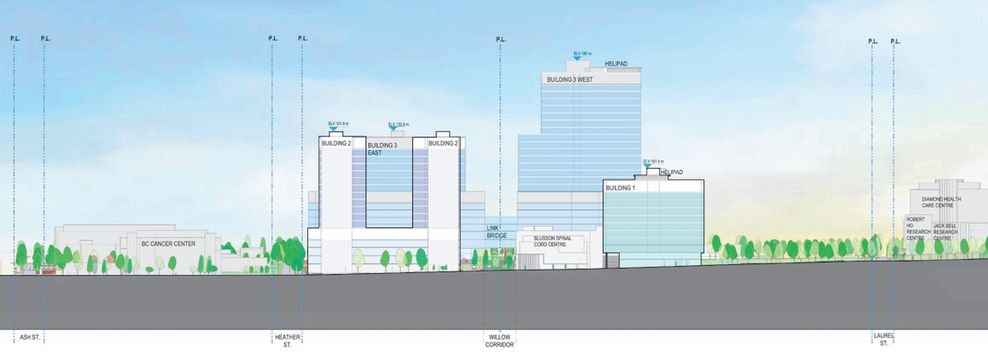
Full buildout concept (Phase 10) of the Vancouver General Hospital campus redevelopment. (Kasian Architecture/Vancouver Coastal Health)
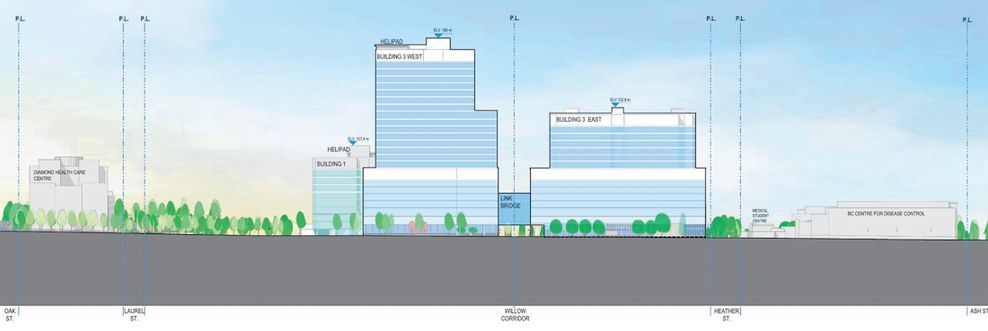
Full buildout concept (Phase 10) of the Vancouver General Hospital campus redevelopment. (Kasian Architecture/Vancouver Coastal Health)