
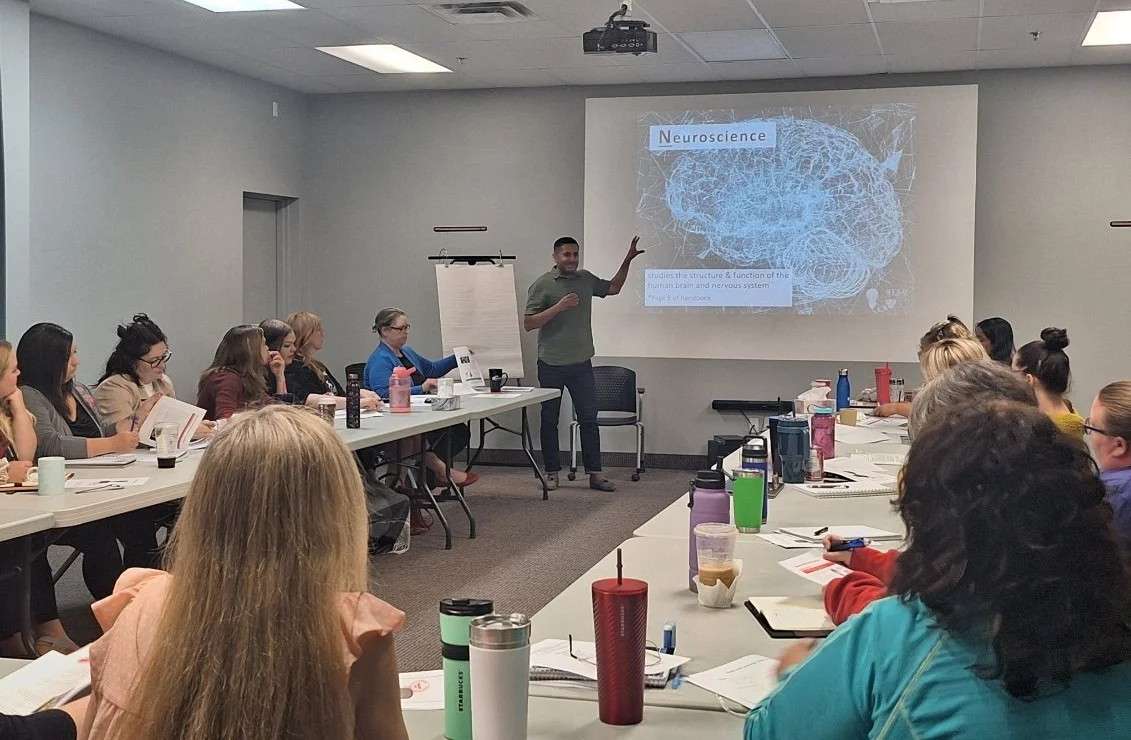
 Photo via Teach Resilience website.
Trauma-informed training is being rolled out across primary care, education, and social service settings in the region and beyond through a social enterprise of the Kingston Community Health Centres (KCHC).
That social enterprise is Teach Resilience, and through it, KCHC is sharing its community-based model of primary care training with other community health centres, schools, and social service agencies looking to strengthen how they support patients and communities alike, according to a release from the organization issued on Wednesday, Jan. 21, 2026.
KCHC explained that trauma-informed care recognizes the lasting impact of trauma on physical and mental health and emphasizes safety, trust, and understanding in every interaction. At the organization, this approach has been embedded into primary care for years, shaping how providers engage with patients and respond to complex health needs, according to the release.
“Trauma-informed care isn’t just for certain patients—it should be a universal precaution,” said Dr. Mary Rowland, a key medical advisor and facilitator at Teach Resilience, in a statement.
“Understanding a person’s upbringing and life experiences is essential to addressing their current health needs.”
As interest in trauma-informed care continues to grow across the health system, KCHC said it is training other community health centres, primary care networks, schools, and social service agencies to apply this approach within their own organizations. According to KCHC, the training focuses on practical tools, shared learning, and system-level change, helping providers deliver care that is more responsive, equitable, and person-centred.
From January 19 to 21, 2026, Teach Resilience has delivered its Trauma-Responsive Training at WellFort Community Health Services. According to the release, the impactful session was offered to WellFort team members, as well as primary care partners from WellFort’s Primary Care Neighbourhood Network in Peel Region and North Etobicoke, along with additional practices across the Central West Ontario Health Team primary care network.
The three-day, in-person training is offered as a Queen’s University–accredited course and has already been
attended by over 2,000 health-care providers in the Kingston, Frontenac, Lennox & Addington (KFL&A) region, according to the release. Teach Resilience has also co-hosted two training sessions with the Frontenac Lennox & Addington Ontario Health Team, reaching many local doctors and clinicians, KCHC detailed.
“After learning about the results of this training in the Kingston area at a conference last year in Lisbon, we were inspired to bring this work to the system of primary care that we are building here across our region,” explained Kimberley Floyd, CEO of WellFort Community Health Services.
“Like KCHC, our clients also face many complex health and social challenges, and integrating this training will help better equip our collective interprofessional primary care system to provide care that truly meets our clients’ needs and builds valuable competence and consistency in person centred care.”
The session at WellFort reportedly marks the first time Teach Resilience has delivered its training outside of the Kingston region. KCHC noted the organization hopes this will be the first of many training sessions offered across Ontario, expanding the reach of trauma-informed care in multiple service-delivery settings.
“Our goal is to make trauma-informed approaches a standard practice across Ontario, and partnering with organizations like WellFort is a critical step in that journey,” explained Roger Romero, Trauma-Informed Team Lead at Teach Resilience.
“By equipping more providers with these tools, we can help communities deliver care that is more responsive, equitable, and truly centred on the needs of the people they serve.”
Learn more about Teach Resilience on their website.