
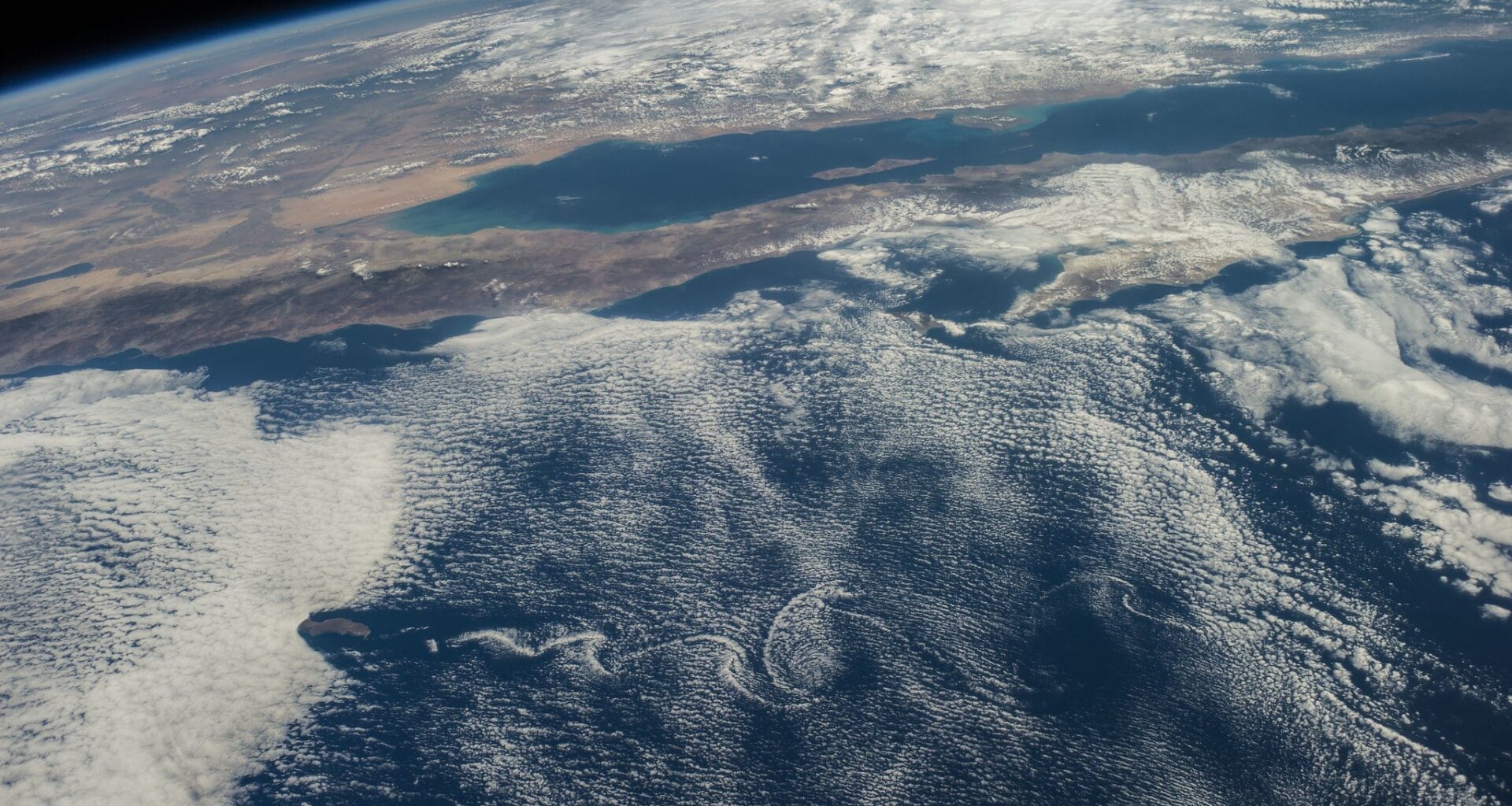
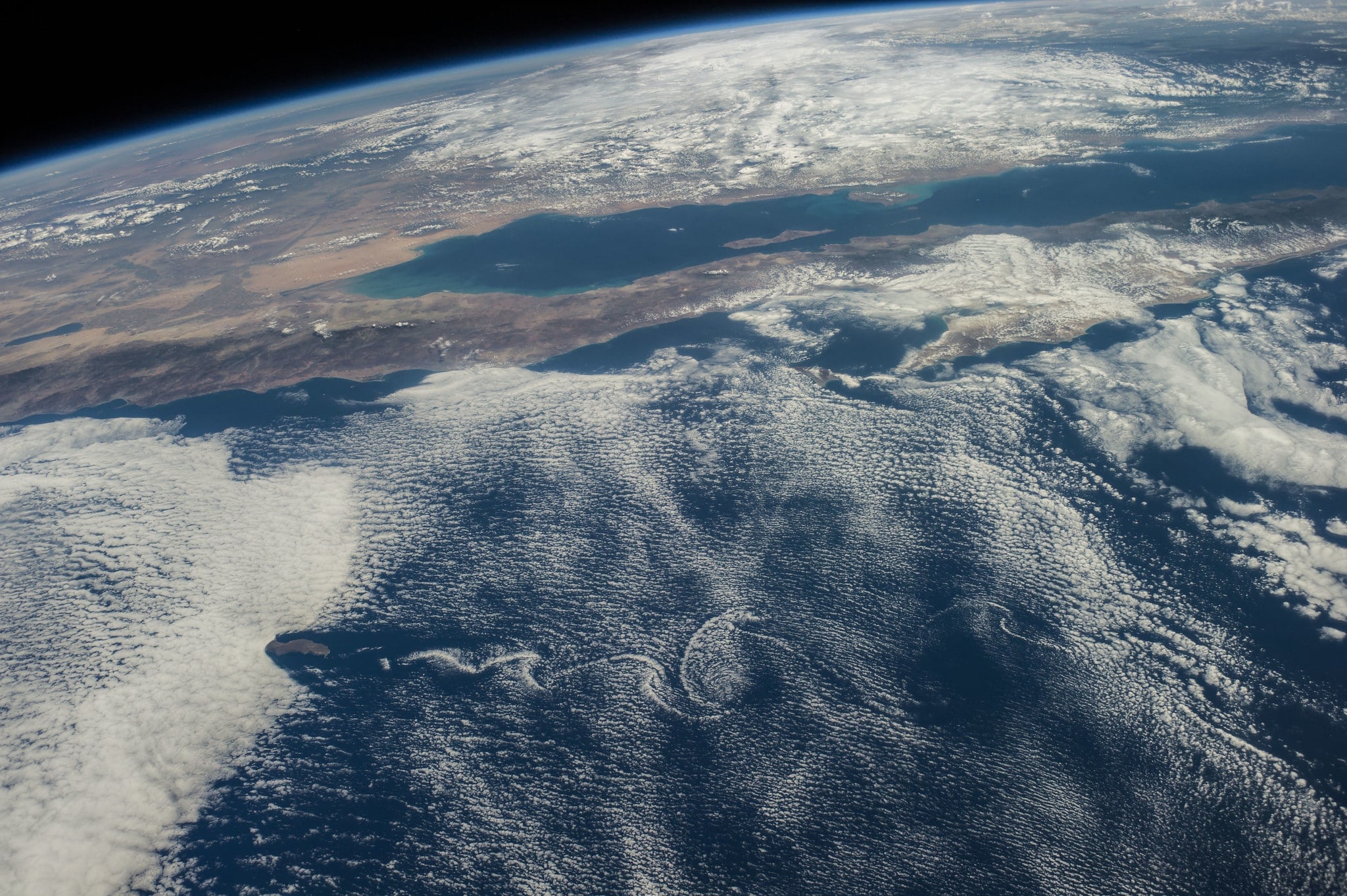
Earth from space Credits: NASA / CC BY NC 2.0
Scientists say they may have solved Earth’s oldest greenhouse mystery: how the planet shifted from a hot, tropical world to the cooler, ice-covered Earth seen today.
New research suggests the transformation began about 66 million years ago, shortly after the extinction of the dinosaurs. The study points to a major decline in calcium levels in the oceans as a key driver of long-term global cooling.
A planet once locked in heat
For much of Earth’s early history, the planet functioned as a greenhouse. During the age of dinosaurs, there were no permanent ice caps. Forests grew near the poles, and sea levels were far higher than today.
Scientists have long debated what caused that warm world to cool. Volcanic activity, changes in sunlight, and shifts in ocean circulation were all considered. The new study adds ocean chemistry to the list of answers.
Calcium’s role in Earth’s carbon balance
An international research team led by the University of Southampton found that calcium concentrations in seawater fell by more than 50 percent over the past 66 million years. The findings were published in the Proceedings of the National Academy of Sciences.
Calcium plays a central role in the global carbon cycle. In seawater, it combines with carbon to form calcium carbonate, the material that makes up shells, corals, and limestone. This process controls how much carbon dioxide remains in the atmosphere.
At the start of the Cenozoic Era, which began after the dinosaurs disappeared, dissolved calcium levels were roughly twice as high as they are today, said lead author David Evans, an ocean and Earth scientist at Southampton.
How oceans slowly pulled carbon from the air
When calcium levels were high, the oceans stored less carbon. More carbon dioxide stayed in the air, trapping heat and keeping the planet warm.
Over millions of years, calcium levels steadily declined. As they fell, more carbon became locked away in marine sediments on the seafloor. That reduced the amount of carbon dioxide in the atmosphere.
Scientists say they’ve solved a long-standing greenhouse mystery. New research shows a 66-million-year drop in ocean calcium pulled CO₂ from the air, cooling Earth after the dinosaurs vanished. pic.twitter.com/pCSXi11412
— Tom Marvolo Riddle (@tom_riddle2025) January 22, 2026
The loss of this greenhouse gas caused global temperatures to drop. Researchers estimate Earth cooled by as much as 15 to 20 degrees Celsius over that long period.
Fossils reveal ancient seawater chemistry
The team reconstructed ancient ocean chemistry by analyzing fossil shells of foraminifera, microscopic marine organisms preserved in seafloor sediments.
The chemical signals locked in those fossils allowed scientists to build the most detailed long-term record of seawater chemistry to date. The data showed a close link between ocean calcium levels and atmospheric carbon dioxide.
Computer-based climate models supported the fossil evidence. The simulations showed how calcium levels shaped how marine life, including plankton and corals, processed and buried carbon on the seafloor.
Co-author Xiaoli Zhou of Tongji University said the gradual shift steadily removed carbon dioxide from the atmosphere, cooling the planet over geological time.
Deep Earth processes tied to climate change
The researchers also found that the decline in calcium closely followed a slowdown in seafloor spreading, the volcanic process that creates new ocean crust.
As seafloor production slowed, chemical exchanges between seawater and newly formed rock weakened. That reduced the supply of calcium entering the oceans, said co-author Yair Rosenthal of Rutgers University.
Scientists have often viewed seawater chemistry as a response to climate change. The new findings suggest it can also be a cause.
The researchers say slow, deep Earth processes beneath the oceans helped drive some of the largest climate shifts in Earth’s history, reshaping the planet long after the dinosaurs vanished.