

Listen to this article
Estimated 5 minutes
The audio version of this article is generated by AI-based technology. Mispronunciations can occur. We are working with our partners to continually review and improve the results.
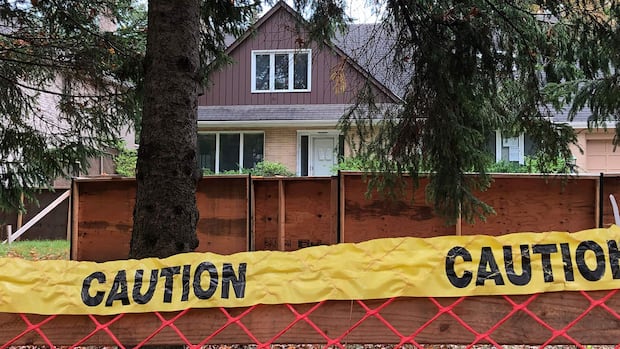
Toronto is closer to placing restrictions on the size of “iceberg homes,” a controversial style of luxury development with massive basements that have drawn environmental concerns over impacts on flood risks and the city’s tree canopy.
Iceberg homes are multi-storey residences that take up more space below ground than above, usually to increase square footage when zoning height restrictions prevent building up.
The city’s housing and planning committee voted Thursday to adopt a motion that would introduce minimum underground building setbacks for low-rise residential buildings, limiting how close they can extend to the property line.
Toronto does not have below-ground setback requirements, but the city has been looking at changing that for years now. A city report to the committee found iceberg-style basements reduce soil health and tree growth, and make the ground less permeable to storm water, increasing flood risks.
Both storm water run-off and tree canopy growth have been major issues in the city in recent years.
Reducing impermeable surfaces like paved lots was something Mayor Olivia Chow wanted the city to look at following major flooding in 2024. Toronto also has a target to increase its tree canopy to cover 40 per cent of the city by 2050 to help fend off the worst heat effects from the climate crisis.
Other issues flagged in the city staff report on iceberg homes include excavation impacts on neighbouring properties, reduced area to plant new trees, and the high carbon footprint that comes with the amount of concrete required to build them.
What are iceberg homes?
The iceberg home got its start in the U.K., in London’s well-heeled neighbourhoods, where wealthy homeowners expanded downward to get around heritage and height restrictions.
The multi-storey basements in some cases include luxury amenities like private cinemas, games rooms, swimming pools and parking garages.
London eventually put restrictions on iceberg homes after complaints from surrounding residents.
During the COVID-19 pandemic, when people were stuck at home, the developments started popping up in wealthy Toronto neighbourhoods like Hoggs Hollow, Forest Hill and the Bridle Path. While they aren’t prevalent, they’re still being built. Since 2024, 12 applications have been submitted by homeowners to build mega-basements, according to the city.
WATCH | Concerns rise over Toronto iceberg homes:
Controversy over environmental issues have been flagged for years. In 2021, a 250-year-old sugar maple tree was cut down during construction of an iceberg home in Hoggs Hollow. Neighbours at the time complained about the removal of tree canopy and the possible destabilization of soil.
Architect calls iceberg bylaw ‘overkill’
While several residents spoke at Thursday’s meeting about the need to protect trees in their neighbourhoods, Toronto architect Noam Hazan told CBC Toronto that homeowners should be able to do what they want below ground if developments don’t affect neighbours’ sightlines. He said there are already sufficient checks and balances in place for tree protection.
“To have new bylaws in place for what I don’t think is that widespread seems a little bit overkill,” he said.
LISTEN | Are basement-free buildings better for the future climate?:
The Current10:29Banning basements in the face of climate change
Some Quebec politicians are calling for a ban on new basement apartments in flood-prone areas. Some critics say the move doesn’t go far enough in the face of a changing climate.
But environmental advocate Tim Gray with Environmental Defence said these limits are necessary for the city’s health.
“If you’re blocking the infiltration of rainwater by having the entire property underlaid by concrete, then a lot more of that is going to end up [flash-flooding],” he said. “And also just not going into the ground where it’s needed to help plants grow.”
The city committee also voted Thursday to no longer define swimming pools, hot tubs, artificial grass and permeable pavement as soft landscaping. City bylaws require a certain amount of soft landscaping on properties to ensure growing space for a healthy tree canopy and other vegetation.
Concerns over bylaw’s impact on housing
But environmental impacts aren’t the only concern.
Some housing advocates oppose the limitations on mega-basements. Damien Moule with More Neighbours Toronto said his organization wants exceptions made for multi-residential buildings.
“If a multiplex needs something in a basement like a shared laundry room or bike parking facility and it just needs to be slightly outside of the [setback limit], I don’t think it really hurts anybody,” he said.
“I would prefer to keep it as easy as possible to build multiplexes, because we just need more housing in general.”
Apartment buildings would be exempted from new requirements, but restrictions would apply to detached houses, semi-detached houses, townhouses and multiplexes. City council will debate the motion later this year.