
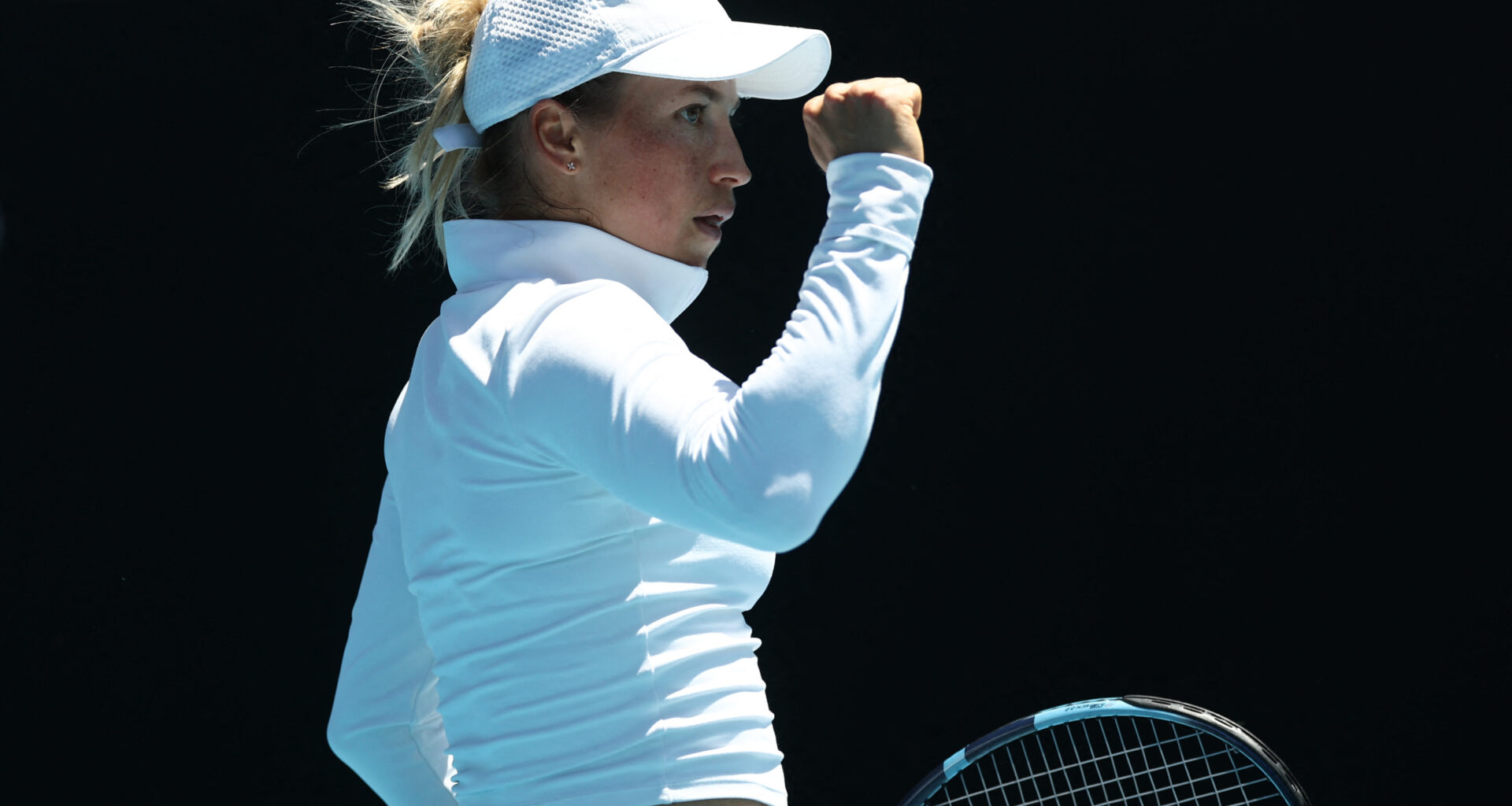
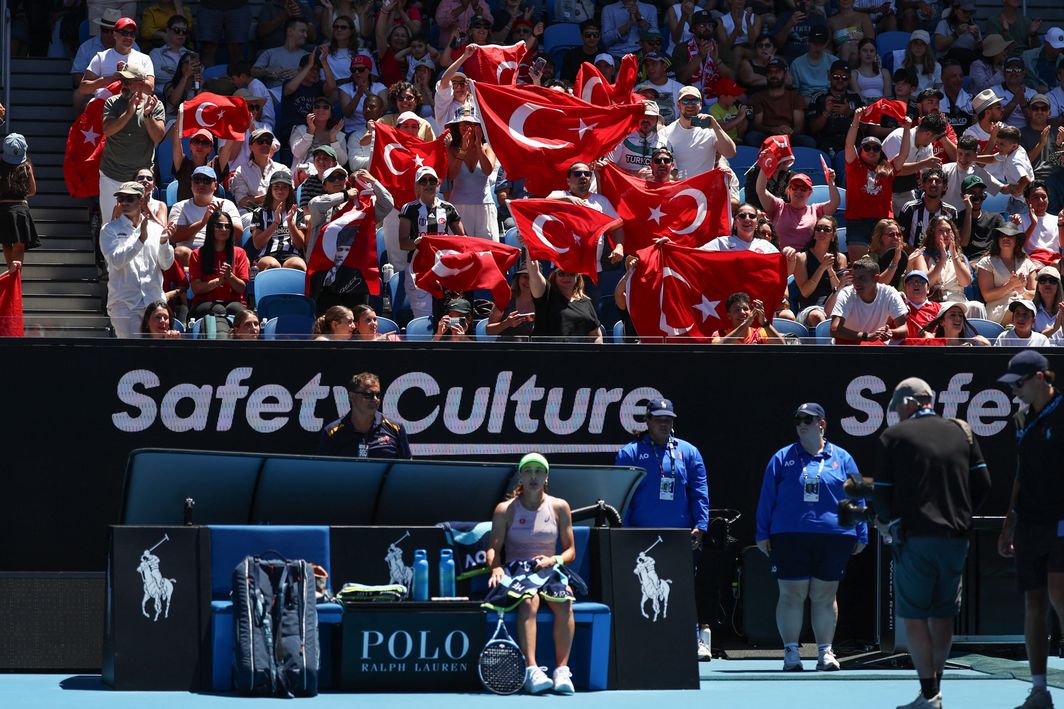
Midway through her Australian Open third-round match against Türkiye’s Zeynep Sonmez, with the noise from a fervent Turkish crowd almost deafening her, Yulia Putintseva had a childhood flashback.
Out of nowhere, she began singing “Song About Rabbits”, from the 1969 Soviet comedy The Diamond Arm, to herself. It was inexplicable — she hadn’t watched the film since she was 14 years old, and her usual match earworms were songs by Taylor Swift or The Weeknd.
“And here it comes, a rabbit song,” Putintseva told press afterward. “I’m like, ‘I don’t know why … it has nothing to do with anything.’ It’s just about rabbits who eat the grass. I was distracting myself with this.”
Australian Open: Scores | Draws | Order of play
The distraction helped. Putintseva recovered after failing to serve out the match at 6-5 in the second set, and emerged a 6-3, 6-7(3), 6-3 victor in 2 hours and 34 minutes. It was a milestone win — the 31-year-old has now completed the set of a second-week showing at every major.
Dropping her racquet, Putintseva started by cupping her ears to all sides of the court. Then she blew the Turkish fans kisses. At her chair, she started dancing, and she continued her shimmy all the way up to the microphone for the on-court interview.
“Really crazy atmosphere here,” she said. “The guys, look at them. They’re very passionate about what they’re doing. Very, very great to see — especially against me, because I love this kind of battle.”
Indeed, it’s not even the first time this week that former No. 20 Putintseva has faced down a hostile crowd. In her first round, she had already quietened Beatriz Haddad Maia’s Brazilian fans out on Court 6 — the Australian Open’s “party court” with a built-in bar — and rubbed her three-set victory in with a florid, celebratory bow to all corners of the court afterward. Putintseva said that “Song About Rabbits” — about a group of rabbits who declare themselves unafraid of any predators, with a refrain that translates as “We don’t care!” — had been stuck in her head in that match, too.
Intense fan atmospheres have been a theme of this year’s Australian Open, but Putintseva is one of several players on the WTA Tour Driven by Mercedes-Benz who have shown that not only are they unbothered when the crowd is against them, they thrive off the hostility.
She joins Alycia Parks, who defeated Alexandra Eala in the first round.
“It definitely puts a fire under me!” Parks said. “I would say I’m good when crowds are against me.”
Putintseva told press that while she appreciated the excitement of fans taking sides, there were moments she felt they crossed the line. The umpire frequently had to warn fans not to whistle or call out mid-point, and Putintseva recalled one such moment that made her determined to win.
“In the game, I think it was 4-3 [in the third set], was a big point,” she said. “I opened the court very good. I take my forehand — the guy just started, like, coughing just for my shot. I was like, ‘OK, now I’m not going to lose.’ Like, really. I was ready to take it all, but I was ready to fight until I die there.”
Despite the distraction, Putintseva made the forehand winner — and didn’t lose another game.
Even though she wasn’t on the receiving end of the crowd’s support, Putintseva knows a thing or two about being a figurehead for tennis in a country with little tradition in the sport. When she began representing Kazakhstan in 2012, the central Asian nation had only ever produced one home-grown Top 100 player — Irina Selyutina, who reached No. 85 in 2002. It gained a foothold on the world stage by offering financial assistance to players such as Putintseva and future Wimbledon champion Elena Rybakina.
Putintseva recalled how, before receiving the offer from Kazakhstan, she had neither financial support nor adequate practise courts near her house.
“Kazakhstan came with support, ideas, how it should be,” she said. “When we came with my parents to the facilities of Astana, and we arrived, they give us balls — new balls, a full box — and my father was like, ‘Is it free?’
The realization that not only would Putintseva be provided with free balls but also water, towels and gym time left her father speechless. Thirteen years on, Putintseva has Kazakh support of her own, and she was sure to recognize it in the crowd.
Izhar Khan/AFP via Getty Images
Jimmie48/WTA
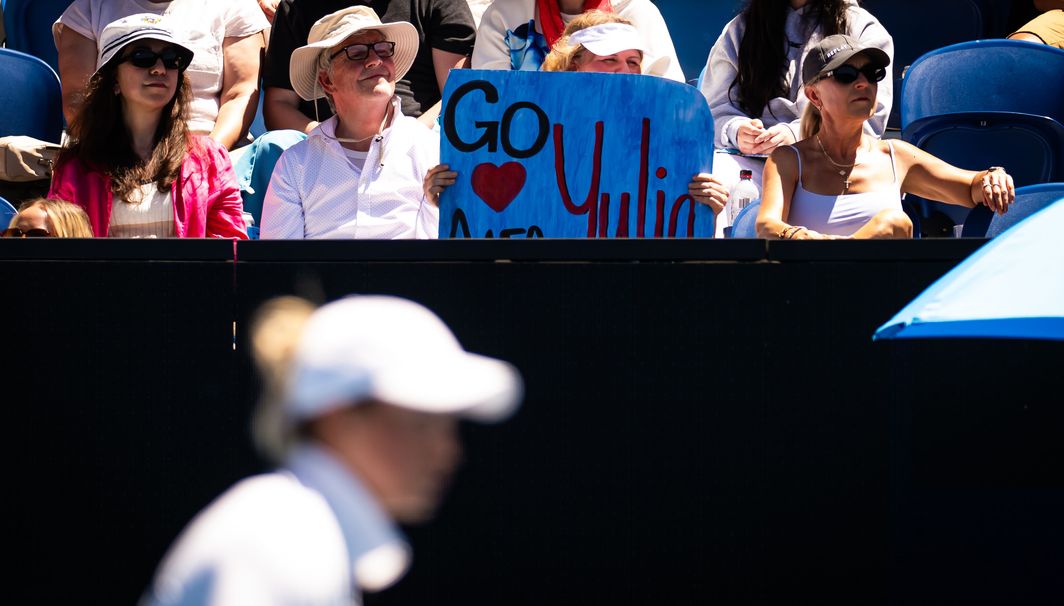
“Less people but better support,” she said in her on-court interview.
“I was thankful for them,” she continued in press. “The guys were cheering, were trying to stay alive around the Turkish crowd. They were a small group, but they were very, very supportive. Also, Australian guys were screaming in third set, ‘Yulia.’ I could hear them, and it was bringing a good moment — you know, like I’m not against the world.”
The result continues a resurgent 2026 so far for Putintseva. At the start of the year, she fell out of the Top 100 for the first time in over a decade, the consequence of a 2025 slump in form — but she returned to it after just one week by making the Adelaide second round, and is now back at No. 94. She’s also back in a Grand Slam second week for the first time since Wimbledon 2024, and for the fifth time overall. Putintseva will bid to make a fourth major quarterfinal against No. 29 seed Iva Jovic, who upset No. 7 seed Jasmine Paolini 6-2, 7-6(3).