
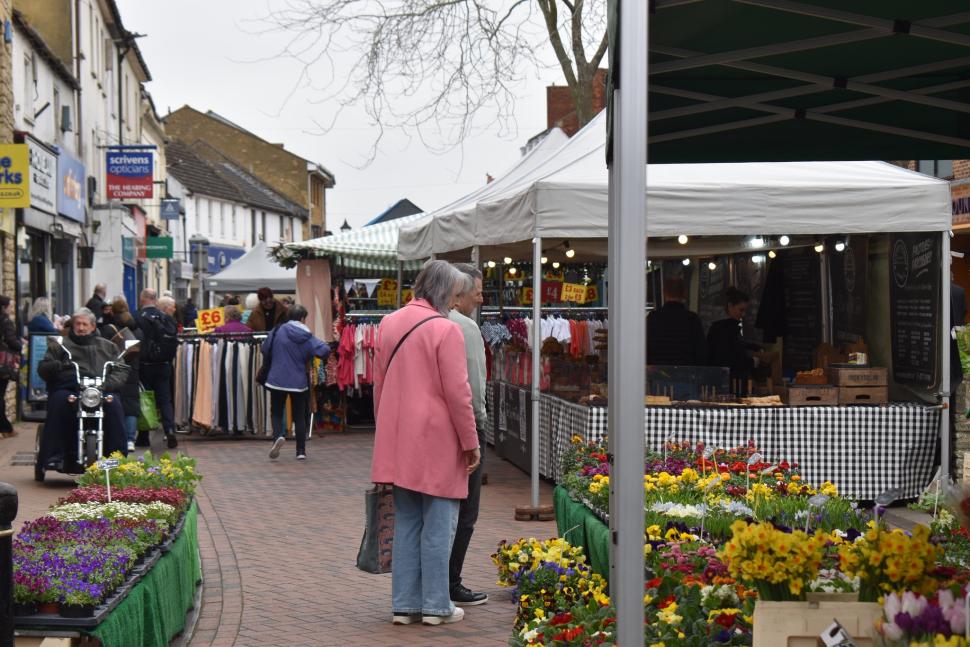
Disabled cyclists have “suffered harassment” and abuse at the hands of “non-uniformed vigilante residents” for riding through a town centre market, a cycling campaigner has claimed.
The claim was made as Oxfordshire County Council voted to amend a controversial cycling trial on Bicester’s Sheep Street, to permit disabled people who use bikes as mobility aids to cycle on the pedestrianised street during market hours.
In March 2025, an Experimental Traffic Regulation Order (ETRO) was introduced to allow cyclists to ride in both directions on Sheep Street, a key shopping street in Bicester, as part of an 18-month trial designed to make the street “more accessible” to cyclists and improving the choice of local routes for people on bikes.
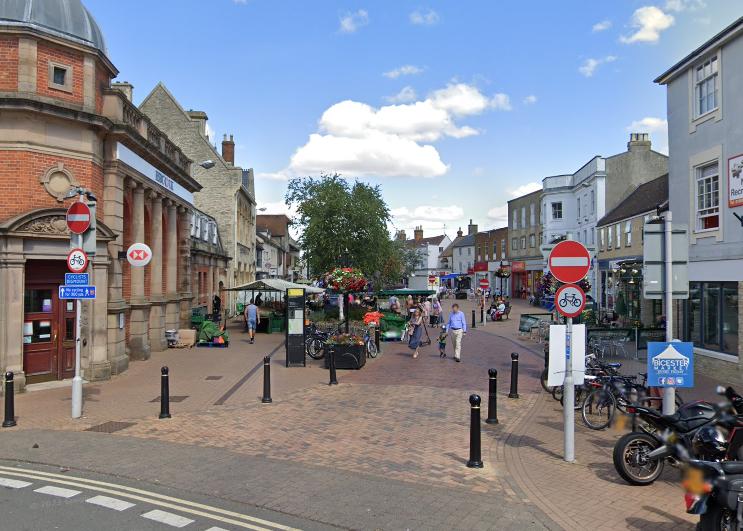 Sheep Street, Bicester, Oxfordshire (credit: Google Maps)
As reported by road.cc, the cycling trial was the subject of a long-running saga, with some locals, politicians, and business owners claiming that “every single resident does not want this scheme”, and that it will lead to “jumped-up, arrogant” cyclists causing “carnage” and posing a risk to pedestrians.
But after months of debate – which saw initial plans for a trial put on hold and replaced with a public consultation – the ETRO was finally approved in November 2024, bringing an end to a 30-year ban on cycling on Sheep Street, which bizarrely still formed part of the National Cycle Network. The trial will end in September, when the council will decide whether it should be made permanent.
According to the ETRO, the only time cycling on Sheep Street is not permitted during the trial is when the weekly market is taking place on Fridays between 9am and 4pm.
However, this week Oxfordshire County Council approved a change to the order allowing disabled people to cycle through Sheep Street during market hours, in what was described as a “small, targeted intervention” to prioritise the needs of disabled residents.
 Bicycle at Sheep Street in Bicester (credit: Catherine Hickman)
Speaking at Thursday’s council meeting, Paul Troop, chair of the Bicester Bike Users Group and secretary of Bike Users Oxford, said the change comes after disabled locals were “abused” for using their bikes to get around the town’s market, the Oxford Mail reports.
He told the meeting that those who use cycles as mobility aids “have suffered harassment by non-uniformed vigilante residents who have subjected them to unwarranted abuse”.
“Given that physically disabled residents may not be able to walk or push a bike, it is wrong to force them to choose to not access the market, or to risk harassment and abuse,” he said.
“From my experience people don’t have a problem with a disabled person cycling when it’s made obvious, like when I’m riding my hand-cycle,” added disabled Bicester resident Kevin Hickman.
During the consultation process, Hickman had previously told the council that because cycling is easier for him than walking, and less difficult than driving, the trial will make the town’s shopping street much more accessible.
“What would really help is a general understanding that many disabled people make the best of their constraints by using other cycles as mobility aids too, and that if someone is cycling slowly and carefully in a place where most people wouldn’t, they likely have a good reason for doing so,” he continued during Thursday’s meeting.
“A person’s impairment isn’t always obvious, especially when cycling. This proposal recognises that, and it’s heartening to see a transport authority thinking beyond blue badge parking when it comes to disabled people’s mobility.”
 HGV on Sheep Street in Bicester (credit: Catherine Hickman)
Andrew Gant, the local authority’s cabinet member for transport management, described the change as a “small, targeted intervention which clearly supports our policy of supporting cycling and walking and prioritising the needs of disabled people”.
The council was told that the director of highways will be responsible for setting up a permit or exemption scheme to allow access for disabled cyclists during market hours.
However, some raised concerns about how the new exemption would be enforced.
“Looking at the disabled persons aspect of the scheme, we support the intent, but we are concerned about the practicalities,” Robin Tucker, the co-chair of Coalition for Healthy Streets and Active Travel, said.
“Disabled people face enough barriers without having to prove their disabilities and have an extra form of ID for a vehicle of such low impact as a cycle. Signage may be sufficient.”