
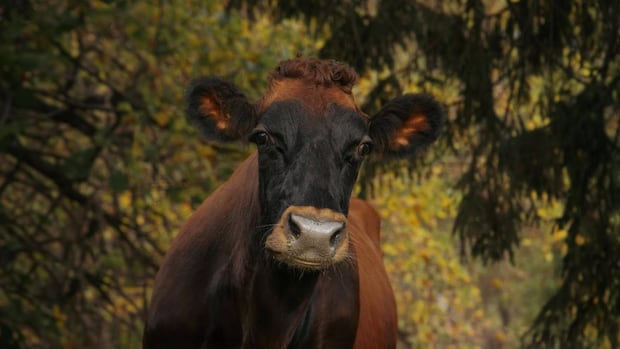
In a barn on Université Laval’s experimental farm in Deschambault, west of Quebec City, a little brown calf named Victorine reaches out to nuzzle a visitor’s hand. She was born in August 2025, but she’s smaller than the younger Holstein calves who share her enclosure.
Victorine is one of a dying breed.
She’s a vache Canadienne, originally a French breed, who arrived in New France with colonists in the mid-1600s. Experts say all the existing Canadiennes are descended — some more directly than others — from that first herd of about 300 cows.
The best estimates suggest there are only 800 of the cows left in the world. Some in France, some in the U.S., a few in Saskatchewan and some in Quebec. Only 400 qualify as purebred. And the clock is ticking to save the breed.
Enter the scientists.
Great milk, just not enough
Rachel Gervais, an expert in animal nutrition at Université Laval, can’t help but laugh as she walks past long rows of black-and-white Holsteins to the stalls where the Canadiennes are quietly grazing.
“It’s incredible!” Gervais chuckles, pointing to one named Florine, and the Holstein next door who towers over her. “You look at this cow and this one and it looks like a baby! But no, she’s an adult. She’s producing milk.”
That milk is good — rich in fat and proteins. But the Canadienne doesn’t produce enough to make her profitable, by industry standards.
A modern Holstein in this herd can produce 60 kilos of milk a day. The Canadienne might produce 20 to 25.
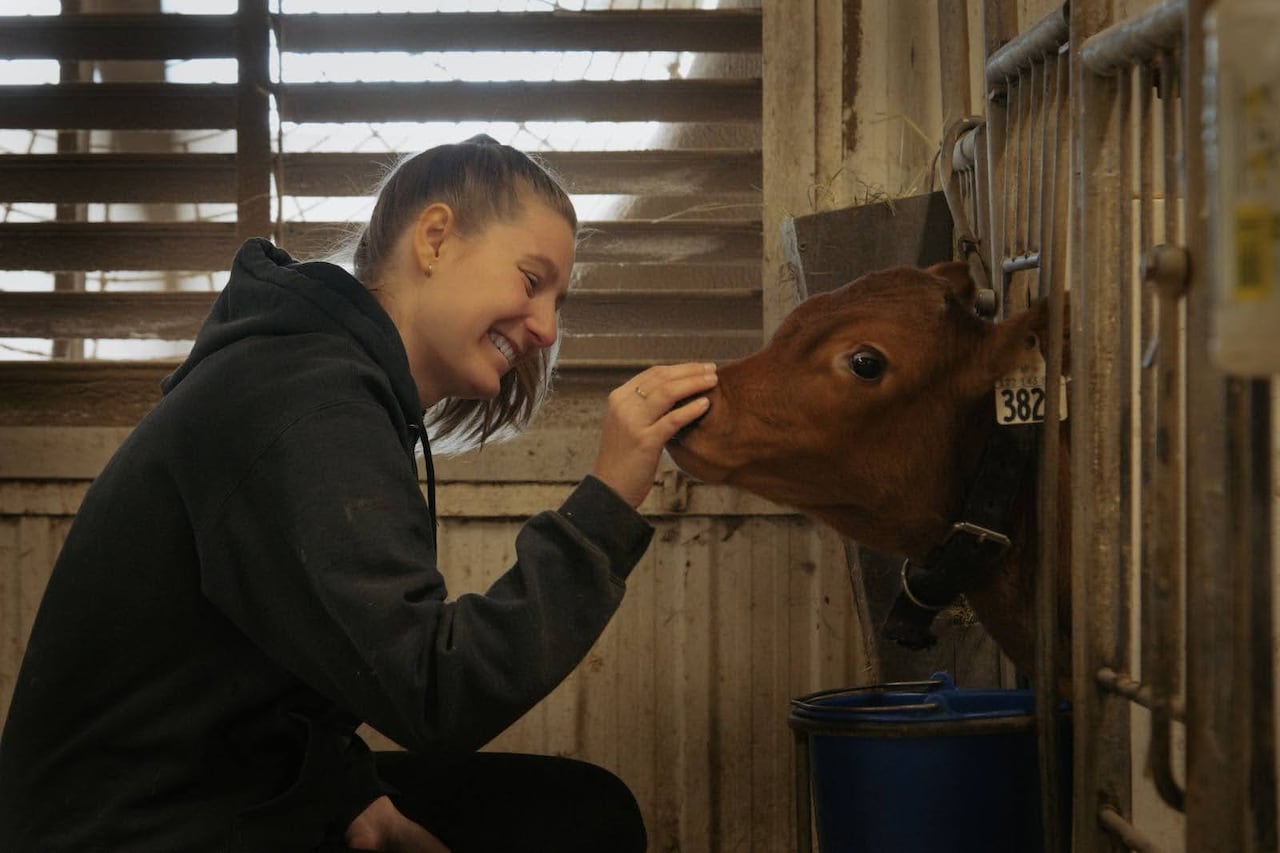 Université Laval graduate student Miatanie Breton-Bernier greets Tornade, whose mother, Éclair, is part of the experimental farm herd. (Françoise Gervais)
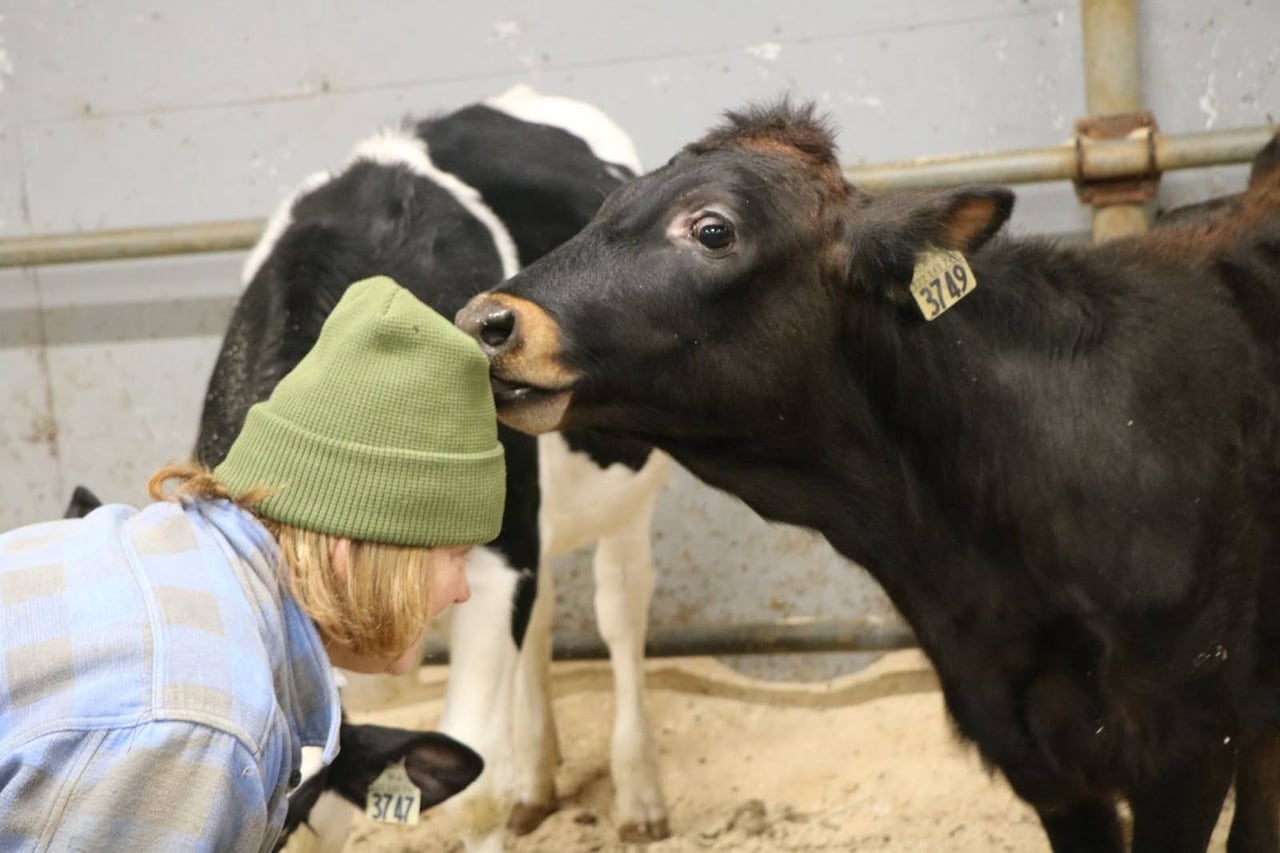
Université Laval graduate student Miatanie Breton-Bernier greets Tonerre, whose mother, Éclair, is part of the experimental farm herd. (photo: Françoise Gervais)
Mario Duchesne has been sounding the alarm about the Canadienne for years. He’s the co-ordinator of the Canadian Cattle Breed Network.
He says breeders turned away from the Canadienne because of that lack of milk production.
They focused on the Holstein, instead, and that cow now dominates the dairy landscape.
Duchesne knows the little brown cow will never produce like a Holstein, but he believes with a little work, she can be profitable.
“We need quality,” Duchesne says. ‘‘But we need to sell the heritage of this breed. It’s from France, but it’s not a French cow. It’s a Canadian cow.”
The university researchers know the argument for saving the Canadienne has to be based on economics for farmers. They’re convinced the key is in the quality of the cows’ milk and how it lends itself to being transformed.
“It happens in Europe,” Gervais points out. “There are so many producers that are producing niche cheese or butter attached to a specific breed, to keep these breeds alive and keep the biodiversity with it.”
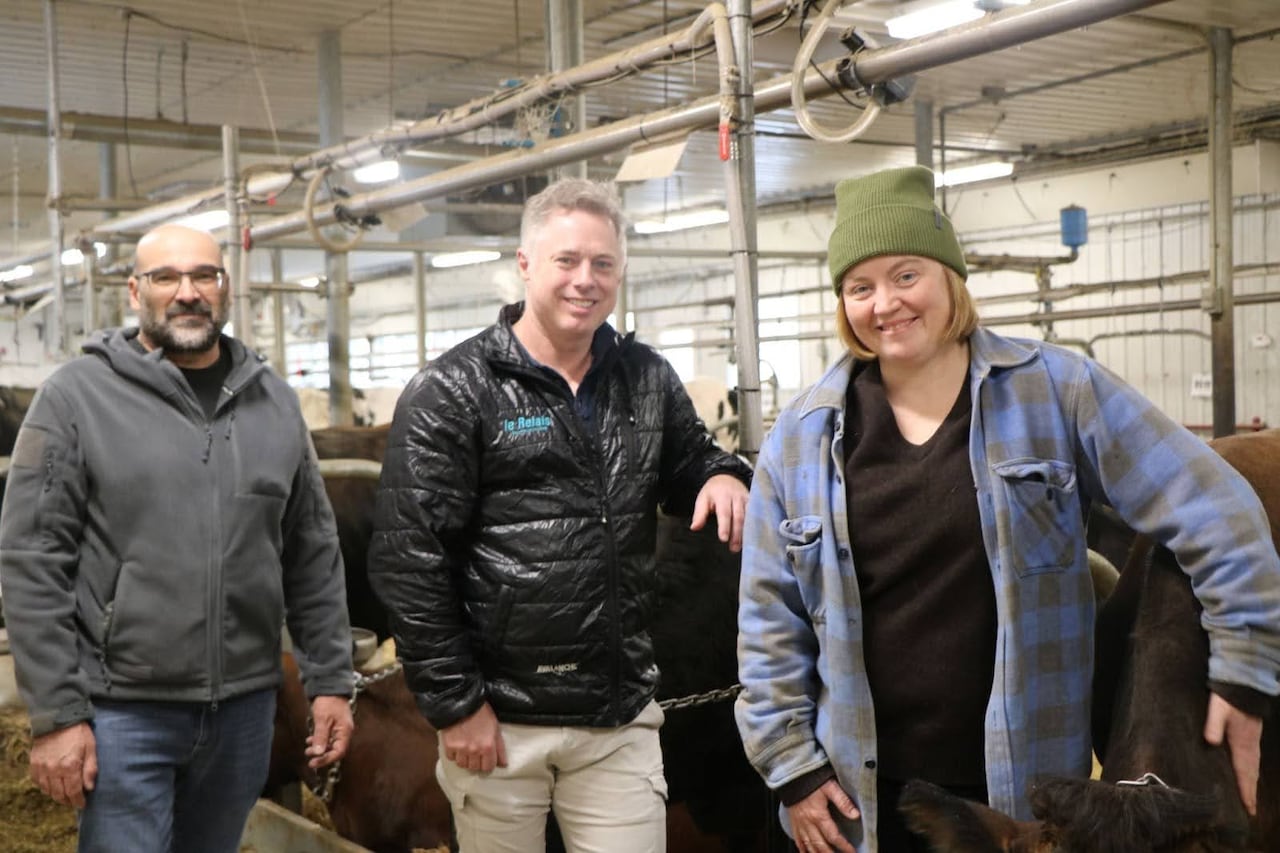 Mario Duchèsne, left, Claude Robert and Rachel Gervais are contributing their expertise to a joint research project that aims to save the Canadienne, a cow whose history in Canada dates back to the beginning of New France. (Susan Campbell/CBC)Cataloguing a cow
There’s little hard data on the Canadienne. Much of what’s said about them is anecdotal or even myth. The Laval team hopes to counter some negative spin with fact.
The first hurdle was figuring out if there’s enough diversity in the cows’ gene pool to save them.
Claude Robert, an animal genetics expert in the animal sciences department at the university, says the assumption was that a cow which had been crossbred so little would be lacking that diversity.
But when his team analyzed the genome of a purebred Canadienne whose parents both directly descended from the original herd, they were surprised.
“We found a lot of diversity, surprisingly,” Robert says. “The breeders were using a lot of the available bulls, and in doing so, they were maintaining the diversity.”
Robert says there needs to be a consensus on what this cow is best for and how she should be bred to achieve that. There are physical traits — like a low-hanging udder — which experts say need correcting. Robert says those improvements can happen quickly, rendering the Canadienne more attractive to producers.
Meanwhile, Gervais is analyzing whether the lore about the cows’ feed stands up.
“We’ve heard a lot of people say these animals are made to eat old forage,” Gervais says. “But we don’t have any numbers. We want to try to find the best diet for the best milk.”
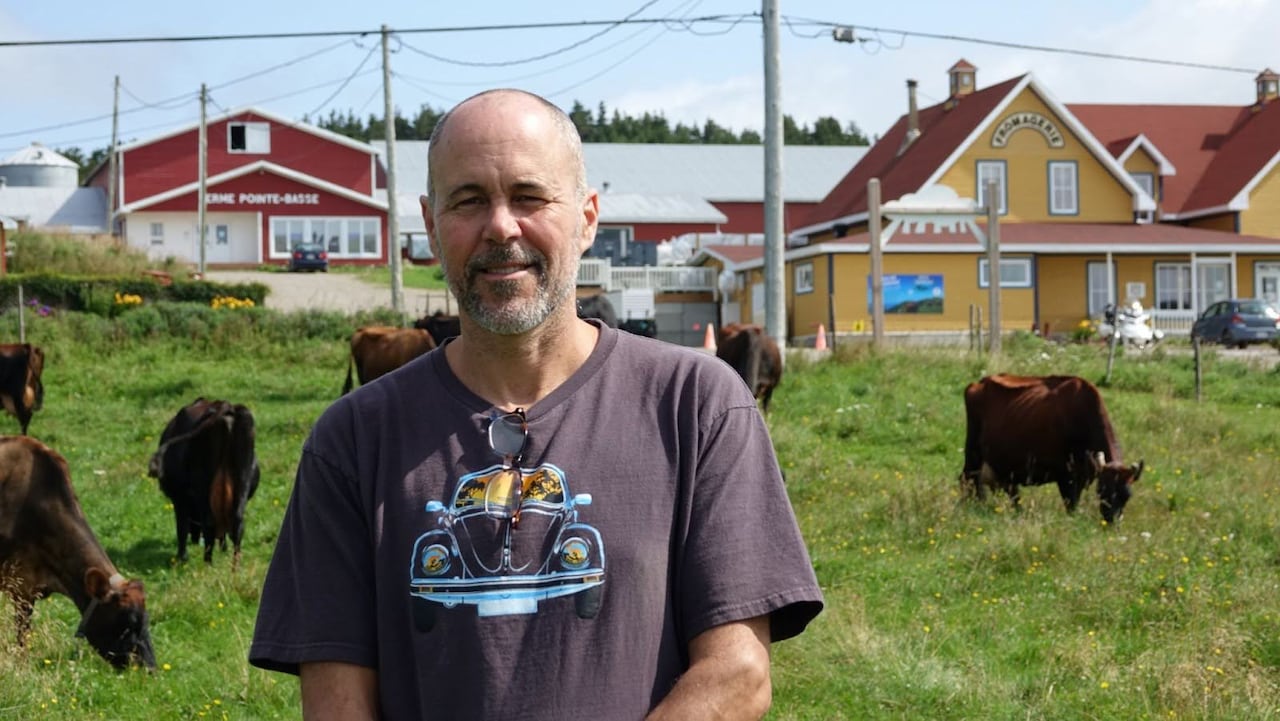 Dominique Arseneau, co-owner of La Fromagerie du Pied-de-Vent in Havre-Aux-Maisons, keeps a herd of Canadiennes, whose milk he uses for cheese production. (Isabelle Larose)Lived experience a big help
Dominique Arseneau has rare first-person experience with the Canadienne.
He’s co-owner of La Fromagerie du Pied-de-Vent in Havre-Aux-Maisons on the Magdalen Islands. His grandfather and father always raised Canadiennes, but for meat. He started making cheese with their milk in 1998.
Arseneau praises the resilience of the breed, who make good use of the pasture land on his farm. He underlines the quality of their milk, calling the Canadienne “a cow that gives us very few problems.”
WATCH | How massaging newborn calves might make them healthier: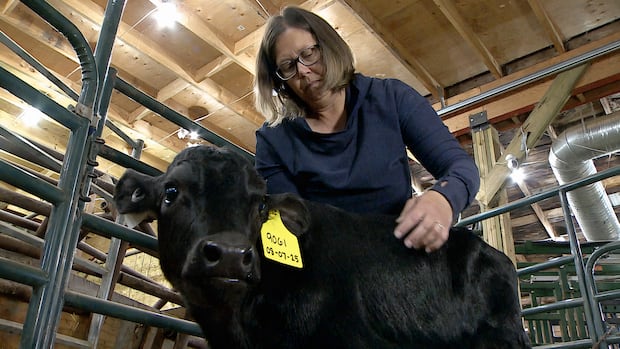
Study looks at how massaging newborn calves might make them heavier and healthier
As part of a research study with Olds College, two Alberta farming families are massaging their newborn calves for one minute. The technique is called “tactile stimulation” and it’s being applied as a way to get the animals used to humans. It’s thought this can reduce their stress, improve their health and, ideally, their profitability down the road.
But there’s a cost to raising Canadiennes that would be an obstacle for some producers.
“When you produce milk, you pay a lot to get volume,” he says. “When a cow is a little less productive, you need more animals to get it.”
Finding a way to bring down input costs without sacrificing the quality of the milk is a focus of the team’s work.
And the proof of this milk is in the cheese.
Blessed are the cheesemakers
The milk from the Laval experimental farm is delivered to the lab of Julien Chamberland, an assistant professor in the university’s department of food science, where his team analyzes its components.
Then it’s sent to the faculty’s experimental plant to be transformed into cheese — the place where Chamberland says “the magic happens.”
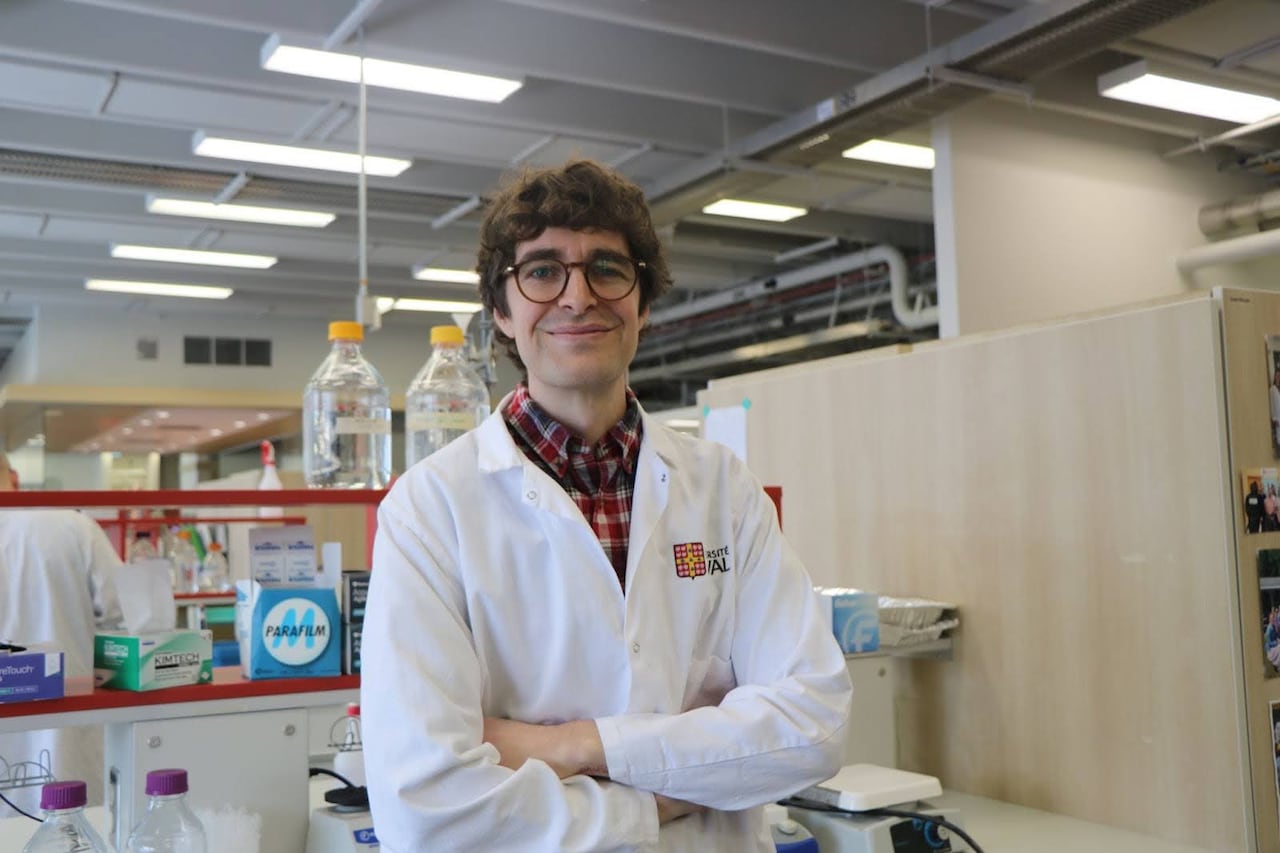 Julien Chamberland’s team is hoping to nail down the magic element that makes the Canadienne’s milk so rich — and the resulting cheese that is so distinctive. (Susan Campbell/CBC)
The team made its first batch of traditional raw milk cheese in December 2025. They took milk from both the Holsteins and the Canadiennes at the farm and prepared them using the same method in the same conditions.
Chamberland says from day one, they could see differences in the cheeses.
“They don’t have the same colour, they don’t have the same taste,” Chamberland says. “The Canadienne cheese has a strong buttery taste that Holstein doesn’t. It’s different and that’s what we want to promote.”
It will take two years of ripening before the cheese reveals all of its secrets. But Chamberland is convinced the Canadienne milk has unique properties that are a strong selling point.
 Victorine, who was born at the Université Laval experimental farm in summer 2025, greets animal science professor Rachel Gervais. She’s already been surpassed in size by Holsteins born after her. (Susan Campbell/CBC)
The thing that unites everyone involved in this research is their attachment to the cows they’re studying.
Gervais calls them their own best marketing tool. She has no difficulty recruiting students to work with the Canadiennes, underlining their friendliness, and how they’ve become favourites on the farm.
Gervais knows the breed won’t survive on cuteness alone. But with the work being done in the barn, in the lab and at the plant, she’s hopeful science will give them a fighting chance.
And she thinks there are a lot of people with a sense of history who want to see the Canadienne continue.
“It would be very sad to see them disappear,” Gervais says, as she pats one of the cows on the head.
“We think she has a place in the landscape.”