
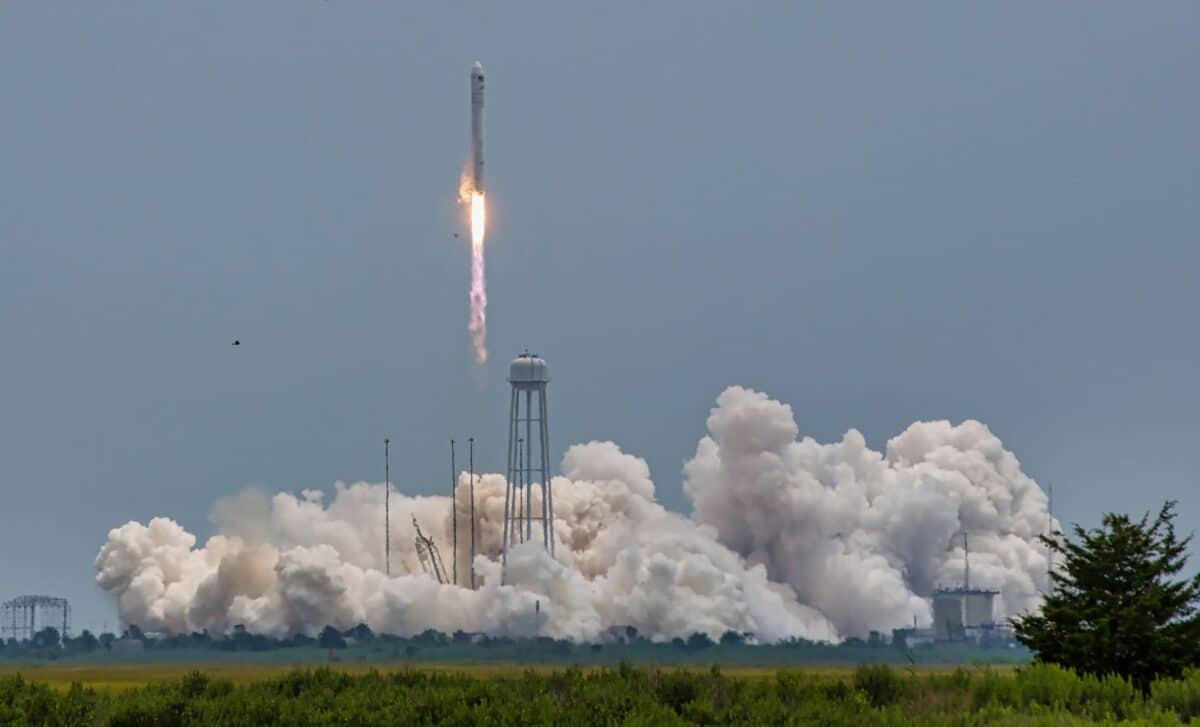
SpaceX kicked off its ninth mission of 2026 with a successful launch from California’s Vandenberg Space Force Base, deploying 25 additional satellites for its Starlink internet network. The Falcon 9 rocket lit up the night sky, adding to a growing constellation now totaling over 9,500 active satellites, according to Space.com. The booster, flying for the thirteenth time, landed safely on the drone ship Of Course I Still Love You in the Pacific Ocean.
The launch occurred just before 10 p.m. local time on January 21 and marked another milestone in SpaceX’s high-frequency cadence of Starlink deployments. The company confirmed the successful satellite release roughly one hour after liftoff, following a smooth ascent from Launch Complex 4 East.
This latest mission, labeled Group 17-30, demonstrates how SpaceX is continuing to expand its global internet infrastructure with unwavering consistency. The deployment supports efforts to connect underserved regions and strengthen in-flight and emergency communication services, placing SpaceX in a leading position in both aerospace and telecommunications.
Night Launch Lights Up Vandenberg Skies
The Falcon 9 rocket lifted off at 12:47 a.m. EST on January 22 (9:47 p.m. PST on Jan. 21), sending a fresh batch of Starlink satellites into orbit above the Pacific coast. According to Space.com, the rocket’s upper stage reached preliminary orbit about nine minutes after launch and deployed its payload on schedule. The mission was visually striking as it occurred at night, creating a dramatic plume across the sky that could be seen from miles around.
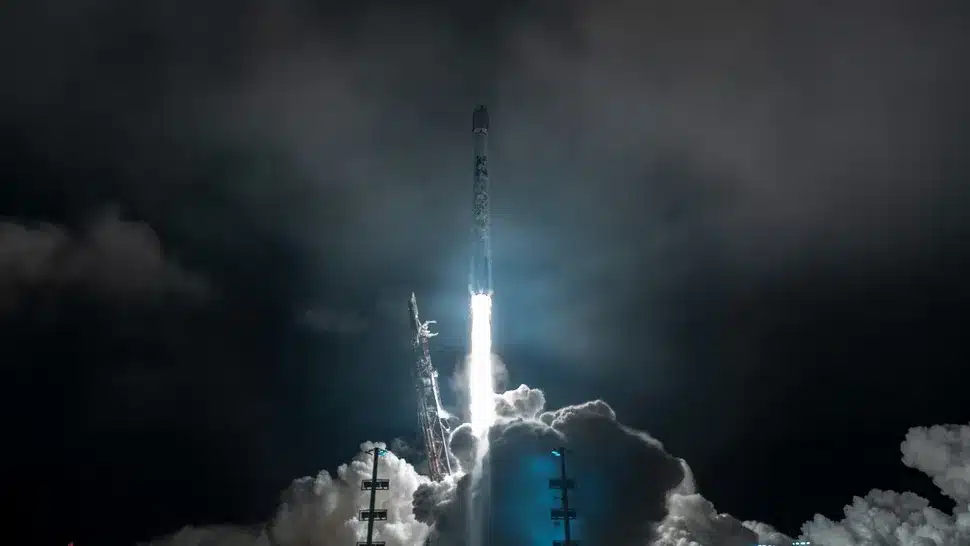 25 Starlink satellites launched aboard a Falcon 9 from Vandenberg. Credit: SpaceX
This marks the 592nd launch by SpaceX since 2010, a number that highlights the company’s dominance in orbital transportation. The rocket used for the launch, Booster 1093, has now flown 13 times, a testament to the reliability and reuse strategy SpaceX has cultivated to maintain its lead in the launch industry.
Starlink Network Continues Its Rapid Growth
The newly deployed satellites will join more than 9,500 active Starlink satellites currently in orbit, according to the reporting. This group, designated 17-30, will contribute to enhancing the broadband network’s performance and coverage. Starlink has been instrumental in providing internet access to regions that lack stable infrastructure, as well as to aircraft and emergency responders in remote areas.
https://twitter.com/SpaceX/status/2014232370354741707
SpaceX’s Starlink service supports a broad range of users, including commercial airlines seeking high-speed inflight connectivity and telecom providers pursuing direct satellite-to-cell capabilities for emergency communication scenarios. The consistent deployment of these satellites ensures minimal coverage gaps and bolsters the constellation’s resilience.
Reusability Remains A Key Part Of SpaceX Strategy
The mission’s first-stage booster, B1093, executed a flawless landing on the autonomous drone ship Of Course I Still Love You, stationed in the Pacific Ocean. The booster’s 13th flight reflects SpaceX’s continued emphasis on rocket reusability, a feature that allows for rapid turnaround and significant cost reduction.
This approach has become a defining trait of the company’s operations. SpaceX’s ability to reuse boosters multiple times has played a critical role in supporting the frequent deployment of Starlink satellites and maintaining the momentum of its launch schedule. As Space.com notes, this was already the ninth launch of the year for the company.