
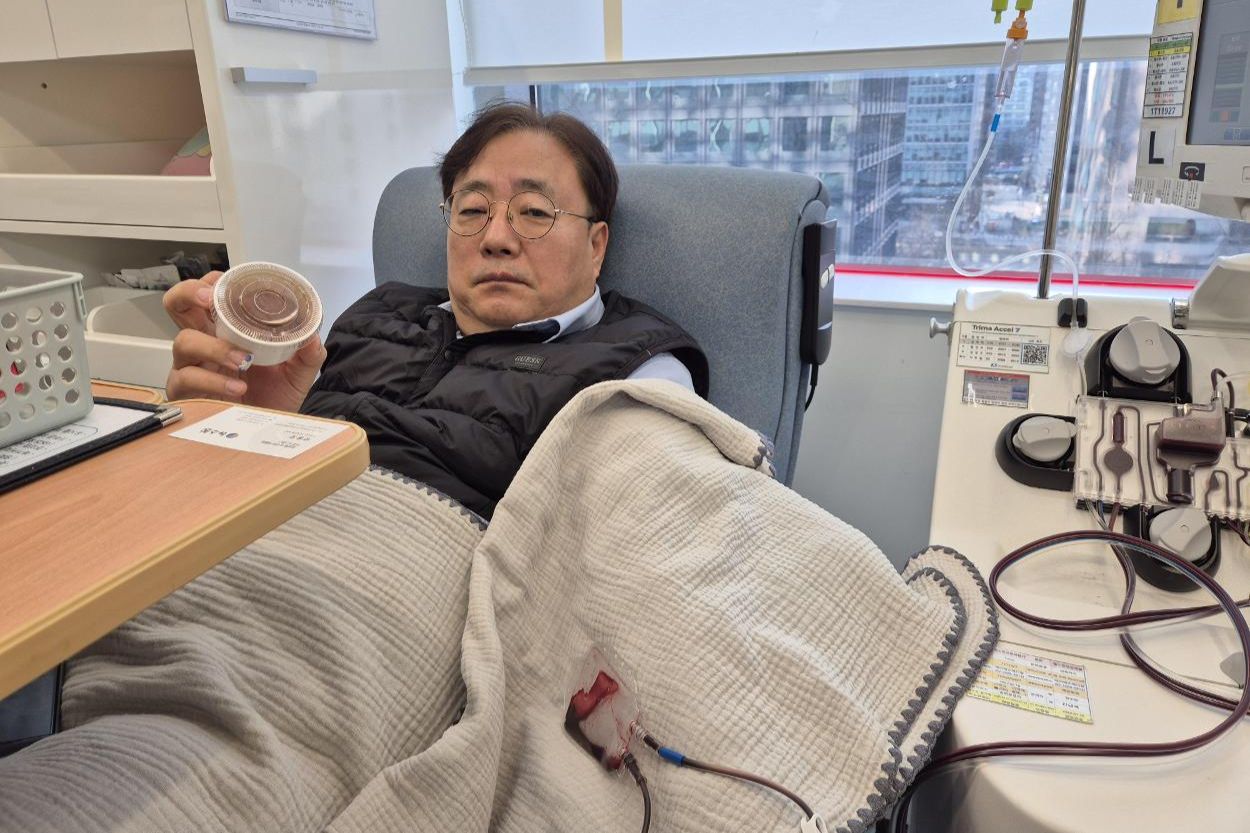
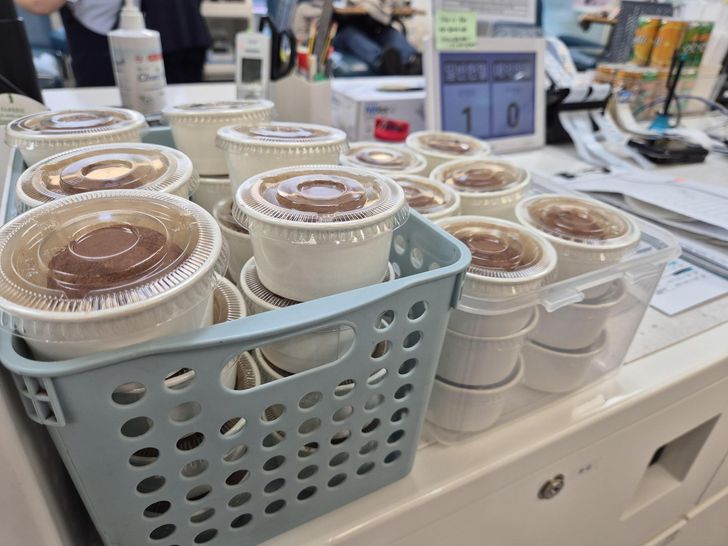
Dubai chewy cookies for blood donors sit at the Gwanghwamun Blood Donation Center in Jongno District, central Seoul, Friday. Korea Times Photo by Park Ung
Choi Sang-hun, a 21-year-old office worker who regularly donates blood, had never tried a Dubai chewy cookie known as “dujjonku,” even as it surges in popularity to become one of the hardest treats to find in Korea.
He finally got a taste at the Gwanghwamun Blood Donation Center in Jongno District, central Seoul, where the cookies were handed out to the first 100 people to donate blood that day.
“I don’t know yet whether it tastes good because I haven’t tried it, but it feels great to get one,” Choi told The Korea Times.
His story points to a broader effort by the Korean Red Cross, which oversees the nation’s blood supply, and has turned to a growing list of incentives — from viral cookies to K-pop — as it struggles to ease a chronic blood shortage.
The Korean Red Cross has not met this year’s benchmark for adequate daily blood supplies of at least five days’ worth, meaning it remains at the “alert monitoring” stage.
The strain of an inadequate supply follows a recent slide in reserves: Blood supplies met the adequate level for 242 days in 2023 and 304 days in 2024, before falling to 248 days last year, leaving stocks below target for roughly one-third of the year.
According to the Korean Red Cross and the Ministry of Data and Statistics, the number of people who donated blood at least once a year fell 25.4 percent, from nearly 1.7 million in 2014 to about 1.26 million in 2024, the lowest level since data became available in 2005.
The Korean Red Cross said low birthrates and a rapid aging society will drive up demand for blood transfusions over the mid- to long-term, while also shrinking the pool of eligible donors.
Last year, people aged 65 and older accounted for more than 21 percent of Korea’s population, meaning the country is now a super-aged society by United Nations standards. The total fertility rate stood at 0.75 in 2024, far below the OECD average of 1.51 in 2022.
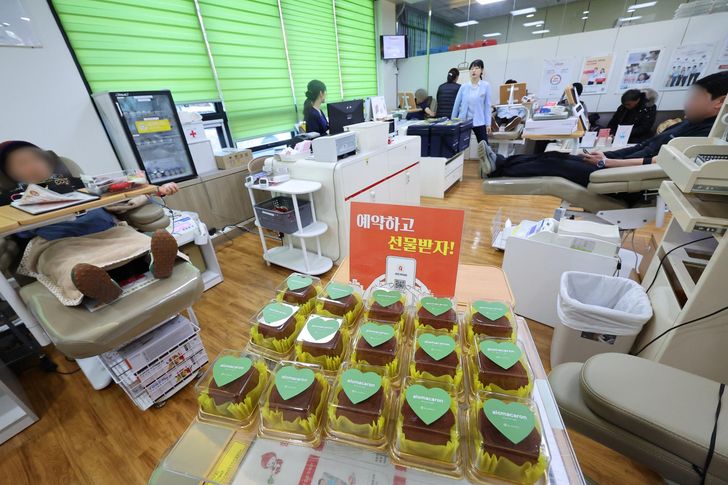
Dubai chewy cookies for blood donors sit out at a blood donation center in Yeonsu District, Incheon, Tuesday. Yonhap
In response, the agency has stepped up its promotions this month, moving beyond standard gifts such as vouchers to offer incentives ranging from Dubai chewy cookies to photo cards of K-pop group ENHYPEN at select donation centers.
On Jan. 16, when Dubai chewy cookies were offered, 668 people donated blood at eight centers in Seoul — a 116 percent increase from the previous Friday, the Korean Red Cross said.
“The approach is already bearing fruit,” said Shin Geum-ok, a 54-year-old nurse with about 30 years of experience, who works at the Gwanghwamun Blood Donation Center.
Friday marked the first day the center began handing out Dubai chewy cookies. Shin said the center bought 100 cookies from a nearby cafe to distribute to the first 100 donors.
“As of 10:30 a.m., we usually see about four or five donors, but today we’ve had 14 — more than double,” Shin said.
She added that blood supplies often remain tight, delaying some transfusions, and expressed hope the promotion will help stabilize them.
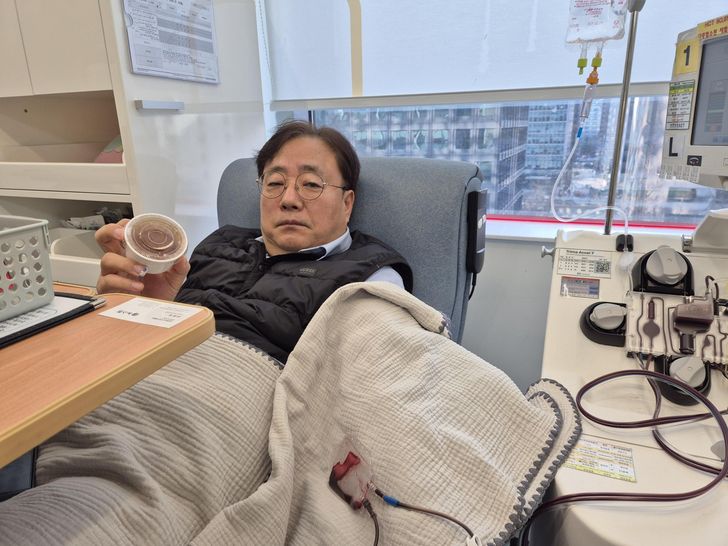
Yang Chung-mo, a 59-year-old blood donor, poses with a Dubai chewy cookie he received at the Gwanghwamun Blood Donation Center in Jongno District, central Seoul, Friday. Korea Times photo by Park Ung
However, the cookies appeared to matter little to regular donors.
Yang Chung-mo, a 59-year-old who is a regular blood donor, said he learned about the giveaway only after registering.
“I don’t think promotions like this have much influence on blood donation,” Yang said, adding that most repeat donors give blood regardless.
Hwang Dae-young, a 34-year-old office worker, said he donates blood regularly regardless of promotions but that such events could still draw more donors. They could also help with platelet and plasma, he said, which take longer to donate.
“If promotions focus on areas where platelets and plasma are especially needed, they could be more effective,” Hwang added.