
Norman Levine, portfolio manager at Brook Wagman Private Wealth Management at Raymond James, joins BNN Bloomberg to discuss the November’s retail sales data.
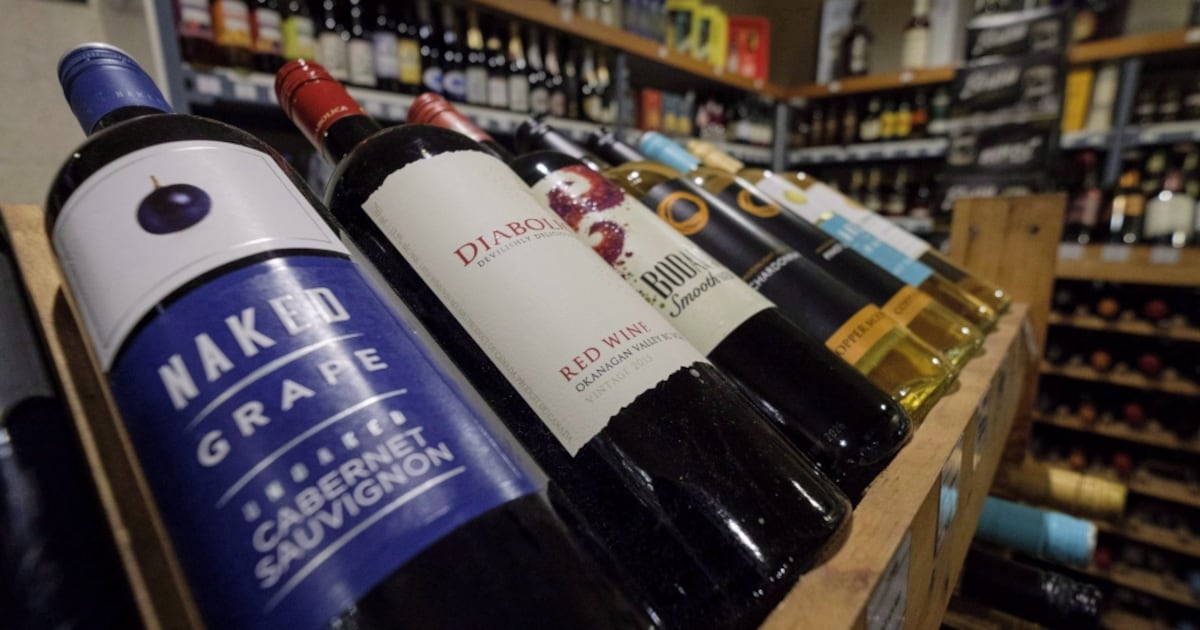
Canada’s retail sales rose 1.3 per cent in November, supported by the resolution of a labour dispute that had disrupted liquor distribution in British Columbia. While the headline increase offered a short-term boost, the underlying data point to ongoing pressure on consumers and uneven economic momentum.
BNN Bloomberg spoke with Norman Levine, portfolio manager at Brook Wagman Private Wealth Management at Raymond James, about the strength of consumer demand, inflation risks, small-cap equities and positioning in precious metals.
Key TakeawaysCanada’s retail sales growth remains narrow, with recent gains largely driven by higher prices rather than increased consumer spending.Elevated food inflation is intensifying affordability pressures and raising concerns about stagflation as economic growth remains weak.Consumer strain is most acute among younger Canadians, while higher-income households continue to fare better in a divided economy.Small-cap stocks are beginning to outperform after more than a decade of lagging large caps, supported by lower rates and domestic exposure.Investors are showing renewed interest in precious metals, with lower-risk royalty structures favoured amid volatility and fiscal concerns. Norman Levine, portfolio manager at Brook Wagman Private Wealth Management at Raymond James Norman Levine, portfolio manager at Brook Wagman Private Wealth Management at Raymond James
Read the full transcript below:
ROGER: All right. Canada’s latest retail sales numbers rose 1.3 per cent in November after a deal was reached in B.C. to end a labour dispute that affected the province’s liquor distribution branch. Let’s get more insight on this from Norman Levine, portfolio manager at Brook Wagman Private Wealth Management at Raymond James. Norman, thanks for joining us.
NORMAN: Welcome from Aruba.
ROGER: Is that where you are?
NORMAN: I’m dressed.
ROGER: I’m looking at the T-shirt. It’s casual Friday taken to the extreme.
NORMAN: Right in from the beach.
So retail sales were up in the month, but it’s very deceptive because they were led by beer, wine, alcohol and spirits, and then food. So you’ve got booze prices going up, which is causing that to happen. Are people spending more? Canada has the highest food inflation in the G7 by a lot. That’s why your retail sales went up. It’s a very bad number otherwise, and it shows that the Canadian economy, especially compared to the U.S. economy, is actually stagnant, with signs of inflation — and I don’t want to use the word too casually — but is it the first signs of stagflation? Possibly.
ROGER: What are some of the numbers that are giving you that indication?
NORMAN: Well, if you’ve got food inflation up over seven per cent year over year and you’ve got sales basically flat when you take out booze sales, to me that means the economy is not growing for the consumer and the prices that consumers are paying are higher. I’m not looking at total economic pricing that hasn’t been reported yet, but retail sales. That’s just showing that the possibility of stagflation is there. In the U.S., you’ve got an economy doing better and projected to do better, so they’re not having the same issues that we are here.
ROGER: And the prediction for December, I think, was that sales would be down. How do you bring that in and what does that mean?
NORMAN: Once again, you’ve got sales coming in flat or down and prices staying stickily high. That doesn’t portend well for the average Canadian consumer, who is hurting. As I’ve talked to you about in the past, we have a K-shaped economy where the well-to-do — and the boomers, I’m one — are doing well, whereas younger people are struggling to get jobs, struggling to pay for rent, homes and food. That doesn’t portray well for the economy.
ROGER: All right. People are looking for places to put their money. Gold is up today. It’s closing in on $5,000 — not quite there — but it’s still higher on the day. How are you treating that right now?
NORMAN: I have some exposure to precious metals. Silver has gone parabolic, and it scares me, but parabolic moves can go a lot higher than people expect for longer before they come crashing down. People are moving into precious metals because they’re afraid of government spending and worried that long-term interest rates will rise because of that.
The way I’m playing it is that I don’t own individual mines. I’ve learned from 50 years in the business that owning individual mining companies can be dangerous, even when the commodity is going higher, because of problems that can happen at individual mines or in the countries where they’re located. So I own Franco-Nevada, which is a royalty company that gets royalties from other companies’ production in gold and silver. They’re also involved in energy and some other commodities. It’s not as dramatic as the moves in gold and silver, but to me it’s a much safer place to be.
ROGER: And where are those royalties coming from? Are they mostly North American?
NORMAN: All over, Roger. Around the world. The company was started — and the reason it’s called Franco-Nevada — because they were getting gold royalties out of properties in Nevada. Now it’s a worldwide company getting royalties on gold, silver, iron ore, crude oil, copper and some other metals. It’s a good way to get exposure without a lot of individual risk.
ROGER: You’re also starting to turn toward small caps right now.
NORMAN: When I first became a portfolio manager in the early 1980s and for the next 10 to 15 years, I managed small- and mid-cap portfolios. I learned there are times in the economic and market cycle when small-cap stocks outperform and times when they underperform.
I also learned that buying individual companies takes a lot of work that most investors aren’t prepared or able to do. You really have to kick the tires, meet management and see their facilities. You also go through periods when the companies do well but the stock does nothing because nobody cares.
I’ve discovered it’s better to own small-cap indexes rather than individual companies. I’m using IWM, which represents the Russell 2000 in the U.S. It has underperformed the S&P 500 for 14 straight years. Valuations on small caps are much lower than large caps, and they’re now starting to outperform for the first time in 14 years.
I still think it’s early going. What’s behind that is lower interest rates, lower energy prices and the fact that the vast majority of these companies are domestic rather than multinational like most S&P 500 companies. With the U.S. economy doing better than expected and tax refunds coming to people, I expect the U.S. economy — especially for individuals and smaller companies — to do well. That’s why I’m recommending owning IWM.
I don’t know if your team was able to get the chart together showing either the Russell 2000 or IWM versus the S&P 500.
ROGER: We couldn’t do it, unfortunately, and we’re also out of time. Norman, thanks very much for joining us. We’ll let you hit the beach. You’re not missing much up here right now.
NORMAN: Thank you, Roger. Stay warm.
ROGER: We’ll try. Norman Levine, portfolio manager at Brook Wagman Private Wealth Management at Raymond James.
—
This BNN Bloomberg summary and transcript of the Jan. 23, 2026 interview with Norman Levine are published with the assistance of AI. Original research, interview questions and added context was created by BNN Bloomberg journalists. An editor also reviewed this material before it was published to ensure its accuracy and adherence with BNN Bloomberg editorial policies and standards.