

LISTEN | What the thinning of the Net-Zero Advisory Body means:
What On Earth26:25Is anyone listening to Canada’s net-zero climate advisors?
There are strong signals Canada could fall short of its legally-binding greenhouse gas emissions targets, as federal data and another study show the 2030 goal is likely out of reach.
But beyond the numbers, there’s another issue. The group meant to guide Canada to net-zero emissions by 2050 is slowly bleeding out, down to five of a potential 15 members.
Those who remain on the Net-Zero Advisory Body have asked Environment Minister Julie Dabrusin, The Hill Times first reported, to help them chart a path for the future. They’ve asked the ministry to appoint new members, sort out the group’s budget and meet with them at least every two months.
The requests hint at the reason some members say they’ve left the group — that not only are Canada’s climate targets falling out of reach but that the Carney government has stopped seeking the group’s advice.
And there’s been plenty to ask about, says Catherine Abreu, one of the group’s original members and the most recent to depart.
For her, the agreement Prime Minister Mark Carney signed in November with Alberta Premier Danielle Smith became the last straw. Under the deal, Ottawa will help that province with the construction of a pipeline that could carry a million barrels of oil each day from Alberta to B.C., where much would be exported to Asia.
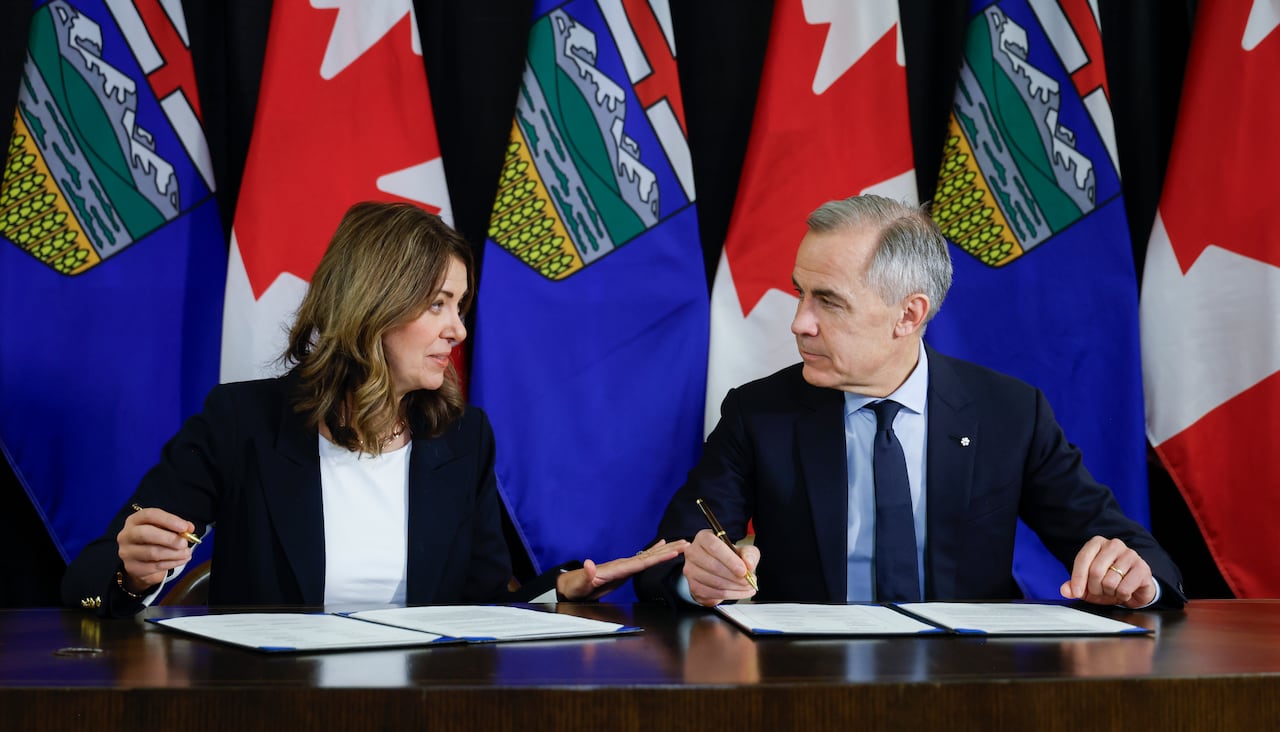 Prime Minister Mark Carney, right, signs an agreement with Alberta Premier Danielle Smith in Calgary on Nov. 27, outlining plans to build a pipeline that would bring bitumen from the oil sands to B.C. (The Canadian Press)A policy audit
That agreement prompted Steven Guilbeault, a Liberal cabinet minister and an environment minister under the Trudeau government, to resign from cabinet. Combined with policy changes like the cancelling of the consumer carbon tax and the creation of the One Canadian Economy Act, some environmentalists are also raising concerns.
Abreu says she shares those worries, noting that the focus now seems to be primarily on industrial carbon pricing as an emissions-reduction strategy.
“Over the course of the last decade, the Canadian government produced a healthy ecosystem of policies around climate change so that there was more resilience,” Abreu told What on Earth.
“But when we have just one policy that’s trying to do all the heavy lifting, it makes it really vulnerable to attack. It makes it really vulnerable to delay. It means that if that policy isn’t working the way that we want it to, there’s nothing else for us to fall back on.”
‘A little bit of leeway’
Not all of her concerns for the future — especially those related to industrial carbon pricing — are shared by her colleague, Michael Bernstein, who remains on the board.
Asked about the lack of consultation before the feds announced the deal with Alberta, Bernstein said he’s “willing to give the government a little bit of leeway.”
“I think we are in a very challenging time for our country, a time when the government is rightly focused on economic protection, trade diversification … addressing affordability issues for Canadians,” he said.
He noted the trade war with the U.S. understandably dominated much of the government’s early days. “Climate change and climate action has to be a part of that, but it has to be part of that broader mix.”
Bernstein said he doesn’t feel Ottawa has abandoned its commitment to reaching climate targets. Instead, it’s auditing them.
“While some of the past policies sounded good on paper, in practice they’re very unlikely to work, because they were costly, they were overlapping,” said Bernstein, who is also president and CEO of the non-profit climate organization Clean Prosperity.
 Michael Bernstein is the president and CEO of non-profit Climate Prosperity and is a member of the federal Net-Zero Advisory Board. (Submitted by Michael Bernstein)
The federal government’s decision to walk back the consumer carbon tax and to gather data on electric vehicle rebates gives it the opportunity to focus on “the most impactful and most cost-effective policy, which is industrial carbon pricing,” he said.
In order for that strategy to be effective, however, he says Ottawa and Alberta’s pipeline deal must set an industrial carbon price high enough to deter emissions and prompt investment in clean energy. He believes that figure should be $130 per tonne.
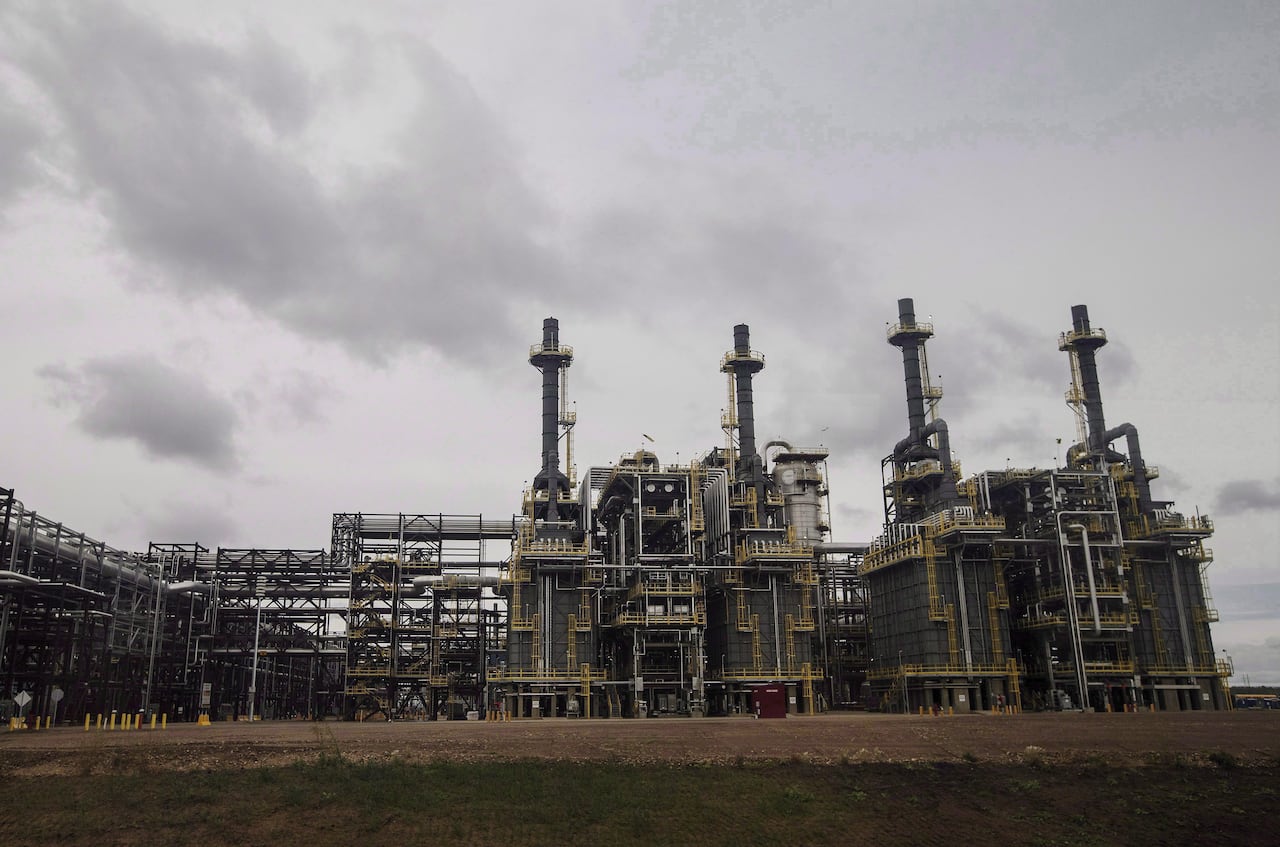 A steam generation unit is shown at Suncor Fort Hills facility in Fort McMurray, Alta. Bernstein and Rick Smith, head of the Canadian Climate Institute, say that setting a strong industrial carbon price is key to cutting emissions. (The Canadian Press)
Rick Smith, head of the research organization Canadian Climate Institute, echoed Bernstein. He says a strong industrial carbon price is a key factor in hitting emissions targets and that recent climate announcements signal the federal government hasn’t abandoned its promises.
Smith noted the deal announced last week reducing tariffs on Chinese-made electric vehicles to six per cent, down from 100 per cent.
“It’s going to result in Canadians having more access to affordable electric vehicles,” he said. “From our point of view, that’s good news.”
He also pointed to new methane regulations announced in December banning the intentional release of the gas into the atmosphere — though, at the time of the announcement, it was noted the policy had been on the books for months.
Abreu says she remains skeptical but that she’s hopeful the resignations will force Dabrusin to respond to the Net-Zero Advisory Body’s concerns.
PM calls MOU ‘first step,’ that it needs partnership with First Nations
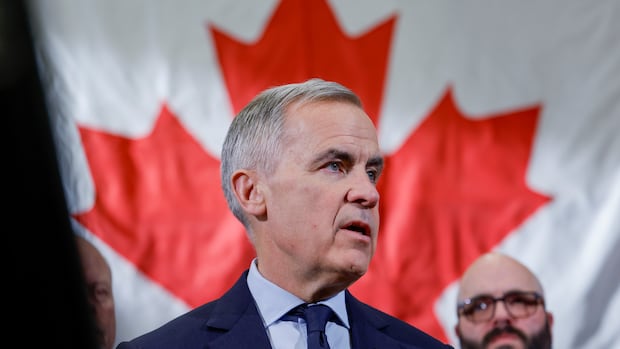
Carney asked if he’s willing to approve a pipeline even if B.C, First Nations don’t agree
Prime Minister Mark Carney says the agreement signed Thursday between the federal government and Alberta is ‘the first step’ and added that several things have to happen before a pipeline is built, including a private sector proponent and ‘full partnership including equity ownership’ with Alberta and B.C. First Nations and the province of B.C.
“I hope, actually, that the strong message coming from myself and colleagues who’ve made the decision to step down … gives Minister Dabrusin a mandate and some of that political space to come out and share with Canadians what their plans are to tackle the climate crisis.”
Dabrusin recently received the body’s annual report and is expected to release it publicly this month. She was not available for an interview.
But her press secretary told What On Earth in a statement that Dabrusin “looks forward to responding to [the group’s] recommendations in 2026.”