
We speak to Professor Joy Myint – Head of School and Professor of Optometry at Cardiff University – who also performs a fascinating role as head classifier with British Blind Sport (BBS), classifying the UK’s blind and visually impaired athletes for competition.
road.cc First of all, tell us a little bit about your background and how you came to be involved with British Blind Sport.
Joy Myint I’m an optometrist by profession and I originally became an international vision impairment classifier back in 2011 with the International Paralympic Committee (IPC). This was as a result of an approach by UK (British) Athletics. BBS then became aware of my existence. I was originally involved in BBS as a classifier between 2011 and 2015 and then I rejoined BBS again in 2025 as their head classifier.
road.cc What is your role within these organisations?
Joy Myint My current role with BBS is as the head classifier. I have oversight of all the BBS’s classification activities. I’m also involved in recruitment, training and the ongoing training of the volunteer classifiers within BBS. The more challenging classifications also come directly to me. Without the volunteer classifiers it would be difficult for BBS to support and promote people being involved in sport.
I’m a national classifier for Paralympics GB. As well as taking part in classifications, I’m involved with recruitment and training for them as well and, again, I often deal with the more challenging classifications. With the International Paralympic Committee, I take part in classifications and I have acted as a chief classifier at classification events.
The biggest difference between what I do for BBS and what I do for Paralympics GB and the IPC is that BBS classification is a desktop exercise – I never see the athlete in person, I just see the paperwork related to them. But for national and international classification, it’s an in-person process where we see the athletes.
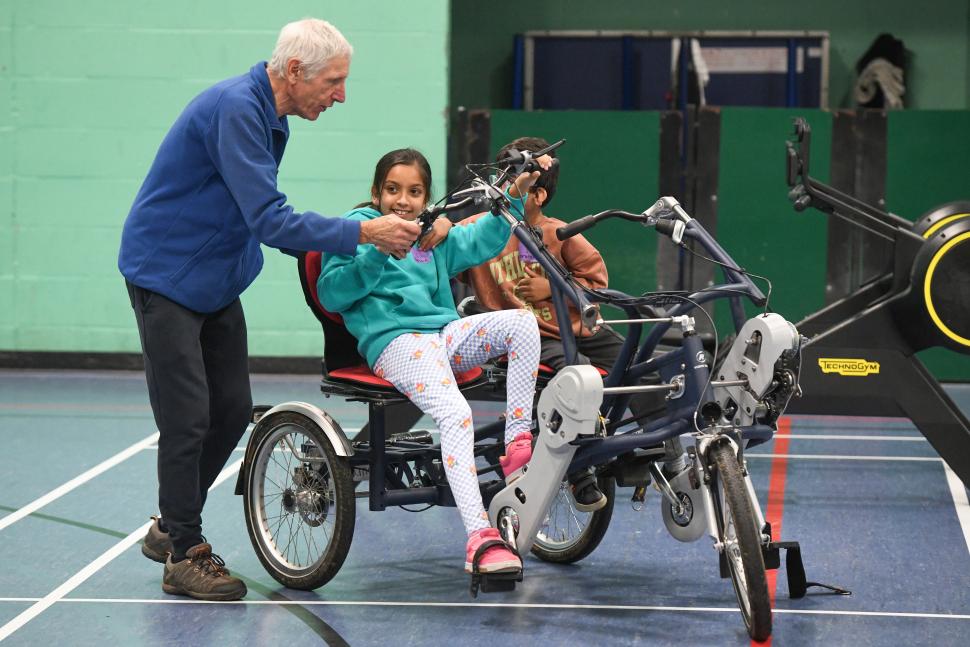 Blind cycling can open new opportunities for potential athletes. (credit: British Blind Sport)
road.cc What is the actual process for classifying athletes?
Joy Myint For British Blind Sport, athletes download a form and complete some personal details. Then they go to their local optometrist and ask them to complete another section of the form, which is sent to BBS. The forms are reviewed by BBS staff who then send the forms independently to two classifiers.
Those classifiers assess the athlete on the basis of the information provided on the form. Then they assign a recreational sports class. The classifiers communicate that decision back to BBS, who communicate the results to the athlete and, if relevant, issues a visually impaired athlete certificate for use in competition and/or open competitions. For BBS members with Active Plus Membership, the classification is free; non-members can still have a BBS classification, but they have to pay a fee for it.
With national or international competitors, the classification process is done in person at an event. Athletes will submit prior medical evidence – such as eye scans or brain scans – and then have tests done on site. The two classifiers will confirm – if appropriate – that they’re happy that the athlete has an eligible condition; they will determine the level of visual function; and if eligible they will then give them a classification on site.
road.cc Tells us about the different classifications and what they mean.
Joy Myint The recreational classification system has changed slightly, and we’ve recently introduced BR1-5 recreational classifications to distinguish recreational sports classifications [BR] from national and international classification [B1-3, there is no B4 or B5].
In both recreational and national or international, 1 is the worst level of visual function. These would be athletes who have no light perception at all or may have some light perception and maybe can perceive some movement but can’t recognise shapes, for example.
Each subsequent category then represents slightly better vision. Athletes classed as BR2 might be, for example, able to count fingers at 50 centimetres; or they might be able to recognise or read very large print at a short distance; or they might have significant tunnel vision.
If an athlete is better than BR5, we would say they are not eligible for a recreational classification. There are also sports-specific classifications at a national or international level – not all sports use B1 to B3. Judo, for example, has its own classification, which is J1 and J2.
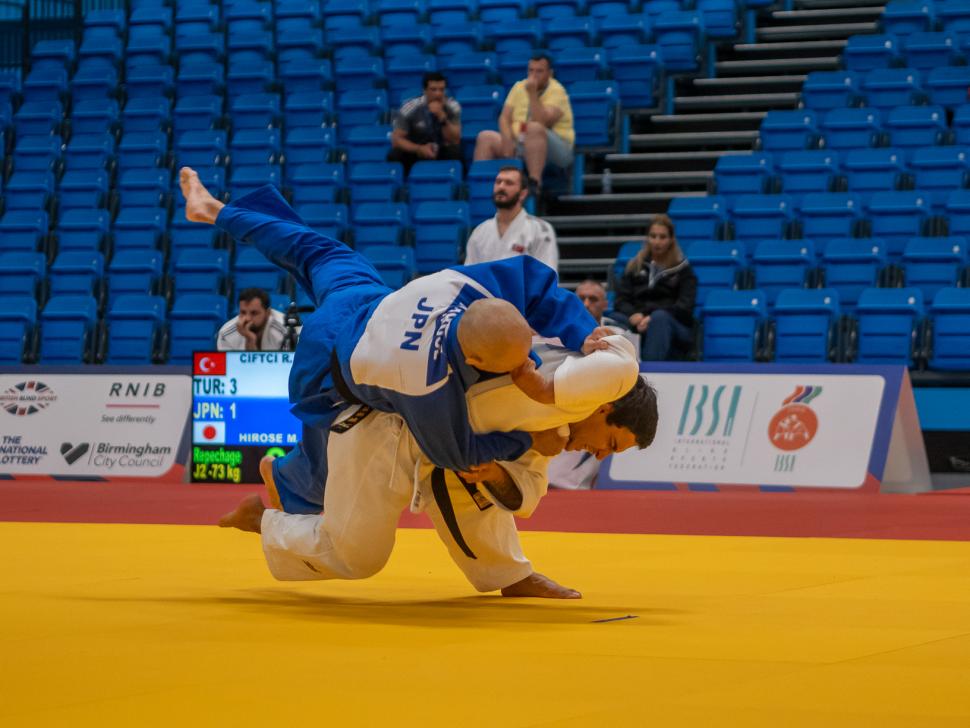 Judo is such a well-established sport for visually impaired athletes, it even has its own classification system. (credit: Richard Hall and British Blind Sport)
road.cc When would recreational ‘BR’ classifications be used instead of ‘B’ classifications?
Joy Myint For most sports, BBS classifications will be used at more amateur level competitions. However, some sports – particularly those that aren’t in the Paralympic Games – do sometimes use a BBS classification for national and international competitions.
road.cc When an athlete receives their classification, is it kept for life?
Joy Myint Not usually. With BBS classifications, it’s usually valid for a minimum of one year, but often we can do longer. If the athlete has a BR1 classification and is stable – the extreme example being if they actually have no eyeballs at all – then obviously their vision is not going to improve and cannot get worse either. In that case, we can give a classification for life and don’t make people in that situation keep submitting year after year.
road.cc Which events have you attended in person?
Joy Myint Many! I went to the International Blind Sports Federation [IBSA] World Games – the biggest blind games event outside of the Paralympic Games – which was held in Birmingham in 2023, where I was joint head classifier. It was the biggest visually impaired classification event ever to be held in the UK; we took over the Aston University Eye Clinic for the best part of three weeks and classified hundreds and hundreds of athletes. It was a fantastic event.
road.cc What kind of involvement have you had with blind or visually impaired cyclists?
Joy Myint I’ve classified a number of cyclists over the years, both nationally and internationally, and of course, we get some through BBS. In fact, at BBS, we have the now retired Paralympic GB Paracycling champion Lora Fachie OBE.
Lora has won seven medals over four Paralympic Games, so she’s one of the UK’s most celebrated paracyclists, and she started working for BBS in June 2025. She is one of BBS’s workforce officers, who deliver training and workshops across the UK.
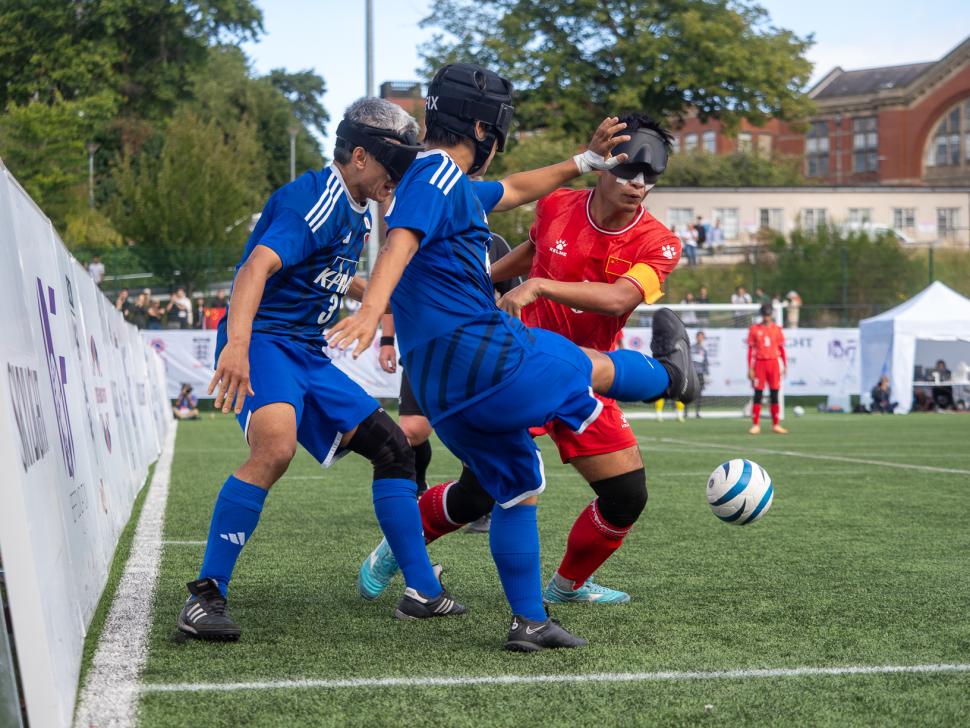 Blind football is a Paralympic event involving elite competitors. (credit: Richard Hall and British Blind Sport)
road.cc Are there ever disagreements about how visually impaired an athlete is?
Joy Myint Yes, sometimes. With BBS, if an athlete disagrees with their classification, or the two classifiers cannot agree it will come to me for a final decision and arbitration. I can also help to write any emails or responses to make sure our decision is robust. Sometimes, on rare occasions, we don’t have enough information sent to us on the form, so we say we can’t classify until we have more details, and then after we receive the additional information any agreement can be reached.
For national and international competition, there are more formal processes to follow. We very rarely get disagreements between classifiers. Sometimes – but still rarely – we get disagreements between the athlete/coach/club and the classifiers. In all cases there are processes that must be followed to ensure a fair and appropriate outcome is reached, so everyone understands and is happy.
road.cc And do ever have suspicions that somebody might be trying to get an unfair advantage?
Joy Myint Yes, it happens, although most athletes do compete with integrity.
In the past, at an international level, athletes have been made ‘Not Eligible Confirmed’ and/or have been found to have committed intentional misrepresentation by their international federation or the national governing body. Each sport has procedures in their classification rules that must be followed to bring a case against an athlete.
With BBS, because the process is entirely desktop based and we never see the athlete, if we are suspicious, we can keep going back and forth until the athlete produces the evidence that we need.
With national and international events, there’s a formal process and the athletes will actually be in situ so, if necessary, they can return for a second round of tests. Internationally, we try and do that at the same event if there are enough panels available. Nationally, it also depends on how many classifier panels we have available at any given event.
If we are suspicious, we can also report athletes for investigation for misrepresentation at national and international level. Again, that’s a formal process and it can lead to some athletes being banned, sometimes for life. Because most athletes do compete with integrity, this happens rarely but it is good to know there are formal processes in place.
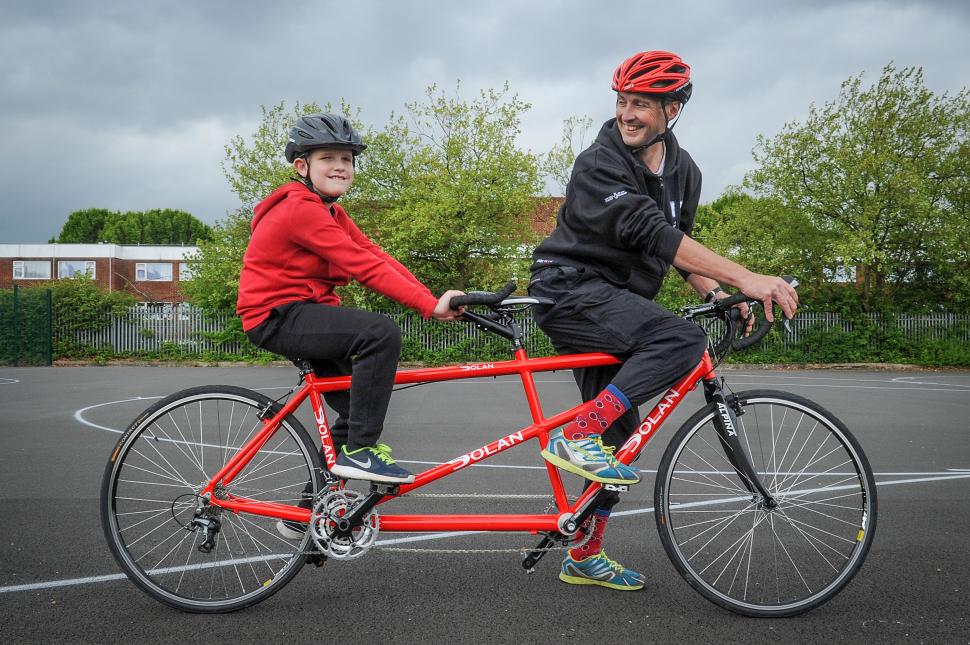
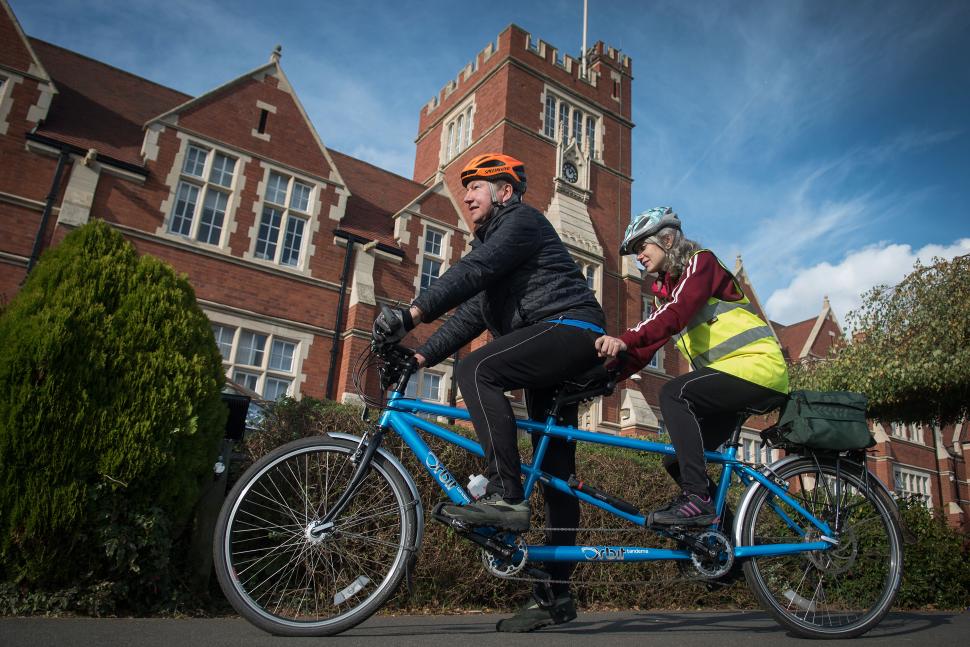 Can you help? Tandems are the ideal way for visually-impaired riders to enjoy taking to the saddle. (credit: British Blind Sport)
Get involved!
Joy says the BBS would love cycling clubs to attract more cyclists with sight loss.
“We want to encourage clubs to get in touch with us if they want to find out more about being inclusive of cyclists with sight loss. Tandem Cycling Clubs in particular are ideal, and we already have several registered with us with who can give testimonials on how easily it can be adapted, and the positive impact it has for riders with sight loss. BBS can offer advice, guidance, resources on communication and training,” Joy says
“We get a huge number of enquiries from people wanting to be involved in sport including cycling, but they don’t always have somewhere local they can go to. It would be great if more and more people became involved in visually impaired cycling.
“I think the other thing that’s worth adding is, sighted riders can also become guides for visually impaired competitive cyclists. Just as in a marathon, for example, where you see blind runners with a sighted guide, it’s the same for cyclists – those riders are very much unsung heroes in all of this.
“So, it’s not just about encouraging visually impaired people; it’s also about encouraging normally sighted people to support someone in the sport.”
To find out more about British Blind Sport, britishblindsport.org.uk