
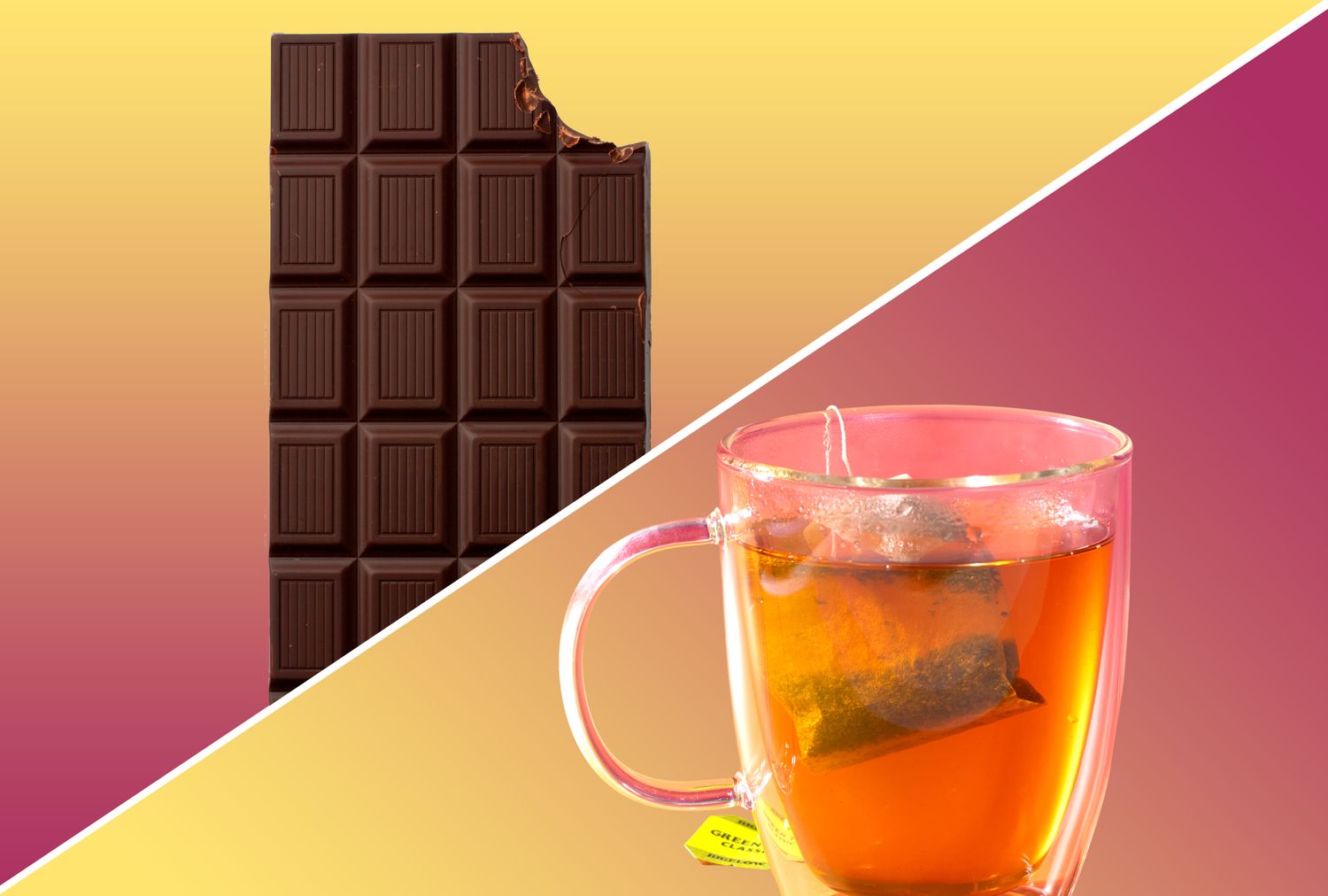
Dark chocolate and green tea both deliver antioxidants and the best choice depends on your health goals.Green tea offers powerful antioxidants with almost no calories or added sugars.Dark chocolate’s heart-healthy antioxidants come with fat, added sugar and calories so smaller portions are best.
Do a quick search for foods high in antioxidants and you’ll see many of the same things pop up again and again. Two that consistently make the list? Dark chocolate and green tea. So, whether you love savoring a few squares of dark chocolate or prefer to cozy up with a warm cup of green tea, both are chock-full of antioxidants. But when it comes to antioxidant power, which one comes out on top? We spoke to registered dietitians to break down the differences between the two antioxidant-rich options.
Antioxidants in Dark Chocolate
Ever heard that dark chocolate can be good for you? It’s true—when you choose the right kind. Dark chocolate comes in a wide range of options, from bars labeled as “dark” with less than 40% cocoa to varieties with over 90% cocoa.
“Dark chocolate—especially varieties made with 70% cocoa or more—contains antioxidants called flavanols, which belong to a broader family of plant compounds known as flavonoids,” shares Leah Sarris, M.B.A., RD, LDN. “These compounds have been studied for their role in supporting heart health, reducing inflammation and improving blood vessel function.”
Generally speaking, the higher the cocoa percentage, the more antioxidants you’ll get. Research has found dark chocolate with higher cocoa content contains greater levels of polyphenols and flavonoids.
Cocoa is also rich in epicatechins, a type of flavonoid (antioxidant) linked to improved heart health, says Jenna Braddock, M.S.H., RDN. Studies have found a link between higher epicatechin intake and lower blood pressure and lipid levels. These antioxidants, flavonoids in particular, can increase nitric oxide in the blood, which helps to improve blood flow. More blood flow can support lower blood pressure and support brain function, too.
Compounds in dark chocolate can improve blood flow, which may support focus and cognitive performance, says Sharniquia White, RD. Chocolate also includes small amounts of iron, magnesium, zinc and selenium, which can support immune health, she adds. Not to mention, dark chocolate contains a decent amount of fiber—1 ounce provides 3 grams of fiber—which can support overall digestive health and regularity.
But not all chocolate products are created equal. Sarris explains: “Processing methods—such as alkalizing cocoa (often labeled as ‘Dutch-processed’), using lower cocoa percentages or adding longer ingredient lists—can significantly reduce flavanol content, meaning some chocolates contain far fewer antioxidants than consumers might expect.”
Dark chocolate is also calorie-dense, mostly due to cocoa butter, which is high in saturated fat. And the higher cocoa percentages often mean more cocoa butter and saturated fat. Plus, many products include added sugars. Dietitians recommend enjoying dark chocolate in moderation and keeping portion sizes in check.
Antioxidants in Green Tea
When it comes to hot beverages, green tea gets plenty of clout when stacked up against other teas. Like dark chocolate, green tea is also a rich source of polyphenols, says Braddock. “About 50% of those polyphenols are in the catechin family, which includes epicatechins but also EGC, ECG and EGCG. Catechins are powerful antioxidants with many benefits and EGCG may be the most powerful.”
The antioxidants found in green tea have been linked to a range of health benefits. One of the most talked about benefits: green tea’s metabolic boosting powers. “Green tea may slightly increase fat oxidation and energy expenditure,” White explains.
Some research shows green tea may also support one’s mood. Green tea contains the amino acid L-theanine, which may reduce feelings of stress and anxiety and may offer “calm focus,” says White.
Regular green tea consumption may also support heart health and longevity. “Green tea has also been found to impact longevity, and those who drink it daily seem to have reduced cardiovascular mortality,” shares Braddock. Yet, it’s important to review these studies closely, as she points out, “many studies use concentrations and extracts that do not match normal consumption levels.”
Compared to dark chocolate, green tea is virtually calorie-free, fat-free, contains no added sugar and is hydrating. “It delivers antioxidants without added sugar or calories when consumed plain,” says Sarris.
Keep in mind that both dark chocolate and green tea contain caffeine, with green tea containing much higher amounts. So be mindful of what hour you are drinking your cup, especially if you are sensitive to caffeinated beverages. Lastly, green tea may interact with certain medications—so check your prescription bottle or with a healthcare provider about any potential interactions.
Which Is Healthier?
Both dark chocolate and green tea contain a wealth of antioxidants, but are you still wondering—which is better? “Both foods contain flavonoid antioxidants, but they deliver them in very different ways,” explains Sarris.
Choose green tea if you’re looking for a low-calorie, no added sugar option with powerful antioxidant benefits, says White. Dark chocolate, on the other hand, can be a delicious way to eat your antioxidants. “Dark chocolate offers a broader mix of cocoa flavanols, but because it also contains fat, calories and added sugar, it works best as a small, intentional treat rather than a daily staple,” points out Sarris.
At the end of the day, there is no winner. Both dark chocolate and green tea can fit into a healthy, balanced eating pattern. “The ‘healthier’ choice depends on your goals, preferences and overall diet,” White adds.
Our Expert Take
In the showdown between dark chocolate and green tea, is there a true winner? Both dark chocolate and green tea are rich in antioxidants but contain different benefits. Dark chocolate’s antioxidants are linked to supporting heart health and brain function—but it’s also calorie-dense, high in saturated fats and may contain added sugar. Green tea contains epicatechins which may help support heart health, longevity and metabolism. However many studies have been done using concentrated forms, so it’s difficult to directly correlate that to a single cup of brewed green tea. Green tea is hydrating, virtually calorie-free and contains no saturated fat or added sugar. Both dark chocolate and green tea are antioxidants-rich, nutritious and can be a part of a healthy eating pattern.