
CONCORD, N.C. — NASCAR is changing how it will determine its premier Cup Series champion, switching from its much-maligned and often controversial elimination-based format to one that rewards consistency.
Beginning with the 2026 season, the new format will feature the 16 drivers who earn the most points during the 26-race regular season advancing to a 10-race “Chase” playoff, NASCAR announced Monday, similar to the format of the same name the sport used from 2004 through 2013 before converting to the elimination style.
No longer will winning a regular-season race virtually guarantee playoff eligibility, as NASCAR wanted a format that “reinforces the value of consistent, season-long performance and ensures the drivers who execute across the full schedule earn the chance to compete for a championship,” the league said in a release announcing the change. In the elimination-style format, a single regular-season win vaulted a driver ahead of all non-winners in the playoff standings, regardless of overall points.
There are also no “wild card” slots carved out for any race winners, with points accumulation serving as the only mechanism to qualify for the playoffs.
The new format will operate similarly to the previous iteration of the Chase, with the 16 eligible drivers competing in a single, 10-race round, after which the driver with the most overall points will be declared the winner. Previously, drivers competed in three, three-race rounds, with four drivers being dropped after each until four remained for a lone championship showdown.
With the unpredictable nature of a single NASCAR race, especially one featuring 30-plus cars that are no longer in the running, the format faced criticism over the years for inviting too much randomness in determining the champion. NASCAR feels the new system will be a better representation of which driver is best in a given season and also will resonate more with fans who had grown frustrated with the one-race-finale system.
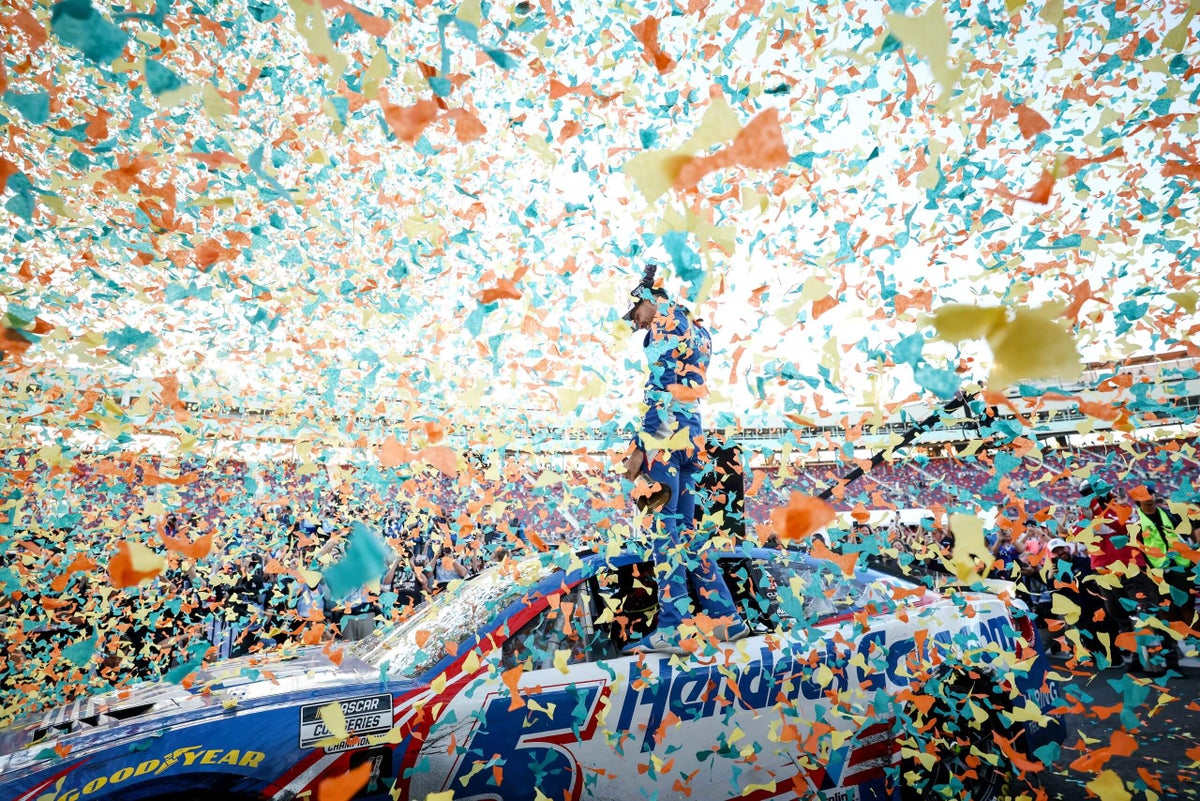
That randomness was on display in November at Phoenix Raceway, in the final Cup Series championship race of the elimination format. Denny Hamlin was three laps away from his first-ever championship when William Byron, who was also in the final four but well behind Hamlin in the race, blew a tire and hit a wall. This forced teams into pit road to change tires, and Kyle Larson ultimately passed Hamlin on the restart and won the championship.
Comparing NASCAR’s playoff formats
Old formatNew format
Regular season
26 races
26 races
Playoff drivers
16
16
Qual. based on …
Total points, plus win-and-in
Total points only
Playoff rounds
4
1
Races per round
3 each in first 3 rounds, 1 title race
10
Eliminations?
Bottom 4 after each of first 3 rounds
No
Champ determined by …
Best finish of final 4 in title race
Most points over all 10 races
Still wanting to encourage drivers to race aggressively for a win — often a key selling point of the previous elimination format — NASCAR is increasing the points awarded for a victory, bumping the total from 40 to 55. The change is to dissuade drivers from being content with having a “good points day,” a strategy drivers would often employ under previous consistency-based formats. Points awarded for other finishing positions, including the stage points handed out at intervals during the race, remain unchanged.
The top driver at the conclusion of the regular season will enter the Chase with a 25-point cushion over the second seed. Simulations conducted by NASCAR via Racing Insights, NASCAR’s official statistical service, showed the top seed would finish fifth or better in the playoffs a majority of the time.
NASCAR’s other two national series, the second-tier O’Reilly Auto Parts Series (OAPS) and the third-tier Truck Series, are also switching to a Chase playoff format, with slight adjustments to the number of participants who qualify and the number of Chase races. Twelve drivers will compete in a nine-race playoff in the OAPS; 10 drivers will compete across seven races in Trucks.
The elimination format was a radical departure from how NASCAR traditionally awarded its championship — both in the previous Chase era and, before that, when the winner was determined by a full season’s worth of points from every race. In both models, consistency was paramount to winning the championship.
NASCAR officials have contemplated changes to the playoff system for more than a year, and moving back to either a Chase or a full-season points system were the most cited options. Ultimately, the middle ground won out.
“This (format) is the best of both worlds,” NASCAR president Steve O’Donnell told The Athletic. “I think for those who want just full-season points, no playoffs, you have points that matter, every single race matters. And for those who want a playoff, you have a playoff now, but it’s points-based. And winning still really matters; you’ve got to go out and compete.
“One of the things we were missing was, we talked about every race mattering, but in this win-and-you’re-in format, winning eliminated that at times, and that wasn’t a good thing. We want drivers to go compete and run every single lap — every single lap matters — and this is going to deliver that.”
The removal of the win-and-in will have a significant impact on strategy, most notably with the road-course specialists who have found success in the Cup Series under the elimination format. NASCAR races on only a handful of road and street courses throughout the year. Previously, winning even one of them put a car into the playoffs — and brought significant attention and financial benefits to the team. Now, it will require broader success to advance.
The most notable example is Shane van Gisbergen, the former Australian Supercars driver who has come to the U.S. and, in short order, become NASCAR’s most dominant road-course racer. His prowess in those events gave his team, Trackhouse Racing, a path to the Cup Series playoffs. He won four regular-season races last year and then a playoff race (albeit after he’d already been eliminated).
Van Gisbergen, though, struggled on NASCAR’s traditional oval tracks, which make up the bulk of the schedule. If the new system had been in place last season, he would not have made the playoffs at all.
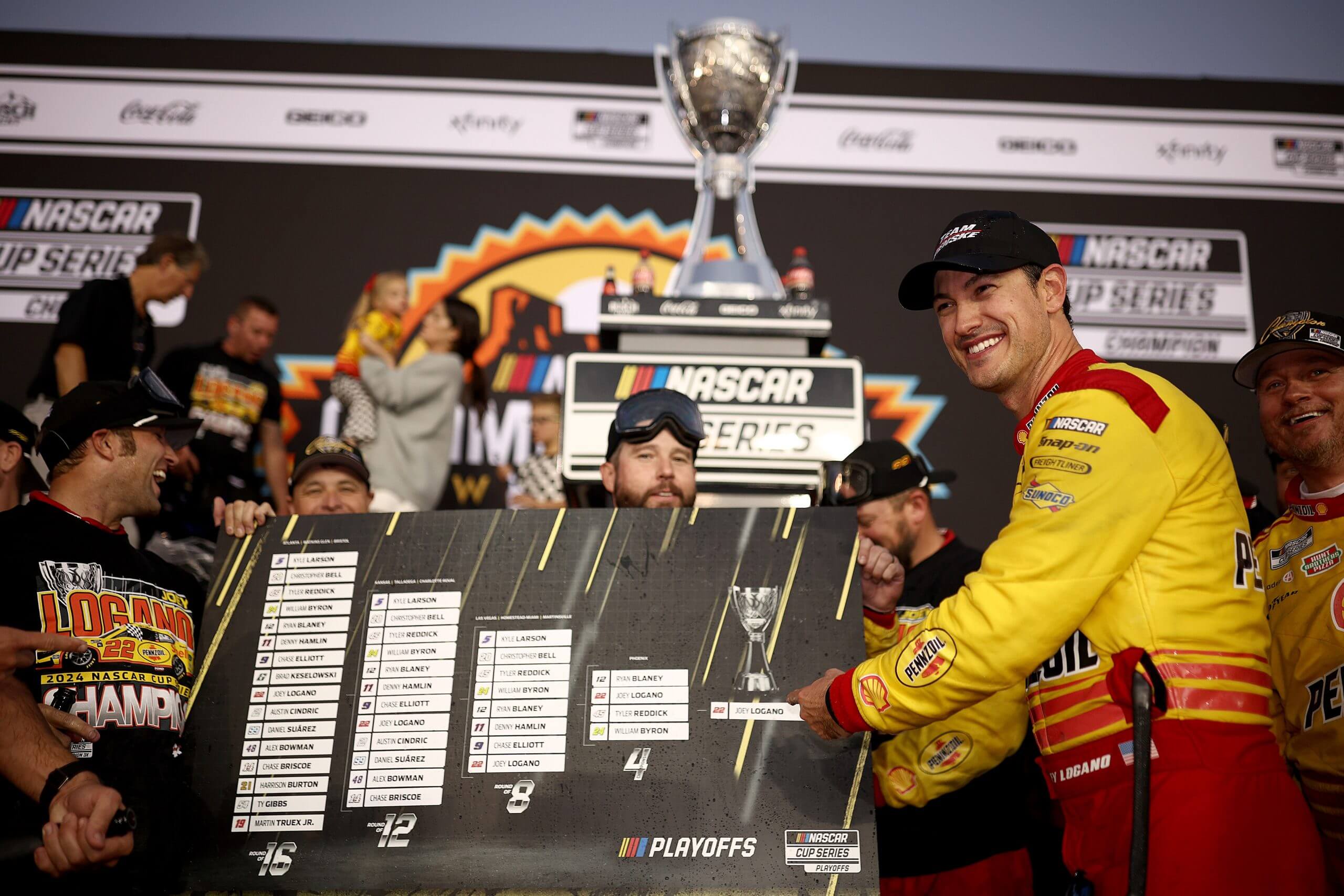
Two seasons ago, Joey Logano won his third Cup Series championship. His average finish in races — a measure of season-long consistency — was 17.1, the worst ever for a champion. (Jared C. Tilton / Getty Images)
Last February, NASCAR convened a committee that included active and former drivers, track operators, NASCAR executives, television partners, media members — including The Athletic — and other industry stakeholders to evaluate whether NASCAR should change its playoff format, then workshopped different formats that could potentially be implemented.
In the discussions, it became apparent to league officials that while continuing to have a playoff was important, greater simplicity was needed than the knockout format that often left many complaining about its complexity. Last fall, after conducting simulations to evaluate the pros and cons of various formats, NASCAR settled on the new Chase. The details were finalized last week.
“If you look at where we want to go for the sport, it’s a little bit more about embracing our roots, and then listening to a lot of the fans and listening to our industry, some of the veteran drivers as well,” O’Donnell said. “And we felt like, if you’re going to go with that positioning, which is the essence of who we are as a sport, then your format and your championship should match that.”
Among those attending Monday’s announcement were NASCAR Hall of Fame drivers Mark Martin and Dale Earnhardt Jr., and active drivers Chase Elliott and Ryan Blaney, both former Cup champions.
Both Martin and Earnhardt, each of whom was on the playoff committee, have voiced their support for a season-long championship model, as NASCAR had from 1949-2003. But Martin’s presence was especially notable, as he has been the most outspoken critic of NASCAR having a playoff format of any kind. He was there to support a format he sees as a balance between what he lobbied for and NASCAR’s preference for a playoff, which it feels boosts interest during the fall months, when the sport competes professional and college football for audiences’ attention.
“I love it,” Martin told The Athletic. “I think it’s a huge win for NASCAR. It’s a huge win for the competitors. … It’s a huge win for the fans. No one loses in this format.
“You will have to be blazingly consistent and consistently fast to be our NASCAR champion under this system. I think it’s fabulous.”