
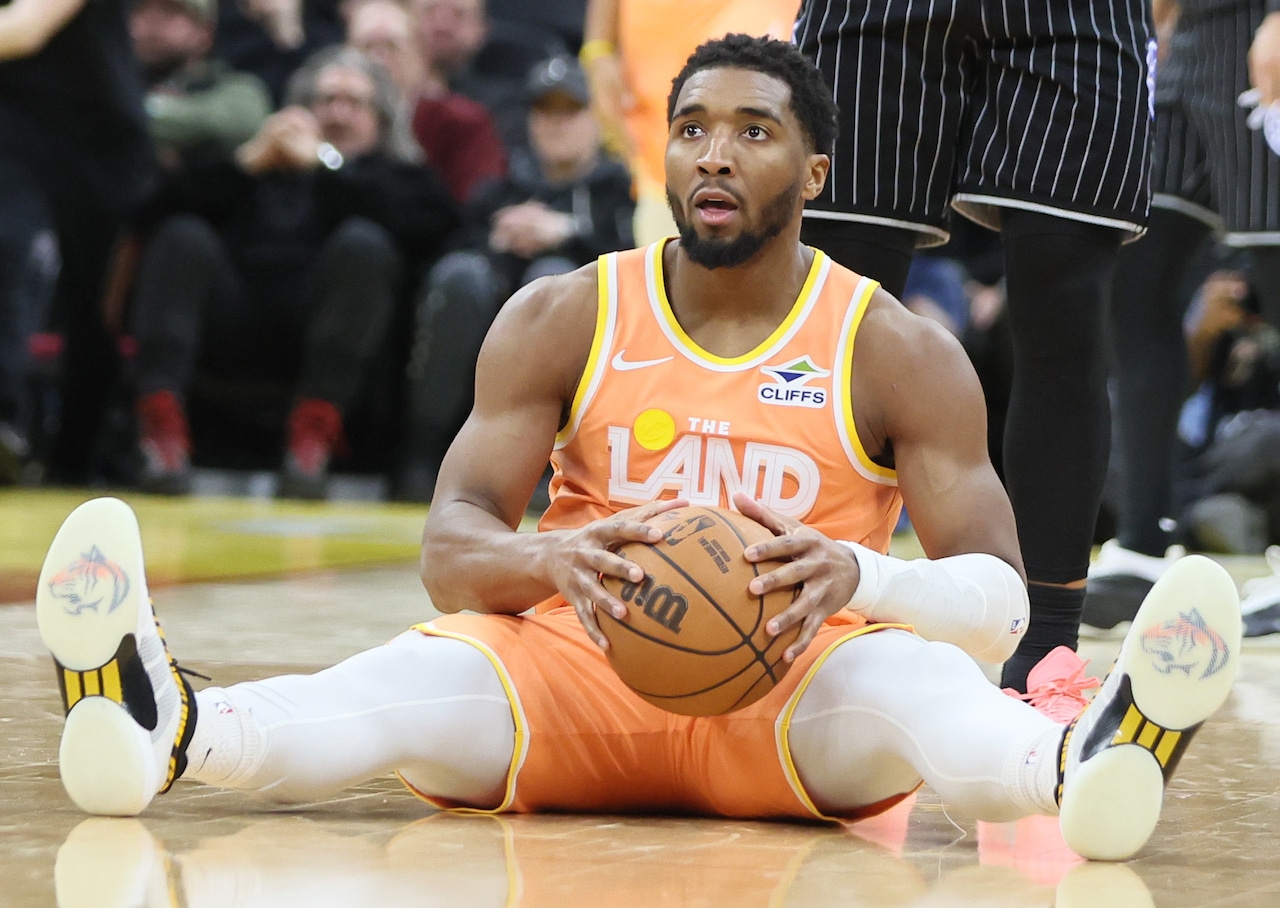
CLEVELAND, Ohio — When the final horn sounded and the Cavs walked off the floor after a 114-98 win over the Orlando Magic on Monday night, the usual procedures followed. Celebration for one side. Reflection for the other. Then the slow exhale that comes when the adrenaline fades and reality creeps back in.
They went home to loved ones. They replayed possessions in their heads, good and bad. They reminded themselves that, for all the emotion poured into 48 minutes, basketball is still a game — and the world outside the arena never stops turning. No matter who you are. No matter what you believe.
For this Cavs team, that reality hit a bit harder this month.
On Jan. 7, Cleveland was on a routine business trip to Minnesota, preparing to face the Timberwolves the next night. The day unfolded like any other road stop until it didn’t.
News broke of the fatal shooting of Renee Good by an ICE agent just miles away. Suddenly, the normal protections of the NBA lifestyle disappeared. Players were restricted to their hotel rooms. Plans were scrapped. The invisible barrier between the league and real life cracked.
Even when NBA players are insulated by security details, private flights and upscale dinners, they are still breathing the same air as everyone else.
“We are in this bubble as NBA players, right? Like, we’re removed,” Donovan Mitchell said. “But in the same token, being there in Minnesota when that happened, it really made you open your eyes because you’re there, you feel it, right? It’s 10 minutes away. We’re on lockdown in the hotel. You can only feel for the people of Minnesota, feel for the families, because it’s just not right … It’s the human element. It’s the human part of it that gets to me.
“It’s not right that it keeps happening. It’s not right that it’s desensitized the way it is … that can’t be who we are as a country, as a people.”
Then, on Jan. 24, it happened again. Alex Pretti was fatally shot by an ICE agent. Videos recorded by bystanders flooded the internet, looping across screens, impossible to unsee. The distance between the league and the world narrowed even further.
A vice president of the National Basketball Players Association, Mitchell has never shied away from responsibility on and off the court. His opportunity to play basketball for a living is rooted in family sacrifice. His late grandmother traveled to the United States from Panama.
After his 45-point performance on Monday, Mitchell carried a Panamanian flag into the locker room. He has spoken about wanting to represent Team World in the All-Star Game, a gesture of pride and identity.
But pride can coexist with fear.
“I have family who came to this country, and they fear for their lives,” Mitchell said. “And they’re legal citizens, like, they fear.”
As Mitchell spoke, Jaylon Tyson sat quietly beside him. Only in his second year in the NBA, Tyson didn’t interrupt or shift in his seat. His eyes drifted — at times back to Minnesota, at times forward — before settling on his teammate as Mitchell worked through his thoughts. Mitchell was navigating a delicate truth in real time, choosing words carefully, understanding the weight behind each one. Tyson listened, learning how to command a room, how to use a voice and a platform without losing the humanity at the center of it all.
On Jan. 25, the NBPA and its executive committee released a statement addressing the recent events in Minneapolis. The message included a quote from Martin Luther King Jr., honored by the NBA just days earlier on Jan. 19.
“There comes a time when silence is betrayal.”
Refusing silence doesn’t always come through words. For some, it means actions. Sometimes it takes shape through presence. And sometimes, it enters the arena before tipoff, already saying enough.
Cavs forward Larry Nance Jr. didn’t have to say a word. He walked in and out of Rocket Arena wearing a black t-shirt that read: “All my homies hate ICE. No one is illegal on stolen land. Immigrants make America great.”
The shirt is sold by the brand CHNGE, which donates 100% of its profits to the Immigrant Law Center of Minnesota. In the last two weeks, the brand has donated more than $112,000 toward the cause.
Moments like these blur the lines fans often hope sports can erase. Basketball is supposed to be an escape. A separation from the heaviness of the world. But the players don’t get to toggle that switch. They carry everything with them — onto the plane, into the hotel, through security and eventually onto the floor.
Before they are athletes, they are people. That is the common thread that binds the locker room to the community.
“You have to have empathy for what’s going on in that community and for the families,” Cavs head coach Kenny Atkinson said before Monday’s game about the situation in Minneapolis.
Empathy doesn’t belong to a place or a moment. It doesn’t wait for a ticket to be scanned, a ball to be tipped or a story to be read. It asks to be carried into the arena, onto the floor and back into everything beyond it.
For the Cavs, January has served as a reminder that the bubble offers comfort, not protection. And eventually, the world always finds its way through.