
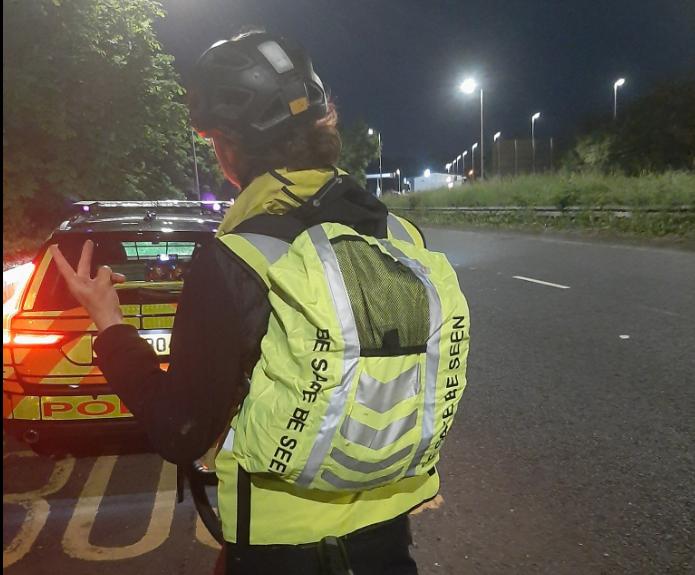
Yes, that’s right. Helmets and hi-vis are back on the agenda.
This week, we’ve heard a few rumblings emanating from Dublin concerning the possibility of a mandatory helmet and reflective clothing law for cyclists in Ireland. The prospect of new legislation controlling what people on bikes wear stems from a recently established government safety review into e-scooters, following a steep rise in collisions involving that particular vehicle.
As we reported yesterday, however, the Irish road safety minister Seán Canney has appeared, for some reason, to lump bikes and e-bikes into the mix (under the umbrella of ‘micromobility’), declaring in parliament that a compulsory cycling helmet and hi-vis law could soon be on the way.
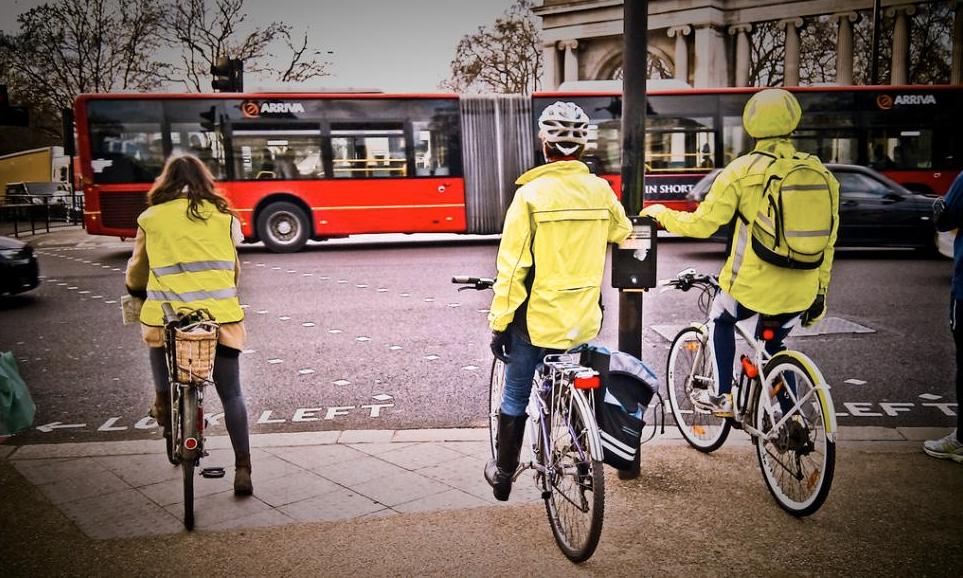
Unsurprisingly, that suggestion has been given short shrift by Irish cycling campaigners, such as Cycling Ireland president Ciaran Cannon, who described any potential protective equipment legislation as “performative policymaking” which “shifts responsibility away from those operating the most dangerous vehicles and implies that injury results from a failure of visibility rather than from road design, driver behaviour, or enforcement”.
Meanwhile, Kevin Jennings, a spokesperson for the Irish Cycling Campaign, branded the move an “over-reaction for very little gain”, and equated it to “telling a person who is struggling with their heating bill to put on an extra jumper”.
And while that response from the cycling community is to be expected, opposition to the proposals has also come from a more unlikely source: a column in the Irish Times.
In fact, English academic and writer Sarah Moss, the author of 2018’s acclaimed Ghost Wall, summed the whole debate up by describing helmets and hi-vis as “symptoms of the Irish problem, not the solution”.
In her column, Moss, a regular cyclist herself, admits that helmets and hi-vis are a must-have in her house. “I am in favour of cyclists being visible, because I am in favour of cyclists being alive,” she writes.
However, Moss draws the line at victim-blaming road safety campaigns which, she says, shift the onus of safety onto the most vulnerable – and away from people in cars.
“I prickle at the RSA’s injunctions to cyclists to ‘Light up’ and especially the vests that say ‘Be safe, be seen’. Whether I am seen or not is not in my control,” she points out.
“The slogan makes no sense anyway; worn on the cyclist’s back, it seems directed towards drivers, who are by definition already safe and seen because they are in cars. It has a tendency to reassure drivers that it is the cyclists’ responsibility to be seen rather than the drivers’ responsibility to see.
“Anyone who thinks cyclists ‘come out of nowhere’ should not be in control of a vehicle. If the bicycle brought teleportation, we’d be using it for something more exciting than commuting. We come from where we were before, usually farther down the bike lane, usually at about the speed we’re going now. Some drivers don’t look, but the more bikes there are, the more aware drivers become.”
Pointing to the Netherlands, Belgium, and Denmark, the author then highlights that very road.cc concept that helmets and hi-vis are rare sights in those nations – despite the popularity of cycling there – because the infrastructure is there to make them redundant, “because it is not cycling that is dangerous, but driving”.
“Where the built environment separates human skin and bone from lorries, cars and buses, there is no need for our frantic striving to make fragile bodies hyper-visible,” she writes (though she does note that Ireland has improved in this regard, with more children than ever cycling to school and urban cycling no longer being the “preserve of skinny men in Lycra” – the “torchbearers”, as she calls them).
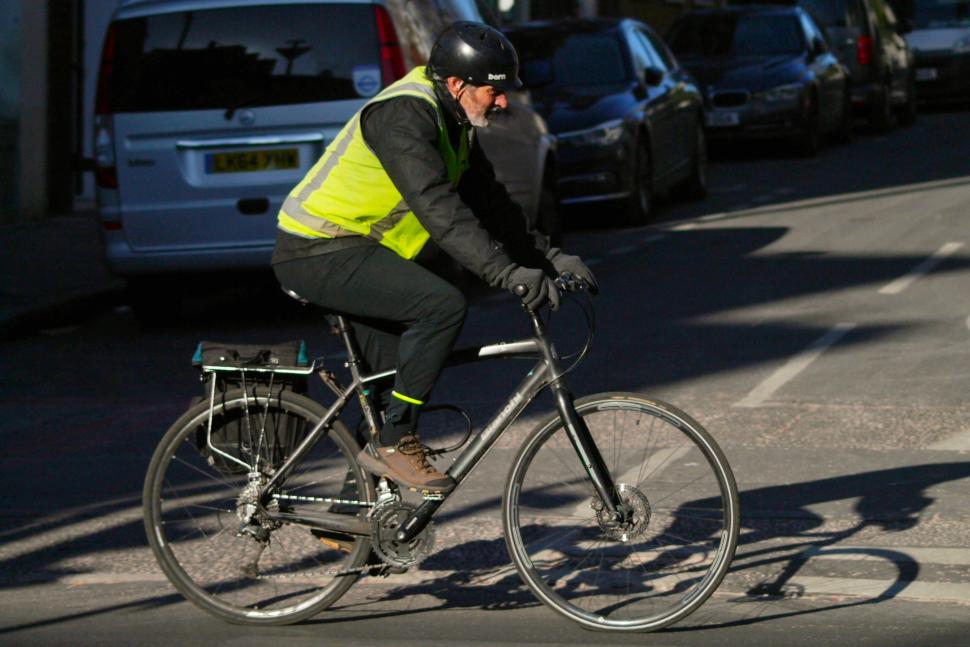
Moss also says that she’s experienced fewer near misses while cycling in Dublin in recent years, thanks to the dual developments of better protected infrastructure and “safety in numbers”.
“Still, every time I have come close to death under some driver’s wheels and had a conversation about it – I will catch up with you if at all possible and I will knock on your window and express my feelings because I am shaky and hammering with adrenaline and disinhibited by mortality – the driver says they ‘didn’t see me’.
“In some ways I suppose this is reassuring, the alternative being that they did see me and decided in cold blood to try to kill me, but it is no excuse.
“I was there when you did not see me because you did not look. I am small but not invisible. I do everything in my power to ‘be safe, be seen’, but in fact I have very little power in this situation. A slogan like ‘Look, don’t kill’ would be more to the point.”
Now there’s an idea for a road safety campaign…