
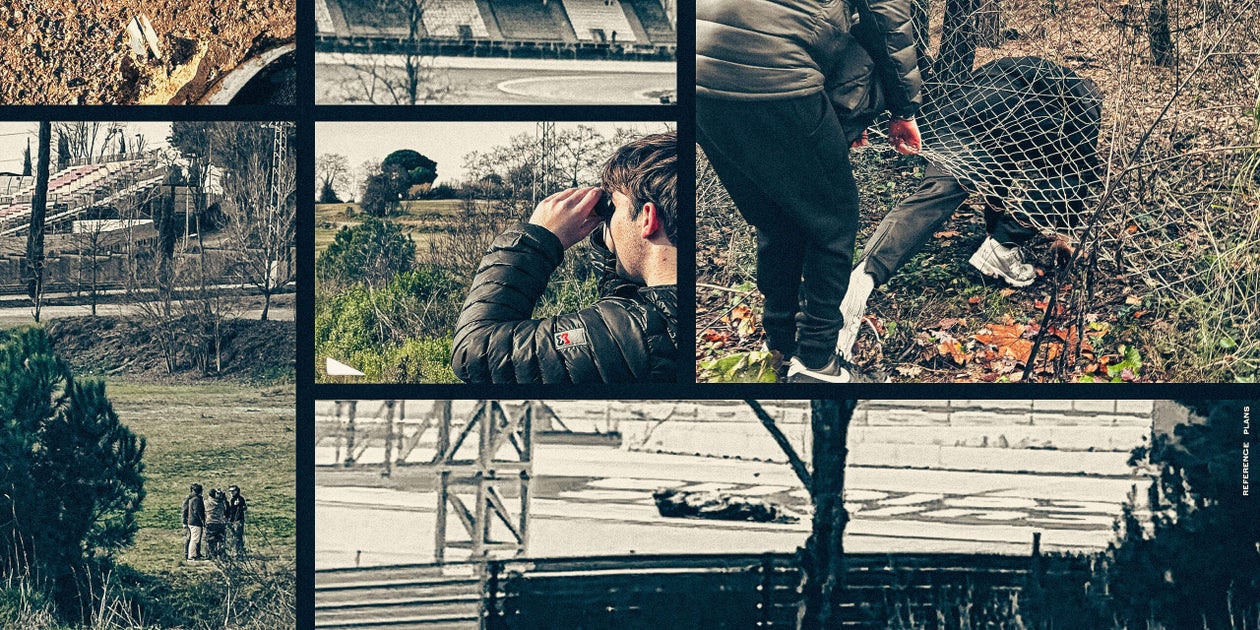
I must warn you: I am not a Formula 1 expert.
You are more likely to find an article of mine about Real Madrid, soccer transfers, or the sports industry in general.
But don’t worry, dear readers. My experience as The Athletic’s special correspondent at the Circuit de Barcelona-Catalunya on Monday may be useful if you want first impressions of the 2026 cars — and, above all, what the first day of testing was like from the sidelines.
The 11 F1 teams have privately rented the Circuit de Barcelona-Catalunya for five days this week, with no media or fans allowed.
This year brings F1’s biggest car design rule changes in recent history, with new engines and cars that will drive very differently. The teams were worried about any potential early problems being broadcast to the world and wanted to sort out any teething problems behind closed doors, before the official Bahrain tests take place next month.
Engineers from one team, who, like everyone mentioned in this article were speaking on condition of anonymity to protect relationships, told The Athletic they didn’t understand the secrecy around this week’s testing and had been following social media to gauge fan reaction to being locked out.
The objective on Monday, for the small number of fans and this reporter in attendance outside the Barcelona track, was clear: We had to try to see everything the teams didn’t want us to.
Unlike other occasions when private testing has taken place at the track, officials didn’t allow access even to the surrounding area, deploying private and public guards to patrol the circuit. But, fortunately, we were able to see the circuit during the morning and afternoon sessions.
Here is how I got my trainers covered in mud, discovered which cars impressed fans the most, and made a few friends along the way.
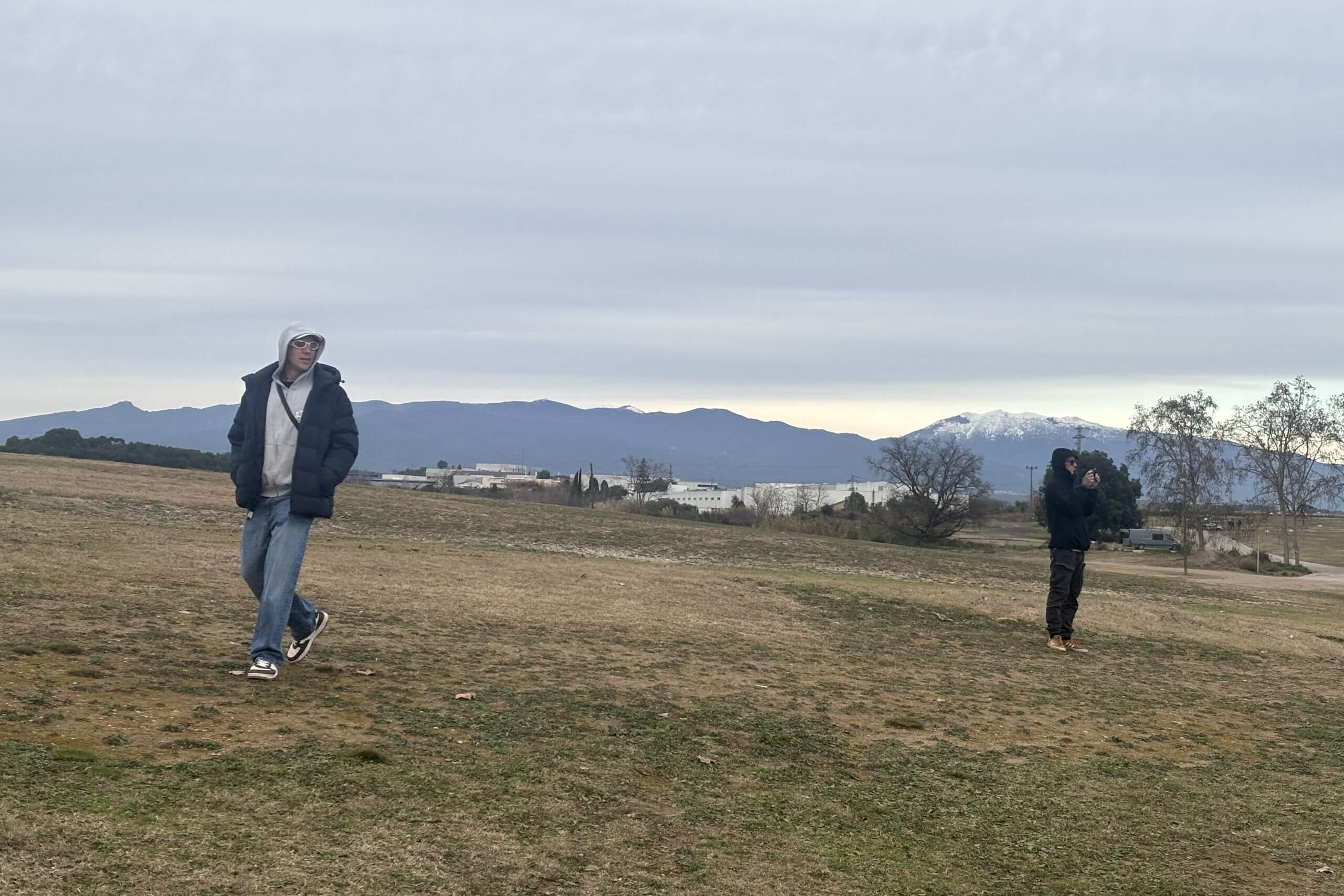
The hills around the Barcelona circuit are the best bet for a view. (Guillermo Rai / The Athletic)
Although it is in the province of Barcelona, the F1 circuit is actually located in the municipality of Montmelo, more than 14 miles from the Sagrada Familia basilica in Barcelona city center.
The nearest towns are Parets del Vallès, Montornès del Vallès, and La Roca del Vallès. Considering that “Valles” means valley in Catalan, mountains are not abundant when approaching the circuit. But in Spain, the terrain is so uneven that there are always one or two hills where you can climb (or spy).
In our case, finding a good vantage was easy. One appeared on Google Maps with the name “Montana vista del circuito (Mountain view of the circuit)” and allowed us to see some of the track’s final corners. The problem was other curious people had the same idea.
When I arrived at that spot — shortly after 9 a.m. and with some cars already running — the circuit’s private security was clearing the area. They argued that the event was private and that the organization had explicitly told them no pictures should be taken. What they didn’t count on was that refuge could be found behind a tree, and so that’s what I did.
I spent a good while watching several cars go by, including the new Audi, Alpine and Red Bull. Each team can only field one car during testing (compared to the two they normally enter on race weekends), and this week for only three of the five days in total. Williams is missing the test as the production of its 2026 car has fallen behind schedule.
The first thing that struck me was that the new cars seemed slower and shorter than what I had seen in previous races on television. This is in part because of the new rules package, which makes the cars lighter and narrower in an effort to increase closer racing.
Just when I thought I was alone, a group of young Italian fans appeared — led by an intrepid Neapolitan who told me, “It’s in my blood to sneak into places” — and I decided it was best to follow them.
A few minutes later, we were just a few meters from the entrance to the main straight. My new acquaintances first tried to sneak in under a fence (unsuccessfully) and then through some revolving doors (again, unsuccessfully). All we managed to do was get our trainers covered in mud and hear the cars up close.
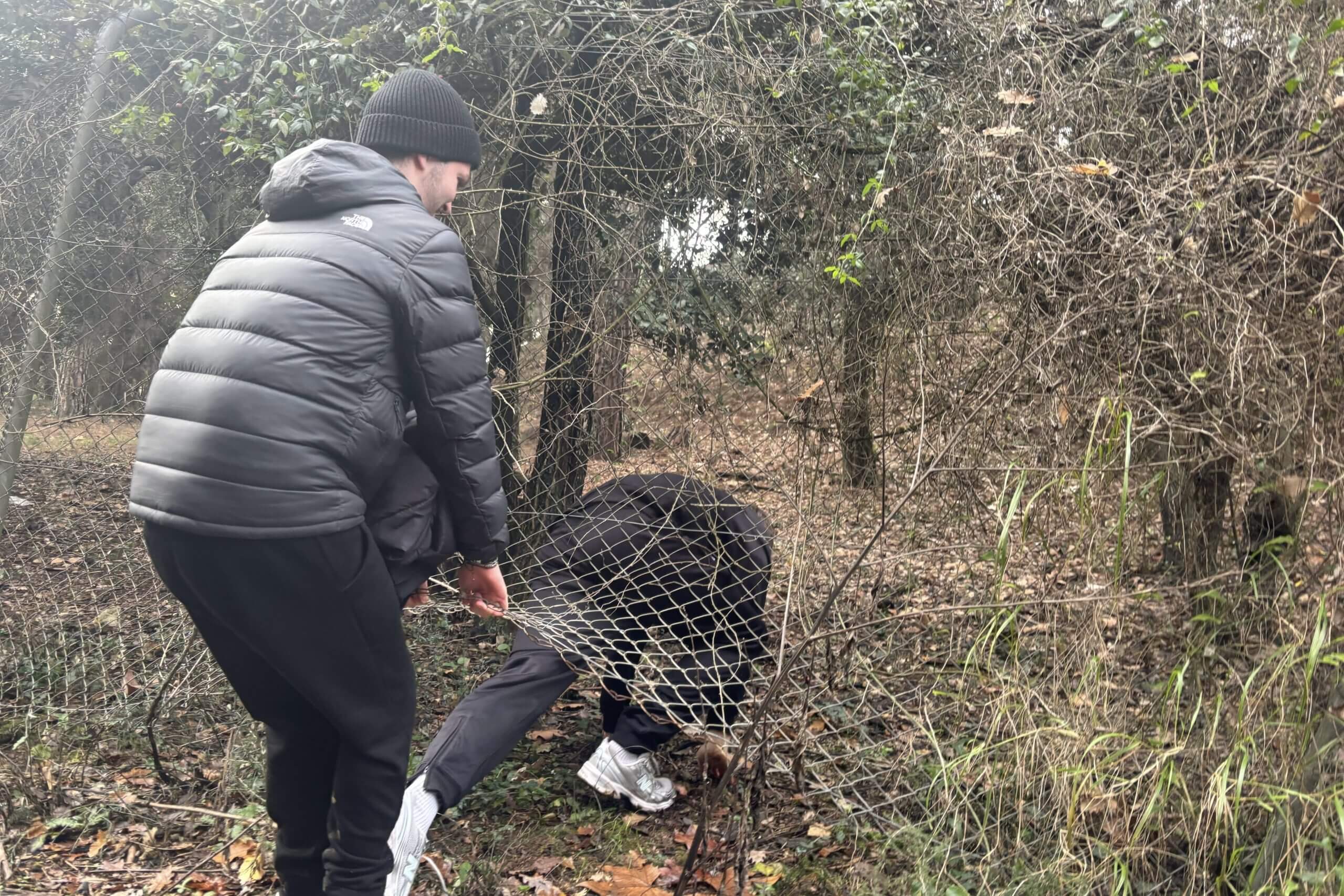
An unsuccessful attempt at finding a better vantage point. (Guillermo Rai / The Athletic)
In general, all the fans I met during the day (about 50 people) were convinced that, compared to the engines used until the end of last season, the cars were louder when they accelerated. They said they felt there was more of an electric sound (this year, engine electrical power has increased by almost 50 percent compared to the old hybrid engine systems).
However, not all the cars sounded the same. Some were more powerful, such as the Red Bull, which fans talked about with admiration in the morning because it roared louder, and Mercedes, which had a boisterous, uniform sound. But others seemed to make more discreet, or less powerful noises – such as the Haas car running a custom Ferrari engine.
When I headed for a second hill, there was a Spanish television camera, some influencers, and more young fans enjoying a party.
There, we witnessed how some teams, such as Alpine, Audi, and Racing Bulls (which had its car stop on the track at one stage), had potential problems. These early teething troubles were why the red flag was waved (or red lights were shown around the track’s final corners) several times during the morning, which forced the cars that were running to return to the pits.
Cadillac, according to engineers from another team, suffered quite a bit during the day and barely completed the laps it had targeted, which the engineers said were due to issues with the new light safety system that warns of electronic problems in the car. At one point, I could see that no lights were visible at all.
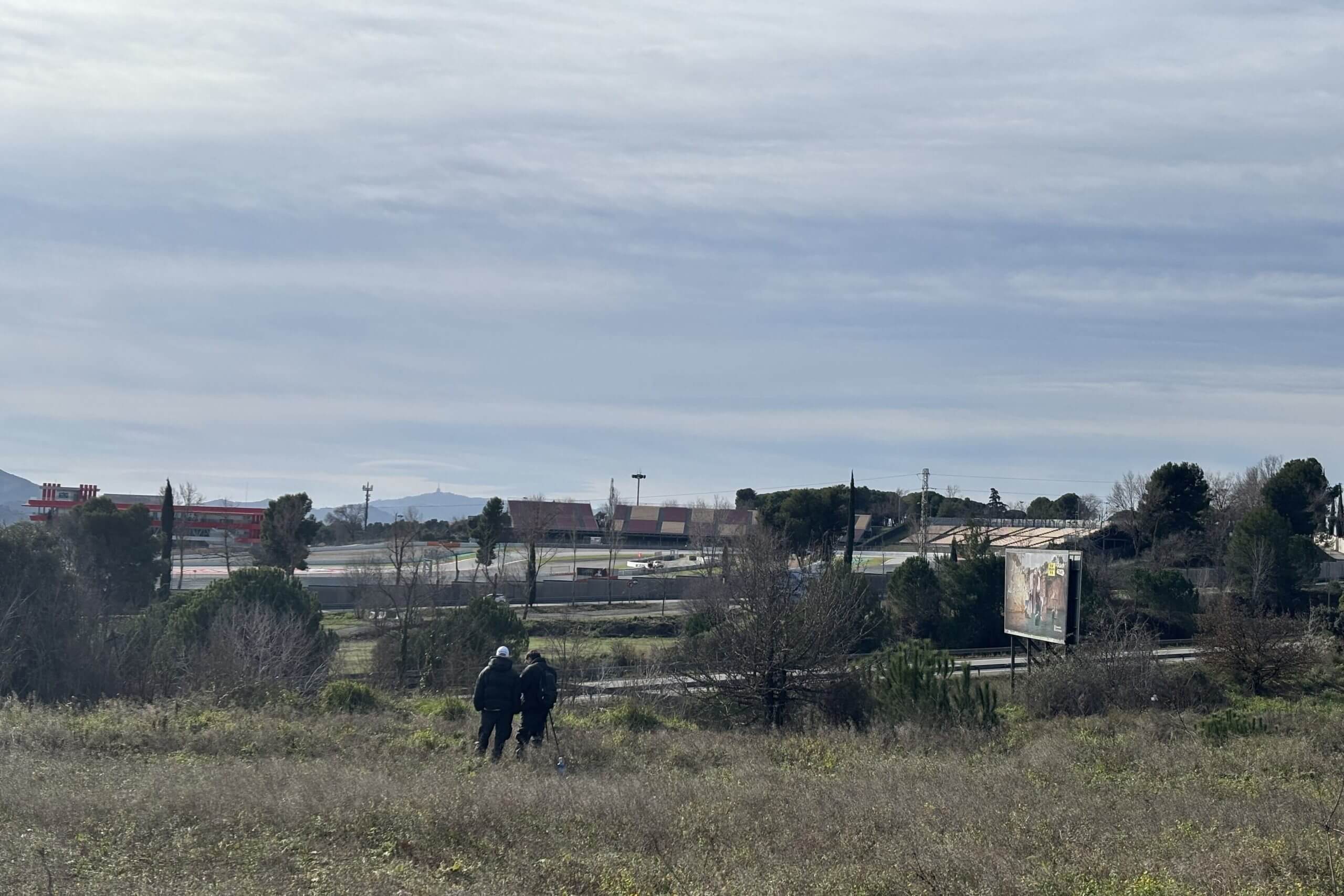
The view from the second hill. (Guillermo Rai / The Athletic)
By then, the Catalan regional police, ‘los Mossos’, had also arrived in a car, once again dispersing the gathered fans. But they didn’t seem to notice me, and I began to believe in beginner’s luck.
In the afternoon, I returned to the first hill and met a couple of Austrians who had decided that seeing their country’s team (Red Bull) was more important than visiting Barcelona. But far from judging them for their lack of cultural interest, I began to understand the attraction of this sport.
“We only get to see this once a year, but we can watch football 40 times,” said Ariel Gimeno and Iker Mengual, two other excited fans from Tarrassa, a neighboring town where FC Barcelona and Spanish football legend Xavi Hernandez grew up.
With them and the Austrian couple, we slipped away from a private security guard. But we were soon betrayed by a motorcyclist guard, riding around the circuit and warning his colleagues.
Once again, we decided it was worth the risk of sticking around and took refuge on the second hill, where we finished watching the session as the sun went down.
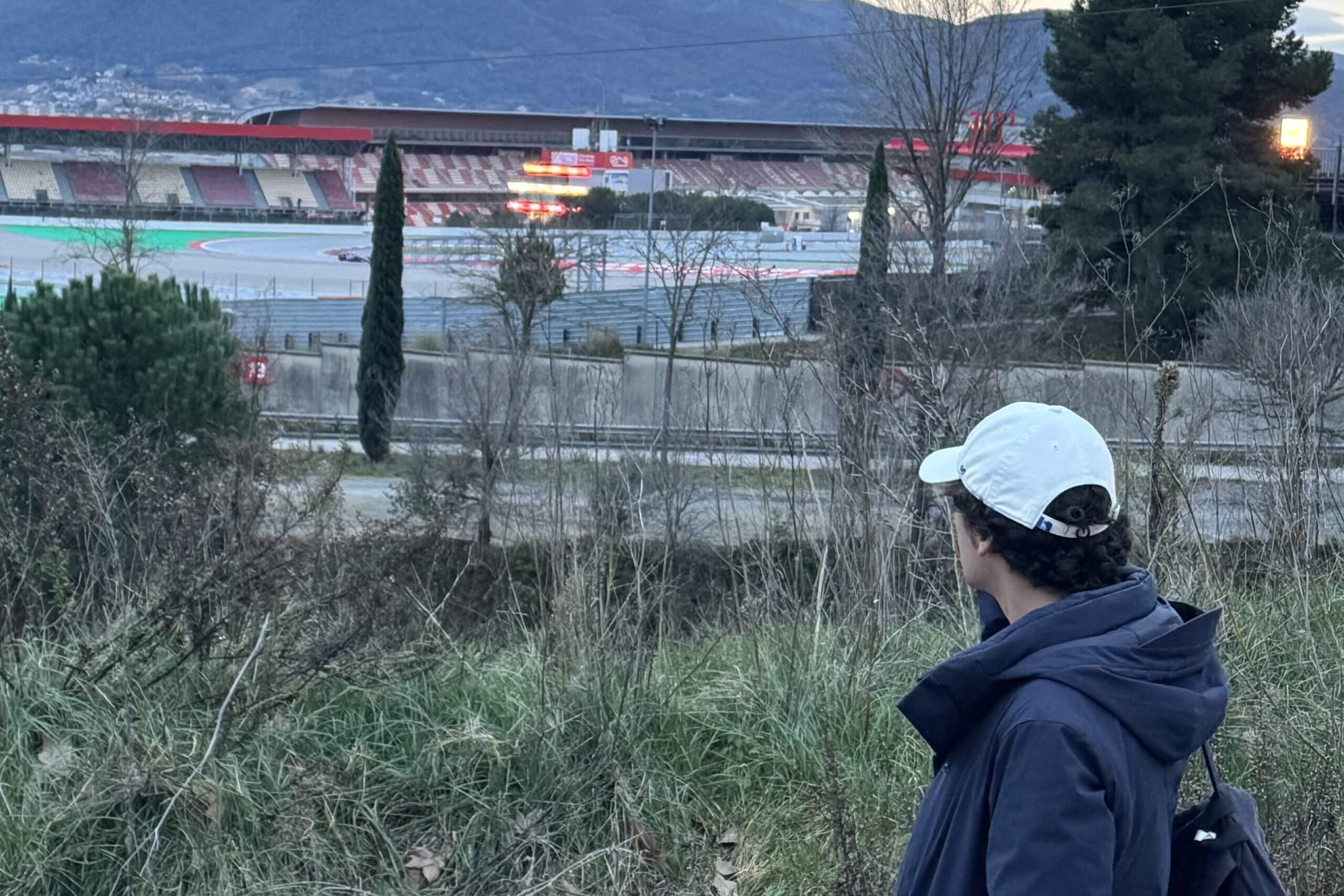
Guillermo Rai at the end of a long day. (Guillermo Rai / The Athletic)
Sometimes, enthusiasm is arbitrary. The fact that Argentine Franco Colapinto is a Spanish speaker and still young generated a lot of excitement among my fellow watchers on the hills, as did the fact that there was a new team, Cadillac, with its Ferrari engine sounding quite promising.
Haas, Red Bull and Mercedes were seen on the track for a long time throughout the day. Engineers from one team expressed positive feelings about Haas. They were optimistic about the Ferrari engine, given the number of laps Haas was completing. Ferrari began its testing on Tuesday morning, before rain arrived at the Barcelona track.
Several team members emphasized that Wednesday would be the key day, saying that if a team didn’t participate by the third day, when the weather is forecast to be dry once again, it may signal trouble. As well as Williams, there’s pessimism in the paddock around Aston Martin, which will arrive late to testing on Thursday.
Team sources described this year as feeling “more uncontrollable than ever” because of the extended pre-season schedule and compressed offseason. Between 2023 and 2025, there was just a single three-day test — held in Bahrain each time.
“Five weeks ago, we were in Abu Dhabi,” one engineer noted. It is the shortest offseason in recent F1 history.
At this point, it is too soon to draw any conclusions about what the first day of testing means for the championship. But one thing is clear: it is difficult to prevent keen fans from enjoying their passion.