
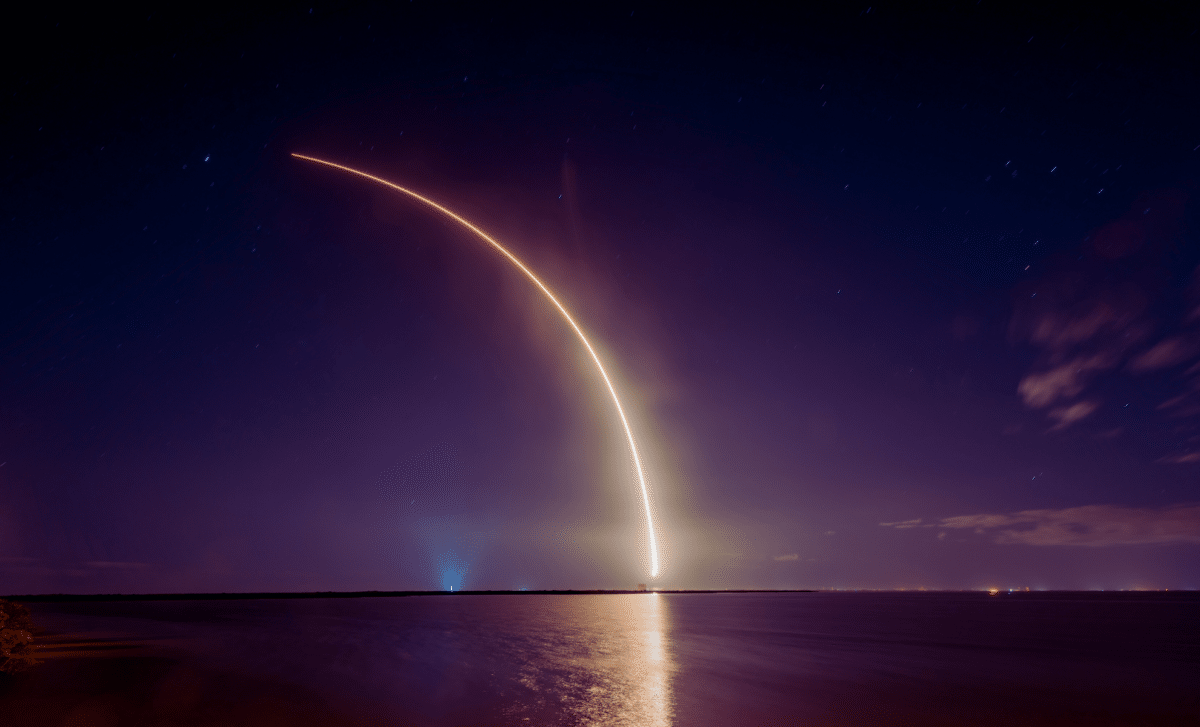
In late December 2025, a startling report revealed that SpaceX’s Starlink satellite constellation had to perform around 300,000 collision-avoidance maneuvers to prevent crashes in space. As the world’s largest satellite network, Starlink, which began launching in 2019, now includes around 9,400 satellites. This massive fleet dominates Earth’s low orbit, making up about 65% of all active satellites. The Federal Communications Commission (FCC) mandates SpaceX to provide biannual updates on the safety measures for the Starlink constellation to avoid creating space debris. However, experts are increasingly concerned about the sustainability of such operations, highlighting potential risks to the future of orbital space.
Starlink’s Growing Impact on Space Traffic
SpaceX’s Starlink satellites, designed to provide global internet coverage, are raising serious concerns among experts about space traffic and the increasing risks of satellite collisions. These maneuvers, which SpaceX regularly conducts to avoid collisions, show the complexity and scale of maintaining satellite networks in low Earth orbit (LEO). With about 300,000 collision-avoidance maneuvers in 2025 alone, this figure reveals the huge logistical and technical challenges of operating such a vast network, According to New Scientist.
“That’s a huge amount of manoeuvres,” says Hugh Lewis, a space expert at the University of Birmingham in the UK. “It’s just an incredibly high number.”
This growing number of maneuvers highlights how congested Earth’s orbit is becoming with active satellites, and how each additional satellite increases the risk of potential collisions.
The company’s mega-constellation is having to perform a huge number of manoeuvres to prevent a collision in Earth orbit https://t.co/oE1NafzxbW
— New Scientist (@newscientist) January 23, 2026
These maneuvers are necessary to avoid dangerous collisions, but the frequency of such operations underscores a growing concern in the space industry. With more companies aiming to launch their own satellite constellations, the sheer volume of objects in space presents a critical challenge for maintaining safe and sustainable orbits.
“From a physics point of view, it’s not good,” says Lewis. “We are moving ourselves towards a pretty bad scenario in orbit. It is not sustainable.”
As the space surrounding Earth becomes increasingly cluttered, experts worry about the long-term implications for space exploration and communication networks.
The Legal and Ethical Implications of Starlink’s Dominance
As Starlink expands its satellite fleet, its growing control over Earth’s low orbit raises important questions about access to space. SpaceX’s Starlink operates at an altitude of 340 to 570 kilometers, a critical range that other satellites share. “It highlights how SpaceX really owns that orbit,” says Samantha Lawler, a space scientist at the University of Regina in Canada. Lawler’s comments point to the fact that, according to the Outer Space Treaty, all countries are supposed to have access to space. However, with the majority of active satellites in this particular orbit being Starlink satellites, SpaceX’s dominance could undermine this principle of equal access. This monopolization of key orbital regions by one company has sparked debate about the ethical implications of privatizing access to space, raising concerns that other nations and private entities could be effectively shut out.
SpaceX’s ability to control so much of Earth’s orbital space highlights the uncharted territory of space governance. While Starlink’s maneuvers might keep the satellites safe, there are growing concerns about the long-term sustainability of such extensive operations. What happens if a mistake is made during one of these high-stakes maneuvers? “They’re doing all these manoeuvres and they’re doing them perfectly,” says Lawler. “But if they make a mistake, we’re in really big trouble.” If a mistake were to cause a collision, the resulting debris could exacerbate the space debris problem and render large portions of Earth’s orbit unsafe, making it difficult to launch or maintain other satellites.
The Space Debris Problem: A Looming Crisis
One of the most pressing dangers associated with a satellite collision in orbit is the creation of debris. Even a minor collision could result in thousands of small fragments, each traveling at extremely high speeds. These fragments can then collide with other satellites or spacecraft, creating a cascading effect that can make parts of Earth’s orbit unusable. Experts like Hugh Lewis warn that the rapid increase in satellites without adequate safety measures could lead to an uncontrollable situation. “It’s not good,” says Lewis, expressing concern about the cumulative effect of many satellites in orbit. With so many satellites potentially at risk of collision, the consequences for space operations could be catastrophic if proper precautions are not taken.
As the number of satellites increases, so too does the complexity of managing orbital safety. To address this, companies like SpaceX are using sophisticated tracking systems to predict potential collisions and perform maneuvers to avoid them. However, the sheer scale of operations required to manage these constellations raises questions about how sustainable this practice will be in the long term. The space industry must find a balance between advancing technology and maintaining a safe, sustainable environment in Earth’s orbit.