

Listen to this article
Estimated 4 minutes
The audio version of this article is generated by AI-based technology. Mispronunciations can occur. We are working with our partners to continually review and improve the results.
More than a century of agriculture research in central Alberta will soon be on the chopping block as the federal government plans to shut down research centres nationwide.
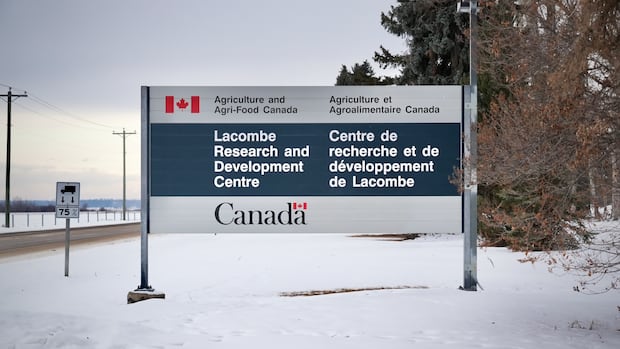
Agriculture and Agri-food Canada (AAFC) said it will shutter seven research sites, including a 119-year-old facility in Lacombe County, in a move advocates say will slow down the pace of Canadian research.
AAFC’s announced closures are part of budget savings identified by the federal government, and come as Ottawa begins efforts to reduce the size of the public service.
“Canada prides itself on being one of the best agriculture producers in the world, and in order to maintain that standard moving forward, we need research and we need the development that comes from that research,” Lacombe County Reeve John Ireland told CBC’s Radio Active.
The Lacombe Research and Development Centre’s purpose is to improve the economic sustainability of livestock production and to develop sustainable practices. Lacombe is 125 kilometres south of Edmonton.
More than 100 employees in Lacombe will be affected by the centre’s closure. More than 1,000 unionized and non-union workers are impacted nationwide.
The national agriculture union said it learned of the cuts alongside its employees, having received no advance notice.
“The way the employer communicated these cuts to our members and to the union was shocking and abrupt. Our members are reeling,” said Milton Dyck, the national president of the Canadian Agriculture Union, in a news release.
The AAFC said on Friday the wind-down of operations would follow a decision process that can take up to 12 months.
Radio Active8:33Federal goverment closing Lacombe research station
More than a century of agriculture research in central Alberta is coming to an end after the federal government announced plans to shut down seven food research centres across the country, including the historic facility in Lacombe County. John Ireland, the county reeve, discusses the impact of the closure.
Nineteen research projects were underway in Lacombe, the findings of which would be difficult to replicate in the private sector, said Ireland.
“The beauty of government research is that it’s verifiable, it’s unbiased, it’s relevant,” said Ireland. “It’s the unfettered and relevant information that we need access to.”
The Lacombe community is “inflamed,” said Ireland, after hearing about the AAFC’s closures.
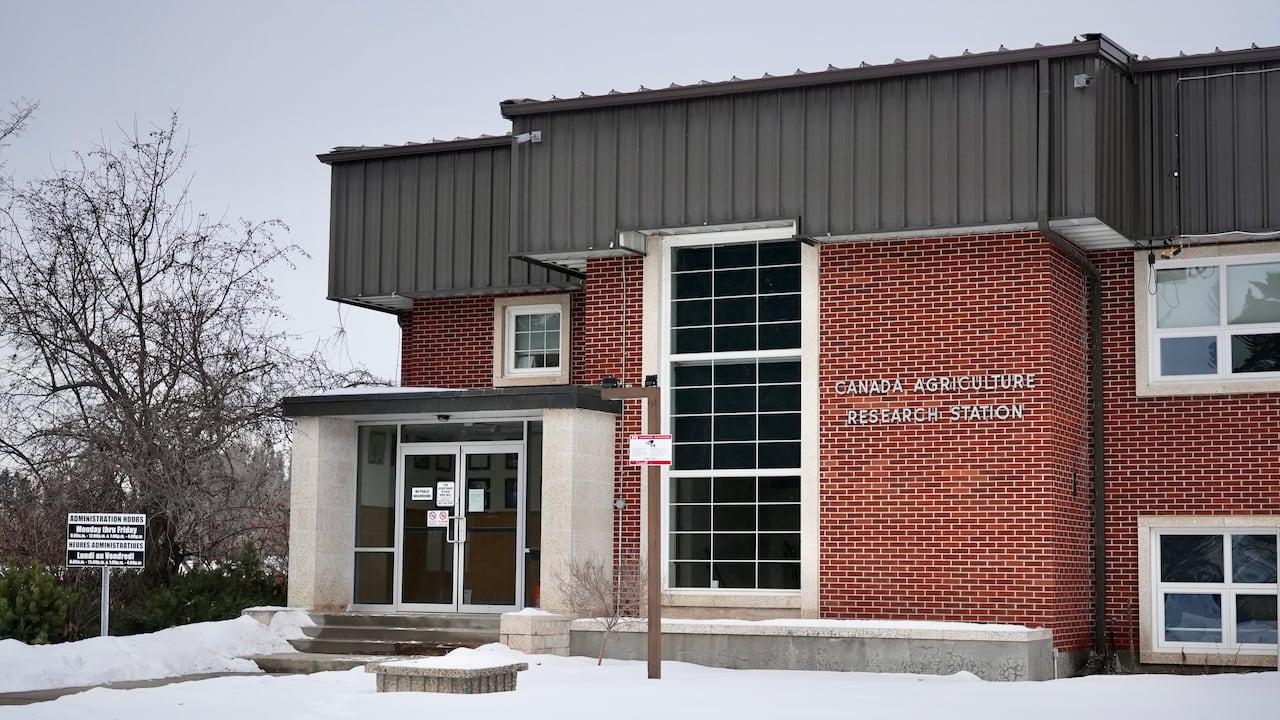 More than 100 employees in Lacombe will be affected by the local research centre’s closure, while over 1,000 workers are impacted nationwide. (Lina Elsaadi/CBC)
“In this time of tariffs, countervailing duties and embargoes, this does seem like a short-sighted move from the point of view that the only defence we have against those countervailing duties is a product that is world class,” said Ireland.
“At this point it looks like we’re headed on a downward spiral with our industry.”
Garrett Koehler, a spokesperson for the Alberta Ministry of Agriculture and Irrigation, called the closure “disappointing,” and said it is too early to know what the long-term effects of the Lacombe site’s closure will be.
“Alberta will be monitoring developments closely and continuing to advocate for agriculture research. Unbiased, farm-focused research is essential for the agriculture sector’s long-term growth and sustainability,” said Koehler.
Looking forward
Though the federal department is closing seven centres — including ones in Saskatchewan, Manitoba, Ontario, Quebec and Nova Scotia — it told CBC it will maintain 17 research centres nationwide and research farms in every province.
Olds College’s vice-president, research, Todd Ormann told CBC News that the post-secondary is looking into picking up some of the Lacombe centre’s research projects.
“There were some very good people there and some very good research happening in Lacombe,” said Ormann. “We want to understand what may need to be picked up.”
Lacombe agriculture workers are looking to lobby the federal government over the next year to save the research centre, said Ireland.
“We’re constantly told by economic development specialists that the secret to your success is research,” said Ireland.
“That rug is being pulled out from under the feet of the agriculture industry.”