
Updated January 29, 2026 08:37AM
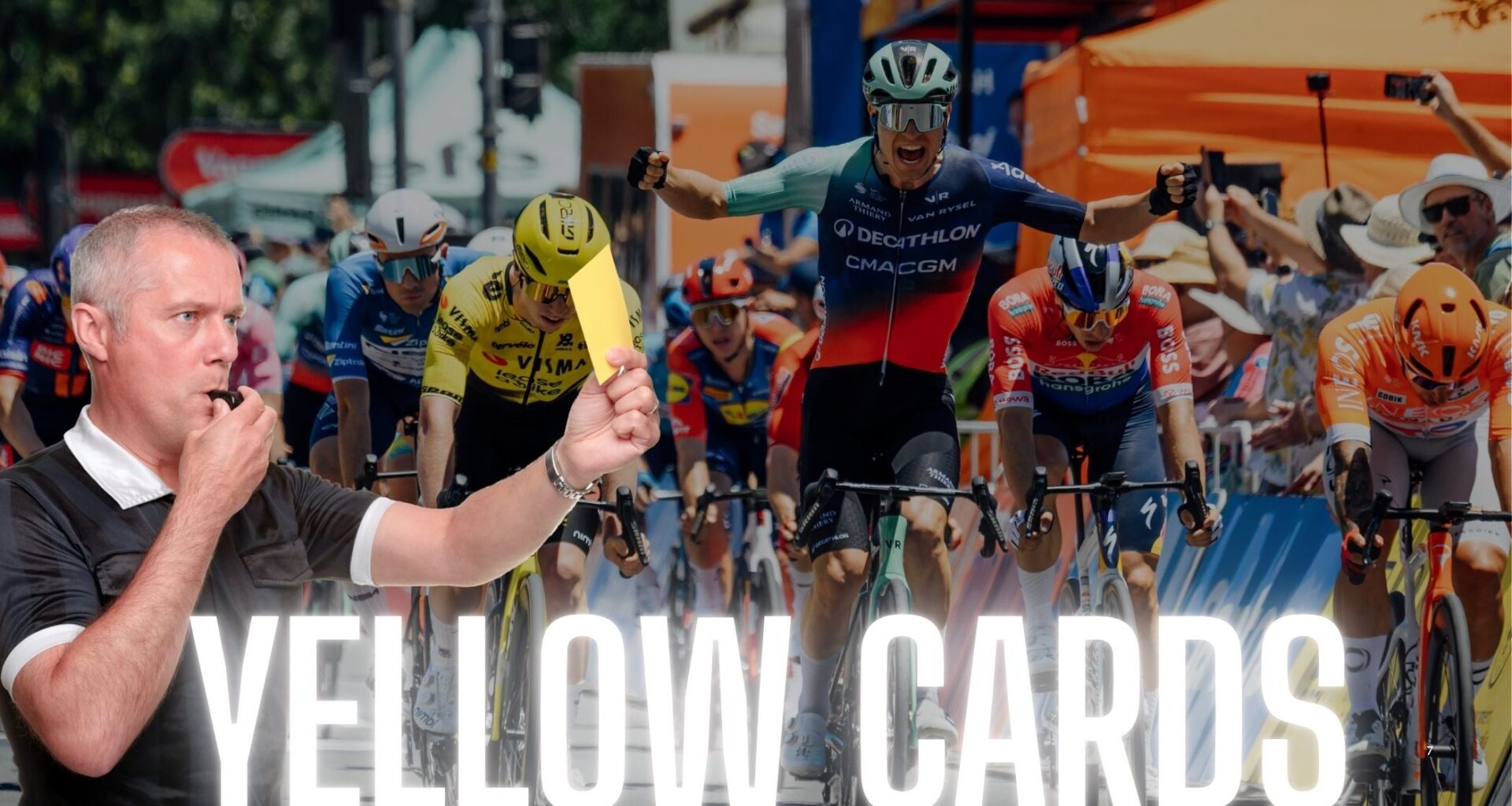
Fabrizio Guidi saw the first suspension in 2026 under the UCI’s yellow cards and became only the second overall since the sanctions framework was rolled out last season.
The UAE Emirates-XRG sport director was handed a seven-day suspension after collecting two yellow cards at the Santos Tour Down Under, triggering the automatic penalty for repeat offenses within the same event under UCI regulations.
Guidi saw his first yellow card after stage 2, with commissaires citing a “breach of regulations or guidelines concerning vehicle movements.” He was sanctioned again for the same offense on stage 5, sealing the season’s forced work stoppage.
Because the ban runs from the day of the second offense, Guidi, on paper, is eligible to return to the UAE team car in time for Sunday’s Cadel Evans Great Ocean Road Race. Since he made the long trip to Australia, he’ll likely be back behind the wheel.
The suspension underscores how the yellow card system is now part of the pro racing landscape going into its second full season of use.
The bigger question remains: Do they make racing any safer?
Less than half of yellow cards went to riders
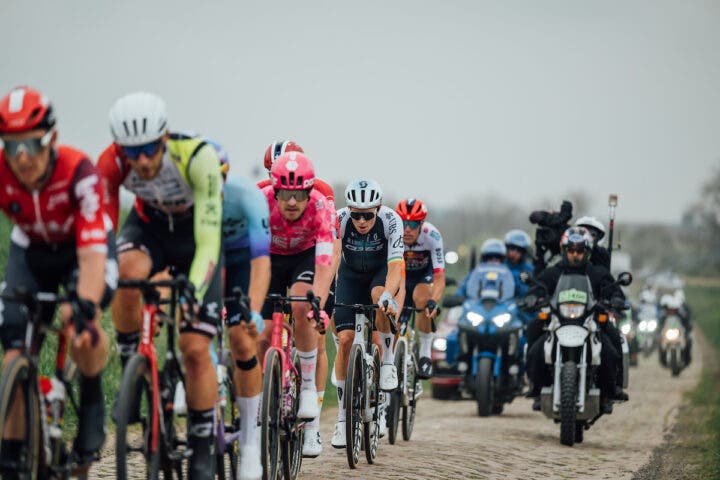 Half of the yellow cards went to others in the peloton beyond the racers, from sport directors, drivers, and motorcycle pilots. (Photo: Chris Auld/Velo)
Introduced by the UCI after trials in late 2024 as a central component of its broader SafeR program, the still-controversial system completed its first full season in 2025 with 268 yellow cards issued for safety and conduct violations (not counting the 2024 test period).
A quick breakdown of the stats reveals some interesting trends.
First, less than half of the yellow cards went to riders.
Some 114 went to riders, 53 to sport directors, and the rest went to soigneurs, mechanics, drivers, and media — with some individuals receiving multiple warnings — a split that reflects how enforcement is focused on convoy behavior just as much as what the racers are doing.
Speaking to GCN last fall, UCI president David Lappartient defended the yellow card system as a key leg as part of a multi-faceted approach to make bike racing on open roads a bit safer.
“We decided to implement [yellow cards] and it helps to improve behavior,” Lappartient said. “Some complain it’s always against the rider, not at all. Sometimes the bad behavior is from the drivers, the sport directors, or the moto drivers.”
That TotalEnergies rider pretending to be a referee and showing Alex Zingle a virtual yellow card 😭 What a legend 🤣
Plot twist: Alex Zingle at the end really got that yellow card for riding on a pathwalk. #ParisNice pic.twitter.com/Dt7eFiHgqq
— Lukáš Ronald Lukács (@lucasaganronald) March 14, 2025
Danny van Poppel (Red Bull-Bora-Hansgrohe) and Patrick Boesman (a motorcycle driver) accumulated the most yellow cards in 2025, with three each, but both avoided suspension by not receiving two within the same race.
Oscar Riesebeek of Alpecin-Deceuninck, who picked up two yellow cards at the Baloise Belgium Tour for riding on sidewalks to bounce in and out of the peloton, received the program’s first race suspension.
“I realize my behavior in the race was not only wrong, but also put fellow riders at risk,” Riesebeek said last year. “And that’s something I sincerely regret and apologize for. The rules are clear. If they are applied consistently, I fully respect that.”
That last comment reveals there’s still some grumbling within the bunch about how yellow cards are dished out.
What will happen in season 2?
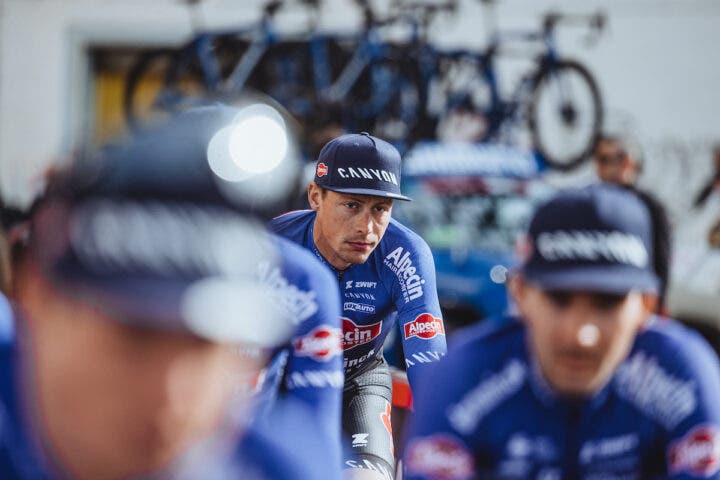 Oscar Riesebeek of Alpecin-Deceuninck was the first rider suspended under the yellow card rules. (Photo: Chris Auld/Velo)
Only three yellow cards have been issued so far in 2026, so it will be interesting to see how active the race juries will be across season two.
Of course, the racing calendar is just getting started. We’ll see in the coming weeks if race juries are being more active on yellow cards or if they’re singling out a specific type of offense.
The rules are the same for everyone.
A third yellow card within 30 days of the first would trigger a 14-day suspension, while six yellow cards within 12 months would result in a 30-day ban.
Race juries at any event still hand out daily fines, time penalties, and other sanctions, like unzipped jerseys, that run parallel to the yellow cards.
At the Tour Down Under, Tord Gudmestad was the only rider shown a yellow card, who was cited for slowing down and celebrating in the bunch after Decathlon CMA CGM teammate Tobias Lund Andresen kicked to sprint victory.
Are yellow cards having a chilling effect on the peloton? That’s hard to say.
Anecdotal evidence suggests that riders are more cognizant in bunch sprints about staying in their lane and easing back on too-early celebrations.
Another big push seems to be targeting infractions of movement of vehicles within the race caravan, always a high-danger spot of any race that’s rarely seen at the front of the action.
It’s an even harder stretch to say yellow cards might have reduced the number of crashes.
There is no fresh data yet about the 2025 crashes. A stat dump from the UCI at the start of last season counted 497 crashes across the men’s and women’s calendar in 2024, and the cycling governing body insisted that one-third were caused by rider error.
Yellow cards are here to stay
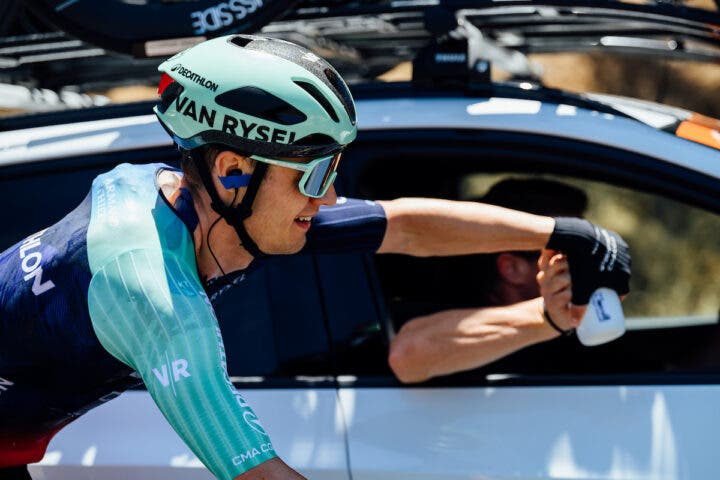 Offenses like a blatant sticky bottle typically see time penalties. (Photo: Chris Auld/Velo)
Not everyone is happy with the new yellow card system.
Riders and staffers both suggest that the application of infractions is inconsistent and uneven. And some of the more blatant offenses, especially within the race caravan involving race organizers or even the UCI, are sometimes overlooked.
Some even say that the risk of yellow cards introduces even more stress into what’s an already chaotic and intense situation.
And there’s the eternal debate about rider safety and if other measures — like better course design to avoid traffic furniture and consistent safety infrastructure — should be the priority.
Going into season two, yellow cards are now part of the furniture.
Whether it’s truly changing behavior or making racing any safer could become clearer out across this season.