

Like many Canadians, I live and work close to the border with the United States. It’s just a few hundred meters away from my office, and when I gaze towards America, I cannot help but think just how geographically close the horrors being waged by ICE are.
But when my focus returns, I wonder: what can we do to help, here in Canada?
The answer is that there’s a great deal that Canada can do – and should do – in response to ICE’s brutality.
Canadians are horrified by the apprehension of children, invasion of healthcare facilities, and the murders of two American citizens – Renée Good and Alex Pretti – by ICE agents, all committed in broad daylight, recorded for all to see.
It is false comfort to believe that ICE could only operate in the U.S.. The agency currently has five offices in consular and diplomatic outposts in Canada: in Toronto, Ottawa, Calgary, Montreal, and Vancouver, where they claim to work with Canadian “partners” in enforcing laws “to protect the public from those seeking to harm [their] country.”
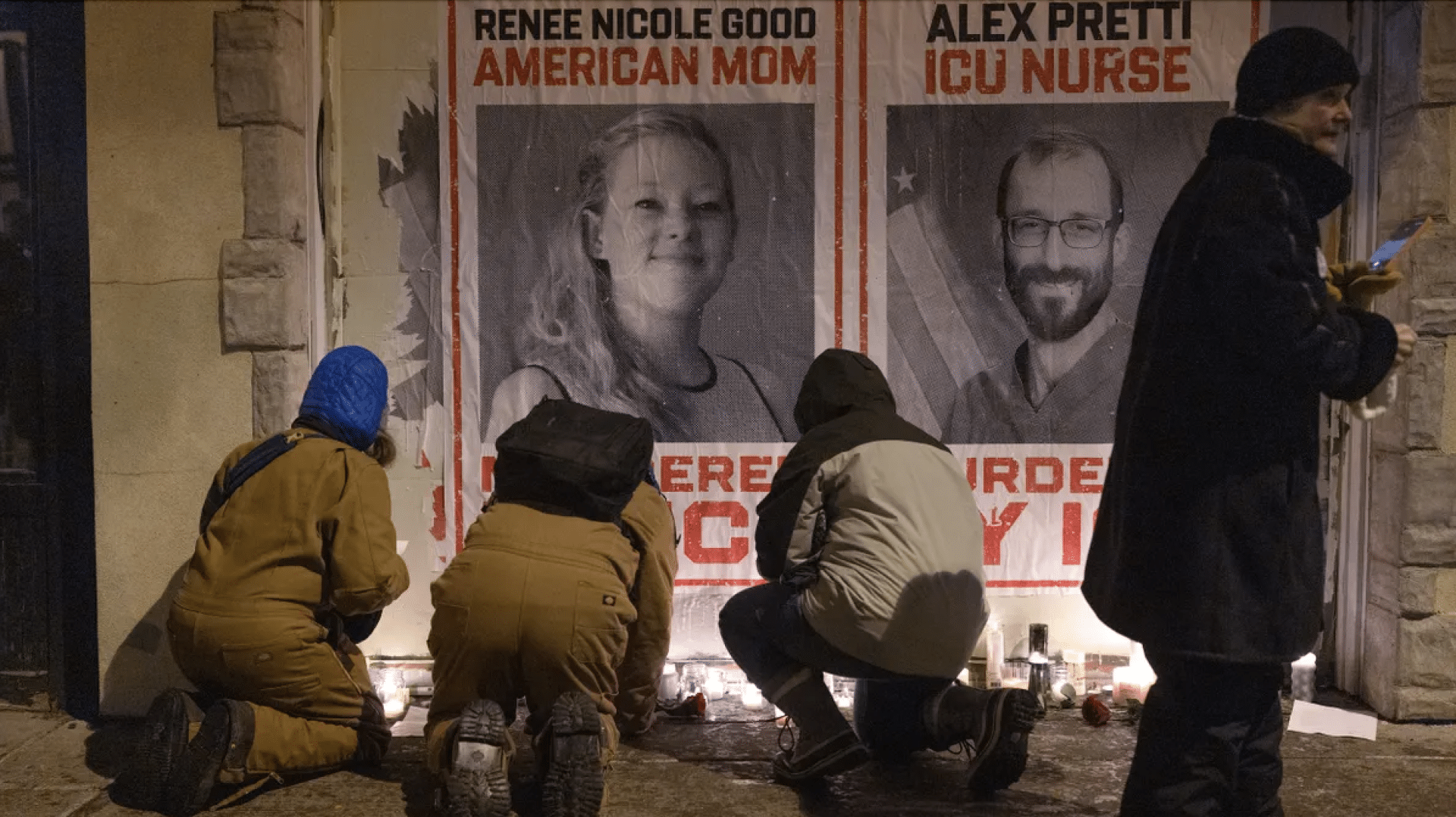 Pictures of the two Americans, Renée Good and Alex Pretti, who were both killed by ICE agents in broad daylight on the streets of Minneapolis.
But what we are witnessing in America isn’t enforcing the law; it’s lawlessness waged by a well-funded and militarized agency doing the bidding of what experts and historians recognize is an increasingly fascist government. In the last U.S. Budget, ICE received a tenfold increase in funding. Today, only 15 countries have military budgets bigger than ICE’s. And as journalist Jonathan Rauch explains,
“Trump has turned ICE into a sprawling paramilitary that roves the country at will, searches and detains noncitizens and citizens without warrants, uses force ostentatiously, operates behind masks, receives skimpy training, lies about its activities, and has been told that it enjoys ‘absolute immunity.’”
The first thing Canada can do, therefore, is to close all ICE offices in the country. To do so, the Liberal government should work with all other parties to reach a consensus in Parliament that ICE is not welcome on Canadian soil because it is engaged in widespread criminal conduct. Parliament could then advise Foreign Minister Anita Anand and Cabinet to find that ICE agents operating in Canada are persona non grata and thus unwelcome in the country. Even if the ICE officers hold some diplomatic status, Canada can expel them by invoking relevant provisions of Canadian law and the 1961 Vienna Convention on Diplomatic Relations.
Some might argue: isn’t ICE involved in critical work, like tackling drug and human trafficking? And aren’t these tasks indispensable to Canada, too? Perhaps, but this work can be done by other agencies, such as U.S. Customs and Border Protection, and U.S. Citizenship and Immigration Services. And if Ottawa thinks that there is any reason that ICE agents stay, the government should make that case clearly to Canadians; the onus is on them.
Others might argue: wouldn’t there be reciprocal action to kick out Canadian officials from the United States? Almost certainly. But that’s not a reason to placate ICE or turn a blind eye to the agency’s violent transgressions. There will be a real cost to our collective moral standing if Canada chooses to do nothing.
 Roshel CEO and founder Roman Shimonov. Canadian-made Roshel vehicles have been contracted by U.S. authorities and deployed in ICE’s siege of Minnesota.
Moreover, ICE has lost any credibility it may have once had. How? By killing people and stealing children from their parents’ arms. And let’s not forget, even before the killings in Minnesota, this was an agency that had already detained at least 150 Canadians – including toddlers – since Trump returned to the White House, some of whom have died in custody after being denied medical care.
Moving to close ICE offices is not just a political or symbolic move. Given what we know about their conduct and ongoing threats to Canada’s sovereignty from the Trump administration, it is also a national and public security issue. But just ridding Canada of ICE isn’t enough. Canadian authorities should immediately take action to ensure that contracts between Canadian companies and ICE are scrapped.
Three come to mind, although there are others, as highlighted in a letter to Prime Minister Carney by the NDP’s Heather McPherson.
First and foremost, Canada must ensure that any contracts with Ontario-based defence manufacturers to sell ICE armoured vehicles are cancelled immediately. There are reports that Canadian-made Roshel vehicles have been deployed in ICE’s siege of Minnesota. If Roshel continues to sell military weaponry and goods to ICE, the RCMP should investigate it for complicity in criminal conduct in the United States and, potentially, crimes against humanity. Canada can do the latter under the Crimes Against Humanity and War Crimes Act.
Second, Canada needs to pressure Vancouver-based company Hootsuite to end its contract with ICE. Dana Cramer, CEO of the Young Digital Leaders of Canada, articulated the dismay that many feel right now when she wrote that she was “shocked by the recent reporting that Hootsuite has taken US$95,000 in contracts to conduct social-media sentiment analysis” for ICE.
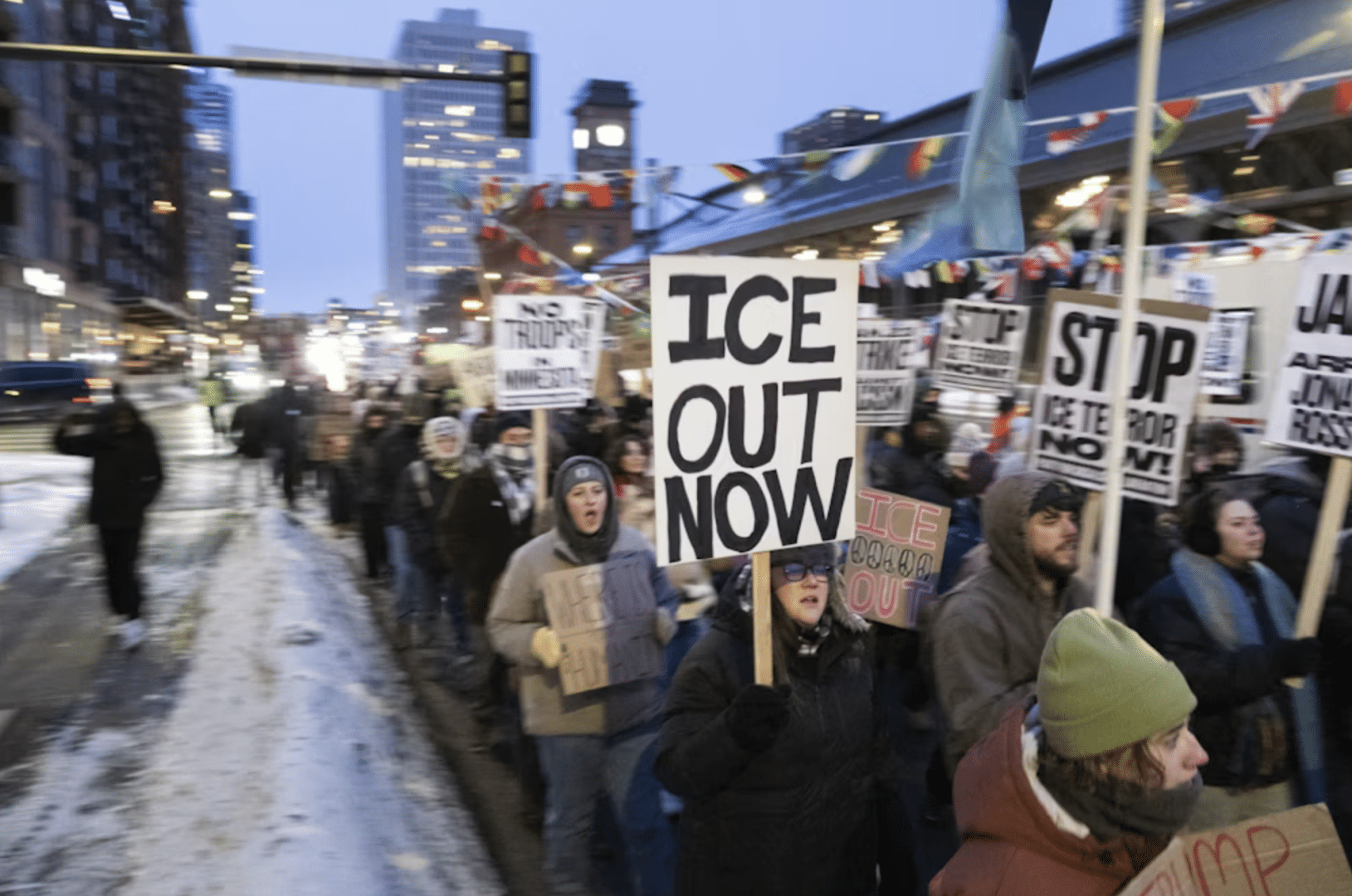 In Minneapolis and many other cities across the U.S., Americans have been out braving freezing temperatures to protest to demand that ICE leave their neighbourhoods.
For its part, Hootsuite and its CEO Irina Novoselsky are unconcerned, insisting that they have “done nothing wrong.” The company and its founders and board members like Ryan Holmes, should be told by both Ottawa and its customers to put their interest in human life and decency before their interest in profits.
Third, the potential deal between ICE and British Columbia businessman Jim Pattison to sell a warehouse he owns in Virginia for “immigration processing” should be scuppered. Put simply: no Canadian should be selling ICE the properties or means with which to carry out its attacks on migrants. The government should make that clear, and that no tax benefits or subsidies will be provided to any company working with ICE.
ICE’s targets deserve to be treated with dignity. They are doctors, teachers, and nurses. They are workers, labourers, carers and educators. Some may be undocumented, but they are also neighbours, fathers, mothers, sons and daughters. They contribute to their communities and their economies. Which brings me to my last suggestion on what Canada should do: welcome law-abiding people in the United States – 73.6 per cent of those targeted by ICE don’t have criminal records – by offering them resettlement in Canada through a new immigration pathway.
Whether ICE will be defunded or abolished is ultimately up to Americans, but what we do in Canada matters. Canadians can demand that our members of parliament and Canadian business leaders take action today. Canada and its companies cannot afford to be complicit in ICE’s crimes. By breaking any ties with ICE, we have an opportunity to offer a lasting reminder to our neighbours to the South and ourselves what decency, solidarity, and compassion look like.
Mark Kersten is an assistant professor in criminal justice at the University of the Fraser Valley and a senior consultant at the Wayamo Foundation.