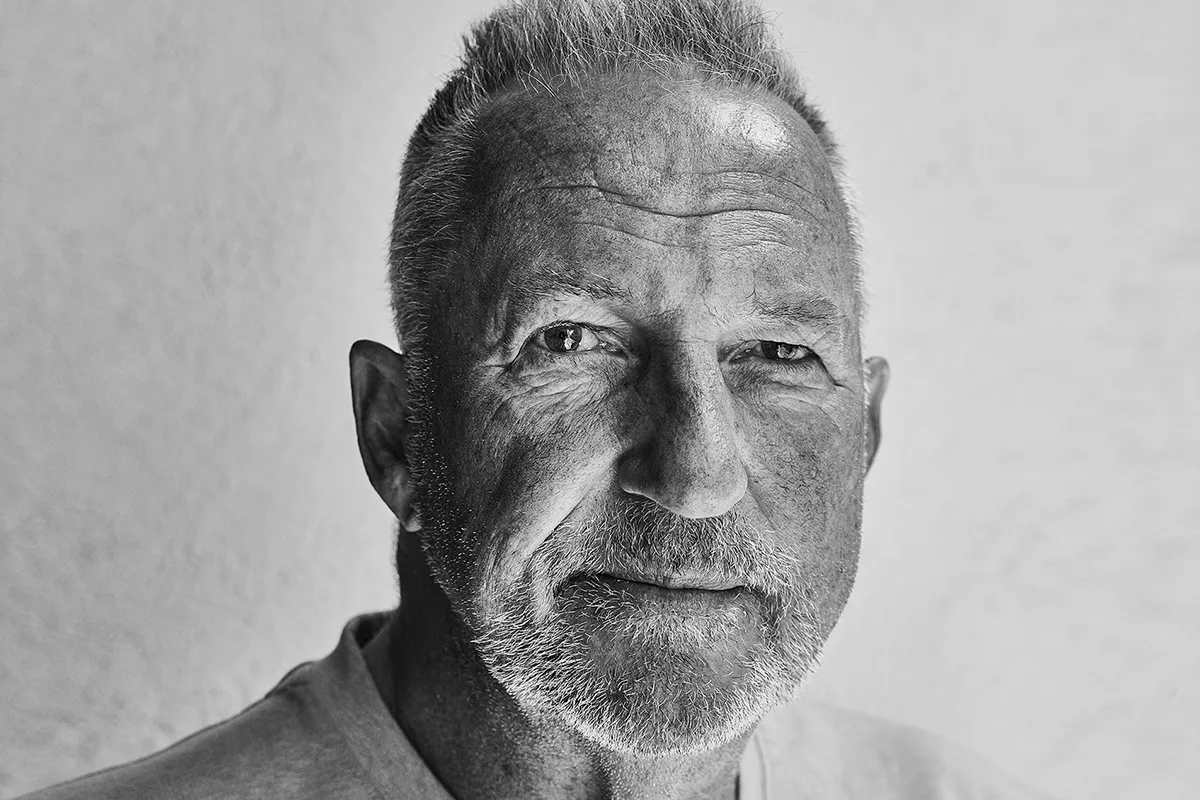
Cyclist: This September you’re hosting the inaugural Beefy’s Charity Foundation cycle ride with Bradley Wiggins. How did that come about, and will you be riding it too?
Ian Botham: I did my first charity fundraiser in 1985 to raise money for leukaemia research. It was a walk from John o’ Groats to Land’s End, nearly 900 miles [1,450km]. Now cricket, that was easy by comparison to actual walking – there’s no such thing as a flat road, you’re balancing all the time, and I was walking 28 miles [45km] a day, 33 days non-stop.
We raised over a million pounds and that helped build a research centre outside Glasgow. When that opened there was a 20% chance of survival for kids with the most common form of leukaemia, but we were able to announce just a couple of years ago that that’s gone up to 95%, which is down to the research and all the money that goes in from fundraising.
I did more walks and that led to starting Beefy’s Charity Foundation. This year we’ve got a ride planned from Lourdes in France to Lord’s Cricket Ground in London. Bradley Wiggins will be there, and I’ll ride too, but probably on a e-bike. I’m carrying a lot of injuries from my cricket career.
Related questions you can explore with Ask Cyclist, our AI search engine. If you would like to ask your own question you just need to , or subscribe.
Speaking of that career, we all know the life of a modern cyclist is almost monastic, but what was life like for a cricket player in the 1980s?
Well, first we didn’t really train, because we played every day, right? We would start a game on Saturday, so you could be at Taunton, then on Sunday we could be playing Scarborough in a Sunday League game. So you drive overnight for a 40-over game, then you drive back and finish the first-class game Monday, Tuesday. Then on Wednesday as the season got going we had all these series, the NatWest, the Benson & Hedges, which played on the Wednesday, then you might be getting a call-up to England. So you didn’t need to train. You needed rehab, and that was the only time we did any sort of work in a gym. You wouldn’t go in there of your own choice.
How did you handle the attention from fans and the media? You were known for being a bit of a character.
We had this motto: you work hard, you play hard. At the end of the day cricket is our theatre, so you go out there and if you’re having a good time the people who’ve come to watch are enjoying it as well. That’s the important thing to me, I think. You’re the entertainer, even if it means ducking West Indian bowlers in the 1980s bowling at 100mph, the ball whistling past your nose. It’s all part and parcel of entertainment.

Who were your mentors? In the pro peloton there is the patron helping guide the younger riders by example. Did anyone do that for you?
I learned more about international cricket at the end of the day’s play. So say we’ve been playing Australia, you’ve been out in the field all day, you come in, you get your wet gear off, then the Aussies would walk in with a slab of beer. We’d all sit down, have a couple of beers and discuss the game. For my first 15, 20 tests, I did mostly listening like this, listening to what the greats, the Dennis Lillees [Australian fast bowler] and the Greg Chappells [Australian batsman] of this world had to say. You actually just sit back, absorb what you can. And then by about the 25th test match I was starting to sort of go up a peg as a player.
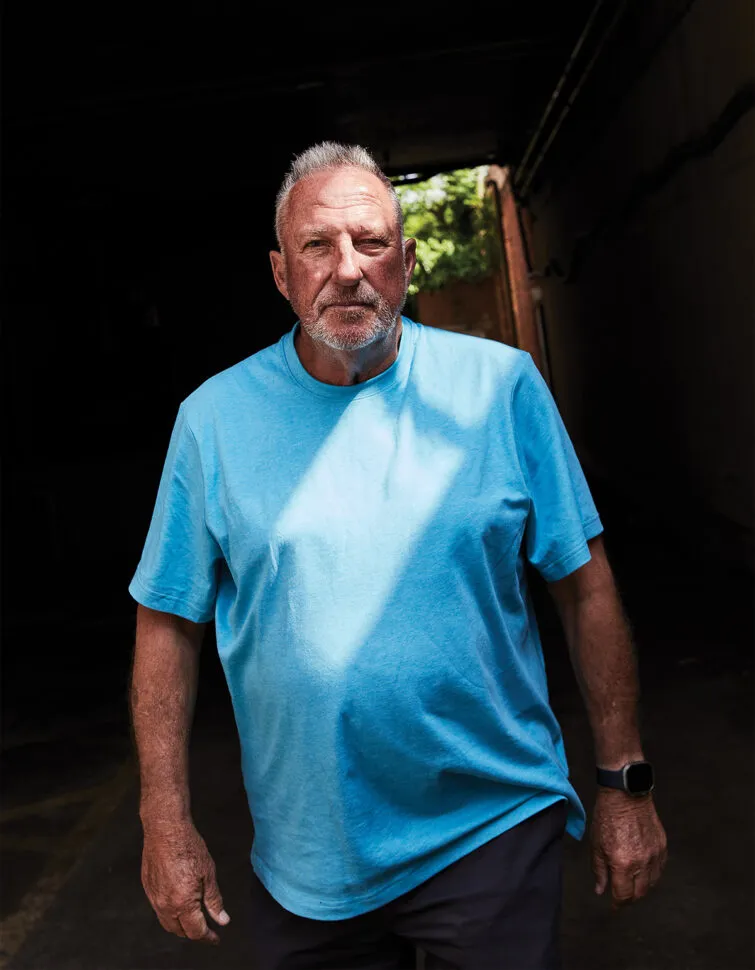 Beefy’s Charity Foundation Lourdes to Lord’s Cycle Ride with Bradley Wiggins takes place over 15th and 16th September. See beefysfoundation.org to find out how you can sign up to ride and raise money for a range of causes.Juan Trujillo Andrades / Cyclist
Arguably your most famous moment came in the 1981 Ashes. England had gone 1-0 down over two tests, yet you almost single-handedly helped turn that around to a 3-1 win. What are your memories of that time?
1981 was a tough time for the UK. We had the race riots, cities were on fire, miners’ strikes, but the way we won that series lifted the whole country.
We were collectively a very good team – people forget Bob Willis performed brilliantly at Headingley; he took eight for 43 as well as me scoring 149 not out. Then the next test I took five wickets for one run, and then I scored another 100 in the last test.
People said after the second test I was lucky, and some people wanted me out of the side [Botham had started off as captain but gave up his armband after the disastrous start]. But I always like to make people eat their own words, and a couple of times in that series I enjoyed that very much. But it wasn’t just me, we were a great team.
How did you deal with the pressure you were under?
Pressure makes kettles whistle. If you want to be at the top of the sport and competing with the best, you’ve got to be in the kitchen in the hottest part. I knew guys I played with had problems with pressure, but I’ve had a saying all the way through my career: I always said I’d ride the torpedo to the end of the tube. What I mean by that is you have to keep going forward. Yes, you can learn from what you leave behind, but you’ve got to keep going forward. That’s simply the way I did it, you know – a bad day was a bad day. So be it, you can’t do it every day. So I never had any problems dealing with pressure.
How did it affect your life off the pitch? We hear of sportspeople who almost end up having to be recluses to avoid attention.
Well, you learn very quickly what you can and can’t do, like where you can have a beer. In the village where we lived at that time, in Epworth in Lincolnshire, I could have a pint, but if I went somewhere else I wouldn’t feel happy in there because there’s always someone that wants to be bigger, tougher and stronger than you, yeah? And I really don’t want all that, so you have to be a little bit careful. Also, children. You know, my children were younger in those days and the school playground is a terrible place, especially if things aren’t going right and your dad’s getting slated in the press.
And did you get much abuse yourself on the pitch? The Australians are fond of sledging [intimidation in cricket terms] after all…
No, not really, because you don’t poke the bear, right? If you started winding me up then I got more and more determined. I didn’t really do it myself, maybe on two or three occasions in a long career. That’s true, ask my teammates. I didn’t really say anything, and no one really said it to me. One Australian did, but anyway, he got sorted out. So that was all right.