
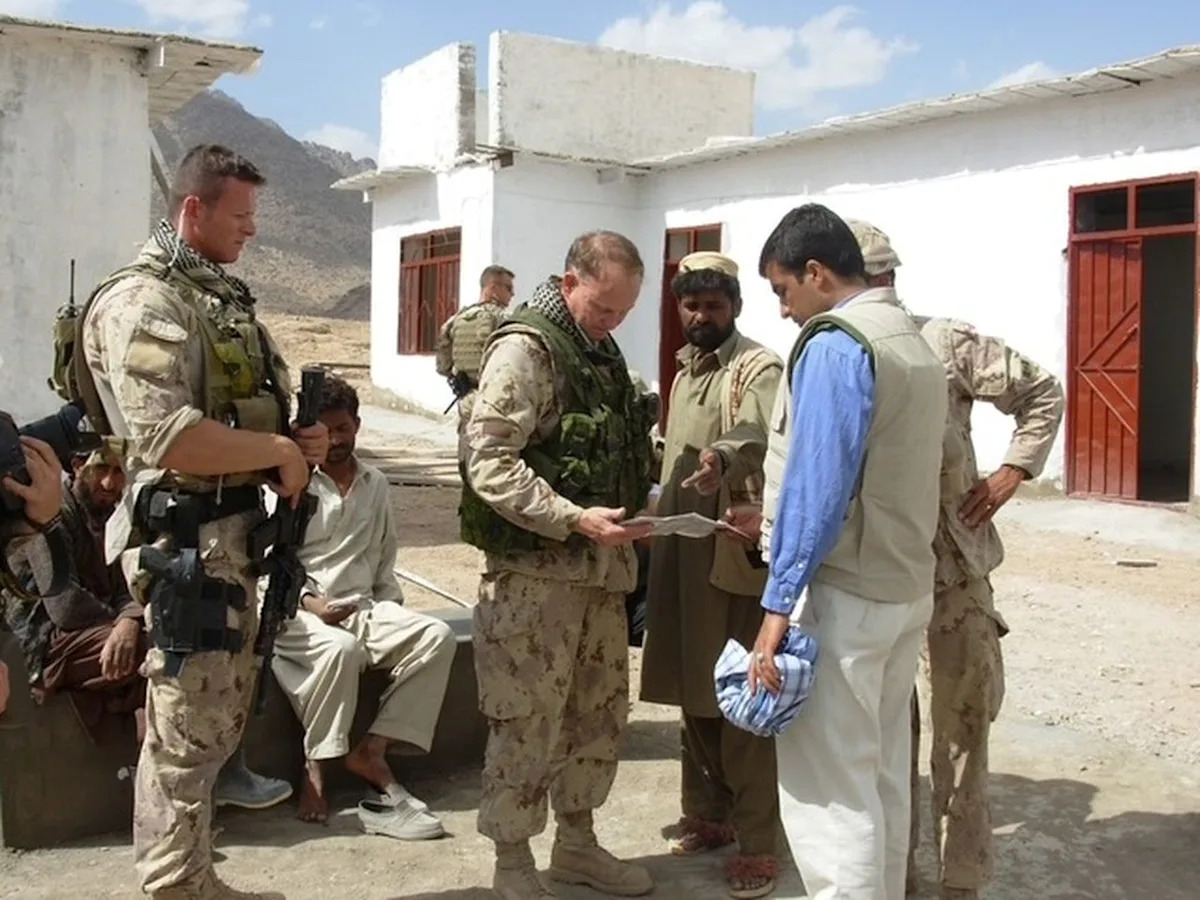
Under a new international spotlight in America’s second Trump era, Canada’s renewed upgrades to defence spending and heightened visibility on the geopolitical scene are coming at a time when Canada needs to assert its sovereignty, according to retired Maj.-Gen. (Ret.) David Fraser.
“We have to take this more seriously than we ever have before,” the Edmonton native said in a Jan. 29 interview with Postmedia.
Canada’s brigadier-general the first time Canada commanded U.S. troops since the Second World War — in Operation Medusa in Afghanistan — retired as a two-star general in 2011. He sees heightened peril in today’s shifting geopolitical sands.
“It is, in fact, a much more dangerous world, and one that Canada is going to do an awful lot more by itself in order to maintain what we’ve taken for granted for decades,” Fraser said.
A rougher world
Coalitions are increasingly complicated by a newly more isolationist neighbour to the south, he said.
“(President Donald) Trump wants and expects us, along with all the other NATO partners, to do an awful lot more,” he said.
“The relationship we have with the Americans in the past is no longer there. The world has changed. It’s become, quite frankly, a lot rougher. There is a lot less co-ordination and collaboration with allies like the United States, and they are becoming more isolationist, and as a result of their decisions to become more isolationist, it means that we have to do more (with NATO and NORAD) in as a result of that.”
Silver lining? Demonstrating to the world that we’re prepared to do what’s necessary to keep our civil liberties the way they are — not “business as usual,” Fraser said.
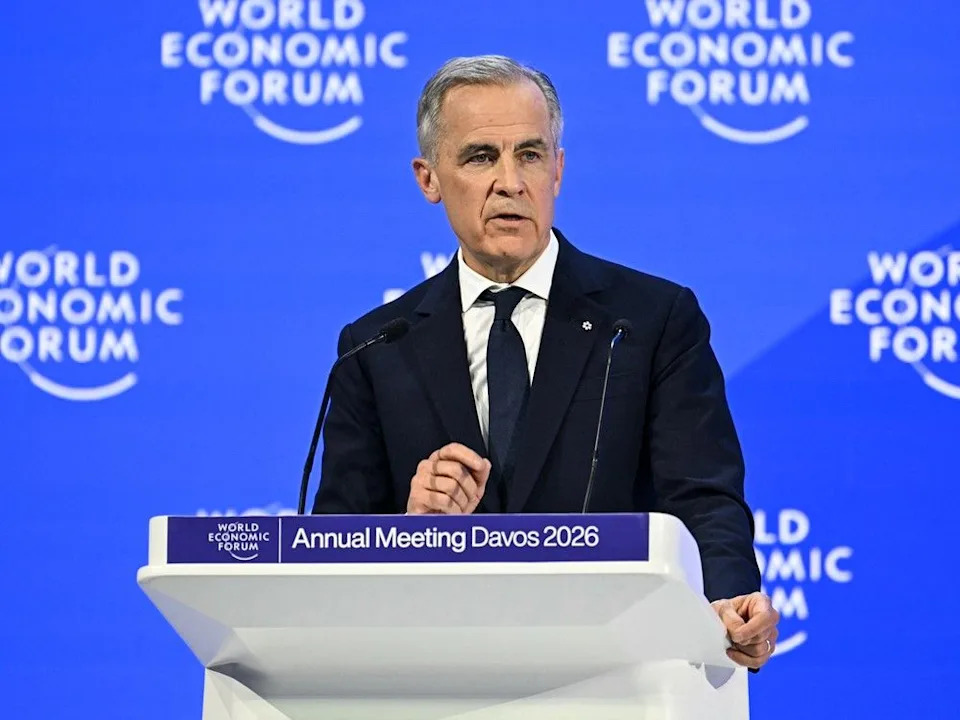
Canada’s Prime Minister Mark Carney delivers a speech during the World Economic Forum (WEF) annual meeting in Davos on January 20, 2026.
Carney’s ‘courageous’ Davos speech
Mark Carney’s step up to the world podium at the World Economic Forum in Davos, Switzerland last week earned the PM a rare standing ovation, “a very courageous speech that kind of just said what everybody was thinking,” Fraser said.
“We’re all — each and every one of us — going to have to pick up our socks and do more working together,” he said.
Supply-chain shifts amid new American isolationism means solidifying new trading partners, and Fraser cites trade deals Carney has cemented, with the U.K. prime minister following suit and other nations acting accordingly, “re-establishing old linkages and diversifying our trade so that we can all carry on living peacefully amongst each other.”
Defence spending infusion
Carney’s $80-billion infusion to defence spending announced in recent weeks isn’t just buying F35s and ships, but support and maintenance for decades to come, David Fraser said.
“That’s going to help stimulate our economy, improve our innovation, keep us technologically relevant with all the changes in technology. And this should spur other investments and other capabilities inside of the defence industry and the Canadian economy as a whole, which should actually mitigate some of the stuff that’s going on vis-a-vis tariffs,” he said.
The outlay may also mean clout in conversations over CUSMA, the Trump-negotiated North American trade agreement that America’s commander-in-chief has shown lukewarm enthusiasm for in the first year of his second term.
“We’re probably going to get less attention than some countries, like Greenland and Denmark, have received by this president,” Fraser said.
“I think the world is trying to deal with Donald Trump. What Canada is doing as a middle nation, we can demonstrate how as a middle nation we can work and live beside a great power like the United States of America.”
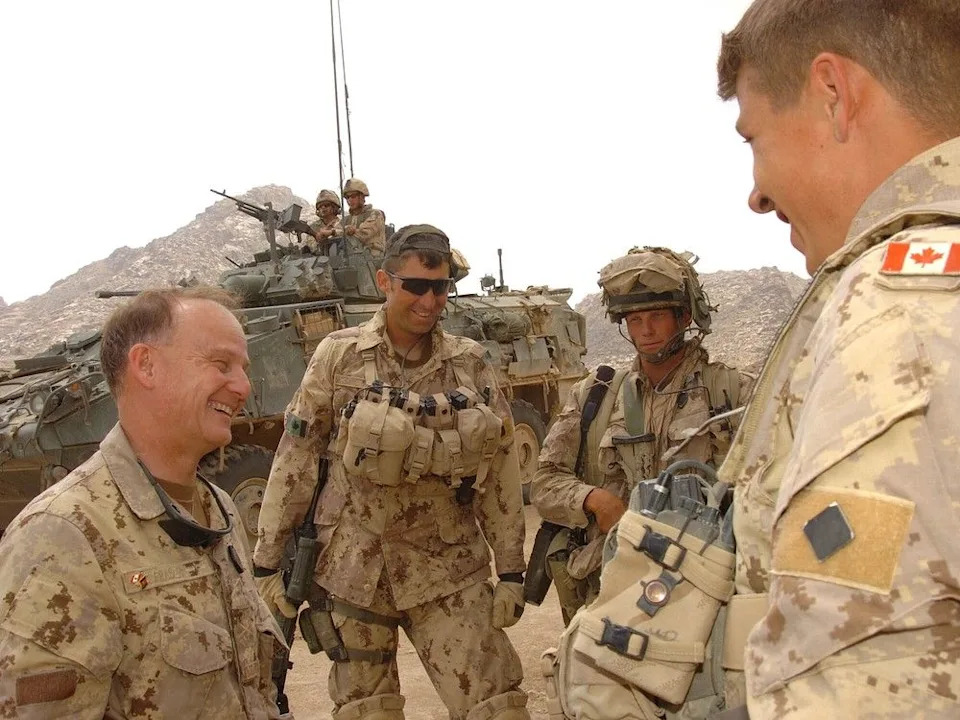
APRIL 24, 2006 — Brigadier General David Fraser Regional Command South Commander visits the troops stationed in Gumbad during his visit to the region a Shura (meeting) with village elders will be held in the local village.
He sees Canada’s stepping up inside NATO and Carney’s place in the World Economic Forum as reasons the world is listening to Canada “in ways that we haven’t been listened to for years,” he said, citing the nation’s long history of punching above weight — in the first and second world wars, in Korea, in the Cold War, the Balkans, and Afghanistan — where Fraser’s own efforts earned a chestful of medals, Canadian and American.
“This is our time in the in the sun, to actually demonstrate leadership amongst those nations very much akin to us, who can work with superpowers like the United States, especially against the threats of what Russia and China present to all of us,” he said.
‘The world has become a lot more complicated’
If Canada’s looking more hawkish, Fraser doesn’t stray into Doomsday thinking.
“I don’t see Armageddon coming or anything like that,” he told Postmedia.
“I do see Russia is a real military threat that we haven’t seen for decades, as illustrated by what they did in Crimea and Ukraine. The threat is accentuated because of their technological innovation of using AI and drones and cyber. And add on top of that, China’s an economic threat and a growing military threat, and so we are looking at hemispherical threats to Canada and to the world that have to be addressed.”
To his credit, U.S. President Donald Trump has addressed that to some extent, Fraser said.
“He’s awakened the world to that fact. Hence NATO is spending five per cent GDP, as opposed to two. And these are good things against nations that don’t have the same philosophy that we do,” he said, adding that the clash is not strictly black-and-white.
“It is techno-colour gray — we still have to work with certain nations like China economically, to make sure that they don’t they get out of check. You can’t ignore them. You’ve got to work with them to try to mitigate the threats they have, and others,” Fraser said.
“The world has become a lot more complicated, a lot more dangerous than it has in the last 40 or 50 years, but I think we’ve got a prime minister and we’ve got a nation that’s doing its part in all this world.”
Related
Bookmark our website and support our journalism: Don’t miss the news you need to know — add EdmontonJournal.com and EdmontonSun.com to your bookmarks and sign up for our newsletters here.
You can also support our journalism by becoming a digital subscriber. Subscribers gain unlimited access to The Edmonton Journal, Edmonton Sun, National Post and 13 other Canadian news sites. Support us by subscribing today: The Edmonton Journal | The Edmonton Sun.