

Listen to this article
Estimated 5 minutes
The audio version of this article is generated by AI-based technology. Mispronunciations can occur. We are working with our partners to continually review and improve the results.
Catherine O’Hara, one of Canada’s most beloved actors and comedians, died last week at the age of 71.
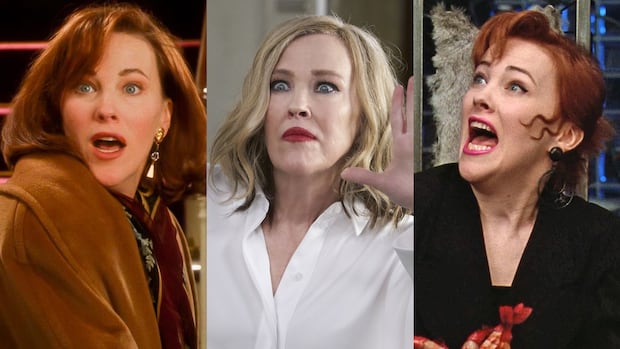
Many audiences will know her for her work as the eccentric Moira Rose from CBC’s Schitt’s Creek, the mom in Home Alone, or from her comedy on Second City Television. But decades into her career, she was still stealing scenes in Emmy-winning shows like The Last of Us and The Studio.
Today on Commotion, writer Paul Myers, producer Andrew Barnsley, and comedian and actor Jennifer Whalen join host Elamin Abdelmahmoud to remember what made Catherine O’Hara one of the greats.
We’ve included some highlights below, edited for length and clarity. For the full discussion, listen and follow Commotion with Elamin Abdelmahmoud on your favourite podcast player.
WATCH | Today’s episode on YouTube:
Elamin: Paul, it’s not easy to make the leap from sketch comedy to a sustainable career in film and television. But Catherine O’Hara not only did it, she sort of became the blueprint for a lot of people. What’s the thing that, you think, [gave her] the longevity she had in her career?
Paul: I guess the first thing, I think, is that she was selective. You know that expression, “We work to live. We don’t live to work”? Her thing was she wanted to do good work. She wanted to do work that was meaningful to her…. I remember reading a 1983 interview where she had left Second City Television and she was saying … if they’re only offering me little housewife roles or “Honey, I’m home,” roles where the Bechdel test is low for these characters, she says, no, I’m not going to do that. But then she gets roles like Heartburn and Beetlejuice….
Home Alone was a chance to play a different kind of mom, and it was a mom with guts, determination and ingenuity. It had what we call agency, you know? And she brought that energy to it again — that manic, just-on-the-edge energy. And then she gets to play with [John] Candy again…. That, for her, must have been a huge draw. And I think [John] Hughes wrote the perfect script for her.
Elamin: I’ve seen obits kind of flying around, and one of the quotes from her is she talked about having this recurring dream where she’s hanging out with John Candy, and there’s a moment where she says, aren’t you dead? And he says aw, why did you bring that up for? There’s something really lovely about [that]….
Jennifer, it really feels like Catherine O’Hara found another gear in the last 10 years of her life. At a moment when a lot of people might have been winding down their careers, she did The Studio, for which she was nominated for a bunch of awards. She did The Last of Us, and she did Schitt’s Creek…. Just that alone, that stretch alone, can cement you as one of the best actors of your generation, let alone everything that she did before that. When you think about the longevity of her career and the later stages of Catherine O’Hara, what do you think she brought to the table as an older actor who was still dominating the scene?
Jennifer: I mean, she brought the decades and decades of control, mastery of her art, life experience. I think that’s partly why I feel ripped off…. She was doing this amazing work at 71. I wanted to see what she was doing at 81, you know? Hopefully at 91, because it was so fantastic. Her vocal control … was unreal. Just the things she could do with a word, with the start of a word and the end of a word and make them two different emotional thoughts, is really hard to do, and she made it look so simple.
WATCH | Catherine O’Hara’s best moments as Moira on Schitt’s Creek:
She always played these high-status rogues, in a way. She played women who had agency, as you said, Paul, but were kind of playing by their own rules…. I mean, Moira’s a bit unhinged. The rules were not always great, but they were really fun, and it was fun to see it. And I have to say, oh my God, I love her to the end of time for also having a natural face. She’s a woman who looked her age, and we don’t see that anymore. To have that humanity come through just made me love her even more.
You can listen to the full discussion from today’s show on CBC Listen or on our podcast, Commotion with Elamin Abdelmahmoud, available wherever you get your podcasts.
Panel produced by Nikky Manfredi and Stuart Berman.