


Listen to this article
Estimated 6 minutes
The audio version of this article is generated by AI-based technology. Mispronunciations can occur. We are working with our partners to continually review and improve the results.
After seven years working to provide in-home palliative care for patients in Ontario’s Grey-Bruce region, Dr. Alexandra Hodgson made a decision in 2024 that it was time for a change.
It certainly wasn’t that Hodgson, 37, had lost any of her passion to practice in a demanding area of medicine, one that comforts in their final days.
“I couldn’t leave a patient’s home anymore with the stress and anxiety of not knowing what was going to happen to that person until I came back in a week,” she said.
Hodgson made the career change due to problems with in-home nursing care provided by the Victorian Order of Nurses (VON) which she said often leaves vulnerable patients in dangerous situations.
“It just became really clear to me that the changes were not coming, and I was not going to be able to provide safe care to people in their homes in this region,” said Hodgson, who now primarily does palliative care work in hospice and hospitals in the Owen Sound, Ont., area.
WATCH | Home care supply problems: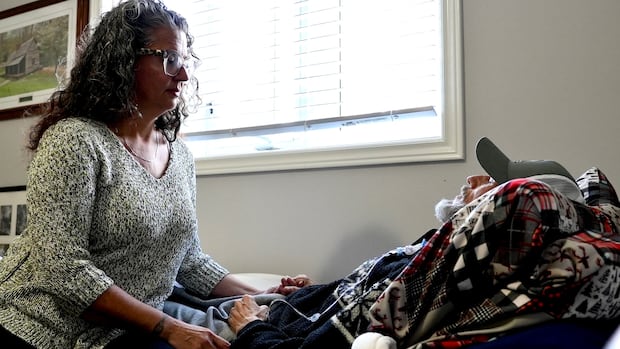
How a shortage of medical supplies in Ontario is impacting home care
Ontario doctors say the province is struggling with delays and shortages of supplies needed for home and palliative care. CBC’s Lorenda Reddekopp has the details.
The concern that triggered Hodgson’s career change is echoed by Dr. Susan Batten, another palliative care doctor in the region who specializes in home care. She says unless VON is suspended from caring for complex palliative patients, she too will step away from doing home care visits.
“I will no longer be able to support palliative patients in their home if they are supported with VON nursing care,” Batten wrote in a letter to Ontario Health AtHome, which manages home care.
“I can no longer place my patients or myself at risk of such negligence,” she said.
VON isn’t the only operator with a home-care nursing contract in the region. However both Hodgson and Batten said VON nurses have consistently failed to deliver what they consider to be a standard level of care for years.
Poor communication, patient tracking Two doctors say there needs to be better oversight over contracts to provide in-home nursing care for palliative patients. (Shaun Best/Reuters)
Batten explained that when the in-home care system is working well, nurses and doctors work together as a team with regular back-and-forth communication. Nurses visit homes more frequently and provide basic patient care and monitoring, but they also have 24-hour access to doctors should a patient’s condition or care needs change.
It’s that essential communication from nurses to doctors that both Hodgson and Batten said is often missing in homes where VON nurses work.
Batten said the difference in patient care provided by VON and CarePartners — another company contracted to provide nursing care for the area — is stark.
“What I know is that CarePartners does this well and VON does not,” said Batten. “VON has not been meeting the standard of palliative care since I started back in 2013.”
The long-standing problems with VON that both doctors described to CBC News include:
Missing or incomplete patient assessments and symptom tracking: Basic patient information such as blood pressure tracking, symptom changes and pain medication levels are often not recorded, tracked or conveyed to doctors when they call for updates. It leaves doctors spending their time tracking information rather than providing patient care.Improper medication management: End-of-life patients in home care often rely on automatic pumps to deliver a consistent dose of pain medication intravenously. Both doctors said they’ve had patients suffer unnecessarily when VON nurses failed to re-fill pumps, order medication re-supplies or notify them about patient discomfort. In one case Batten cited, a patient was in pain for days when the pump’s tubing had been disconnected. Spotty, non-existent or inaccessible patient charting: Batten said something as straightforward as blood-pressure readings are often not taken. Or if they are, the charts aren’t always available. The lack of universal patient charting continues to be an ongoing issue across Canada’s health-care system, but Batten said a failure to provide even basic recording of symptoms by VON nurses is a persistent problem.
Both doctors said VON appears to lack an effective system of quality control similar to what is present in hospital and hospice settings.
VON nursing issues statement
CBC News reached out to Ontario’s Health Ministry, Ontario Health AtHome and VON requesting interviews.
Only VON responded stating the organization “takes concerns of this nature very seriously and is committed to ensuring we work closely with physicians, other providers and Ontario Health atHome to deliver integrated care and services for all our clients.”
VON said they’ve been”working on improving communication with all providers within the clients’ circle of care to help enhance real-time continuity of care, proactive access to client information and clinical updates.”
Both Hodgson and Batten told CBC News they understand VON nurses are working in less than optimal conditions, as they are paid less than hospital nurses. They also have to drive long distances, often in winter conditions, to serve an area that is vast and largely rural.
Hodgson is calling on the province to provide, above all, transparency about how quality control is monitored for organizations contracted to provide in-home nursing care for dying patients.
“We have these two organizations that work in the same area with the same set of challenges in terms of geography, and so why have we gotten to a point where one organization is so much better than the other?” she said.
NDP says contracts are the culprit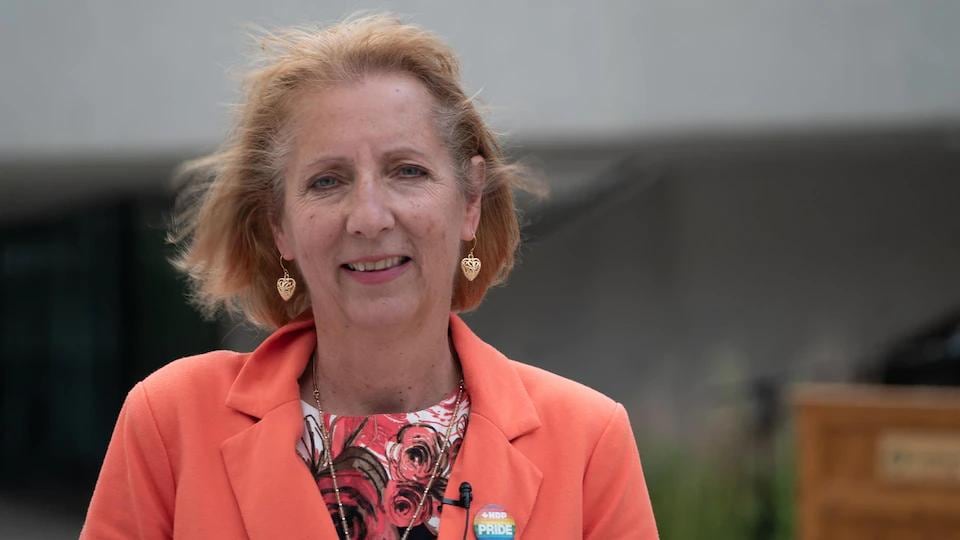 NDP Health Critic France Gélinas said competitive bidding for nursing contracts is driving down the quality of home care, which she said is a ‘broken’ system. (Aya Dufour/CBC News)
NDP health critic France Gélinas said her office receives “nonstop complaints” about what she says is a “broken” home-care system.
Gélinas said the main problem is that the province uses a competitive but closed system to issue long-term contracts for care providers.
“The companies try to out-bid each other on price and that’s not how quality health care is provided,” said Gélinas.
She said the contracts are shrouded in secrecy, and often have durations of 10 years or more with few checks to ensure quality of care.
Gélinas said home care nurses are among the worst paid in the province, which often leads to high turnover and a lower quality of care.