
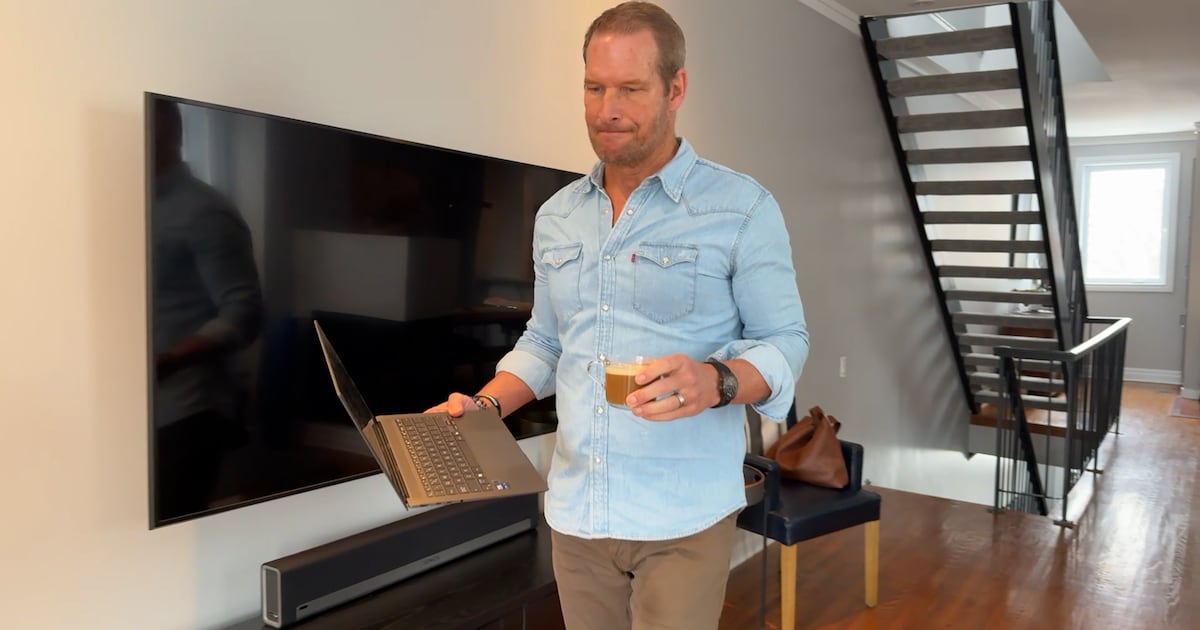
An Ottawa man diagnosed with a rare form of cancer is sharing his story about the backpack that saved his life. CTV’s Leah Larocque reports
By all accounts, life was good for Ted Wagstaff.
The 61-year-old business investor and advisor had a loving wife, and together they were raising three children. But last spring, while on a business trip, Wagstaff started to feel unwell, waking up with severe stomach cramps.
After a series of tests and visits to the hospital, Wagstaff says, “that’s the first time I swallowed deeply and went, ‘I don’t think this is good news.’” He says he was brought to a doctor’s office, and she pulled her chair over to him and said, “The CT scan showed classic signs of lymphoma.”
A long journey lay ahead.
The hardest conversation
While the diagnosis itself was overwhelming, the most difficult moment came later, telling his children.
“I told them I had another obstacle ahead of me, and that I was going to need their help,” he said.
Then he said the words no parent wants to say: “I have cancer.”
As doctors continued testing, the diagnosis became even more serious. He learned he had a rare, aggressive subtype known as double-hit lymphoma, a form of blood cancer that is both fast-growing and difficult to treat.
“I knew it was rare. I knew it was aggressive. I knew it was deadly,” he said.
Treatment began quickly at The Ottawa Hospital. But this wasn’t standard treatment.
His form of cancer would not respond to the typical chemotherapy treatment.
His physician, Dr. Kevin Imrie, recommended an R-EPOCH regime. As an outpatient, Wagstaff received a portable pump.
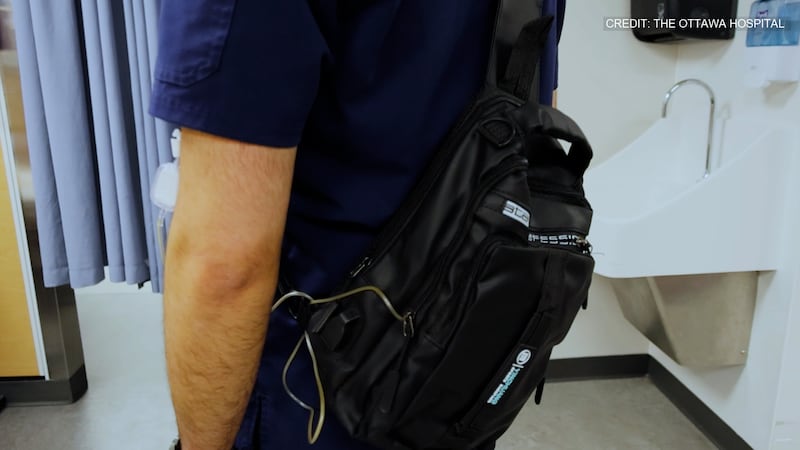 Ted Wagstaff backpack The R-EPOCH cancer treatment involves a portable pump, held in a backpack, that delivers a constant course of chemotheraphy drugs. (The Ottawa Hospital/supplied)
Doctors inserted a thin pink catheter into his bicep, threading it across his chest and into his heart.
Instead of short infusions, he was given a backpack—literally filled with chemotherapy drugs—and a pump that delivered medication continuously, 24 hours a day.
From Monday to Friday, the backpack went everywhere with him.
“I slept with it. I showered with it. I went for walks with it,” Wagstaff says. “My chemo backpack went everywhere.”
Each day, he returned to the hospital to have the bag replaced. Over the course of his treatment, he received 487 hours of chemotherapy.
Wagstaff’s mindset never wavered.
“My attitude was, ‘bring it on,’” he says. “We need to get rid of this—whatever it takes.”
The treatment regimen, known as dose-adjusted EPOCH, is a highly personalized approach designed to keep chemotherapy constantly circulating in the bloodstream. For aggressive cancers like double-hit lymphoma—often resistant to standard chemotherapy—timing is critical.
“By having chemotherapy continuously over the week, we can catch cancer cells whenever they’re dividing,” explained Dr. Imrie.
“Ottawa has become a leader in delivering these complex treatments on an outpatient basis—care that, in many other centres, would require long hospital stays,” he said.
For Imrie, personalized care makes all the difference.
“The key message, his doctors say, is that cancer isn’t one disease—and patients aren’t all the same. We’re moving away from a one-size-fits-all recipe. Instead, we’re designing treatments around each patient’s unique biology and specific cancer,” he said.
“There’s not a doubt in my mind that this specific treatment changed my prognosis,” said Wagstaff. “It changed the outcome of my cancer journey.”
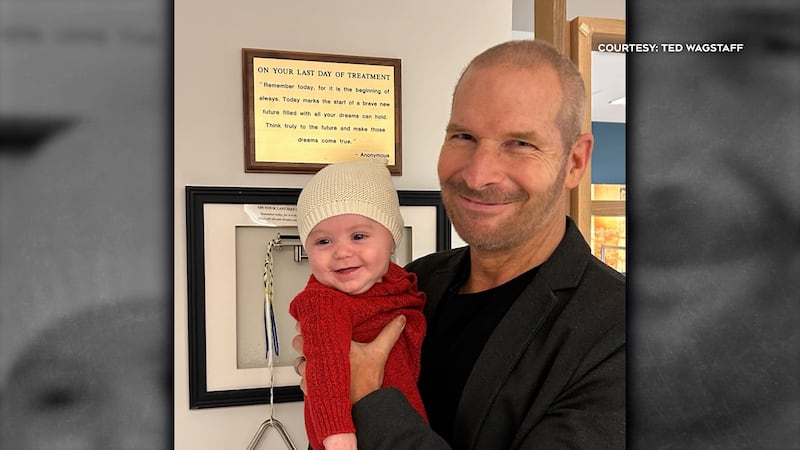 Ted Wagstaff Ted Wagstaff, 61, a father of three, was diagnosed with a rare and aggressive form of cancer. (Ted Wagstaff/supplied)
Months later, after enduring the grueling cycles of treatment, Wagstaff received the news he had been hoping for in an email that read, “You should consider yourself to be in complete remission.”
The words landed with incredible weight. Complete remission.
“Pretty powerful,” he says.
Today, his gratitude runs deep—for the doctors, nurses, and researchers who guided him through the darkest chapter of his life.
“I’ll never find the words to say thank you,” he says. “I have immense gratitude for the Ottawa Hospital and what they did for me.”
World Cancer Day
His story resonates with the larger global community marking World Cancer Day on Feb. 4, an international effort to raise awareness about cancer and the importance of prevention, treatment, and research.
According to the World Health Organization, every year, millions of people around the world are affected by cancer—an estimated 20 million new cases were diagnosed worldwide in 2022, and nearly 10 million people died from the disease that same year. An estimated 53.5 million people globally were alive within five years of a cancer diagnosis, underscoring both the increasing burden of the disease and the impact of improved care and survival.
According to Statistics Canada, more than 1.5 million people in Canada are currently living with or beyond cancer, a number that continues to grow due to improved detection, treatment, and longer survival.