

Listen to this article
Estimated 5 minutes
The audio version of this article is generated by AI-based technology. Mispronunciations can occur. We are working with our partners to continually review and improve the results.
A former B.C. lawyer who killed his client has been found guilty of first-degree murder in Kamloops, B.C.
Justice Kathleen Ker delivered her verdict after a lengthy recap of the trial in which she referred to the accused as a “fraudster” and laid out the circumstances that proved the killing was both deliberate and planned.
She said the evidence pointed to Rogelio (Butch) Bagabuyo having conspired with his client, Mohd Abdullah, to shield Abdullah’s money from his estranged wife.
When Abdullah started asking for the money back, she said, Bagabuyo knew “the jig” was up and began planning the murder, ultimately stabbing him to death and then smuggling the body out of his office.
The automatic sentence for first-degree murder is life, with no chance of parole for 25 years.
Conspiracy to shield funds
Bagabuyo, who is no longer a practicing lawyer, came to court on Tuesday with a piece of luggage and spent the majority of the trial staring straight ahead, even when addressed directly by the judge. He shook his head when asked if he wanted to address the court.
Bagabuyo was charged with first-degree murder about a year after the death Abdullah, a 60-year-old Thompson Rivers University instructor who was stabbed at Bagabuyo’s office in downtown Kamloops on March 11, 2022.
Bagabuyo admitted to the killing but his lawyer had argued it was unplanned, and therefore Bagabuyo should be convicted of the lesser charge of manslaughter, which has no set prison term.
Justice Ker noted because there were no eyewitnesses to the stabbing the case and verdict is based entirely on other evidence available.
The trial heard that Abdullah hired Bagabuyo in 2016 and they conspired to hide more than $780,000 during Abdullah’s separation from his wife.
By April of 2018, all of that money was gone, with crown lawyer Ann Katrine Saettler telling the judge that Bagabuyo “squandered the money on his own living expenses and would have been unable to return the funds” to Abdullah as planned.
Abdullah’s wife died in September 2019 before they could divorce, but Bagabuyo convinced him “it was necessary to leave the funds in his care for two more years” to protect the money from his wife’s estate or family, Saettler told the judge during the trial.
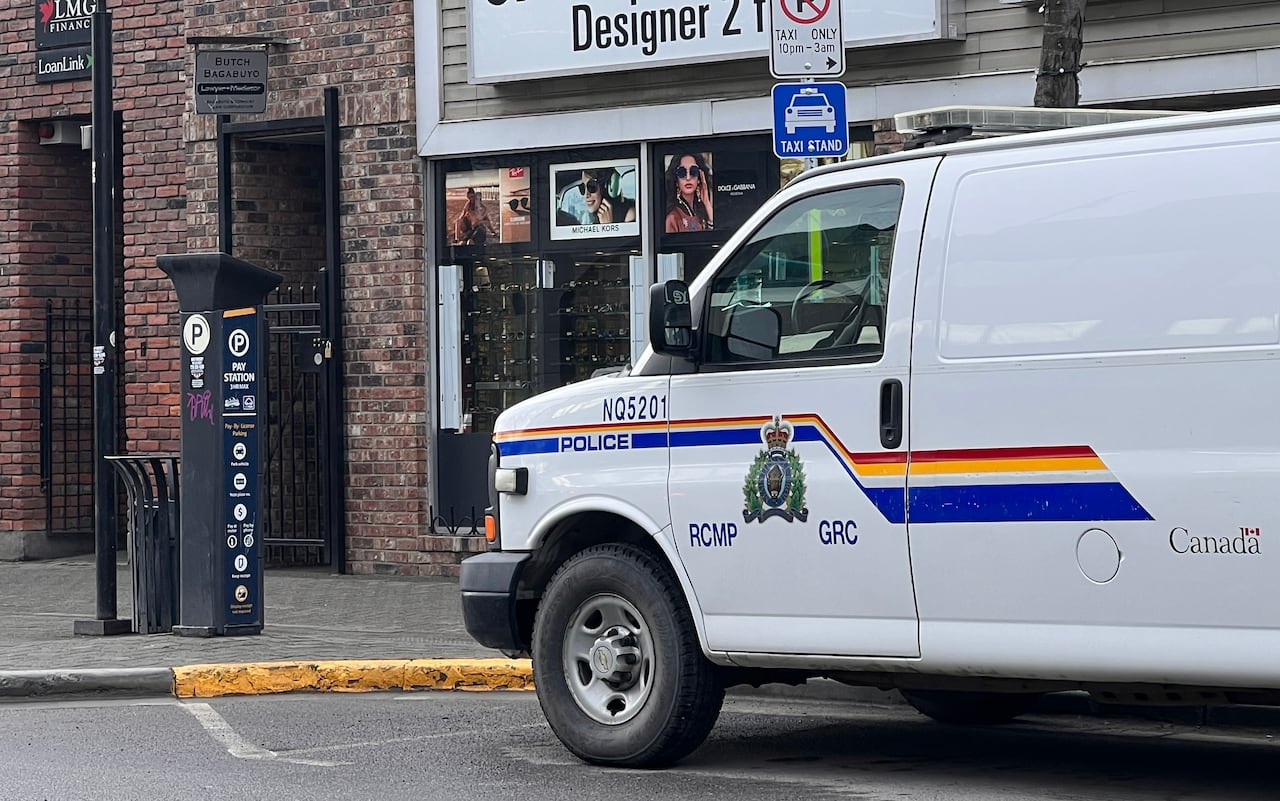 An RCMP van outside the legal practice of Rogelio (Butch) Bagabuyo in Kamloops, B.C., pictured on March 22, 2022. (Doug Herbert/CBC)
Saettler said that the accused methodically planned the murder for more than a week after he realized he would no longer be able to fool Abdullah, who was getting increasingly impatient about getting his money back.
To show premeditation, the Crown showed a video of the accused buying a plastic tote bag from Home Depot that matched the one where Abdullah’s body was later found.
Saettler said that the decision to buy a tote that size to simply store legal papers was unreasonable and supported the Crown’s theory that the murder was planned.
She also noted gaps in Bagabuyo’s security cameras and the purchase of a propane tank and hacksaw which she argued were intended to be used to dispose of the body before being contacted by police.
‘Jig was about to be up’: Judge
Defence lawyer Mark Swartz had said the death was “unexpected” and while his client admitted to killing Abdullah at his office, he maintained it was manslaughter.
But during the sentencing hearing, Ker aid it was clear that both Bagabuyo and Abdullah knew hiding the money was illegal and that by March 1, 2022, Bagabuyo knew “the jig was about to be up.”
Ker said that the only rational conclusion on the whole of the evidence was “Bagabuyo planned to kill Abdullah and undertook a number of preparatory steps in the days preceding the meeting of March 11.”
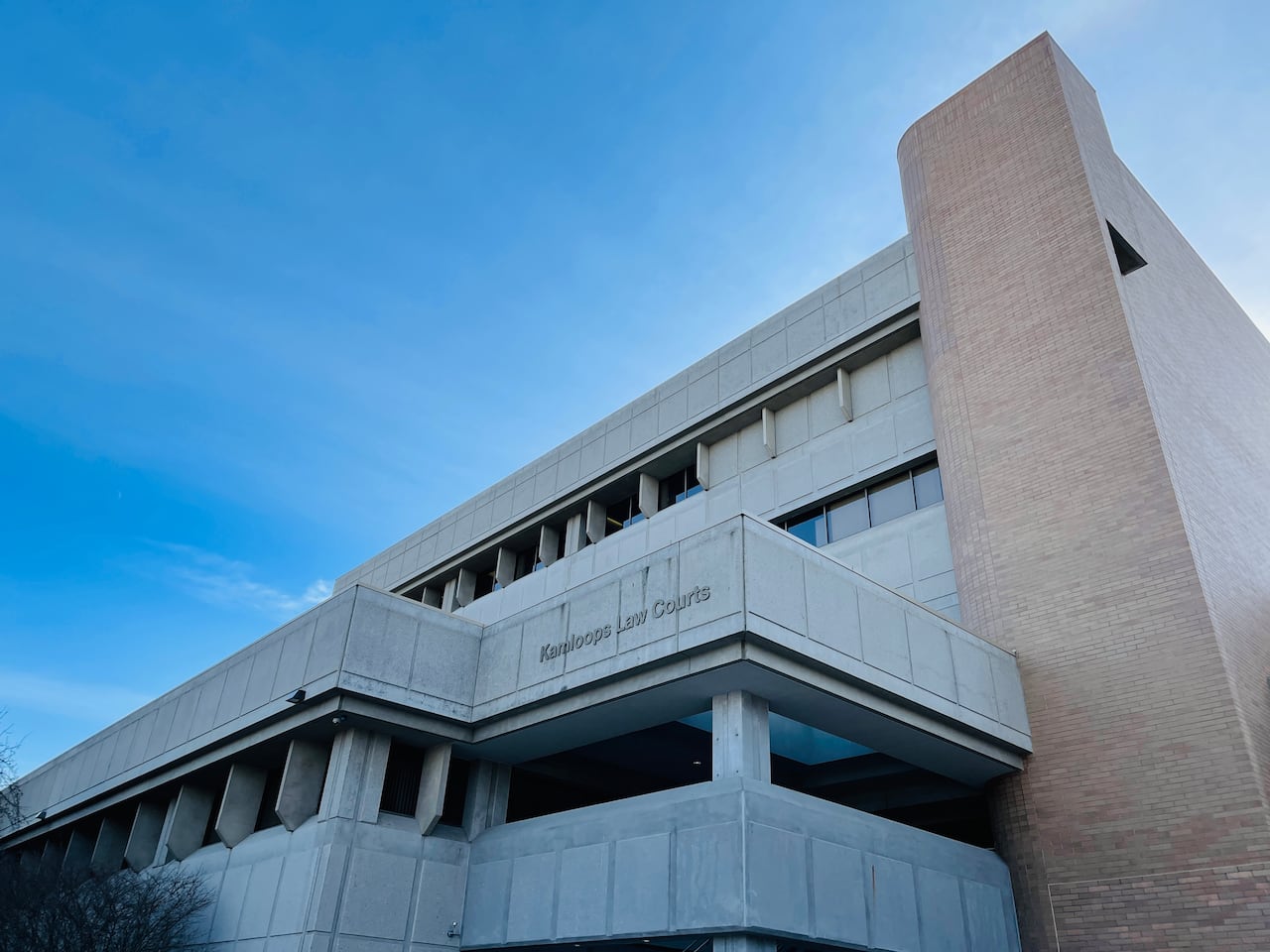 The judge ruled there was no doubt the killing was planned and deliberate. (Marcella Bernardo/CBC)
They included emailing Abdullah on March 1, 2022, to set up the meeting at his office, writing a to-do list on a cue-card reminding him what to do, purchasing plastic wrap and a “decoy tote” in the days leading up to the killing, the judge said.
“These steps were both carefully thought out and considered over a number of days,” Ker said.
“The circumstantial evidence in my findings of fact related to the timeline of events between the email of March 1 and the meeting on March 11 make it fundamentally clear that this was a planned and deliberate murder.”
She noted that security cameras at his home were repeatedly turned off, making her believe he had something to hide.
 Bagabuyo has been out on bail since July 12, 2023. (Peter Scobie/CBC)
Ker also said that Abdullah’s body was found with multiple stab wounds, indicating his death was not a “spontaneous” event and that when his body was found it was wrapped in plastic, and that several rolls of the same plastic were found in Bagabuyo’s office.
Bagabuyo was arrested on March 18, 2022, the day after the body was discovered inside a tote by the grandson of an unsuspecting friend who he had enlisted to rent a van and help find a place to bury the tote.
Ker ruled there was no doubt the killing was planned and deliberate.
Bagabuyo has been out on bail since July 12, 2023.
The B.C. Law Society says he’s no longer a lawyer.