
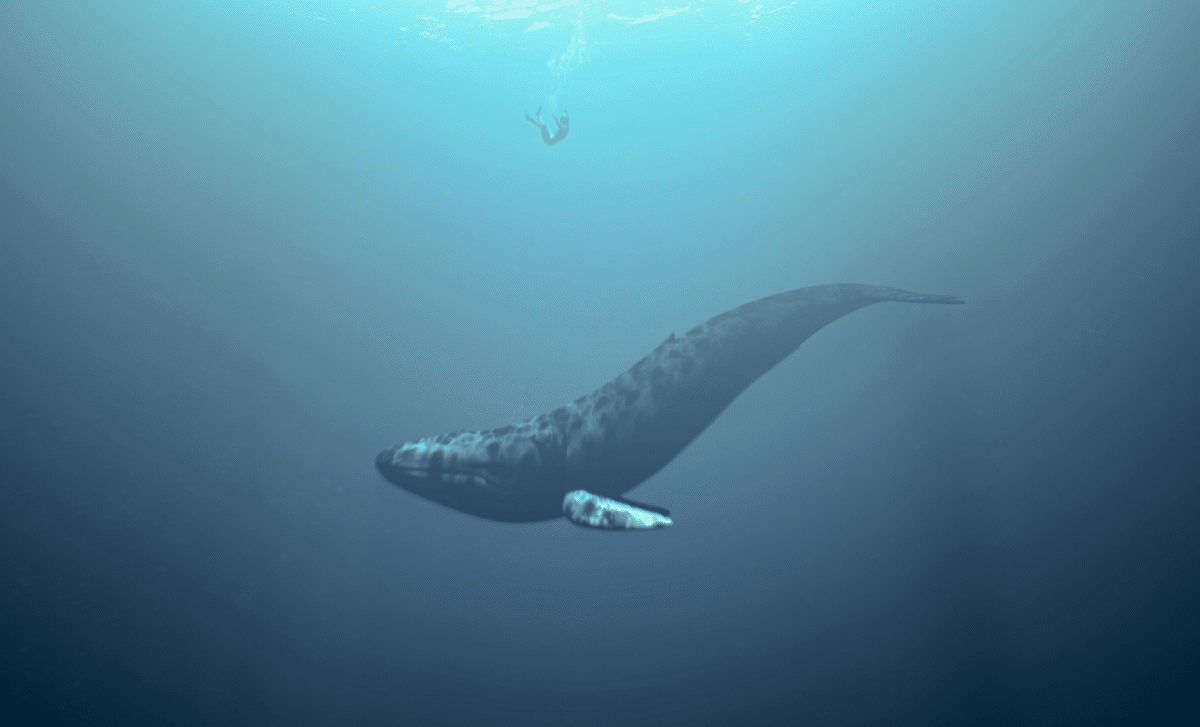
In 1989, the U.S. Navy detected an unusual sound under the ocean’s surface. This sound, unlike anything previously recorded from whale calls, came from a frequency of 52 Hz. For over a decade, researchers from the Woods Hole Oceanographic Institution have tracked these mysterious calls, which seem to belong to a whale that could be either a unique individual or an entirely new species. The intriguing aspect of the 52 Hz whale is its solitary and distinct voice, which has earned it the title of “the loneliest whale in the world.”
The Odd Frequency: Why Does the 52 Hz Whale Sound Different?
When scientists first recorded the 52 Hz whale’s call, they were puzzled by its pitch. Typically, baleen whales like blue and fin whales produce sounds in the 10 to 40 Hz range, much lower than the 52 Hz of this particular whale. The distinct call stood out in the ocean’s acoustics, but what made it even more perplexing was the fact that no other whale was heard producing a similar sound. As researchers from the Woods Hole Oceanographic Institution continued to track the frequency, they discovered that “only one series of these 52-Hz calls has been recorded at a time, with no call overlap.” This led them to conclude that it was likely a single whale producing the sound, which was unusual in itself since whale calls are often heard in overlapping patterns from different animals.
Despite extensive research, the species of this whale has yet to be confirmed. The report from Woods Hole in 2000 revealed, “This sound source has been the only one with this call structure in the entire listening area.” The uniqueness of the sound has baffled marine biologists and continues to challenge their understanding of whale communication. Could the whale’s call be an anomaly, or is it indicative of a species previously unknown to science?
The Search for the 52 Hz Whale: Could It Be a Hybrid?
For over 12 years, scientists have been tracking the 52 Hz whale’s call, focusing their efforts on identifying the species responsible for the sound. The data collected by Woods Hole Oceanographic Institution has been consistent, but there is still no concrete answer. The researchers have speculated about the nature of this whale, with one possibility being that it could be a hybrid between a blue whale and a fin whale. The combination of these two species could explain why the whale produces such an unusual call. “Perhaps it is a hybrid,” the Woods Hole report noted, suggesting that the whale’s sound may be the result of a genetic mix between the two species.
This theory remains speculative, but it raises intriguing questions about the genetic diversity within the whale population and how hybridization might affect the behavior and communication of marine animals. Hybridization between species is not uncommon in the animal kingdom, and it could very well be the case that this whale represents a unique example of this phenomenon. Still, without visual confirmation, the true nature of the 52 Hz whale remains a mystery. Researchers continue to track the whale’s calls in hopes of discovering more clues that could shed light on its identity.
The Loneliest Whale: A Symbol of Isolation or Just an Unusual Call?
Over the years, the 52 Hz whale has captured the imagination of people around the world. Dubbed “the loneliest whale in the world,” the animal’s solitary existence has sparked emotional responses from people who imagine the whale drifting through the ocean, unable to communicate with others of its kind. However, the idea of a lonely whale is largely a human projection. The scientific community has yet to confirm whether whales, particularly this individual, experience loneliness in the same way that humans do. In fact, there’s little evidence to suggest that whales can feel loneliness as we understand it.
Nevertheless, the idea of the whale’s loneliness continues to captivate the public. The 52 Hz whale’s inability to communicate with others of its kind—due to its unique call frequency—has led to widespread speculation that it might be isolated in the vast ocean. The idea has even inspired songs and documentaries, including the BTS hit “Whalien 52” and the 2021 documentary The Loneliest Whale: The Search for 52. These cultural references help to keep the story of this elusive animal alive, sparking deeper conversations about the impact of human activity on marine life and the importance of protecting these majestic creatures.
The Impact of Human Activity on Whale Communication
The search for the 52 Hz whale has not only intrigued researchers but has also brought attention to the impact of human activity on the ocean’s soundscape. Increased noise pollution from shipping, sonar, and other human activities can interfere with whale communication, which relies heavily on sound. In The Loneliest Whale: The Search for 52, scientists explore how loud noises in the ocean affect whales’ ability to communicate with one another and navigate through their environment. These disruptions could be a contributing factor to the 52 Hz whale’s apparent isolation, as it may be unable to communicate effectively with other whales. This issue highlights a broader concern about the health of the ocean’s ecosystems and the need for better protections to reduce human impact on marine life.
Unsolved Mysteries: Will We Ever Find the 52 Hz Whale?
Despite decades of research, the 52 Hz whale remains a mystery. Scientists at Woods Hole Oceanographic Institution have been tracking its calls since 1992, yet they still have not been able to identify the species responsible for the calls. The fact that “we have been tracking this call since 1992 and have not identified the whale species” underscores the difficulty of studying such a mysterious and elusive animal. Even with the help of sophisticated tracking technology, finding and identifying a single whale in the vastness of the ocean is no small feat. Yet, the persistence of scientists and their dedication to unraveling the mystery of the 52 Hz whale shows that there is still hope that one day, the truth will be revealed.
As the search for the 52 Hz whale continues, the questions surrounding its existence will likely persist. Whether it is a hybrid, a unique individual, or simply an anomaly in the ocean’s acoustic landscape, the 52 Hz whale remains one of the ocean’s most intriguing mysteries. Until its true identity is discovered, the legend of the loneliest whale will continue to capture the imagination of people around the world.